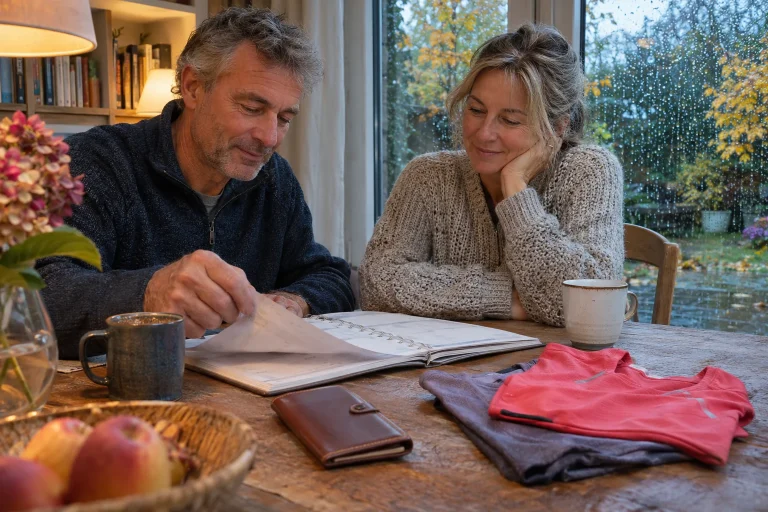
A well-established movement routine saves you from reinventing the whole day every morning. You know the place, companions and usual task. Your own programme can provide this anchor after seventy too. Lasting, however, does not mean the plan stays identical regardless of what happens around you or to your health.
A good routine can retain its purpose even when timing, form or support changes. The question is how you notice it needs reviewing and which part to discuss with whom. Not every modification is a healthcare matter, but not every difficulty can be solved by rearranging a calendar either.
An urgent symptom differs from an ordinary plan review
Do not wait for the next planned review if you feel seriously unwell in a new way. The NHS information on fainting identifies fainting during exertion, for example, as a situation requiring urgent assessment. Severe chest symptoms, breathlessness or another new symptom that seems dangerous also put appropriate help before completing a weekly goal.
An ordinary routine review is separate. It can be worthwhile without new symptoms if your schedule, social programme or personal interests have changed. You need not experience every adjustment as illness. What matters is keeping clear whether you are discussing scheduling, activity content or health.
Uncertainty can be named too. If you do not know how significant a change is, do not use an online list to classify yourself as fit or unfit. An appropriate professional can clarify the question. A planned follow-up does not prevent you from reporting a new problem sooner.
What should remain constant in a routine?
The precise distance need not be its most stable element. A meaningful goal, a protected opportunity for movement or connection with a community can remain constant. Keeping these can make a temporary change of form feel less like a complete break. The essence may be a framework you can return to, rather than identical performance in every circumstance.
The National Institute on Aging activity guidance emphasises realistic, enjoyable options adapted to actual life. In your personal system, identify which element genuinely helps you set off. For one person it is meeting others, for another a nearby venue or equipment prepared beforehand.
If only an unbroken app streak holds the routine together, missing a day can acquire excessive meaning. A log can instead remain a tool for retaining your story. A modified week can also have value. Leave room in your recording system for temporary changes, not only the opposition between completed and ruined days.
What should return to the conversation when health changes?
With a new illness, injury, persistently changed well-being or greater difficulty in daily function, an earlier programme cannot automatically be considered equally appropriate. Individual assessment can include both the purpose of movement and the actual task. Ask not only whether sport is allowed, but which activity and framework fit your present condition.
The NICE recommendation addressing multiple long-term conditions emphasises connections between illnesses, treatments and daily life, together with a coordinated individual plan. If several providers care for you, retaining their current instructions can help. Advice not visible to one another should not become a compromise workout invented at home.
A new treatment or product can also be relevant history. The NIA information on medication safety recommends an up-to-date list of the products actually used. Note changes, but do not stop or alter treatment to make movement easier. A relationship in time can be discussed; cause and action require individual assessment.
Rethinking a programme does not necessarily mean stopping permanently. Another activity, more support, a different environment or a temporary restriction may enter the plan. A general age rule cannot decide the answer beforehand. The next step becomes workable when you understand its purpose and individually agreed conditions.
 Enlarge image
A fall or new unsteadiness is separate history
If you fell, do not retain the event only as a break in the training log. How it happened, whether you were injured, whether you could get up and whether walking or confidence changed afterwards may matter. You do not need to try the same difficult situation again to describe it precisely. Retained details can support an appropriate assessment.
The 2025 NICE falls-prevention recommendation considers both the circumstances of a fall and individual factors. Appropriate programmes include tailored tasks and regular reviews of progress. This does not imply an identical home challenge for everyone or one risk score.
Attachment to a familiar route is understandable, but familiarity does not make every situation unchanged. A new surface defect, worse light or current unsteadiness may call for different conditions. Changing the venue can be an organisational task while new physical symptoms require separate assessment. You need not choose only one of these questions.
A change in life circumstances often concerns organisation
Caring for grandchildren, supporting a relative, moving home or new travel arrangements can change available time. Your fitness or motivation has not necessarily deteriorated; the week’s structure may simply be different. Demanding flawless completion of the old plan may not provide a useful answer.
Separate the session’s timing, access and content. The activity itself may remain appropriate while a lengthy outward journey no longer fits. At other times, the group time changed and you seek a local solution. You can organise such matters yourself provided activity content remains within your current individual framework.
Changed circumstances can bring new enjoyment too. Perhaps you find a closer community, or the balance of solo and shared sessions changes. You do not have to describe every change as a loss. A system fitting your personal goal can have several workable versions, and you can choose between them later too.
| What changed? | Which question does it raise? |
|---|---|
| A new or worsening symptom | Necessary individual healthcare assessment and a current movement framework. |
| A fall or unsteady walking | The circumstances and individual next steps need separate review. |
| A different schedule | Place, time and travel can be reorganised within the existing framework. |
| Changed interests | Your own goal and enjoyable activity can be named again. |
Guidance gives direction; review connects to your own day
The NHS activity guidance for older adults presents daily activity, aerobic movement and tasks supporting strength, balance and flexibility together. The broader movement picture therefore includes more than running. Reviewing your routine can also identify which roles are represented and which have remained in the background.
Every session does not need to challenge every capability. The question is your individual programme as a whole, not producing one perfect day. If you previously recorded only running kilometres, other activities or individually prescribed tasks may have remained invisible. You can structure the log to preserve the actual programme.
The gap between a target amount and present possibilities does not automatically mean failure either. Reassessment concerns the starting situation and appropriate next step. You do not need to make up everything in one large session at the week’s end. An app summary does not personally authorise suddenly concentrating the load.
Make your review brief but meaningful
Choose a calm time to consider what worked in the programme. No new diary app is needed. A few sentences may suffice: which session fitted the day, where you met an obstacle and whether there was a new bodily change worth retaining. Notes should not become another compulsory performance creating more work than help.
Distinguish different types of comments. ‘It was missed because the bus was late’ differs from ‘the same task brought a new symptom’. The first may call for an organisational answer, the second individual assessment. Even brief wording can retain that distinction without a clinical score.
- What remained valuable and manageable within my personal goal?
- Which barrier can change through location, time or help?
- Is there a new health question I need to report separately?
- Which current plan am I following, and when will we discuss it again?
This list has no compulsory score or review deadline applying to every seventy-year-old. Follow-up agreed in an individual care plan has its own role. Everyday reflection helps you notice the programme’s usefulness without waiting for a major unexpected change.
 Enlarge image
Make a modified plan recognisable
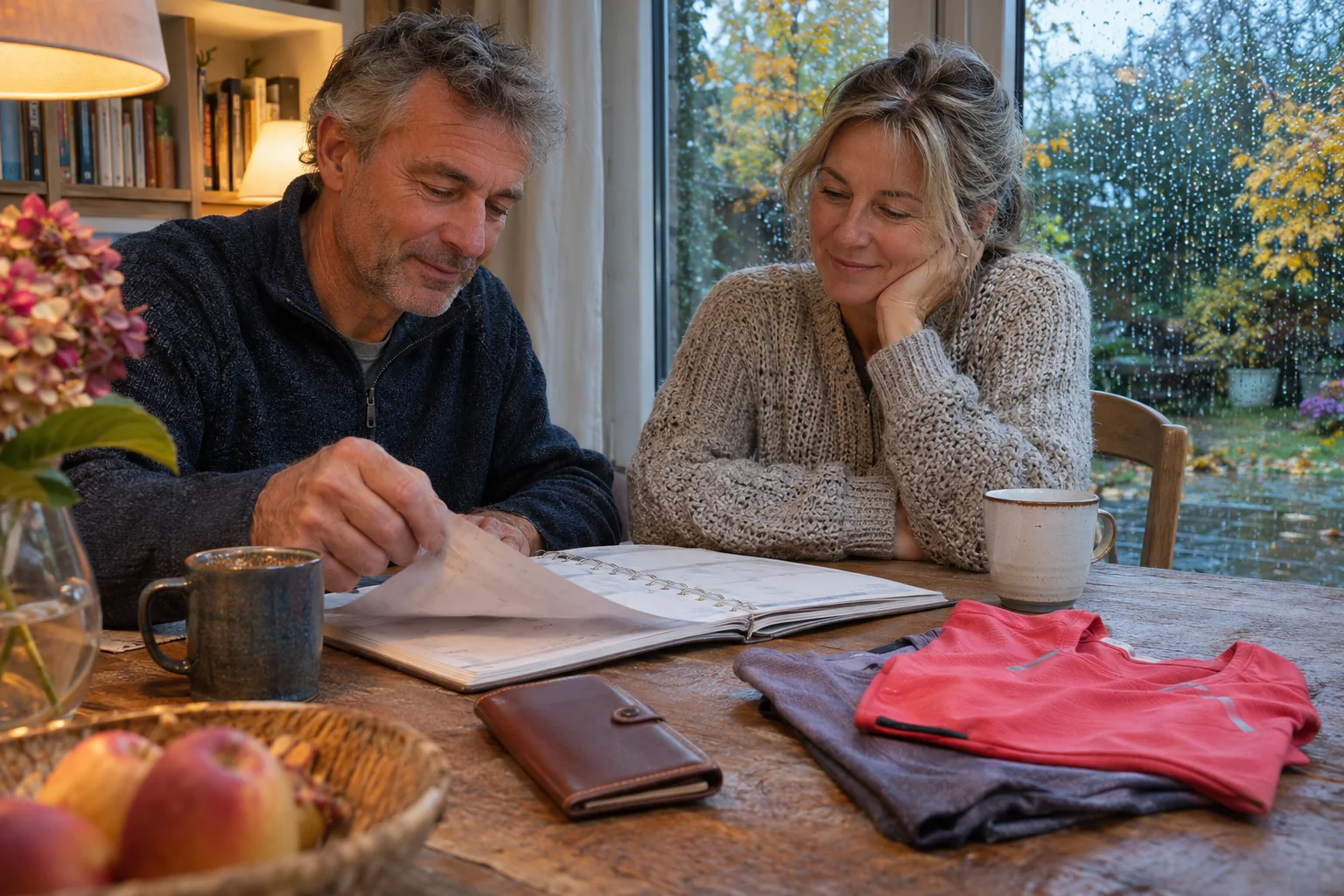
If you agree a new programme, know what changed and what remains valid. You should not have to choose between contradictory sheets or app tasks. Dating the current version, noting the next contact and retaining contact details for questions can provide simple reference points.
Tell your companion or organiser what is necessary for the shared occasion. For example, you are choosing different participation or temporarily need another time. Your entire health history does not automatically belong to the community. Help can also be described as a specific task rather than a general expectation of supervision.
An earlier plan need not be hidden as a failure, but should not be confused with the current one. It can preserve what suited another period. The new version describes the conditions under which you continue now. Your movement history can have different chapters without comparing them all against the same standard.
Lasting can also mean a connection you can return to
A fictional man in his seventies finds his movement routine harder to maintain because the family schedule changed. With no new symptoms, he first rearranges travel and timing within his existing movement framework. He does not increase the weekend amount as punishment for missed sessions. He retains the social meeting he values in another form.
In another situation, new dizziness requires that same routine to change. A more convenient time is no longer enough: appropriate symptom assessment becomes a task too. The distinction between the stories is not perseverance but the nature of the change. A precise question helps select the appropriate next step.
A lasting routine is therefore not a rigid contract with your earlier performance. It is a framework in which an important goal, actual condition and practical circumstances can meet again. A necessary modification can itself show the plan being used: you notice what happens and seek a manageable response to change.
Sources
NHS: activity guidance for older adults; NICE NG56: personal goals and coordinated care; NICE NG249: falls assessment and an individual programme; NIA: activity in real life; NIA: medication safety; NHS: fainting. Checked: 21 November 2026. The questions and stories are original illustrations, not a clinical classification or individual exercise prescription.
How Futószív articles are prepared: our editorial guidelines.