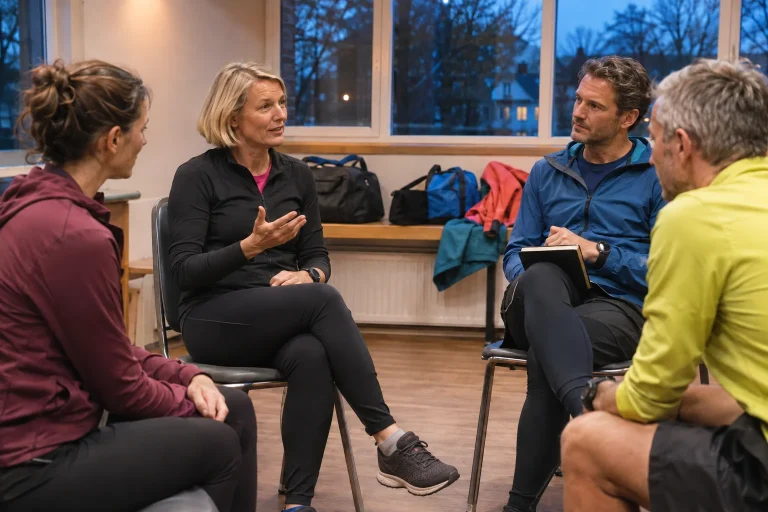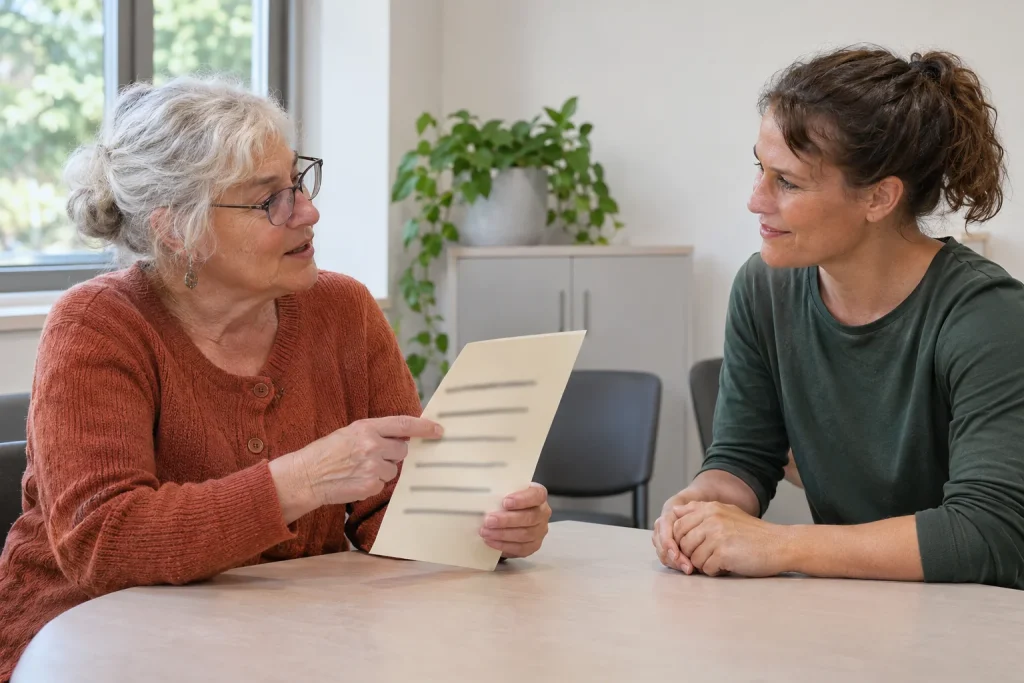
The discussion seemed clear at the clinic, but at home the tiny print of your activity instructions blurs together. An abbreviation beside an exercise is unclear, and an arrow in the drawing could mean two things. This does not make you incapable of cooperating. A gap remains between the information received and the circumstances of use, and it is worth naming precisely.
As a runner or an older person preparing to jog, you eventually use the plan in your own everyday life. Clarity for the professional alone is insufficient. You must read it, understand it and recognise when and how an instruction applies to you. Each task can create a separate difficulty and may need a separate solution.
First explain where use breaks down
I cannot see the letters leads to a different request from I can read it, but do not understand what the three repetitions refer to. Changing presentation may help the first; the second lacks explanation of content. If the sentence is clear but the movement’s starting position is not, an individual demonstration or clarification of execution may be needed.
Choose a specific line rather than judging the whole sheet unusable. For example, you cannot see the light-grey note, it does not identify which leg starts, or an instruction about modification does not name the next step. A precise example enables a solution addressing the actual barrier.
The NICE recommendation on patient experience emphasises individual communication needs and accessible spoken and written information. This is a professional framework from abroad, rather than a specific service promise for Hungarian healthcare. Its practical idea is useful: information format should belong in the discussion.
Check readability in your own situation
Larger print alone does not solve everything. A long dense paragraph can remain difficult to follow when enlarged. Contrast between text and background, line organisation, reflected light on the page or an important note at the bottom of the reverse may matter. You need not choose one font size for everyone to show what works for you.
If possible, examine the version received with your usual reading aid before the appointment ends. Can you find the section discussed? Are heading, task and additional note clearly separate? This trial provides feedback on the guide’s usability, rather than testing your vision or intelligence.
The National Institute on Aging information on vision also explains appropriate lighting and assistance adapted to visual difficulty. If reading difficulty is new, appears in other daily tasks or changes, its assessment is a separate question. A larger-print sheet may help but does not replace a necessary eye examination.
At home, consider where you use the plan. A sheet easy to read on a table may be harder beside an exercise mat in different light. The aim is not deciphering words from an uncomfortable position while moving. Put the needed part somewhere clear beforehand and clarify the exercise before performing it.
 Enlarge image
Paper, digital text or audio: make format a choice
Some prefer larger, well-organised paper; others prefer digital text with adjustable type size. Neither indicates a greater level of cooperation. If you do not use a smartphone, a plan uploaded to an app may be inaccessible. If paper is easily misplaced, an organised digital version may be more practical.
A scanned page and actual digital text are not used identically either. A document saved as an image may require sideways scrolling after enlargement, and text-to-speech may not work. Ask about a version with selectable, resizable, navigable text. You need not know file-format names; describe the operation causing trouble.
A spoken explanation or short recording may help when you can follow it and its creation was agreed beforehand. Finding one modification quickly in audio may be harder, however. Paper and a spoken summary can complement each other. Important instructions should not remain only in a conversation difficult to retrieve.
| Barrier to use | Example of a specific request |
|---|---|
| Small, faint text | I would like a larger, darker, clearly structured version. |
| A digital sheet behaving like an image | I need text I can enlarge properly or have read aloud. |
| A forgotten spoken detail | Let us also record the agreed change on my own copy. |
| An app not used | Let us find a paper or other solution accessible to me. |
The plan should show what applies to you
General information may list more options than belong to your individual plan. Separate background explanation from agreed actions. If a page contains ten exercises but the conversation covered only two, do not assemble a programme by guessing. Ask which section applies now.
A movement name alone may be insufficient for an action. Starting position, support, amount, frequency and conditions requiring changes or discussion can matter. The individual plan establishes these. A general article should not fill a missing training dose; it should help you recognise what remains uncertain in the received description.
It helps to find the next appointment or contact arrangements in one place too. We will see is not necessarily sufficient. A scheduled review, a contact route for questions and an urgent situation mean different things. If one abbreviation compresses all of them, request a plain explanation for your plan.
The intended goal also supports understanding. If a task supports everyday rising or safer activity arrangements, do not expect feedback solely from your watch’s pace. Clarify the connection between the description and your own goal together. This reveals why the task belongs to the programme.
Repeat the plan in your own words
It is easy to answer yes to is everything clear even with an uncertain detail. Briefly describing what you will do at home may help more. For example: I understand I use this agreed version, but not the general example on the other side for now. A misunderstanding may then emerge before becoming part of your programme.
The NICE shared-decision-making recommendation also supports presenting information in smaller parts and checking understanding. Repeating in your own words checks the explanation rather than examining you at school. It may also tell the professional which expression needs explaining differently.
Pointing to paper is not always enough to clarify movement. Ask how understanding can be checked together. Do not try to infer your individual version from an online video at home merely because the exercise name is similar. The same name can conceal different starting positions and tasks.
You may think of a detail after the appointment too. Retain it as a short specific question: which sentence, which version and which situation remain uncertain? You need not repeat every previous explanation. A clearly named question is often easier to clarify than a general I cannot manage any of it.
Do not mix the corrected version with the old one
A plan may change over time. If an earlier sheet was amended by hand and a new file says something different, know which version currently applies. Request a date or another clear identifier on your own copy. This avoids following conflicting instructions rather than creating complicated administration.
Organisation can be simple: the current sheet in a designated place, previous copies in a separate folder. Digital filenames can help, but should not be the only way to work out a content change. Understand what changed and why. Newly received general information does not necessarily override the individually agreed plan.
Separate your own notes from instructions received. A question mark beside an unclear part is fine, but do not silently turn it into a new training prescription. If a family member helps rewrite the sheet more legibly, check that amounts, exceptions and conditions remain identical. A short omitted word can change meaning.
 Enlarge image
Help should support your own participation
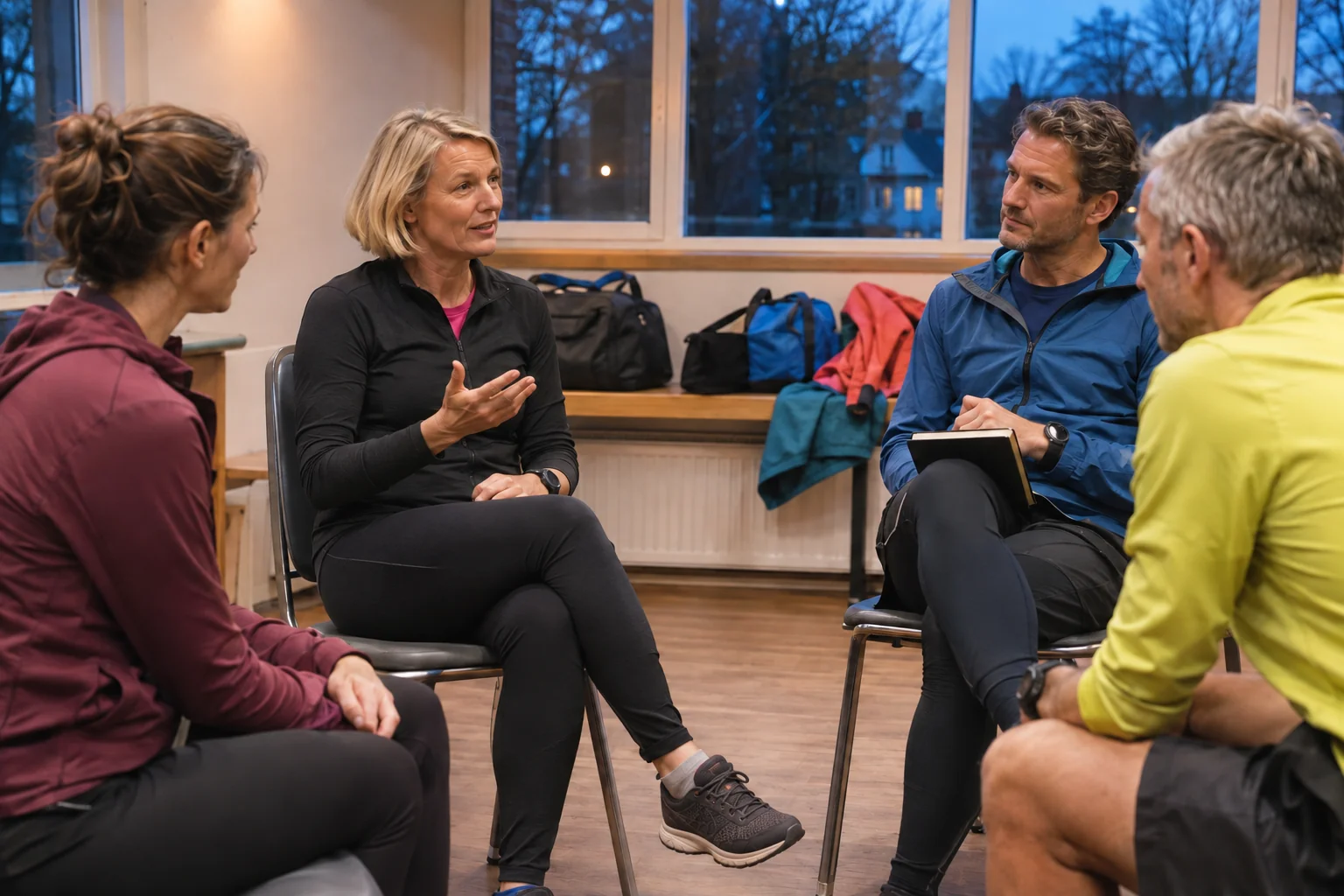
Older age does not mean family must interpret and decide everything for you. Say whether you want a companion and what assistance you request. Someone can take notes or prepare questions while the conversation continues to address you. Useful support can differ between people.
The sheet may contain personal health details. If you need someone’s help printing or enlarging it, share only necessary information and consider storage. The whole document need not belong on a running club’s shared message board. You can ask the community for practical help without showing every part of your history.
Naming visual, hearing or reading difficulty should not become embarrassing. Your experience of use is important information: you can say which format is accessible and which is not. If someone answers for you, calmly take the floor back. Cooperation also means time for your question and for processing the answer.
An actual day tests whether a plan is usable
Imagine a retired runner who can read the sheet brought home at the kitchen table but not its faint footnote. They also do not know whether the note concerns every task or only the last. They do not choose between font size and healthcare content: they name both questions and clarify them separately at the next contact.
The amended copy clearly separates the individually agreed task from background information. The person summarises their understanding in their own words, then puts the current sheet in its designated place. This story is an original illustration rather than proof of a movement programme’s result. The change concerns information usability, rather than an automatic decision about fitness to run.
Three simple questions can bring clarity before setting out: can I access the information, do I understand the part applying to me, and do I know where to clarify uncertainty? If an answer is missing, the plan can still improve. The goal is not memorising every page, but reliable, manageable information about your own tasks.
Sources
NICE CG138: individual communication and accessible information; NIA: vision in older age and support for everyday tasks; NICE NG197: understandable information and shared decision-making. Checked: 21 November 2026. Request examples and organisation examples are original editorial illustrations, rather than individual exercise prescriptions.
How Futószív articles are prepared: our editorial guidelines.