An advanced running shoe can show better economy in a short test. For someone preparing for a marathon, however, the question is what remains of that advantage after a longer run. An eighty-minute study with trained men brings us closer to an answer if we distinguish precisely between the same speed, the same relative task and how the advantage changes over time.
A short-term advantage and a lasting advantage: how do the questions differ?
A short shoe test conducted while fresh asks about the cost of running at a given speed under the conditions examined. A longer investigation adds a question over time: what happens to the same difference as running continues? The two can build on each other, but they are not identical. A favourable initial measurement does not yet reveal how the measures develop later.
A marathon reader often has a third question in mind too: what will the shoe be like in the race’s final hour? This practical question is understandable, but involves more conditions than eighty minutes in a laboratory. The course, weather, pacing so far, equipment and whole race duration will all be involved. Interpreting research precisely means making this additional step visible too.
What follows is therefore neither a purchase test of a particular model nor experience from our own hands-on testing. We follow an original study’s design and the limits of its conclusions. We end with personal observation points that need no invented laboratory findings alongside them. Scientific data and your own experience of use can each remain valuable separately.
What did the eighty-minute study compare?
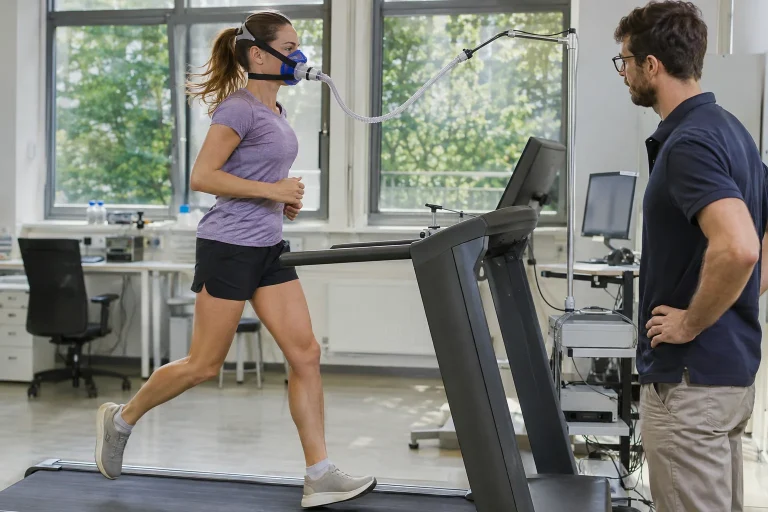
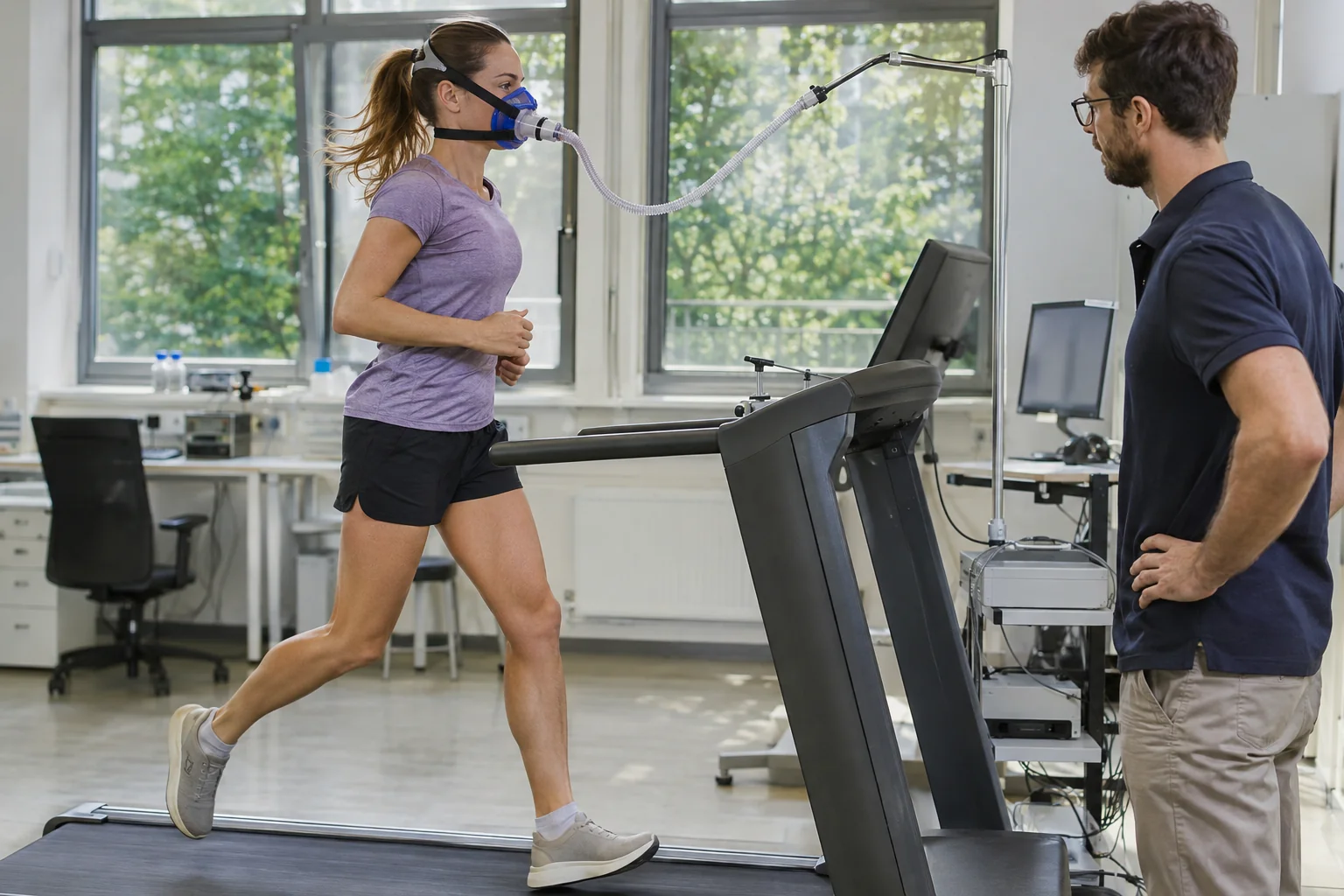
The 2025 study involved ten trained male distance runners. A shoe combining a carbon plate and high-rebound foam was compared with a shoe without a plate. After measurements while fresh, three eighty-minute runs took place on separate days in random order. The programme allowed shoes to be compared at the same external workload and at a relative workload adjusted to a shoe-specific threshold.
At the same external workload, the carbon-plated condition showed better economy and lower perceived effort, heart rate and lactate. The economy advantage also remained in the other comparison. However, no shoe-by-time interaction was found to establish a different pattern in how the between-shoe difference developed over time. This is an important nuance: an advantage existing and the rate of change are separate questions.
Participants were trained, fast male runners, not a random sample of the entire marathon field. Read the finding in relation to that group and the protocol used. It does not automatically imply the same response in every woman, older beginner or marathon runner moving for four or five hours. This is not rejection of the result, but precise identification of who produced it and under which circumstances.
 Enlarge image
The same external workload: keeping speed constant
In a comparison based on external workload, the specified running task remains shared. Put simply, the same speed must be maintained in both shoes. It then makes sense to ask whether the oxygen or energy demand required differs. Lower cost in this comparison does not mean the runner ran faster; identical speed is precisely what makes the difference interpretable.
A similar question in your own everyday trial might concern your practical experience on the same familiar route with a similar task. This does not become laboratory measurement because a sports watch also recorded it. Heart rate, circumstances and your own sensations can provide observations together, but do not directly show oxygen cost. Precise wording preserves this distinction.
If one session ultimately becomes faster, the comparison already answers a different question. A lower heart rate or easier feeling does not necessarily come solely from the shoe, and a higher value does not prove a worse shoe either. First examine what actually happened to speed. Even this single variable often differs behind identically named runs.
The same relative internal task: not necessarily the same pace
A threshold-adjusted comparison follows different logic. If a specified threshold corresponds to different speeds in the two shoes, the same percentage of it does not mean the same kilometre pace. The study treated this as a separate condition. ‘The same relative intensity’ should therefore not be read as meaning every run by every participant took place at the same speed.
To understand the concept, take our own fictional values: the reference speed is fifteen kilometres per hour in one condition and sixteen in the other. Ninety per cent of each is respectively 13.5 and 14.4 kilometres per hour. The relative number is identical; the external task differs. This is solely arithmetic illustrating the denominator’s role, not a recommended training intensity or the study’s actual data.
It is useful in your own training diary too to distinguish which comparison you want. Did running feel easier at the same pace, or did a different pace result at what felt like the same effort? Both are interesting observations, but different claims. Expressing the sentence precisely makes shoe effects, deliberate pace choice and your current condition less likely to merge.
A remaining difference is not the same as a different fatigue curve
Imagine two measurement series created only for illustration. In one shoe, a fictional oxygen cost begins at two hundred and later reaches two hundred and ten millilitres per kilogram per kilometre. In the other, it begins at one hundred and ninety-two and reaches two hundred and two. Both rise by ten, while the absolute difference remains eight. There is a difference between conditions, while change in this example proceeds at the same rate.
The numerical example is not the research results table or a typical personal shoe response. It merely separates how an advantage can persist without the conditions differing in their change over time. Real statistical analysis examines more, including uncertainty. An interaction not established statistically does not prove the two curves are exactly identical over every possible duration.
The everyday conclusion is therefore not that the shoe eliminates fatigue. An economy advantage remaining in a particular condition can coexist with changes during prolonged exertion. Race pacing, nutrition and hydration, and equipment handling still need separate preparation. Technology’s possible benefit does not need reinforcement from a claim the study did not actually test.
Eighty minutes is not the whole second half of a marathon
Picture the duration specifically. Eighty minutes is one third of a four-hour finish and slightly more than one quarter of a five-hour finish. The research run is still longer than a fresh trial lasting a few minutes, but is not the same as the end of the whole race. Your own late-marathon situation accumulates more history and different circumstances than one laboratory window describes.
Another study examining physiological durability in marathon runners compared measurements while fresh and after a longer run. Certain measures deteriorated; others did not change significantly. Because the studies used different protocols, their results should not be merged into one universal fatigue story identical in every situation.
If a summary claims a shoe’s advantage lasts to the end of the marathon, look for the actual study duration. How long was the run, at which speed and who performed it? These simple checking questions reveal where data ends and extrapolation begins. Naming the precise duration preserves the longer laboratory trial’s value.
 Enlarge image
Your own response and practical usability are separate observations
The study analysing 96 runners’ responses to shoe stiffness found different individual patterns alongside the whole group’s average. Some showed better economy in the stiffer condition, others worse, and some essentially no change. This research used short tests and particular prototypes; it was not a full marathon investigation of every advanced shoe.
In your own use diary, keep fit, perceived stability and the development of comfort separate. On which route, in which turn or during which longer activity did an observable difference occur? None of this requires an invented oxygen percentage. If something presses, shifts or is difficult to manage, describe it as a specific practical problem without necessarily seeking a physiological explanation behind it.
The trial should not be one day that changes everything at once. New shoes, new socks, an unfamiliar route and an unusually long programme make it difficult to understand where each experience came from. Observing under familiar conditions offers a more orderly starting point. Trying equipment within preparation aims to understand usability; it does not require a separate exhausting race-substitute test.
What should you write beside the shoe in your race plan?
Make a brief, factual summary: which shoe you used in which of your own sessions, on what routes and for how long, what worked and which questions remain open. Laboratory research can sit on a separate line as background knowledge. Your own observations then stay distinct from group findings measured by others. Both remain, but neither claims more than you actually know.
Do not automatically change the starting plan to a faster pace solely because you read a favourable study about shoe technology. The race goal comes from the whole preparation and event conditions. Name any remaining equipment uncertainty too. Knowing the open questions produces a clearer decision than allowing a technological promise to obscure everything.
The eighty-minute study therefore provides meaningful data showing that a particular advanced shoe’s economy advantage can persist during a longer laboratory run. It does not measure your personal experience of the marathon’s full second half for you. Research becomes part of the decision when you preserve its duration, the method of comparison and the independent place of your own practical experience.
Sources
- Madsen and colleagues: an advanced shoe’s economy advantage in 80-minute runs.
- Hunter and Muniz-Pumares: durability of physiological measures.
- Chollet and colleagues: individual response to shoe bending stiffness.
How Futószív articles are prepared: our editorial guidelines.