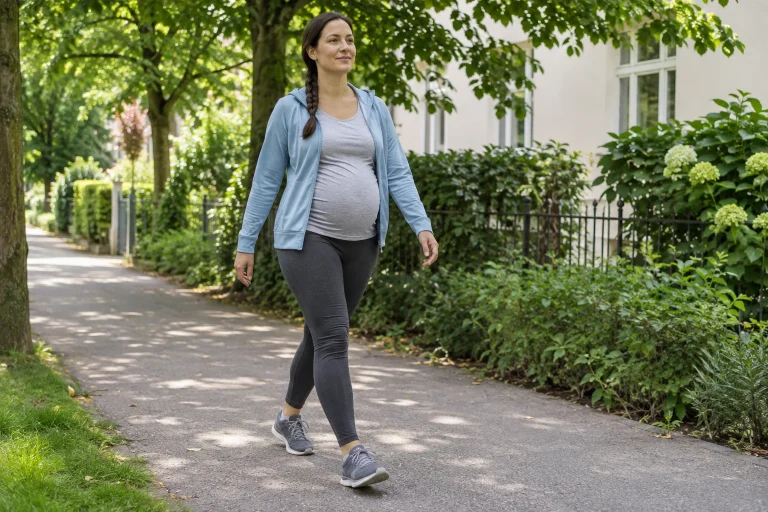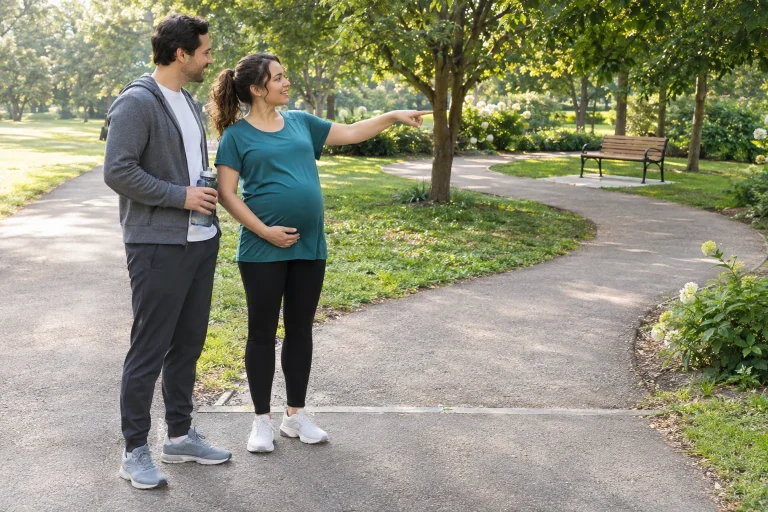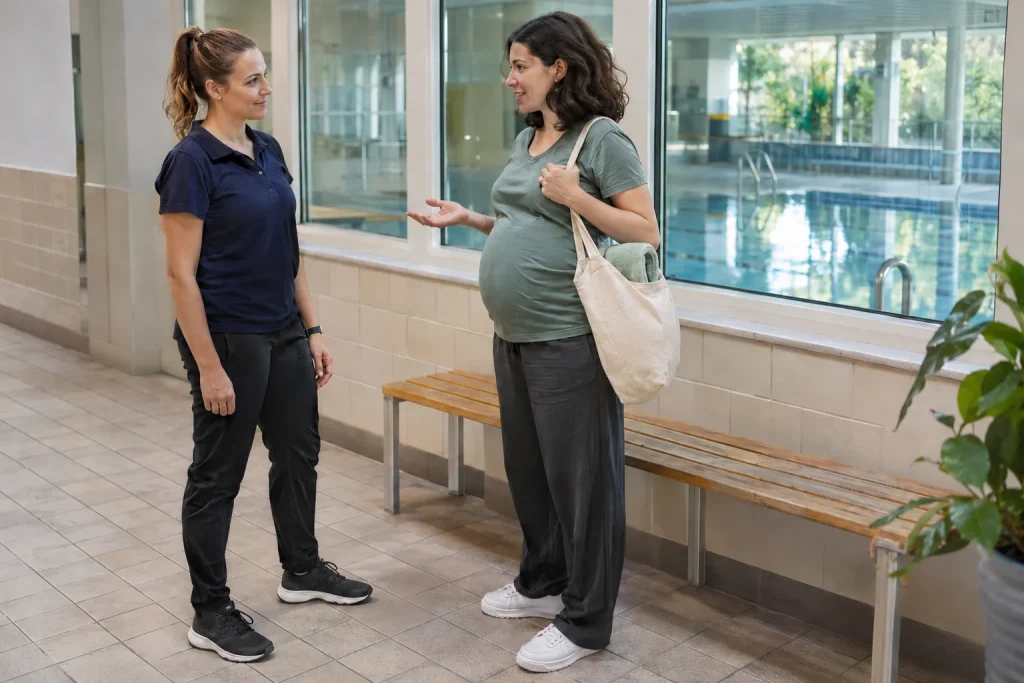
A running loop that used to feel good can become less comfortable as pregnancy progresses. There are more than two possible responses: continuing exactly as before or giving up all movement. Depending on your individual condition and maternity care guidance, other activities may be considered. The choice becomes useful when it is not driven by replacing missed kilometres at any cost. Walking, swimming or an appropriately modified class offers its own experience, environment and conditions for learning.
Report new pain or feeling unwell to your maternity care professional first; do not automatically treat it as a signal simply to choose another sport. This article helps with practical selection of activity considered appropriate, rather than diagnosing a symptom. Once medical boundaries are clear, enjoyment, ease of stopping, access and personal comfort can all inform the decision. The entire load of previous running does not need to be recreated in another form.
First clarify what has changed in the running experience
An awkward route arrangement, an uncomfortable familiar pace and a specific symptom are different situations. Name the change in your own words. Rather than “I cannot manage running any more”, explain what became unpleasant, when you noticed and what changed compared with before. The professional can then ask more precise questions.
According to the NHS page on exercise in pregnancy, changing to another form of activity may become more comfortable as pregnancy progresses; it gives brisk walking instead of running as an example. This is a general option, not a ready-made answer to every symptom. Individual care needs to clarify whether the current change calls for a simple programme adjustment or further assessment.
You do not have to wait until every part of running feels bad before discussing a change. Equally, your desire to exercise should not be used as proof that every part of the old plan must remain. Enjoyment of an activity and assessment of current circumstances can both fit within the conversation. An appropriate change does not deny your previous running life.
Your choice can also start with what you loved about running
Running can provide several experiences at once: fresh air, time to yourself, company, a movement rhythm or a familiar transition after work. Naming which matters now makes it easier to find another programme. One activity may not provide every former component. You might find company in a shared walk and quiet solitude on another occasion.
This question is neither a psychological test nor a ranking. It is simply practical help to ensure that a sports watch’s calculated load is not your only measure of value. If you loved the outdoor environment most, an accessible walking route may bring more enjoyment than an unfamiliar indoor room, even if the latter looks more athletic. An individually appropriate medical framework is needed in both cases.
Predictability can be a value in the choice too. A short programme near home may adapt more easily to a changing day than a fixed-time session requiring lengthy travel. This does not make the scheduled class bad; it asks for different organisation. The aim is to recognise the conditions under which activity is genuinely accessible in your present life.
Walking is an activity in its own right, not unsuccessful running
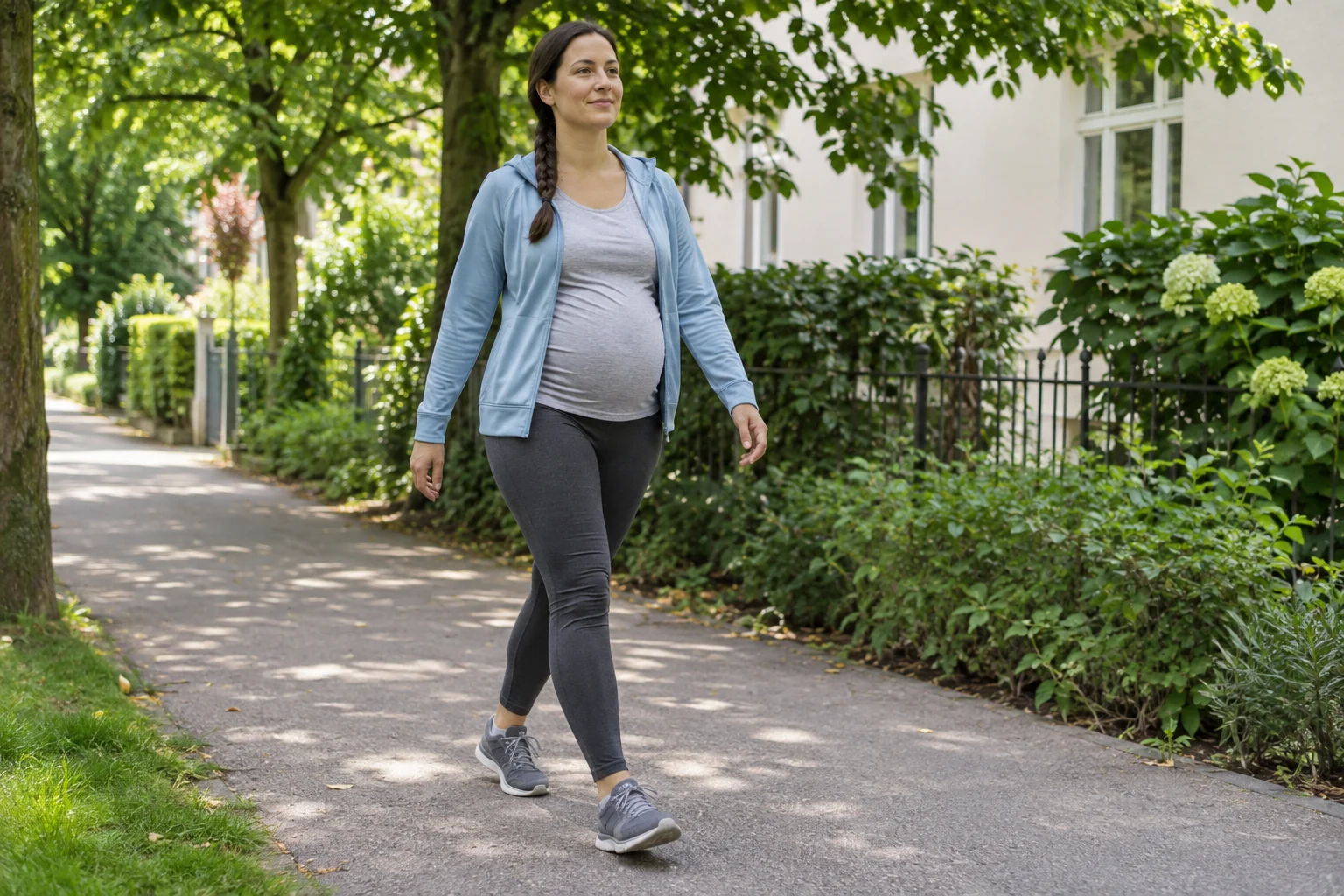
The CDC activity information lists brisk walking among examples of moderate-intensity activity. This does not prescribe a personal speed or mean every walk must have the same intensity. Adapt the programme to your condition and agreed boundaries rather than judging it against your former running pace.
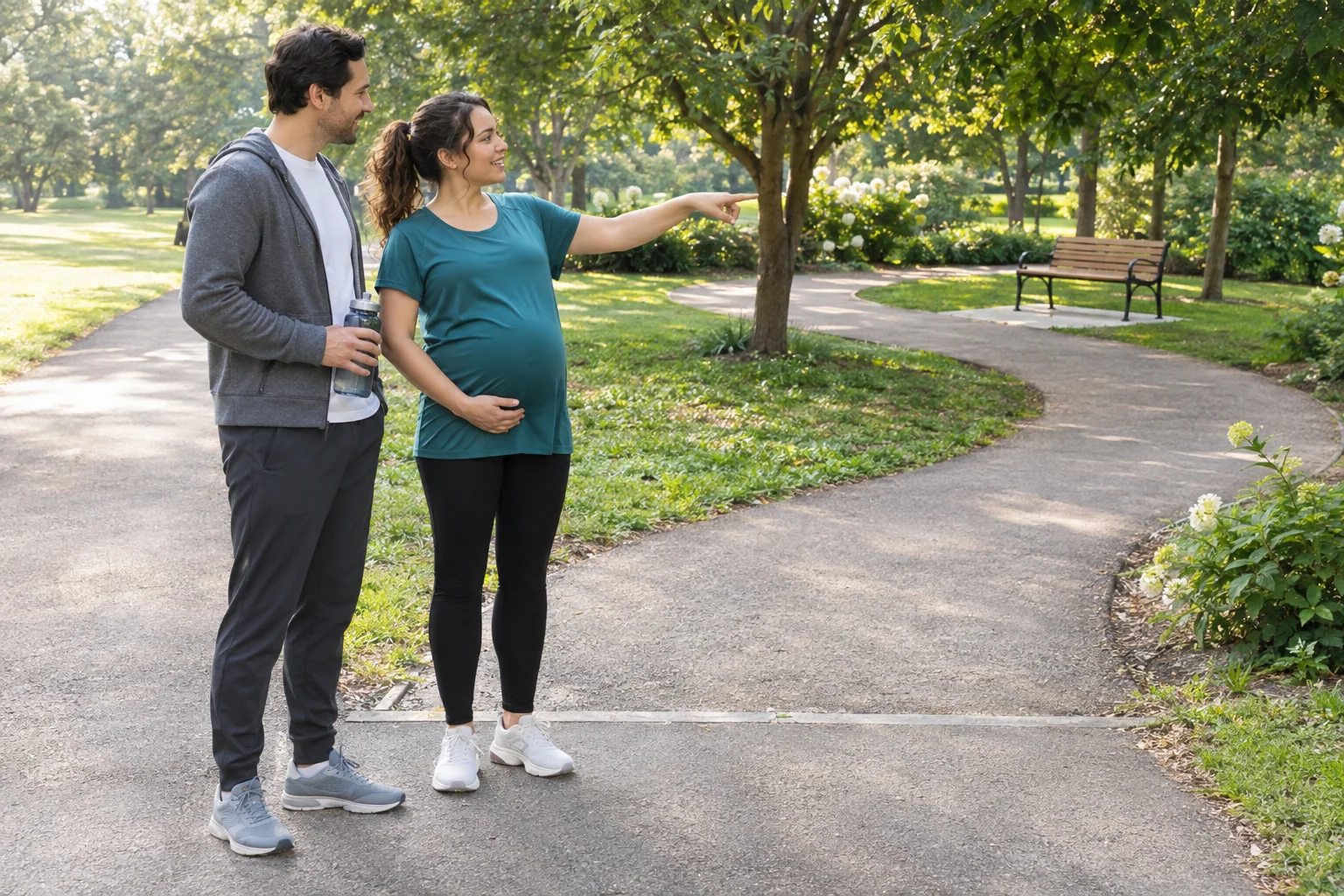
From an organisational perspective, walking may offer a simple departure and easy route changes. Check for an even surface, seating, a comfortable turning-back point and help available if needed. These are not lists of medical permission criteria, but everyday planning questions. A familiar trail-running loop does not automatically become a good walking route simply because you cover it more slowly.
If you go with someone, agree that the old distance or pace need not be maintained now. The outing can remain shared even if it is shorter or follows another route. Supportive company adapts to agreed boundaries, rather than restoring old performance expectations through encouragement to go “just as far as that tree”.
 Enlarge image
For water-based activity, the route to the pool matters too
The ACOG information on exercise presents swimming and water-based classes among possible activities; water supports the body. The NHS also mentions water-based movement and pregnancy classes. This does not mean that every pool programme is equally appropriate under every individual condition.
For a practical decision, think through the whole outing: how you get there, whether a changing room is accessible, how you enter and leave, whether you can prepare at your own pace and whom you can ask questions. Time in the water is only one part. If travel and changing together require arrangements that do not work now, you do not have to overcome that through willpower.
If swimming or the class is new to you, do not treat running fitness as a substitute for water skills. A new activity may require learning of its own. Ask the instructor about entry conditions, individual modification and how to stop or request help. The pool is not a racecourse marked out in water for the run you missed.
| Consideration | A walk nearby | A water-based class |
|---|---|---|
| Access | A suitable route and an easy return may matter. | Travel, changing and safe entry are also part of the outing. |
| Flexibility | It may be easier to shorten around your own routine. | It often involves a fixed time and a group framework. |
| Learning | The chosen route and individual boundaries should be familiar. | Skills and the instructor’s conditions need separate clarification. |
| Experience | Outdoor surroundings and company that is easy to arrange. | A different environment and movement experience, with its own requirements. |
Do not begin a new activity with the old load
The NHS emphasises starting new activity gently and does not recommend beginning a new vigorous activity, such as running, during pregnancy. When trying another sport, clarify what is appropriate for you too. How good you used to be at another activity is not the only consideration. The new environment, technique and current condition may raise separate questions.
A first visit may aim simply to find your bearings: learn about the place, speak to the instructor and clarify individual conditions. An introductory programme need not immediately grow into a full workout. Learning can have time of its own without requiring validation as a sporting achievement in an app.
Agree the change with your maternity care professional and, when necessary, a qualified exercise professional. If individual circumstances have led to particular boundaries, general group advice should not override them. If it is unclear at the venue how to follow those boundaries, clarifying the question takes priority over finding a way to participate at any cost.
Kilometres, energy estimates and training time do not create a compulsory exchange rate
A running watch can easily suggest that different forms of movement convert into one shared number. That does not make the programme’s purpose or execution identical. An estimated energy value or training-load score cannot calculate an individual pregnancy exercise prescription. Device data do not automatically answer the care question.
If you insist on accumulating the same minutes or estimated energy instead of a missed run, the change can easily become another pressure to perform. Sporting volume need not be balanced like an account every day. Following individual advice, a comfortably manageable programme and appropriate help are more useful references than resemblance to an earlier graph.
In the training diary, you can simply record what you did: a walk, a water-based class or a shorter shared period outdoors. You do not need to add how many kilometres it is “worth”. If the diary creates pressure instead, you can change what you record. Documenting sport should serve you, rather than being the place from which you need permission to accept a new situation.
Comfort is important feedback, but not a complete assessment of suitability
An enjoyable movement experience is valuable, but does not override every individual contraindication or new symptom. The ACOG professional statement links activity recommendations to assessment of medical and obstetric circumstances. “It was not difficult” and “It was appropriate for me” are therefore not the same statement in every situation.
Do not use a new sport to test an earlier symptom. If pain or feeling unwell occurred while running, being symptom-free in the water or while walking does not identify the original cause. Describe the change to your maternity care professional and follow individual guidance. Switching between activities does not replace a necessary examination.
If you feel discomfort, overheating or illness during a new activity, stop; the NHS emphasises this too. Continuing is not justified merely because you have reached the venue or paid for a session. Time already spent there does not oblige you to finish. The symptom and medical guidance received determine the next step.
 Enlarge image
Three feasible changes from different starting points
The first runner misses the community most. Within boundaries agreed with her maternity care professional, she arranges a walk with two companions, with a short route and turning-back arrangements known in advance. She does not ask others for a pace contest, and they do not call it missed training. The experience centres on meeting and outdoor time while retaining individual conditions.
The second runner is interested in water-based activity but has not attended a class before. She speaks first with her care professional and then the instructor, clarifying entry, learning and modification options. If the fixed time does not fit her day now, she seeks another solution. An initial wish to try something need not immediately become a new weekly obligation.
The third runner notices she would use every alternative to replace her former load. She can name this in the conversation about sport too. Alongside simplifying an individual activity plan, she can ask for help so that a changing life stage does not feel like continually falling behind. The example is not a therapy prescription: it recognises that a new programme has organisational and experiential purposes as well as physical ones.
Have a plan you can understand on changing days too
At the end of the choice, know your individual boundaries, which new situations require a question and what happens if the day’s programme does not take place. Every omission need not produce another replacement programme. In a flexible arrangement, a shorter session, a different time or an agreed pause can make sense without redesigning the whole week.
You can also describe the change specifically to people around you. For example: you are choosing another activity now, on your own terms, and do not want encouragement steering you back to the former distance. Companions need not understand every medical detail to respect the decision. Attention makes a shared outing supportive, not maintaining an earlier training plan unchanged.
An activity chosen instead of running can offer a genuinely new opportunity when it has a place in the day in its own right. It may be an outdoor walk, water-based movement considered appropriate or another individually agreed programme. The shared principle is choosing to suit current condition, respecting new skills and retaining the experience. Running kilometres need not continue counting like a shadow behind every other activity.
Sources
- NHS: changing activity and safety during pregnancy
- CDC: moderate activity during pregnancy
- ACOG: possible activities and precautions
- ACOG: individual assessment before recommending activity
How Futószív articles are prepared: our editorial guidelines.