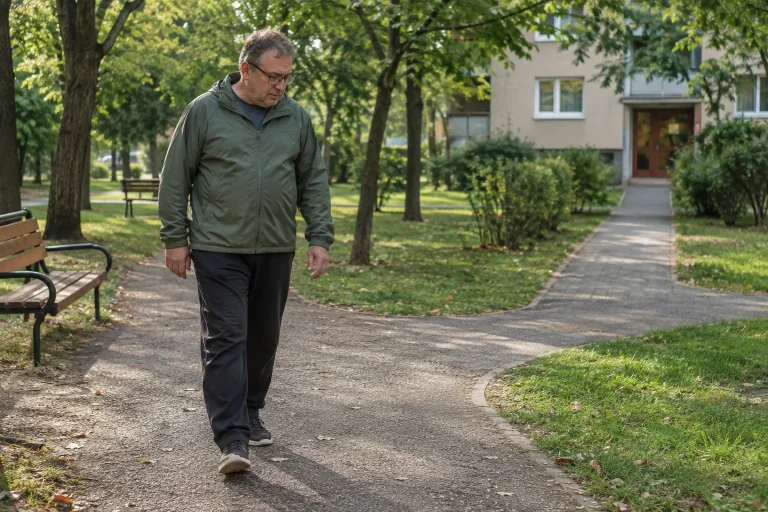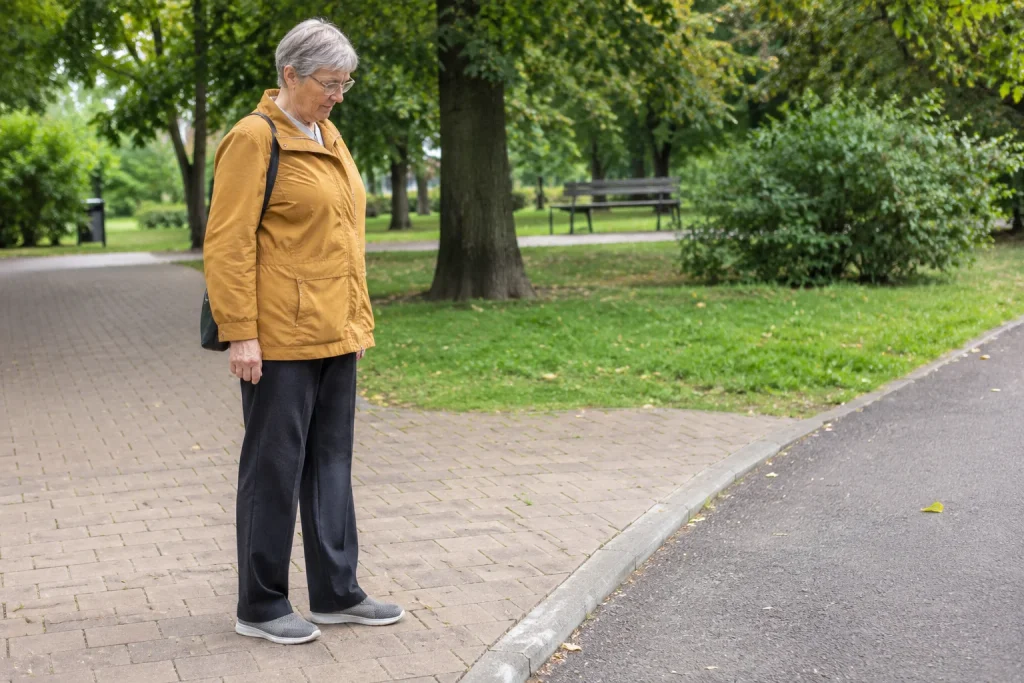
The kerb at the corner is familiar by day, yet at dusk it becomes harder to judge where the paving ends. This is not necessarily the same question as reading your phone or a distant sign. While running, the path’s edge, differences between surfaces and changes in lighting matter together. If this has changed, give it separate attention.
Sudden sight loss, a new dark curtain-like shadow, many new floaters with flashes of light or severe eye pain may require urgent care. The NHS information on vision loss and flashes of light highlights prompt assessment of these. Do not keep running to see whether the problem stops by the next streetlamp.
Seeing the pavement edge also requires contrast
A light line against white stands out less than a dark line on the same sheet. On everyday routes, how clearly a surface edge differs from its surroundings matters too. You need not make a home vision test. The concept helps explain that separating something from its background is part of the visual task alongside sharpness.
The National Eye Institute information on older adults’ vision mentions difficulties distinguishing colours and object boundaries and adapting to changing light. It also emphasises that sight loss is not simply an inevitable part of ageing to accept. Observing the change does not replace eye assessment.
As a runner, “At dusk, the grey kerb blends into the asphalt” may therefore be more precise than “My eyesight is worse”. Naming the situation, time and affected task helps discussion. You need not know which eye condition or optical factor may underlie it.
The same route can present a different task when light changes
A sunny section may lead into a shaded underpass; a lit lobby into a darker pavement. The route’s physical form has not changed, but its visibility has. Do not automatically maintain your familiar rhythm through a section harder to assess. If you cannot adequately see the surroundings, the manner of movement or outing can change.
The NIA eye-health information explains that adapting to lighting changes may take longer in older age. We derive no universal waiting time for readers from this. A general number of seconds cannot declare an individual visual difficulty safe.
The practical question is whether the uncertain transition can be avoided or handled under calmer conditions. Another entrance, earlier departure or more evenly lit route may work better. A familiar shortcut’s value can change if it crosses the least visible section.
A familiar route cannot be used from memory alone
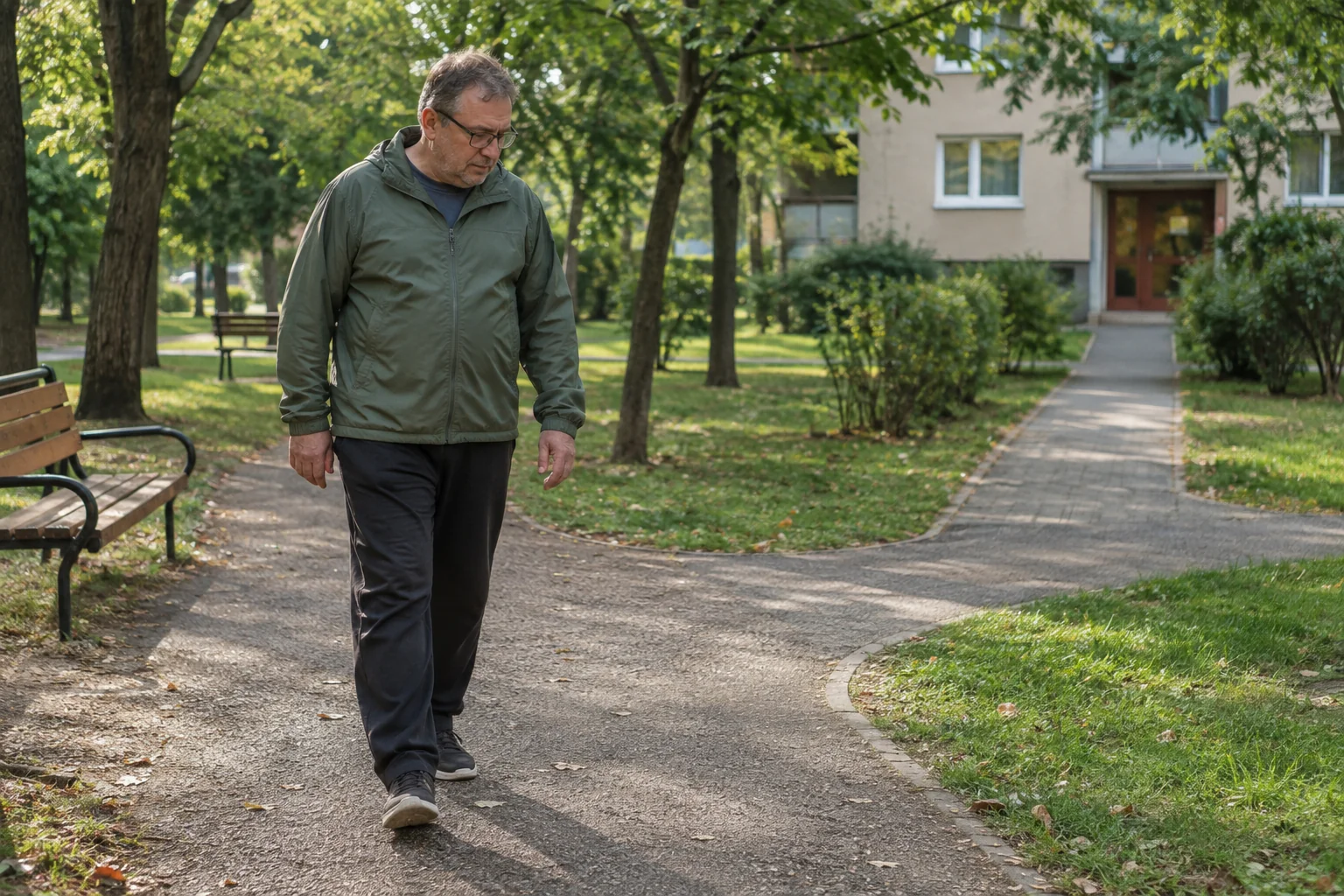
Familiarity helps but cannot replace seeing the current route. Last week’s clear pavement may now contain a bin, repairs or a fallen branch. Under harder visual conditions, old memories do not reveal new obstacles. Having used a route many times is therefore insufficient for choosing it.
A daylight review can identify narrow points, level changes and connections home. This is practical orientation, not proof that you can later run it comfortably at dusk. An edge clear by day may look different in the evening. Do not combine the situations into one supposedly certain route rating.
If the environment cannot be adequately assessed with your present vision, you need not practise conquering uncertainty there. Your activity goal can be considered on another route or at another time. The reason may be entirely everyday: calm movement matters more than preserving a long-used loop at all costs.
 Enlarge image
Consider the whole illumination, not the number of lamps
A route may look lit on a map yet have dark gaps, obscured lamps or distracting light sources. A lamp’s presence and your ability to perceive the surface appropriately are separate questions. Counting poles along a section cannot yield a simple safety score.
The CDC falls-prevention guide mentions eye checks and adequate environmental lighting. Applied to running plans, the practical lesson is matching the route with individual visual conditions. A streetlamp does not treat an eye condition, and good glasses do not remove every obstacle.
| Route section | What to notice | Possible practical response |
|---|---|---|
| Where park and street meet | Do lighting and surface change suddenly? | Seek another entrance or a brighter time. |
| Narrow pavement section | Can you see the edge and possible obstacles? | Choose a wider, more clearly visible section. |
| Return route | How much will light have changed by the time you arrive? | Plan the entire outing including getting home. |
This review guarantees neither accessibility nor a hazard-free environment. It helps keep the decision from addressing only light at departure. If uncertain, shortening the route or rearranging the outing is available too. You need not discover only at an evening loop’s end that the homeward section presents different conditions.
A headtorch and reflective details answer different questions
Reflective elements may help others notice you, while your own light can illuminate surroundings. Their purposes differ. Neither establishes that you will recognise every kerb or that a new vision problem no longer needs attention. Equipment provides no individual eye assessment.
If using a light, learn its operation in a calm, safe place. Do not start studying buttons, charge and prescribed use on a busy section. Appropriate selection also involves how it fits your vision and surroundings. A brightness number assigned in this article does not determine individual suitability.
If you still cannot see the route well with a light, willpower is not the solution. Change the outing and describe the remaining problematic situation at professional vision assessment. Buying equipment need not be expected to improve every condition automatically. The question remains whether that route is usable for you.
Describe the circumstances of your glasses at the check
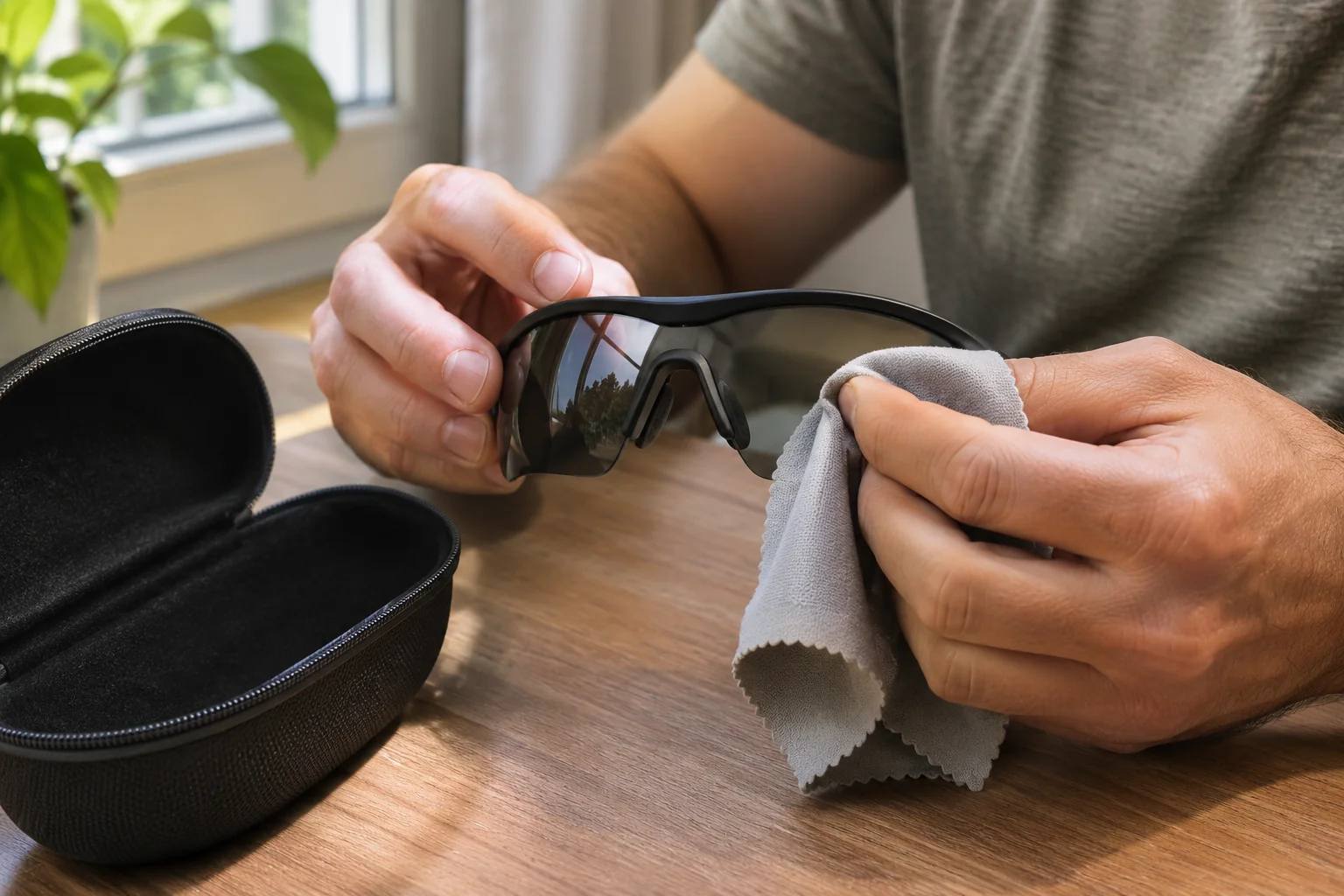
If you wear glasses or contact lenses, reviewing current correction may be part of vision assessment. NIA specifically highlights this. Cleanliness or fogging of glasses is an everyday factor, but should not alone explain away new deterioration in sight. Both kinds of problem can coexist.
At the professional discussion, identify the running situation: at what distance surfaces are hard to notice, at what time and with which glasses. No evening test loop is needed before the appointment. Describing previous experience is a sufficient starting point. The professional can adapt examination or correction to your individual condition.
If you receive new glasses or another change occurs, ask about conditions for everyday use. You need not work out alone the relationship between equipment suitable for reading and visual tasks important during movement. Do not force adaptation in uncertain traffic situations. Use the new solution according to individual guidance.
Tell your running companion the specific difficulty, not a label
“The pavement edge is harder to distinguish at dusk” tells your companion more than a general age comment. Discuss an earlier meeting, a section easier to assess or avoiding pressure when deciding to stop. Help should not automatically mean someone taking every decision for you.
Nor should accompaniment be developed through improvised grips. If vision means you regularly need support during activity, learn and agree its appropriate form individually. A friend’s spoken cues cannot replace perceiving the environment in every situation. The word help should not conceal a false sense of safety.
In a group, you need not share every health detail with everyone. A practical request may suffice: daylight timing, another meeting point or avoiding uncertain sections. A community’s accessibility often also depends on how naturally such needs can be discussed. Modification should not involve joking stigma or pressure to perform.
 Enlarge image
Plan the light at the end too
An apparently short outing can run long: a companion is late, conversation lasts longer or transport changes. Conditions adequate at departure may differ by the end. Do not treat getting home as leftover time. Outbound and homeward sections both belong to the outing.
In an imagined autumn example, the group plans to meet after work at the usual time. Someone reports already struggling to see the route’s edge during the second half. Arrangements can change through an earlier meeting, a daylight weekend outing or another location. Fit the specific option to participants’ possibilities.
The lesson is not that every older person must run by day. The decision responds to a named individual difficulty. Another person may need different conditions. Useful organisation leaves room for this variation rather than deriving general prohibition or universal safety from age.
Keep precise information about the change
A short note about visual difficulty can include time of day, surroundings and task. Has recognising a kerb, stair edge or face become harder? Did it develop gradually or begin suddenly? These are prompts for describing experience, not a diagnostic questionnaire. With urgent new symptoms, notes must not delay help.
Alongside professional assessment, adapting surroundings may remain important. Daytime activity, a clearer route and appropriately checked glasses can support the same goal from different directions: more workable everyday movement. One device or test number need not solve every situation. Individual vision and the chosen task matter together.
Difficulty noticing a kerb at dusk is therefore neither a general judgement on running ability nor a trivial inconvenience. It is a specific change that may involve both eye assessment and practical arrangements. The aim is adapting activity to genuinely usable conditions, rather than preserving the old route at all costs.
Sources
NEI: vision changes in older age; NIA: eye checks and visual conditions; CDC: falls prevention; NHS: vision loss; NHS: floaters and flashes. Checked: 21 November 2026. The route examples are editorial illustrations.
How Futószív articles are prepared: our editorial guidelines.