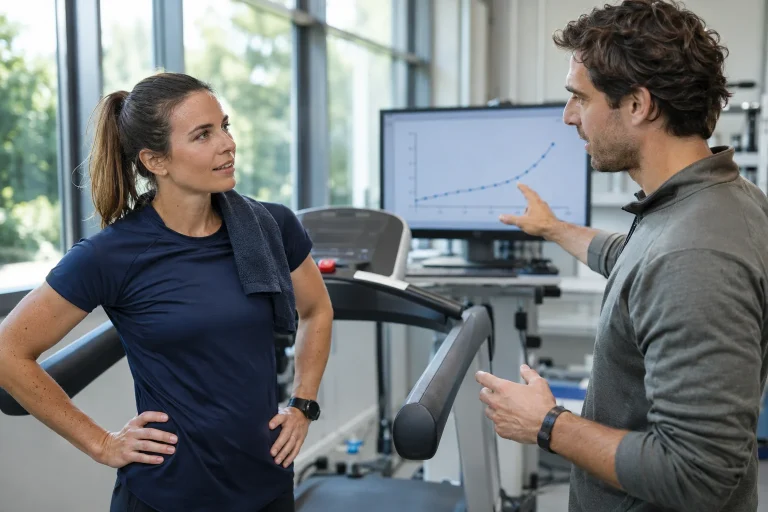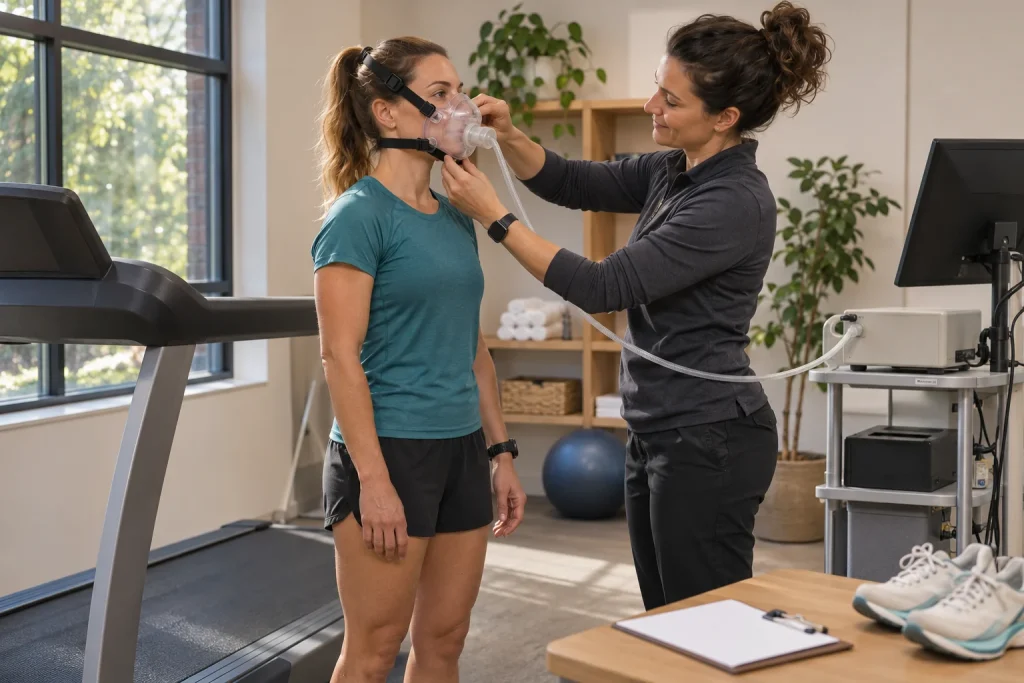
The laboratory report arrives: a new threshold pace, oxygen-uptake data, an economy curve. The crucial question is not only whether a number improved. You also need to know which point in the marathon cycle the snapshot represents, your condition on arrival, and which next decision the result should inform.
The assessment date is part of the result
An assessment’s value depends substantially on what you want to compare it with. Early base training may pose a different question from the weeks before racing: are you seeking a useful baseline, refining training ranges or checking the realism of a target marathon pace? The same protocol may provide data for each, but not necessarily the same most important data. Before booking, express the purpose in one sentence.
The calendar week alone is insufficient. Two runners may both be in preparation week ten, while one is finishing a heavier block and the other returning from an interruption. Naming the training cycle does not describe work actually completed. A brief account of the preceding period belongs beside the test sheet: which runs, changes and unusual circumstances preceded measurement.
A useful results sheet keeps more than numbers. It records the date, procedure, current preparation context and question you sought to answer. When revisited six months later, these explain why the measurement mattered. Without them, interpretation can narrow to one larger or smaller number and lose its connection with your running.
What does preparation tracked through repeated measurements show?
In a study following 16 recreational runners, participants underwent assessments at five points during 16 weeks of marathon preparation. Speeds at aerobic and anaerobic thresholds and running economy did not follow identical time patterns. The roles of variables associated with the marathon result also differed across the cycle. This highlights that one snapshot assumed unchanging may not describe a preparation process well.
The study does not imply that every marathon runner needs five laboratory visits or should attend in the same weeks. It involved a small sample following a particular programme; the authors also considered further validation necessary in other runners and with other periodisation. The practical lesson is that repetition has value when its purpose is clear and you genuinely want to track change between the dates.
Separate the research design from your own organisational decision. Research may use several timepoints to understand a process. In your preparation, timing can serve a specific purpose, such as helping decide whether training goals need reconsideration. If everything would remain unchanged regardless of the result, refine the decision question before contemplating another booking.
Baseline assessment: seek a useful starting point, not a final marathon prediction
An early-cycle assessment often provides its greatest value as a documented reference. It shows responses recorded under a particular protocol and helps start consistent logging. You need not calculate every kilometre of an autumn or spring race from it already. Later weeks may change what the current test describes, and several marathon conditions remain unknown.
Imagine a runner arriving at the laboratory after a longer winter break. Seeing a lower speed than before, they immediately call the preparation unsuccessful. Yet its substantial part has not even begun. A more accurate statement is: this is my starting condition, which needs to inform the next period’s tasks. That is not glossing over the result; it restores the measurement’s purpose.
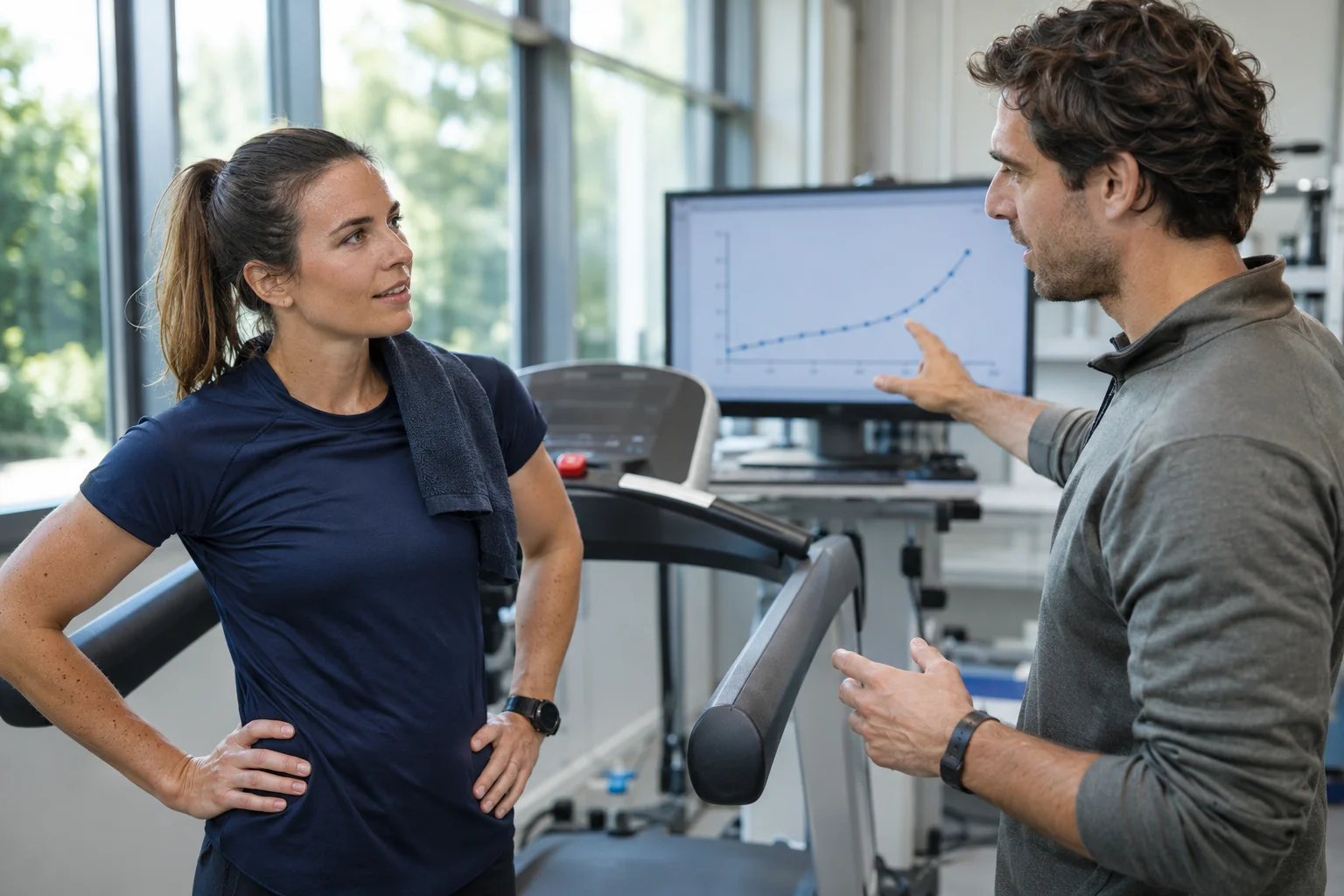
At the baseline visit’s end, ask for a clear explanation supporting later comparison. How was each speed determined? What counts as the same protocol? Which data can be interpreted alone, and which require reviewing several curves together? Clarifying these now avoids reconstructing missing details from the next result.
 Enlarge image
Mid-cycle assessment: consider the context as well as the direction of change
Midway through preparation, one performance value can easily look like proof that everything is progressing well. An interim assessment may provide a more nuanced picture: one metric improves, another barely changes, while the runner feels more confident on longer runs. This is not necessarily contradictory. Different metrics describe different properties, and the diary’s running experience does not precisely replicate a laboratory task.
Keep threshold speed, its associated heart rate and economy on separate lines. If only one highlighted number remains, later you cannot see how the others developed. The research on physiological and training characteristics of recreational marathon runners also examined relationships between several components. Interpreting marathon performance therefore connects several questions rather than establishing a single ranking.
A practical example: a runner receives a new speed for one training range, yet the preceding weeks’ overall demands were already difficult to accommodate. Every run need not immediately become faster. The assessment may provide a new reference for interpreting intensity; training volume and timing remain separate decisions. Bring them together in discussion with the coach.
Compare fresh and fatigued conditions only with the question understood
For repeat assessment, we often seek the same preparation so differences reflect the process being followed as closely as possible. If easier days preceded the first visit but an unusually demanding period preceded the second, interpretation becomes harder. The difference may be interesting, but it no longer answers the same comparison. The preceding load cannot simply be appended afterwards from memory.
A different case is testing specifically for changes after prolonged exertion. A study in 18 marathon runners compared fresh conditions with those after a specified longer run. Some physiological parameters deteriorated, while others showed no significant change. This design deliberately addressed a different question from an early- and mid-cycle comparison with matching preparation.
Do not confuse the two purposes. One asks: how has my condition changed through preparation under comparable conditions? The other asks: how do measured properties change after prolonged running? Neither is generally more valuable; they seek different information. For post-fatigue testing, the laboratory organises exertion and supervision. Copying an online protocol independently does not produce equivalent data.
Comparability is built from small details
The testing facility sets preparation rules. Request them in writing and review them again before repeat testing. These may concern preceding exertion, meal timing, usual drinks and time of day. The aim is not your own universal laboratory-preparation recipe, but following that facility’s protocol and honestly documenting departures.
Shoes and treadmill settings should also be traceable. If you wore conventional training shoes first and racing shoes of another construction second, do not automatically regard the result purely as fitness change. The same applies to different load stages, incline or threshold-determination methods. First establish whether the same task was genuinely measured.
A simple diary line can prevent many misunderstandings: date and time; laboratory and protocol; shoes; a short account of preceding days; unusual circumstances; and purpose. Mark missing data too rather than filling gaps with guesses. Later you can judge which changes warrant greater confidence and which remain possible signals only.
A worked example: improvement appears, but what decision follows?
Suppose a fictional runner is assigned speeds of 12.0 and later 12.6 km/h at a named threshold using the same procedure. Relative change is 0.6/12.0, or 5%. In pace, the first is 5:00 min/km and the second about 4:46 min/km. This calculation clarifies the difference between the data. It does not establish on its own that the marathon target time can improve by exactly 5%.
The next question is whether the measurements are comparable. Were protocol and shoes the same? Was the threshold named and determined identically? Were there unusual preceding circumstances? With these clear, the change becomes a more useful reference. Discussion can then consider justified changes to training goals and which field experience supports the interpretation.
The marathon plan goes further. Expected duration at the chosen pace, longer-run patterns, course and fuelling also matter. Better laboratory data can be good news without requiring every previous plan to change. Often the useful outcome is understanding the current task more precisely, rather than immediately choosing a greater goal.
 Enlarge image
Give a pre-race assessment a specific use
Another assessment close to the marathon can be tempting, particularly with uncertainty over target pace. Before booking, clarify which question it can still answer and how it fits the remaining weeks. A measurement alone does not remove race uncertainty. It cannot completely describe future weather, the start situation or fuelling experience on the day.
The assessment’s own demands matter too. The laboratory and coach can jointly judge how timing that protocol fits pre-race tasks. Do not replace this with a universal number of weeks for every runner. Your preparation, previous testing experience and measurement purpose together frame the arrangements.
Consider two outcomes beforehand. What would you do if the result supports the current plan? What if the data are uncertain or less favourable? If you can accept only the first, testing can easily become buying reassurance. With a meaningful next question for either situation, the result can genuinely inform a decision.
What should you ask at the final discussion?
When receiving the report, ask more than which number is your best. Request a short explanation of what was measured directly, what was calculated from it and what is further estimated about marathon performance. A recorded signal, a method-defined threshold and a future target time carry different certainty. Understanding those three steps separately preserves the result’s usefulness.
Take home three statements: the current assessment’s main finding; the next coaching decision it informs; and what circumstances could require reinterpretation. This is more manageable than a filled table without explanation. Sporting-performance consultation must also remain separate from any medical report: they answer different questions with different responsibilities.
The next assessment’s timing then need not be decided by curiosity or a generic package offer. Start from the change you want to track, conditions you can repeat and decision requiring new information. Laboratory assessment remains part of preparation: a tool enabling more precise questions and more transparent decisions.
Sources
- Esteve-Lanao and colleagues: predicting marathon performance at different points in preparation.
- Hunter and Muniz-Pumares: durability of physiological parameters in marathon runners.
- Gordon and colleagues: physiological and training characteristics of recreational marathon runners.
How Futószív articles are prepared: our editorial guidelines.