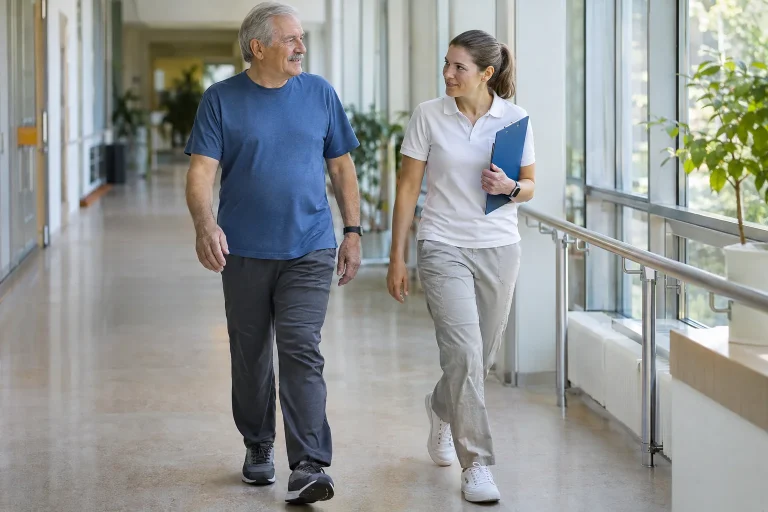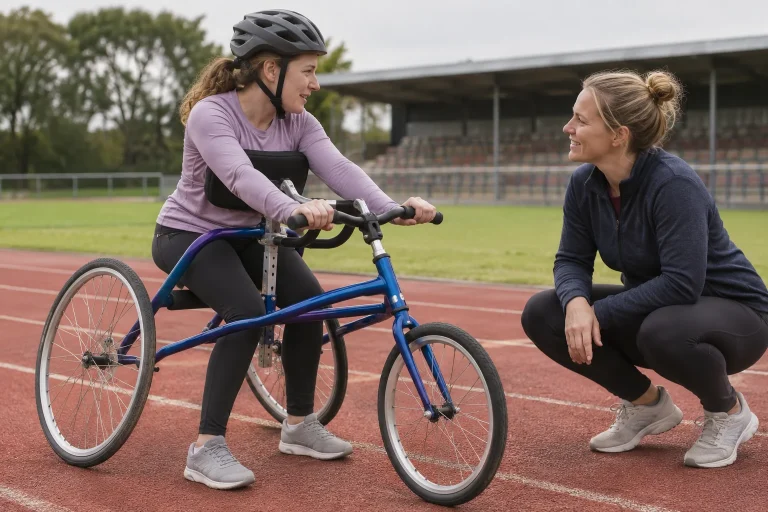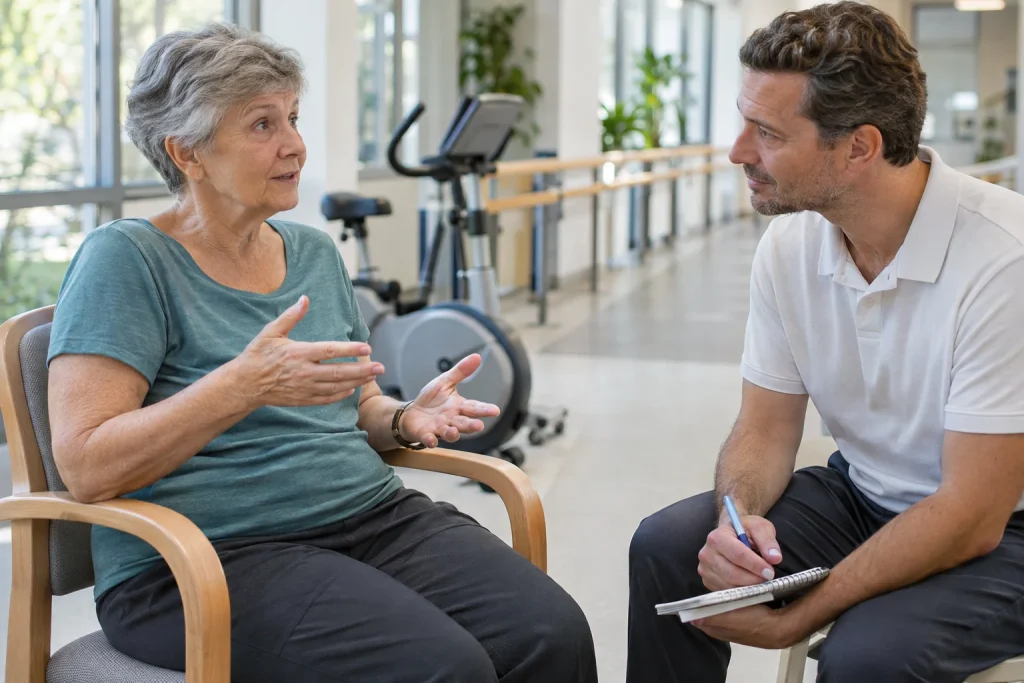
With Parkinson’s disease, sport involves more than asking whether running is allowed. First consider movement manageable in the current condition, personal goals and circumstances needing adaptation. Running may belong in one person’s sports plan, while walking, cycling or another activity offers a better option for another. The choice does not judge someone’s attitude towards the condition.
Movement can be an important part of care, but does not replace necessary treatment or guarantee stopping the disease. This article offers practical questions for discussion with a neurologist and appropriate movement professional. It prescribes no personal running dose, medication timing or gait correction to try alone.
Current recommendations include several types of movement
The Parkinson’s Foundation and ACSM update published in 2026 considers aerobic activity, strengthening, balance and other movement tasks together. Running is one possible aerobic form, not compulsory or best for everyone. Individual condition and appropriate supervision are important parts of the recommendations.
Do not automatically adopt an entire programme seen online or in a group class. Ask which elements your goal needs, how to perform them and what to monitor. A task’s name alone is insufficient for judging its demands.
A previous love of running can be an important personal consideration. Choosing another activity that appeals or is manageable now is equally valid. A sports plan should support the person, not preserve one activity at any cost.
Start from current function
Describe previous sporting experience and, separately, daily movement now. How do starting, turning, stopping, steps and changing surfaces go? Have there been falls, unsteadiness or situations you started avoiding? These are more useful than an old running time alone.
The NICE Parkinson’s guideline raises referral to a physiotherapist experienced in the disease for assessment and advice even early on; it recommends Parkinson’s-specific physiotherapy for balance or movement problems. This may provide important professional support for considering running too.
Assessment should do more than identify difficulties. Ask which preparation and surroundings offer manageable activity. A precise framework can support more independence than general but hard-to-interpret caution.
Discuss changes in medication effects too
If movement or wellbeing changes during the day, explain this when planning sport. Do not demonstrate only what you can do at one favourable time. The real everyday pattern helps choose a manageable outing and necessary support.
Do not independently alter treatment to fit a training session or race time. Clarify medication, side effects and timing with your clinician. A running friend’s successful routine is not personal medical guidance.
With an agreed system, a group leader may need only the practical framework: when participation suits better and which changes require a break or help. Every medical report need not be shared for flexible organisation.
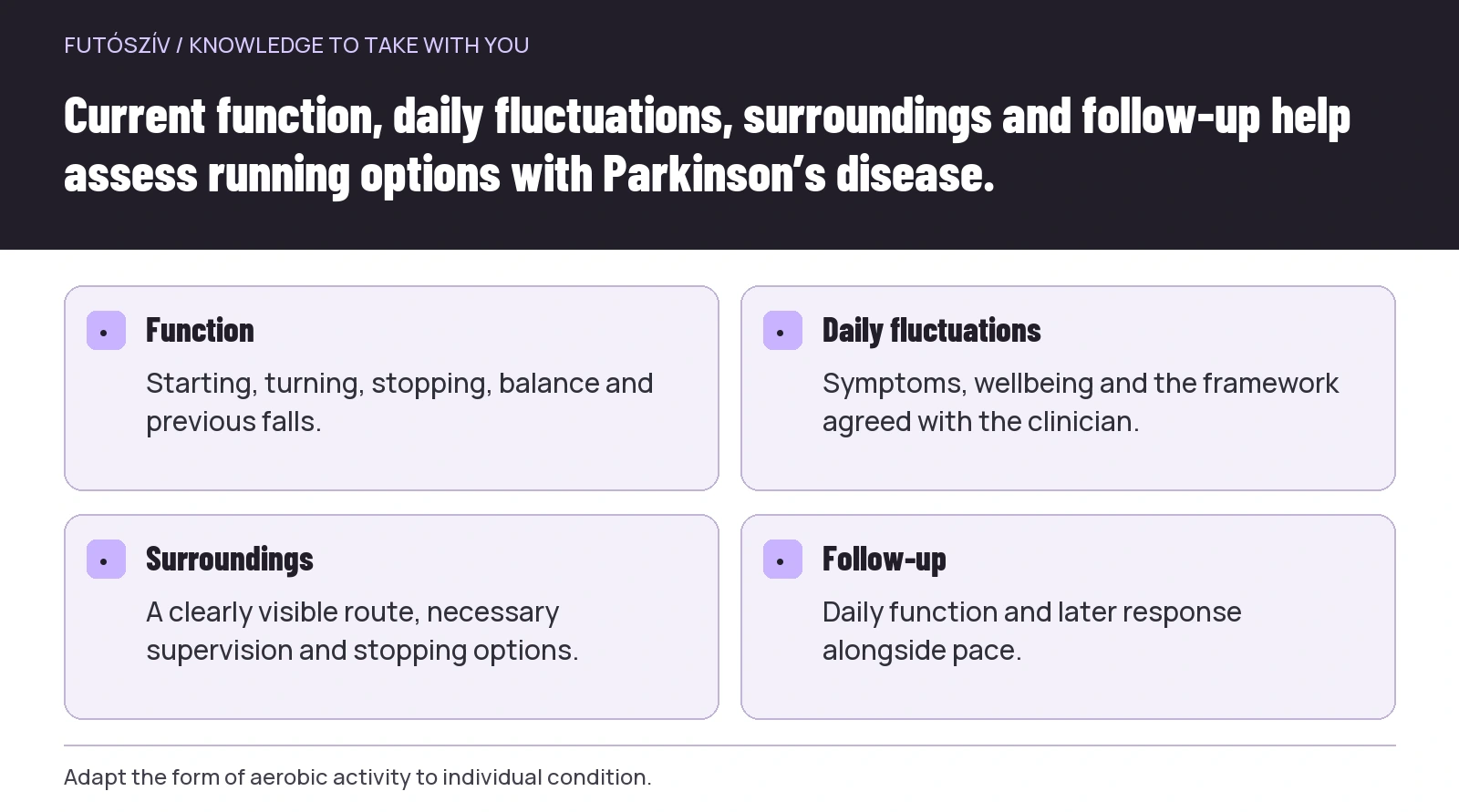 Enlarge diagram
Text version of the illustration
- Function
- Starting, turning, stopping, balance and previous falls.
- Daily fluctuations
- Symptoms, wellbeing and the framework agreed with the clinician.
- Surroundings
- A clearly visible route, necessary supervision and stopping options.
- Follow-up
- Daily function and later response alongside pace.
Stopping and restarting are separate tasks too
The APTA clinical guideline discusses gait, balance and task-specific training alongside aerobic and strengthening work, plus external cueing where appropriate. These are not identical techniques for everyone. Adapt them to personal movement difficulties and surroundings.
If freezing of gait or difficulty starting affects you, include the individual solution you have been taught in the sports plan. Do not first try a rhythm cue chosen from a community video on a busy route. An appropriate professional can help determine what works for you.
Gates, narrow turns, crossings and sudden stops matter within a running route too. Assess more than pace on straight stretches. Course and task together create the actual movement situation.
Do not test willpower when dizzy
The Parkinson’s Foundation discusses blood-pressure drops associated with standing and possible symptoms in Parkinson’s. Tell your clinician if standing up or moving causes dizziness, weakness or unsteadiness. Fitness cannot establish the cause.
Do not independently try to resolve this with extra salt, forced drinking or medication changes. Seek advice based on individual health and treatment. A running programme can be adapted where necessary rather than requiring symptoms to be endured.
Fainting, severe chest symptoms, serious breathing difficulty or sudden substantial illness require urgent healthcare help; in immediate danger, call 112. Do not continue running or drive. A sporting companion can help arrange care.
Monitoring intensity can be individual too
The professional recommendations presented in 2026 discuss intensity through several measures while considering physiological suitability. Do not derive a target you must reach at any cost from generic age-based heart-rate zones entered into a watch. Ask which signs and measures you can follow appropriately.
Alongside heart-rate data, wellbeing, movement quality and symptoms requiring stopping may matter. If displayed figures and experience disagree, report this to the professional. Measurement supports decisions; it does not override symptoms.
A companion can learn the assessed guidance to the necessary extent too. They need not use their own sense of effort to decide whether your outing is easy. Appropriate demands do not necessarily mean the same pace or heart rate for everyone.
Treadmill training is not automatically simpler
A treadmill can seem more controlled, but the moving surface, getting on and off, speed control and stopping are separate tasks. Individual assessment and appropriate instruction matter if choosing this format. Do not use it alone merely because outdoor routes seem complicated.
Make operation and necessary supervision clear. Follow manufacturer guidance and professional advice together. An activity unsuitable for your condition can be replaced with another option without reducing sport’s value.
Research or rehabilitation programmes often include screening and monitoring. Their intensity is not an independent internet prescription. Determine particular demands from individual circumstances.
Surroundings can reduce unnecessary complexity
A familiar route with clear visibility and easy exits may be a starting choice where movement is appropriate under the professional plan. Consider surface, crowds, turns and lighting together. A popular route is not necessarily best for today’s task.
Agree signals, stopping and getting back with a companion. People should not have to follow complex explanations or constantly perform another task while moving. If practising complex situations belongs to the programme, learn it within appropriate professional guidance.
The group should not unexpectedly change distance or terrain. Predictability lets the runner make decisions. Requests to adjust should not be labelled weakness or lack of motivation.
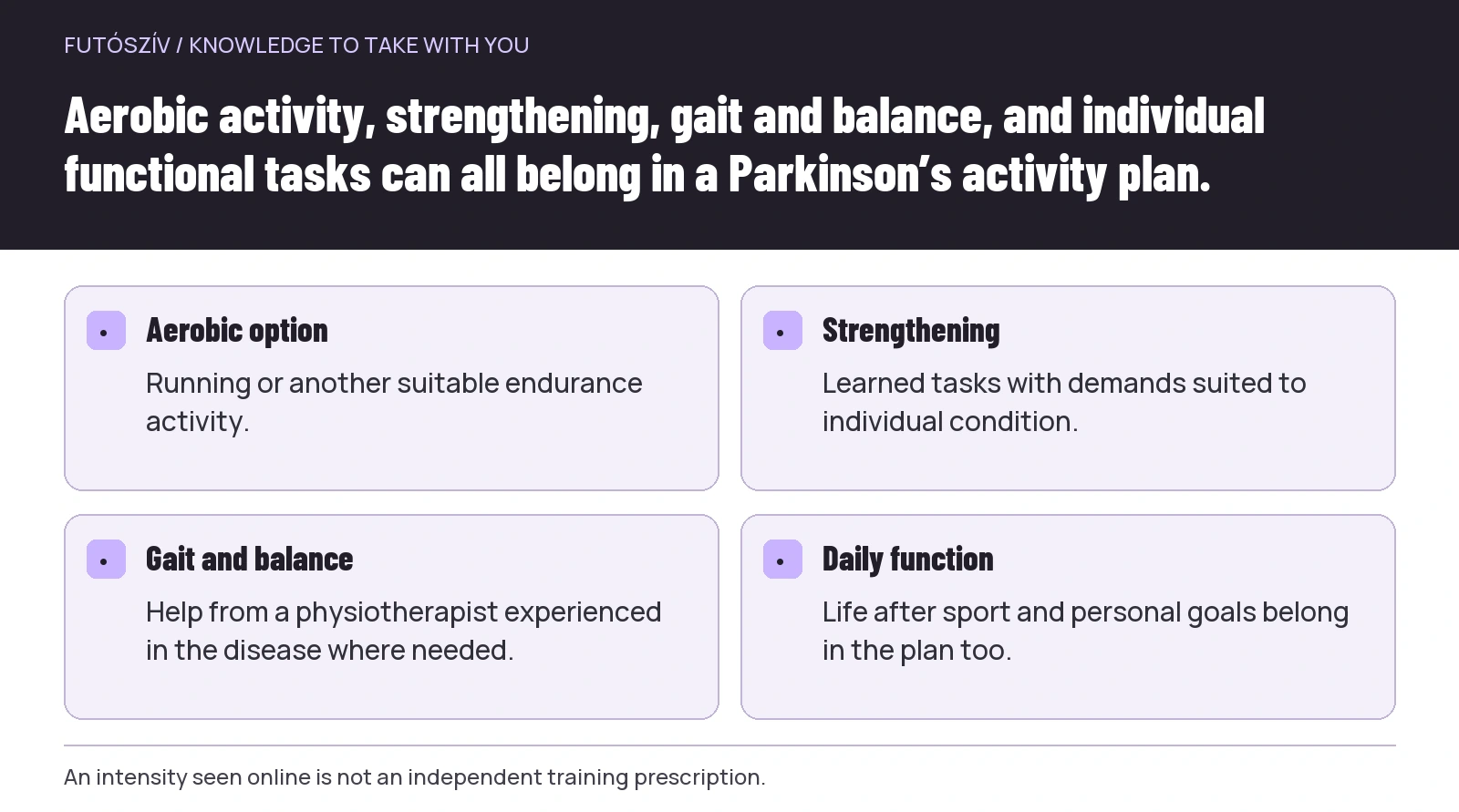 Enlarge diagram
Text version of the illustration
- Aerobic option
- Running or another suitable endurance activity.
- Strengthening
- Learned tasks with demands suited to individual condition.
- Gait and balance
- Help from a physiotherapist experienced in the disease where needed.
- Daily function
- Life after sport and personal goals belong in the plan too.
Daily demands belong to the programme
Work, travel, caring and other tasks may come before and after movement. If a session succeeds on paper but the rest of the day repeatedly becomes harder, treat that as feedback needed for planning. Sport is not completely separate from everyday life.
Briefly note activity type, conditions, wellbeing and later response. Every day need not be another performance test. Changes in function and manageable participation can matter at least as much as speed.
Agree progression and the rhythm of outings individually. Do not automatically make up a missed session on the next crowded day. Regularity can provide a framework that leaves room for changing daily condition.
An activity goal should not promise a cure
Evidence-based recommendations support several benefits of movement, but outcomes must not be advertised as guaranteed disease arrest or a replacement for medication. Discuss programmes making such promises with your clinician, asking which evidence supports which claim.
Your goal can be better daily function, fitness, company or retaining enjoyment of running. These matter even if they do not measure changes in disease course. A harder day does not prove you failed to work well enough.
Do not measure commitment to sport by concealing symptoms. Accurate feedback supports personal care and programme adjustments. Appropriate treatment and movement can fit together; they need not be opposing choices.
The community should support decisions, not take them over
A running group should discuss goals and assistance directly with the person. If a partner or carer is present, agree how to include them too. A Parkinson’s diagnosis does not mean losing independent sporting decisions.
Provide a precise meeting point, distance, time frame and shortening option. If the athlete requests help, make the task specific. Do not unexpectedly touch or direct their body in the name of good intentions.
Discuss sharing photos and personal stories separately. Every outing need not become an inspirational story. The runner’s own goal, social role and enjoyment can remain at the centre of participation.
What should you ask at the next professional appointment?
- Given my current function, is running or another activity more suitable now?
- Which assessment and instruction are needed for the chosen task?
- How should we account for daily symptom and treatment-related fluctuations?
- What is the plan for stopping, gait unsteadiness or dizziness?
- Which surroundings and necessary support make the outing manageable?
- What should we monitor alongside pace, and when should the plan be reviewed?
Running can find an appropriate place in sport with Parkinson’s when individual assessment, treatment arrangements and daily life connect. The aim is not to meet a general movement expectation. Seek manageable activity in which healthcare follow-up and personal sporting experience both matter.
Sources
- Parkinson’s Foundation and ACSM: Updated exercise recommendations, 2026
- NICE NG71: Parkinson’s disease in adults – recommendations
- APTA: Physical Therapist Management of Parkinson Disease, Clinical Practice Guideline, 2022
- Parkinson’s Foundation: Low Blood Pressure and PD
How Futószív articles are prepared: our editorial guidelines.