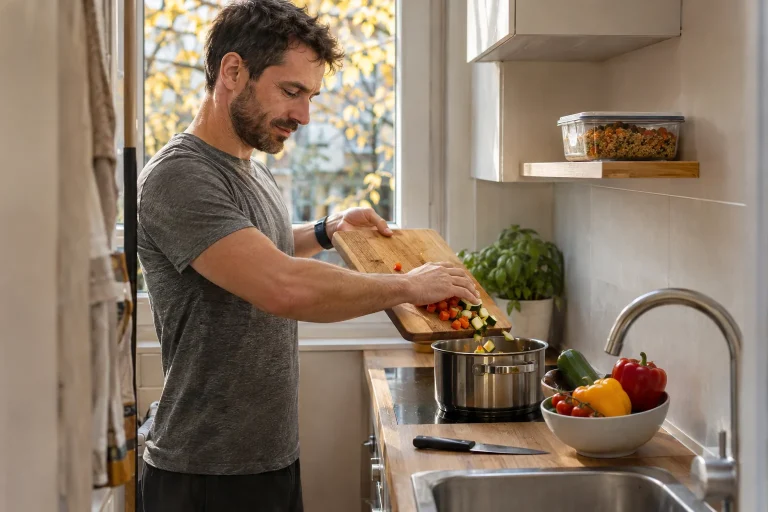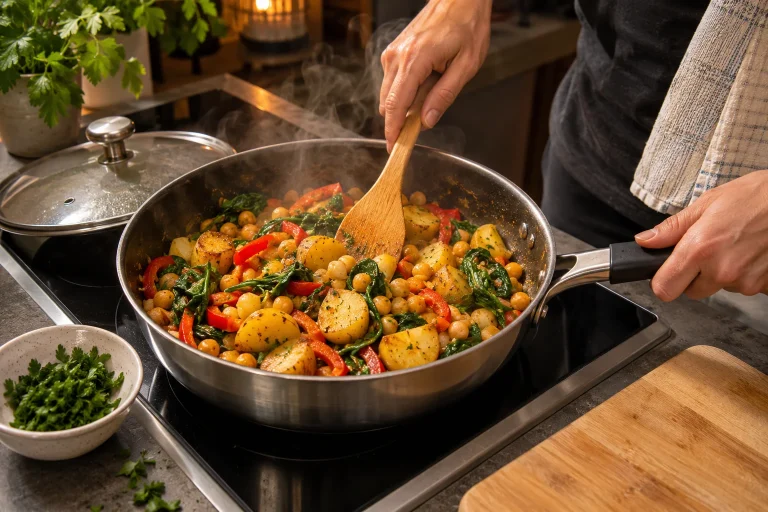
Vegetable preparation makes a rushed dinner quicker when you know exactly what has already been done, what still needs washing or cooking, and which container you can reach for with clean hands. Washing and cutting the whole week’s supplies together on Sunday is not a good solution for every crop. Instead, bring forward the operations needed for the next specific meal. Washing, cutting, cooking through and being ready to eat are separate stages.
This guide concerns preparation in a home kitchen, not industrial preservation or a guarantee of zero risk. It does not give one storage time for all vegetables. Always follow packaged products’ labels, use-by dates and appropriate temperature requirements. During pregnancy, with reduced immune defences or in another special circumstance, also follow the food safety advice relevant to you. Prepared raw vegetables do not automatically become suitable for everyone.
After shopping, sort first rather than washing everything
The Nébih 2026 cleaning guide generally places washing immediately before use. With leafy and layered produce, attention is also needed to remove dirt between the parts. In household preparation, thoroughly cutting up everything purchased should therefore not be the automatic first step. First check when each item will become a meal and what storage conditions it requires until then.
When sorting, separate produce in an appropriate condition from items that cannot be used. Do not set spoiled vegetables aside for tomorrow’s soup. Soil-covered goods awaiting preparation should not touch ready-to-eat salad or bread. Treat unpacking a large shopping bag as a task too: first make room for refrigerated packages, then organise the rest in suitable storage. A pile left on the counter should not hide the clean surface needed for food preparation.
Designate two sides, even on a small worktop
You do not need two kitchens. But be clear about where unwashed produce goes and where cleaned components protected from further contamination can be placed. Do not leave open ready-to-eat salad beside the sink while washing soil-covered vegetables or other dirty equipment nearby. If space is insufficient, work with smaller quantities and finish one stage before starting the next. More open bowls do not solve overcrowding.
The Food Standards Agency information on cross-contamination recommends separate equipment for raw meat, vegetables and ready-to-eat foods. If that is not possible, task order and appropriate cleaning between tasks become especially important. Do not confuse surfaces used for raw and ready-to-eat food. Dripping raw-meat juices, a soil-covered package and cut vegetables must not share the same space without control.
Wash with clean running water
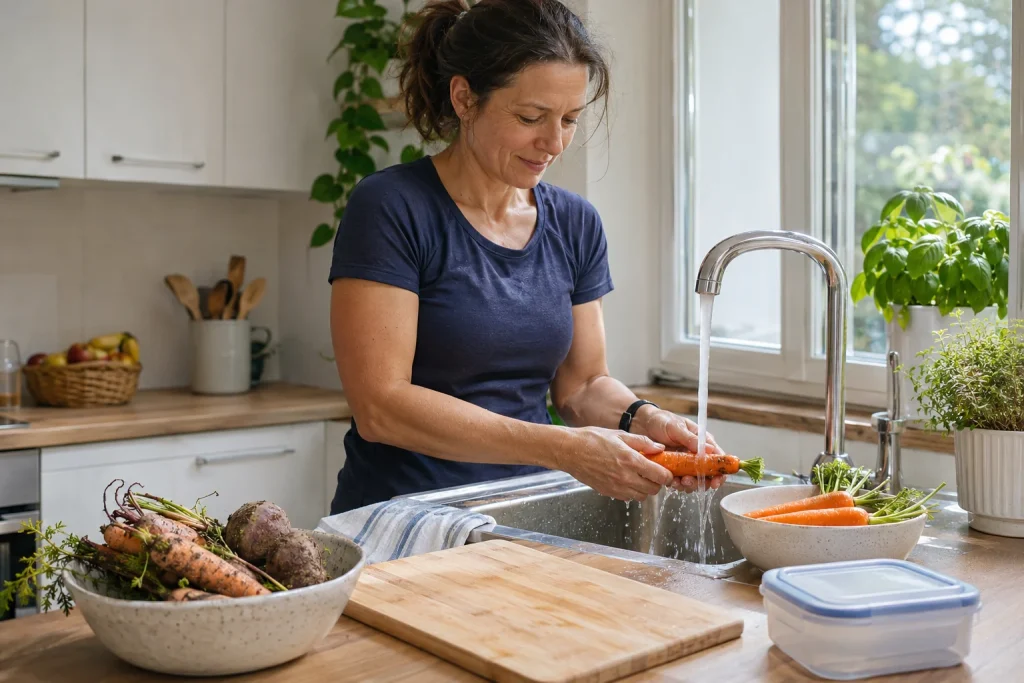
The FDA produce-handling guide describes washing under running water and does not recommend soap, detergent or commercial produce washes on produce. Cleaning is also needed before removing the peel. Washing can reduce surface contamination, but does not make vegetables sterile. Clean hands, knives, boards and subsequent handling therefore still matter after proper washing.
Washing-up liquid is for suitable dishes and utensils, not salad leaves. Separate the two operations in your workflow too. First clean the equipment required, then use it to prepare the vegetables. Do not use chemical cleaning products beside open food at the same moment. If you interrupt the work, check the surfaces and your hands again when returning, rather than simply continuing where you were before the phone call.
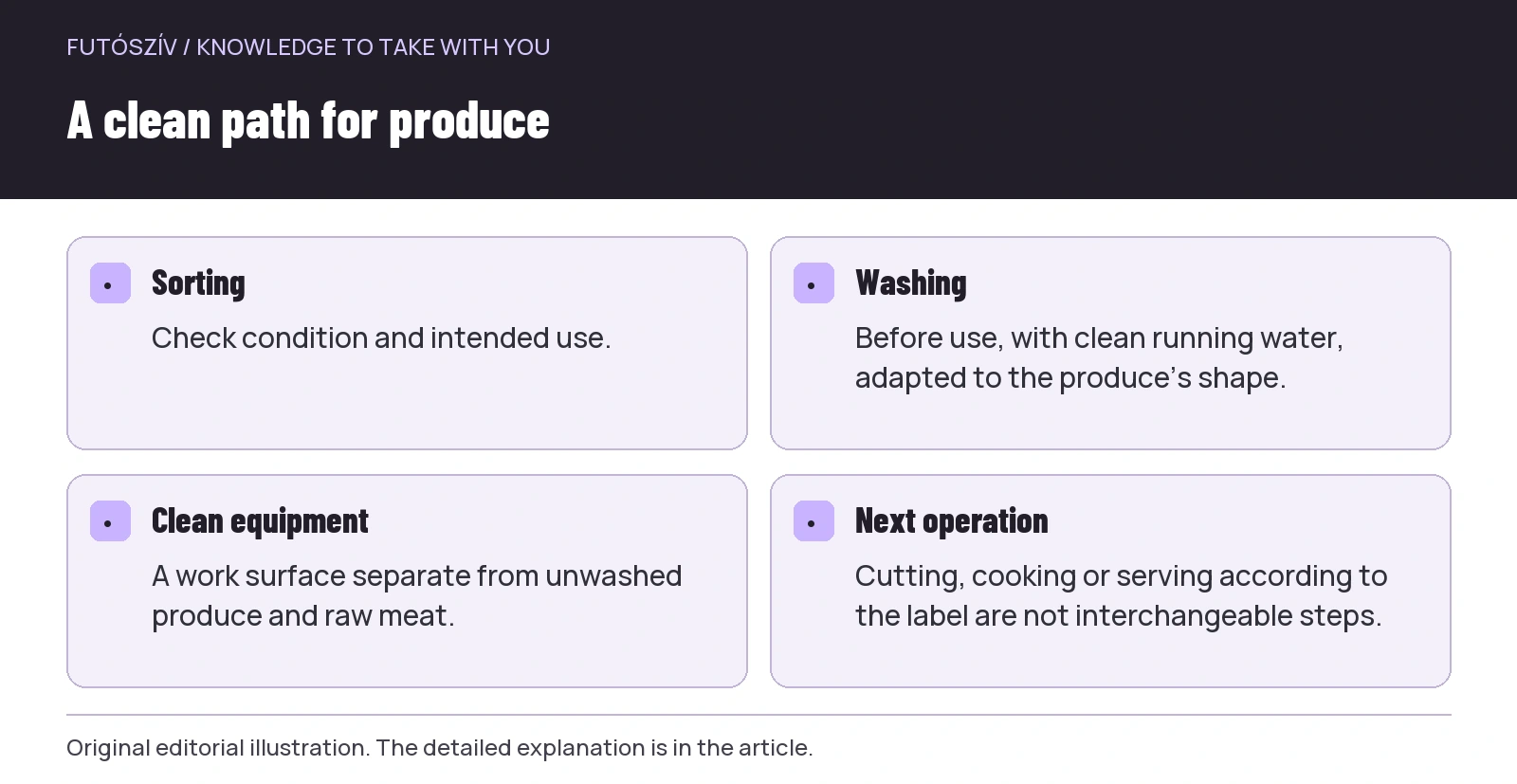 Enlarge diagram
Text version of the illustration
- Sorting
- Check condition and intended use.
- Washing
- Before use, with clean running water, adapted to the produce’s shape.
- Clean equipment
- A work surface separate from unwashed produce and raw meat.
- Next operation
- Cutting, cooking or serving according to the label are not interchangeable steps.
Different shapes require different access to dirt
Smooth produce can seem easy to inspect, while spaces between leaves or a layered onion require particular attention. Adapt cleaning to the produce. Nébih also highlights separating leafy vegetables into leaves and cleaning between layers; a dedicated brush can help with tougher skins. Do not settle for water running over the outside of a whole head for a few seconds if you have not reached the inner parts you will use.
It is worth organising the work so that separating parts for washing and cutting for the final recipe can be different steps. A cleaned leaf is not necessarily a finished salad mix; a washed vegetable can remain whole until needed. This avoids searching for the next task among damp, halved pieces during a rushed afternoon. The process makes visible what is actually prepared and what is not.
For bagged salad, the label determines the next operation
According to the FDA, produce specifically labelled prewashed and ready to eat can be used without further washing according to its label. Rewashing can introduce new contamination from dirty surfaces or equipment. This does not mean every bagged vegetable is a ready-to-eat salad. Check the condition and instructions on the package. Appropriate storage for refrigerated products, steps after opening and date labels still apply.
Do not leave vegetables sold already cut and chilled beside dry groceries for hours simply because they are plant ingredients. Put them in their appropriate place on arriving home. Open packaging so that its outer surface and contents do not become mixed on the worktop. If salad goes straight onto a plate, provide a clean bowl and serving utensils. A prewashed label does not replace clean serving.
Which step is worth doing earlier?
| Planned meal | Task to clarify in advance | What you cannot automatically consider ready |
|---|---|---|
| A warm vegetable meal in the evening | Which ingredient needs separate cleaning and longer cooking? | Cutting does not replace necessary heat treatment. |
| A cold salad for the following day | Where will it remain protected at an appropriate temperature, and when is the dressing added? | A sealed container is not a preservation method. |
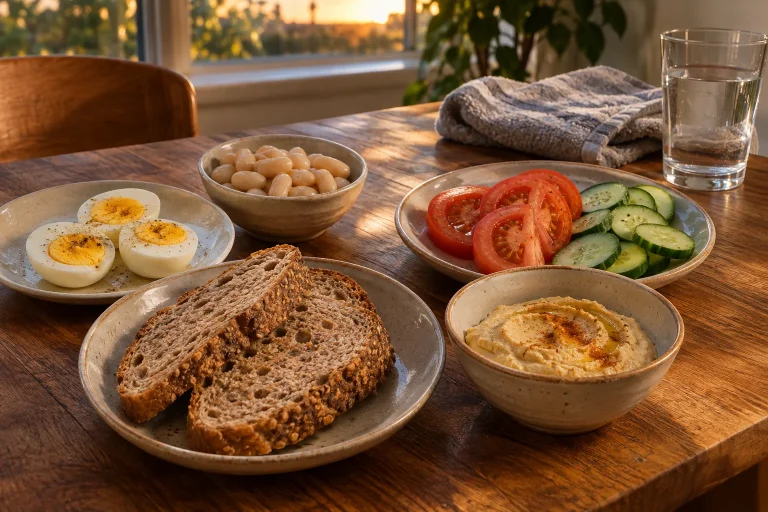
| Vegetables for a sandwich | When will you wash, dry and slice them so the meal can be assembled? | A pleasant texture does not prove safe storage. |
| A packaged ready-to-use product | What does the label say about eating, refrigeration and opening? | A bag alone does not mean the contents are prewashed. |
Do not look for saved time only in knife work completed ahead. Choosing clean dishes, preparing recipe equipment, checking unwashed supplies and arranging operations can also reduce the tasks before a late dinner. If you use only one vegetable on Tuesday, processing five others on Sunday is not necessarily needed. Smaller, specific preparation is easier to track than transforming the whole week’s quantity at once.
Separate containers, separate states
During storage, raw unwashed produce, cleaned vegetables awaiting use and finished food should retain identifiable states. In clean containers suitable for food, name the contents and next task. ‘Carrots, cook for dinner’ gives different information from ‘ready side dish’. A label is particularly useful when several people share a refrigerator and the person retrieving the container did not prepare it.
Storing dressing or a crunchy component separately can also help preserve the desired texture. This does not extend the other ingredients’ safe storage life indefinitely. The component that needs using first and the specific storage instructions still set limits. If a component’s opening or preparation time is uncertain, do not retrospectively write a more convenient date on it. A container system preserves information; it does not create a new use-by date.
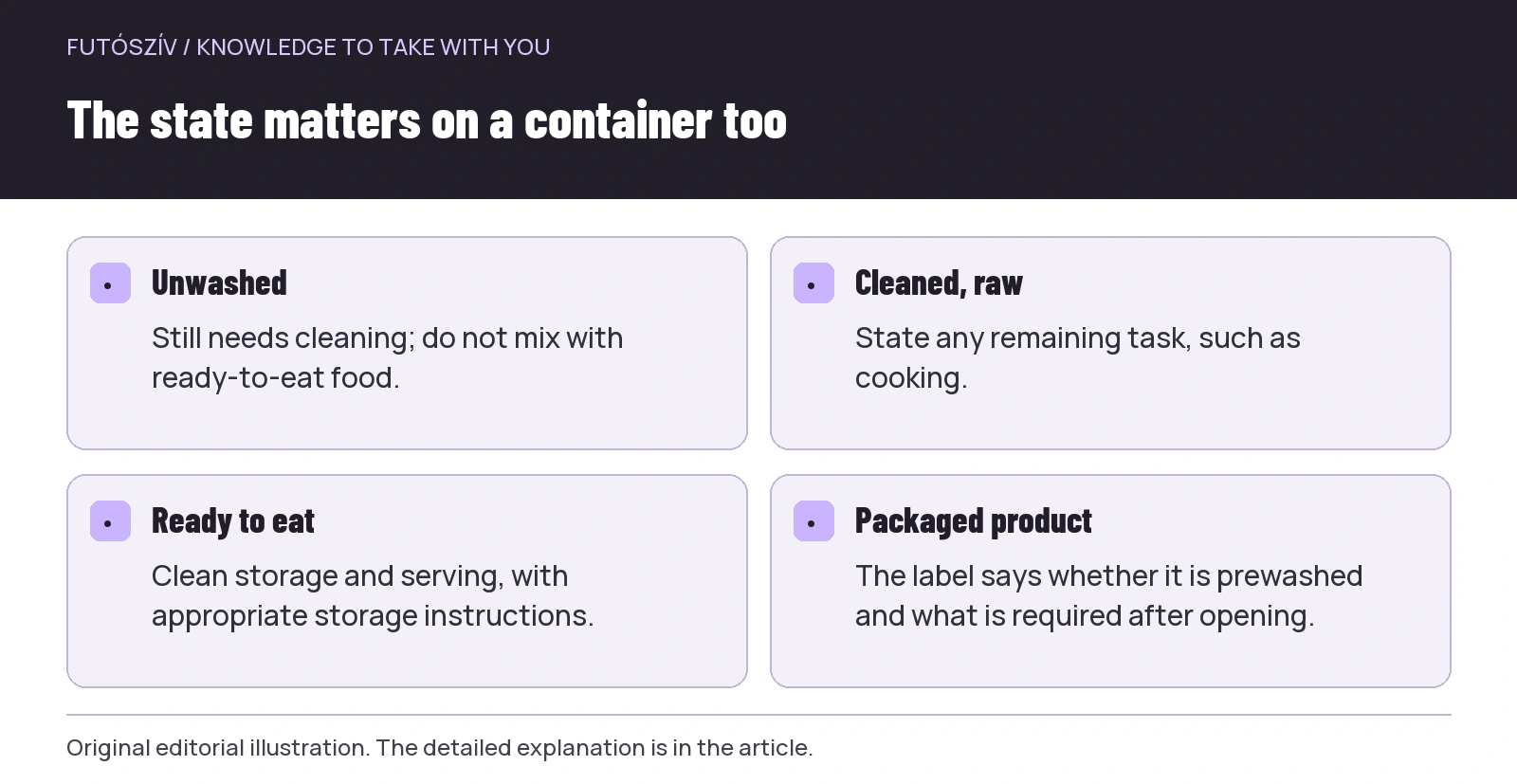 Enlarge diagram
Text version of the illustration
- Unwashed
- Still needs cleaning; do not mix with ready-to-eat food.
- Cleaned, raw
- State any remaining task, such as cooking.
- Ready to eat
- Clean storage and serving, with appropriate storage instructions.
- Packaged product
- The label says whether it is prewashed and what is required after opening.
The path must stay clean after drying too
Use a clean kitchen towel or paper for drying after washing. A damp cloth previously used for many tasks is not an appropriate intermediate surface for ready-to-eat salad. Keep a salad spinner clean according to its own instructions too, and do not pour its contents back into the unwashed produce bowl. The benefits of a good preparation sequence remain only if the next container and serving utensils are clean as well.
Consider common interruptions. After putting away a shopping bag, touching the bin lid or handling raw meat, do not automatically reach for prepared vegetables. A short, orderly stage makes it easier to notice which objects you touched. There is no need for an elaborate log of every movement; what matters is recognising the clean path and the one that may have been contaminated. If they become mixed, stop and reorganise the surface before continuing.
A fictional everyday example: dinner after running
Imagine an evening when you make a warm pasta dish with vegetables and plan a cold sandwich for the next day. First choose the ingredients for each meal and check their condition. Keep equipment needed for ready-to-eat food separate. Wash and prepare the sandwich vegetables in line with their own time of use; do not try to finish them on a board already used for raw meat. The portion going into the hot meal then needs the further operations in the recipe.
If the evening is shorter than expected, do not omit hygiene steps. Simplify the meal: use an appropriate product whose own preparation instructions fit the time available, or choose another familiar meal. Do not treat an ingredient awaiting cutting as ready-to-eat food simply because you have already written the dinner’s name on its container. Honest labelling of preparation status prevents misunderstandings here too.
A good system makes a few clear commitments
Before the next shop, review your own preparation notes. If making salad required too many cutting tools, choose simpler cuts. If a container’s size prevented protected storage, prepare less or find another container. If you did not enjoy the vegetable in the intended dish, assign it to another recipe rather than trying to solve this with another large batch cut the same way. These small changes target the actual preparation obstacle.
Clean before use, work with clean tools, separate unwashed and ready-to-eat components, and follow the product’s own storage conditions. Assign any operation done ahead to a specific meal, and make the contents and remaining task identifiable on the container. Vegetable preparation can then genuinely reduce searching before dinner without relying on uncertain supplies kept for several days.
Sources and further reading
- Nébih: How should we clean seasonal fruit and vegetables properly?
- FDA: Selecting and Serving Produce Safely
- Food Standards Agency: Why avoiding cross-contamination is important
How Futószív articles are prepared: our editorial guidelines.