Frozen vegetables become useful kitchen backups when you know which meal to make from them. A bag deep in the freezer does not alone solve post-run dinner. Product condition, required preparation, chosen equipment and accompanying food together create a real plan. Speed may mainly come from clearer parts of the process, not every package being ready to eat.
This guide gives kitchen ideas for adult recreational runners. It prescribes no personal vegetable portion or recovery diet. Adjust quantity and whole-meal composition to your needs, diet and exercise demands. With an allergy, illness or prescribed diet, the specific product and other ingredients must suit you. These dish formats are not our own product-test results or a quality ranking between brands.
Frozen does not mean ready
Bag wording may identify plain vegetables, a multicomponent mixture or a sauced product. These cannot be used identically. A seasoned mixture may contain ingredients needing attention, while plain-product preparation instructions still matter. First check required cooking, equipment-specific guidance and the starting state.
The Nébih information on handling fruit and vegetables emphasises that freezing generally does not destroy microbes. Food does not therefore become safely edible simply by remaining frozen for a long time. Appropriate handling and required cooking still matter. A freezer is storage equipment, not a home disinfection process.
The Food Standards Agency cooking guidance specifically highlights required preparation of frozen vegetables. If cooking is specified, complete it even before later use in a cold dish. Do not simply scatter cooking-required food onto a cold salad. Desired serving temperature does not rewrite preparation requirements.
Choosing begins with the intended meal
Select a dish format before a bag. Soups, separate sides and sauces may suit mixtures of differing sizes or composition. Larger pieces and finely cut elements can behave differently in the same dish. Do not choose vegetables only by colour. Intended use and instructions tell more about suitability for your recipe.
A sauced or flavoured version may ease one dish if all ingredients suit you. Plain versions accommodate several flavourings. Neither is automatically better for every household. Consider actual cooking habits and how many achievable meals you know for it. A cheap mixture never used helps less than a familiar product actually becoming dinner.
A package label should answer five separate questions
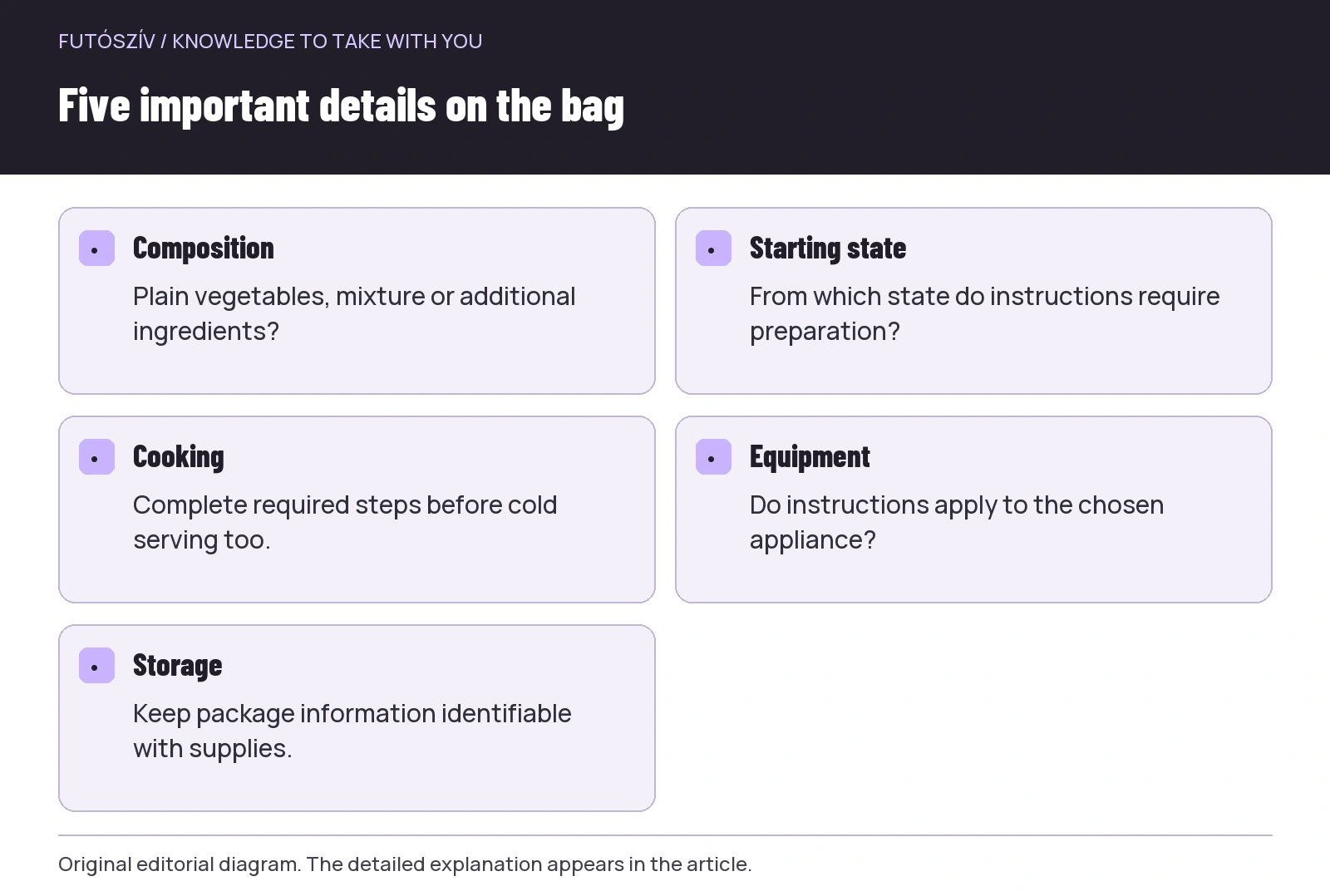
First is composition: only vegetables or other ingredients? Second is storage, third starting state, fourth equipment instructions and fifth handling the opened bag. Not every product gives a separate sentence for every situation, so read the whole label. If appropriate equipment for required preparation is unavailable, choose another suitable product or dish rather than shortening the wording.
| Label element | What should you remember? | Which mistake may it prevent? |
|---|---|---|
| Ingredients. | Plain vegetables, mixture or product with additional ingredients. | Using an unfamiliar sauce or unsuitable ingredient. |
| Starting state. | Does preparation begin frozen or in another required state? | Unnecessary or inappropriate counter thawing. |
| Preparation. | The full required cooking process. | Serving a cooking-required base cold. |
| Equipment. | Which method does the guidance concern? | Transferring timing unchanged to another appliance. |
| Storage. | Temperature, packaging and further handling instructions. | Losing original information with an unlabelled bag. |
 Enlarge diagram
Text version of the diagram
- Composition
- Plain vegetables, mixture or additional ingredients?
- Starting state
- From which state do instructions require preparation?
- Cooking
- Complete required steps before cold serving too.
- Equipment
- Do instructions apply to the chosen appliance?
- Storage
- Keep package information identifiable with supplies.
For soup: vegetables belong to a planned process
Consider other ingredients and when each becomes appropriately cooked. Everything need not enter the pot together. Recipe sequence and package instructions should shape work jointly. Prepared stock, dried pulses and frozen vegetables are different tasks. Pulses needing separate preparation are not automatically dealt with by entering soup.
Shape texture for the dish: chunky, partly blended or smoother versions may suit. Texture change does not replace required cooking. Prepare ingredients appropriately first, then follow further recipe operations. For blending hot food, follow appliance instructions; not every vessel and lid handles hot liquids identically.
Do not identify the whole meal with vegetables in soup. Consider accompanying food or further suitable elements needed for you. This individual quantity-and-composition question does not follow from a bag’s suggested use. If soup regularly proves insufficient, do not merely seek more seasoning. Adapt the whole meal to your needs, with dietetic help if necessary.
For a separate side: moisture and space matter too
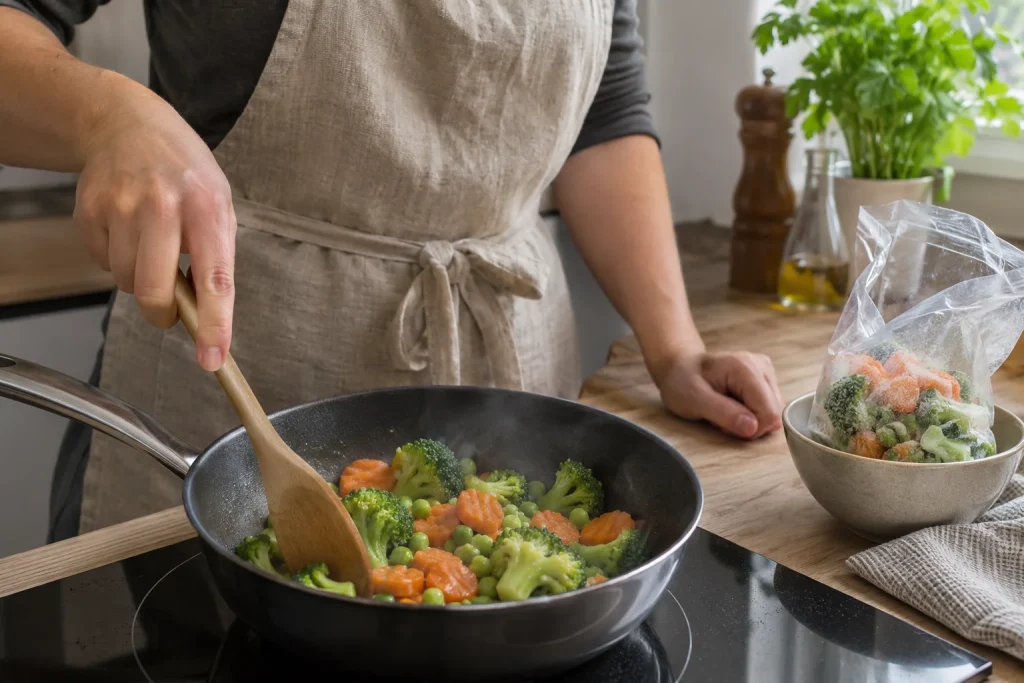
Begin with the label’s method. Pan size and quantity can affect results. Do not squeeze arbitrary amounts into a smaller pan merely to finish in one batch. Required appropriate cooking and desired texture are the joint aim. If the method cannot work with your equipment, choose another suitable recipe.
The main ingredient beside vegetables needs separate attention. Raw meat or fish must not contaminate cooked vegetables, and finished food needs clean serving tools. A shared-pan dish and separate side are different workflows. Decide beforehand which to follow. Instead of randomly swapped utensils and ingredients accidentally treated as ready, clarify when each component is complete.
If several people want different seasoning, a simpler base with separate suitable flavourings can be transparent. Every serving need not involve opening several mixtures. Find a household version allowing the necessary quantity to be prepared safely and the remaining frozen supply handled as instructed.
For sauce: vegetables should be more than decoration
In pasta or other sauced food, vegetables may be a main sauce element. Plan when they enter and how required preparation is fulfilled. Frozen pieces scattered on at the end differ from appropriately cooked ingredients. With several products, each instruction matters. Brief warming guidance for a ready sauce does not automatically provide a cooking plan for raw or frozen additions.
Shape liquid and texture consistently in your recipe. If a new mixture changes the result, try one change at a time. Another piece size, quantity or appropriate method may help. Record the specific product and method too. Next time you then know what to repeat rather than remembering only some frozen vegetables.
Consider variety across the whole supply
The NHS fruit-and-vegetable information includes frozen versions within dietary variety. Fresh is therefore not the only condition for suitable vegetables belonging to a meal. Specific composition and preparation still matter. Different forms can together build usable supplies matched to access and actual use.
Every evening need not use the same many-ingredient mixture. Have an option for a favourite soup, one for separate sides and one working well in sauce. Real meals justify selection. Many opened bags do not alone create variety if every meal becomes the same random mixture. A few familiar bases can be clearer and easier to use.
 Enlarge diagram
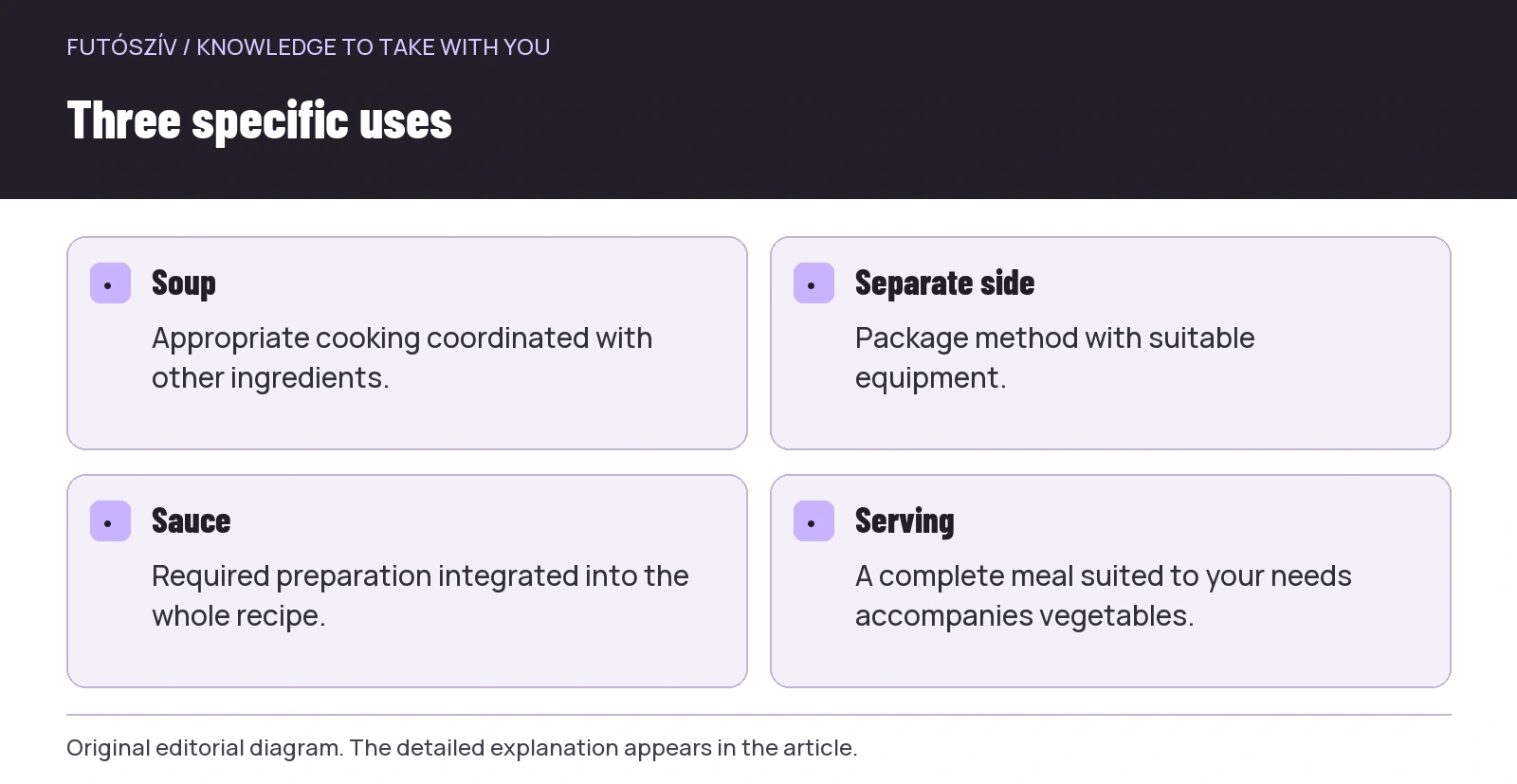
Text version of the diagram
- Soup
- Appropriate cooking coordinated with other ingredients.
- Separate side
- Package method with suitable equipment.
- Sauce
- Required preparation integrated into the whole recipe.
- Serving
- A complete meal suited to your needs accompanies vegetables.
The bag’s journey from shop to use
Plan appropriate transport and home storage for frozen food too. Follow package temperature and handling requirements, avoiding prolonged unattended waiting somewhere warm during shopping. Put it into required storage at home. Prepare the cooking quantity without leaving the remainder unnecessarily on a work surface. Preserve each product’s thawing and further-storage instructions.
If transferring contents to another suitable container, retain product name and necessary guidance. An unidentified bag complicates later preparation: exact composition, recommended method and which supply you use become unknown. A simple legible label may provide clarity. Do not discard information still needed for the next dinner when cutting packaging.
What makes your system time-saving?
Write beside the dish what time is actually saved. Less chopping? Fewer separate ingredients to obtain? Easier preparation of the amount needed? Savings become specific rather than confused with a promise that every frozen product always cooks faster. The chosen dish determines the whole task.
On a personal recipe sheet, record package type, required method and accompanying food. With a regular dish, equipment and sequence are familiar beforehand. If a mixture fails, identify why: flavour, piece size, texture or an overly complex process? This is a more precise start than calling frozen vegetables generally good or bad.
A personal supply map with three dishes
Choose a simple soup, separate side and sauced dish you enjoy and that fit your diet. Find a specifically usable product and appropriate preparation plan for each. These are not a compulsory weekly schedule but a supply-use map. Bags become ingredients for known dinners rather than isolated reserves.
Frozen vegetables support running weekdays when you understand their condition, required preparation and role in meals. Variety, familiar workflow and clear storage together create the advantage. Following labels, adapt flavour and quantity to your needs so a bag genuinely becomes an achievable dinner base.
Sources and further reading
- Nébih: Safety matters when eating fruit and vegetables too
- Food Standards Agency: Cooking your food
- NHS: 5 A Day — what counts?
How Futószív articles are prepared: our editorial guidelines.