Beans, lentils and chickpeas can belong to many dishes, but the word pulses does not identify what is in the package. Dried ingredients, ready-to-eat cans and chilled prepared spreads create different kitchen situations. As a runner, beyond appropriate preparation, you may want to know how the food fits your day. Separate food safety, cooking work and personal eating experience. None replaces the others.
This article gives general kitchen guidance to adult recreational runners, not an individual diet or treatment for gastrointestinal disease. If medical or dietetic reasons require avoiding an ingredient, follow your guidance. For allergies, check ingredients and preparation conditions too. Meal formats are not universal portions and make no personal diagnosis about pulse tolerance.
Start with the product’s condition when shopping
Alongside the front-of-pack name, find three details: ingredient condition, whether cooking is needed and storage. Dried red lentils are not a ready meal, and canned beans do not always mean the same product. They may be a simple base in liquid or a sauced dish with several ingredients. Seasoning and other ingredients affect the planned recipe and personal suitability. The label concerns that product; remembering another packet is insufficient.
If a recipe requests cooked beans, do not substitute the same weight of dried beans in the final step. First complete appropriate preparation of the dried ingredient, and weights will not automatically match. Water and time required for cooking affect the final dish too. For a recipe requiring a cooked state, you may choose an appropriate prepared base. This is genuine simplification, not omitting required preparation.
| What is at home? | What should you clarify? | When should you plan it? |
|---|---|---|
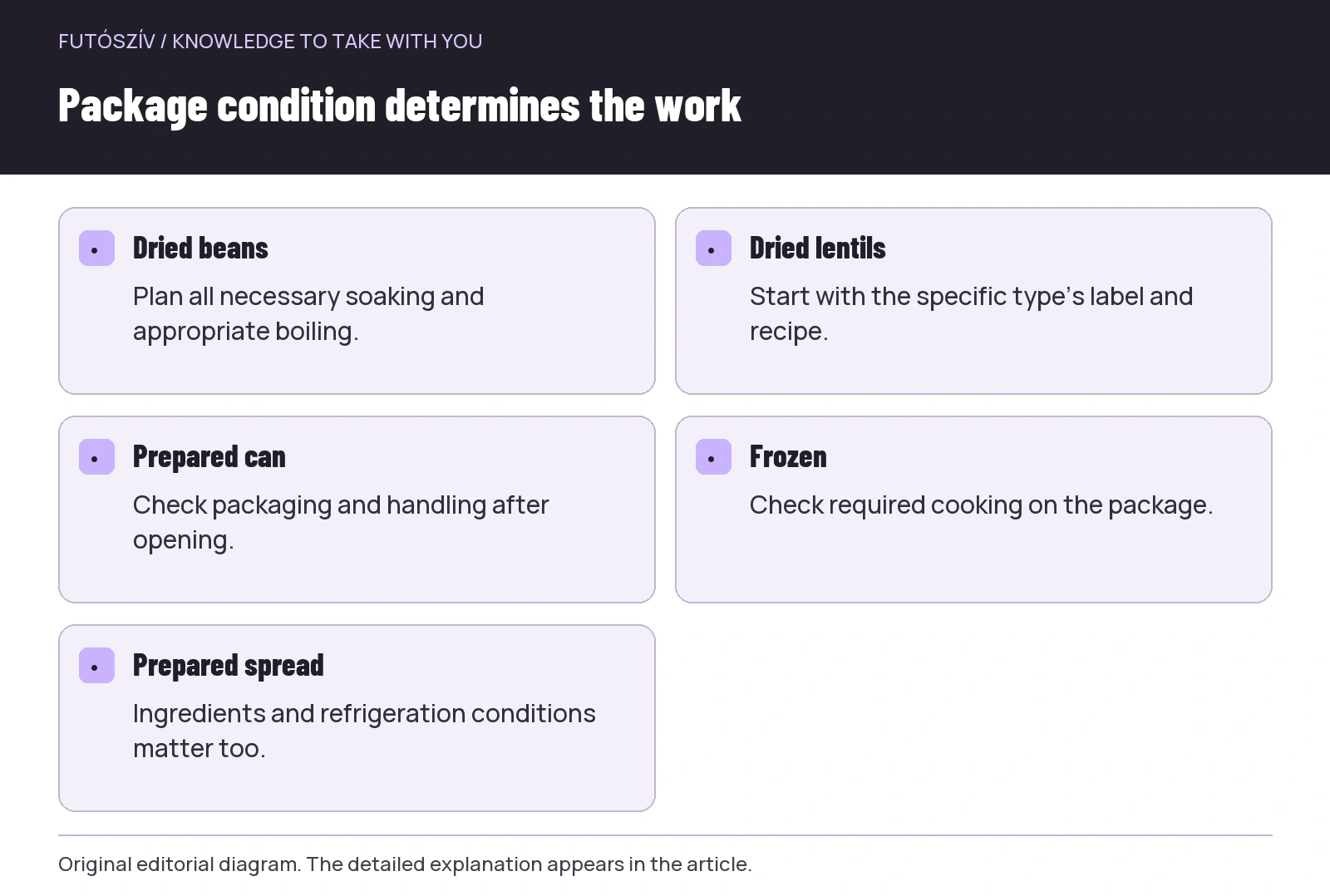
| Dried beans. | Variety, necessary soaking and the full appropriate boiling process. | When there is time and suitable equipment for complete preparation. |
| Dried lentils. | Specific type and package cooking instructions. | According to recipe and actual preparation time. |
| Ready-to-eat canned food. | Packaging condition, composition and handling after opening. | For quick assembly according to required use. |
| Chilled prepared spread. | Ingredients, allergens, date and refrigeration. | For a meal with appropriate storage maintained. |
| Frozen product. | Is it ready to eat, or is cooking required? | According to package requirements and equipment. |
Proper cooking of dried beans is not an optional extra
The European Food Safety Authority’s 2026 information highlights lectin risks in raw or inadequately prepared beans. Appropriate soaking and boiling are important. For beans, the information describes six to twelve hours of soaking, changing water and at least half an hour boiling at a hundred degrees Celsius; required time also depends on variety, and the ingredient must be properly cooked. Follow any longer instructions for the specific product too.
Do not reduce this process to mere warming or automatically regard every other kitchen method as equivalent. Soaking alone does not replace cooking. Beans in salad or spread must also be appropriately prepared, not simply soaked dried beans. Raw or barely processed versions seen on social media do not become safe by being called natural. If you cannot complete necessary operations, choose a suitable ready-to-eat product.
EFSA guidance is no reason to regard appropriately prepared pulses as generally dangerous. The preparation difference is precisely the point. Retain package instructions until the ingredient is used. If transferring to your own container, keep the name and necessary preparation information identifiable. An unknown dried ingredient in an unlabelled jar makes later good decisions harder.
 Enlarge diagram
Text version of the diagram
- Dried beans
- Plan all necessary soaking and appropriate boiling.
- Dried lentils
- Start with the specific type’s label and recipe.
- Prepared can
- Check packaging and handling after opening.
- Frozen
- Check required cooking on the package.
- Prepared spread
- Ingredients and refrigeration conditions matter too.
Lentils and beans do not share a single cooking programme
Different pulses may vary in size, processing and desired texture. A creamy red-lentil soup and a bean bowl retaining separate beans require different outcomes. Do not use one general minute count for every packet. Begin with product instructions and the recipe, shaping desired texture within appropriate preparation requirements. A brief recipe cannot override ingredient handling.
Separate the final pan step from the whole preparation in the cooking plan. A dish using ready beans may be quick; the same dish from dried ingredients needs another schedule. Looking only at time beside a recipe’s final step may reveal missing soaking or cooking only on arriving home. Write ingredient condition beside its name in everyday planning: appropriately cooked beans, not simply beans.
Three different meal formats from the same idea
The first is a spoonable soup or thicker dish. Ingredient texture belongs to the whole meal, while side dishes or bread can be adjusted separately to personal needs. The NHS vegetable and lentil soup recipe uses red lentils and vegetables, for example, with further serving elements. This is a family recipe, not a measured sports portion for runners. Combining pulses and vegetables within a dish can offer an idea.
The second format is a bowl made from an appropriately prepared base. Side dishes, suitable vegetables and flavouring can sit separately alongside beans or chickpeas. When trying a new ingredient, keep others familiar if they fit your diet. This makes its flavour and texture easier to understand. Do not call a whole bowl light or heavy solely from one ingredient. Composition and your quantity matter together.
The third is a spread or dip. This also uses an appropriately prepared base, with other ingredients chosen for your needs. A spread’s name is not a complete ingredients list: sesame, dairy or another unsuitable ingredient may be present. Blending smooth neither neutralises an allergen nor replaces required cooking. Kitchen form changes texture, not safe-handling requirements.
Fibre’s role and individual comfort are connected questions
The Food Standards Scotland fibre information includes pulses among fibre sources. It mentions gradual change from previously lower intake and appropriate fluid consumption. This is general dietary information, not a recipe to apply before every run. Desirable variety across a day’s diet and tolerance of a particular pre-run meal may need separate consideration.
Do not attempt a complete sudden dietary transformation through one meal. If a pulse dish is new, explore it first under calmer everyday circumstances. Record experience so the specific food and conditions are visible. What else accompanied beans, how was it prepared and when did you eat? Something not sitting well on one day does not establish a definite cause.
Look beyond the ingredient name in observations. The same pulse can produce dishes with quite different compositions. A spread, heavily seasoned thick dish and large multicomponent bowl are not identical circumstances. Notes help when preserving this distinction. Every bite need not be analysed, but a recurring question requires a more precise food name than something with pulses.
What should you record after a simple kitchen trial?
A few factual details suffice: specific product or ingredient, preparation form, approximate amount used and other foods. Add how it fitted the day and your comfort. Notes should not automatically blame one food. If several new ingredients changed together, the result cannot isolate one cleanly. The aim is a clearer picture of personal eating, not home diagnostic testing.
Do not treat appropriate preparation as a tasting experiment. Proper cooking and handling are prerequisites in every case. An observational trial must not deliberately include inadequately cooked food or food of uncertain condition. Seek medical advice for recurring, persistent or substantial symptoms after eating. Review personal dietary adaptation with a dietitian rather than independently excluding ever more whole food groups from uncertain notes.
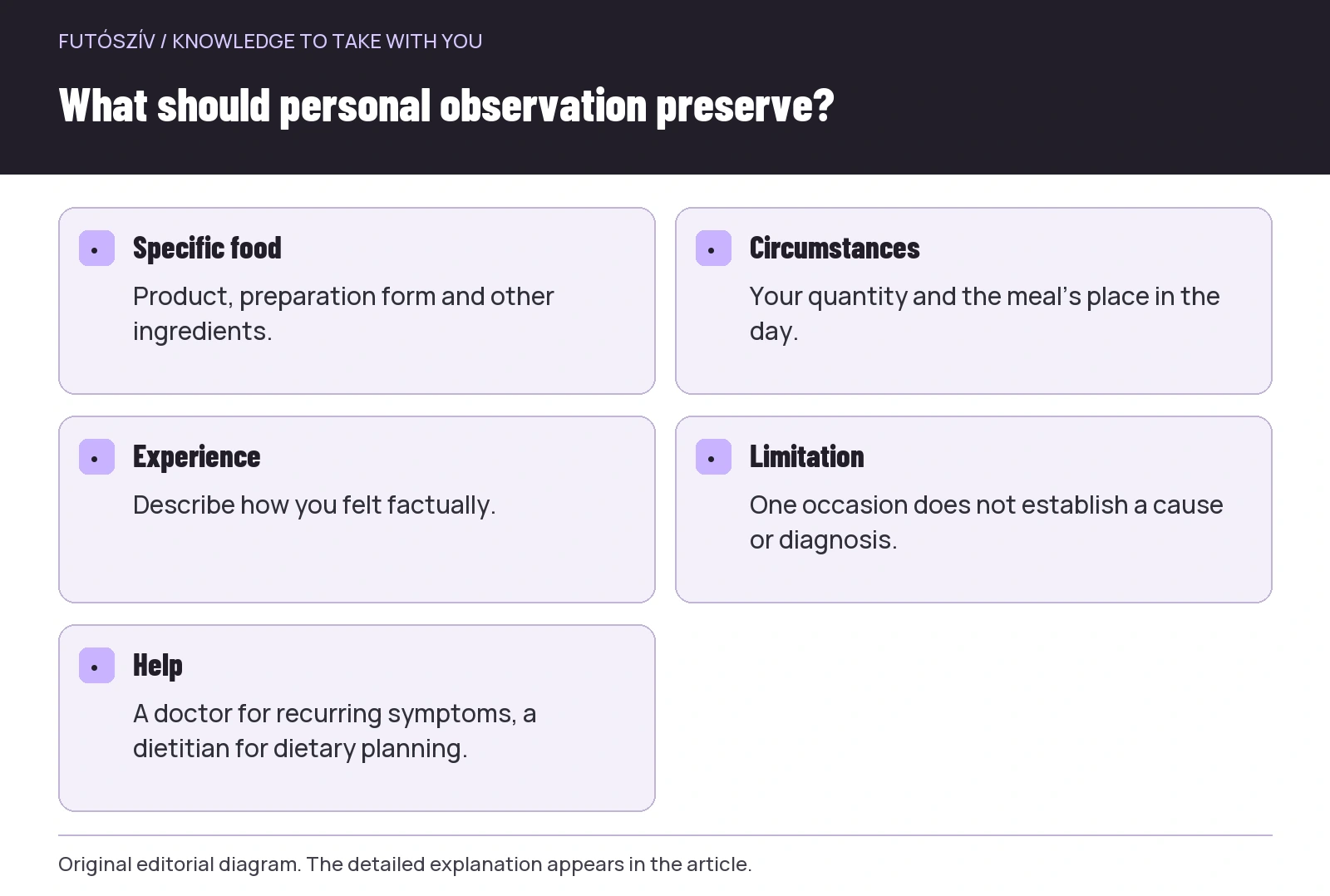 Enlarge diagram
Text version of the diagram
- Specific food
- Product, preparation form and other ingredients.
- Circumstances
- Your quantity and the meal’s place in the day.
- Experience
- Describe how you felt factually.
- Limitation
- One occasion does not establish a cause or diagnosis.
- Help
- A doctor for recurring symptoms, a dietitian for dietary planning.
Meals close to running have their own circumstances
A familiar everyday dinner and food shortly before an important run are different situations. Do not assume that anything which can generally belong to a diet works in any quantity and timing immediately before departure. Follow the particular food and previous experience. Before an important event, avoid centring a kitchen experiment on a wholly new pulse dish with several unfamiliar ingredients.
This is neither a general ban on pulses nor a compulsory avoidance list before every run. The whole diet and personal circumstances matter. If assembling meals suited to exercise demands is regularly difficult, a sports dietitian can help plan more precisely. A specific food and timing description supports discussion more than a general claim that an ingredient is definitely good or bad for every runner.
Plan kitchen backups too
Keep a familiar prepared base fitting your diet at home if useful. It serves a different role from dried supplies: one can enable quick assembly, the other planned cooking. Check handling after opening for every prepared product and retain ingredient information. Supplies help when you have an achievable meal idea, not merely packages in a cupboard.
When cooking, decide beforehand what goes straight to the table and what is used later under appropriate food-safety conditions. Do not base tomorrow’s plan on uncertain leftovers waiting to cool in a large pot. Follow official storage guidance appropriate to the food. Handling a multicomponent dish cannot be derived from one ingredient’s longer keeping time.
A personal selection with three familiar dishes
Begin with three suitable formats you enjoy: an appropriately prepared soup, a prepared base for serving and a familiar spread, for example. Note the required product state, operations and accompaniments forming the full meal. These three dishes are not a compulsory weekly menu. They provide tangible kitchen knowledge to which you can later add different seasonings or suitable accompaniments.
A usable understanding of pulses follows food from package condition to plate. Proper cooking is fundamental, texture and kitchen form are choices, and individual comfort can be observed attentively. Keeping these separate reduces misunderstanding and supports dishes fitting your diet, needs and real everyday cooking opportunities.
Sources and further reading
- EFSA: Lectins in food — undercooked beans pose health risk
- Food Standards Scotland: Fibre
- NHS: Vegetable and lentil soup
How Futószív articles are prepared: our editorial guidelines.