A painful step is not a training signal you must get used to
Walking, stairs, turning in bed or running brings pain around the pubic bone, back of the pelvis or hip. As a pregnant runner, you may first blame technique, shoes or missed strength work. Pelvic symptoms may need individual assessment, however; you need not prove tolerance with another session.
The Irish HSE information reviewed in 2026 describes pelvic girdle pain as varying in location and severity and potentially obstructing everyday movement. The name is often abbreviated PGP. Symptom location alone cannot reliably establish the cause.
This article concerns coordinating a running plan, everyday tasks and professional help. It provides neither a home diagnosis nor identical physiotherapy for everyone. New, strong or unusual abdominal or pelvic pain cannot automatically be classified as pregnancy-related musculoskeletal symptoms.
Which everyday movements can describe the situation?
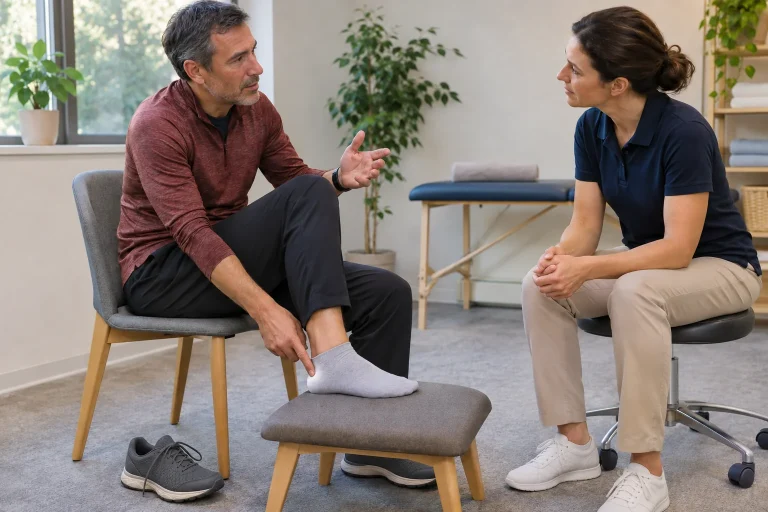
HSE explains that walking, loading one leg, stairs, dressing, getting out of a car and turning in bed may all be difficult. Tell the professional about these, not only running pace. Precise everyday movement descriptions can clarify the circumstances and extent of limitation.
Separate location, triggering movement and consequence. For example: I feel it around the pubic bone, stairs worsen it and I reach my flat more slowly as a result. This is a more usable account than my pelvis is unstable if nobody has yet assessed that.
Do not repeat painful self-testing movements to prove every detail. Limitations already observed can be described. If symptoms substantially affect normal walking, seek appropriate help rather than merely shortening the next run.
Why need you not wait silently until birth?
The RCOG patient information emphasises that early assessment and treatment can relieve symptoms and help retain everyday activity. Pelvic girdle pain is not necessarily a burden to endure without help until birth. Appropriate care is possible during pregnancy too.
The NHS page on pelvic pain in pregnancy also highlights an experienced professional’s role. The aim need not be immediately restoring previous running volume. More comfortable walking, sleep or daily tasks are important results too.
If symptoms do not improve, recur or substantially affect life, report them again. Previous discussion is no reason to stay silent. Change and difficulties implementing advice provide information for reassessment.
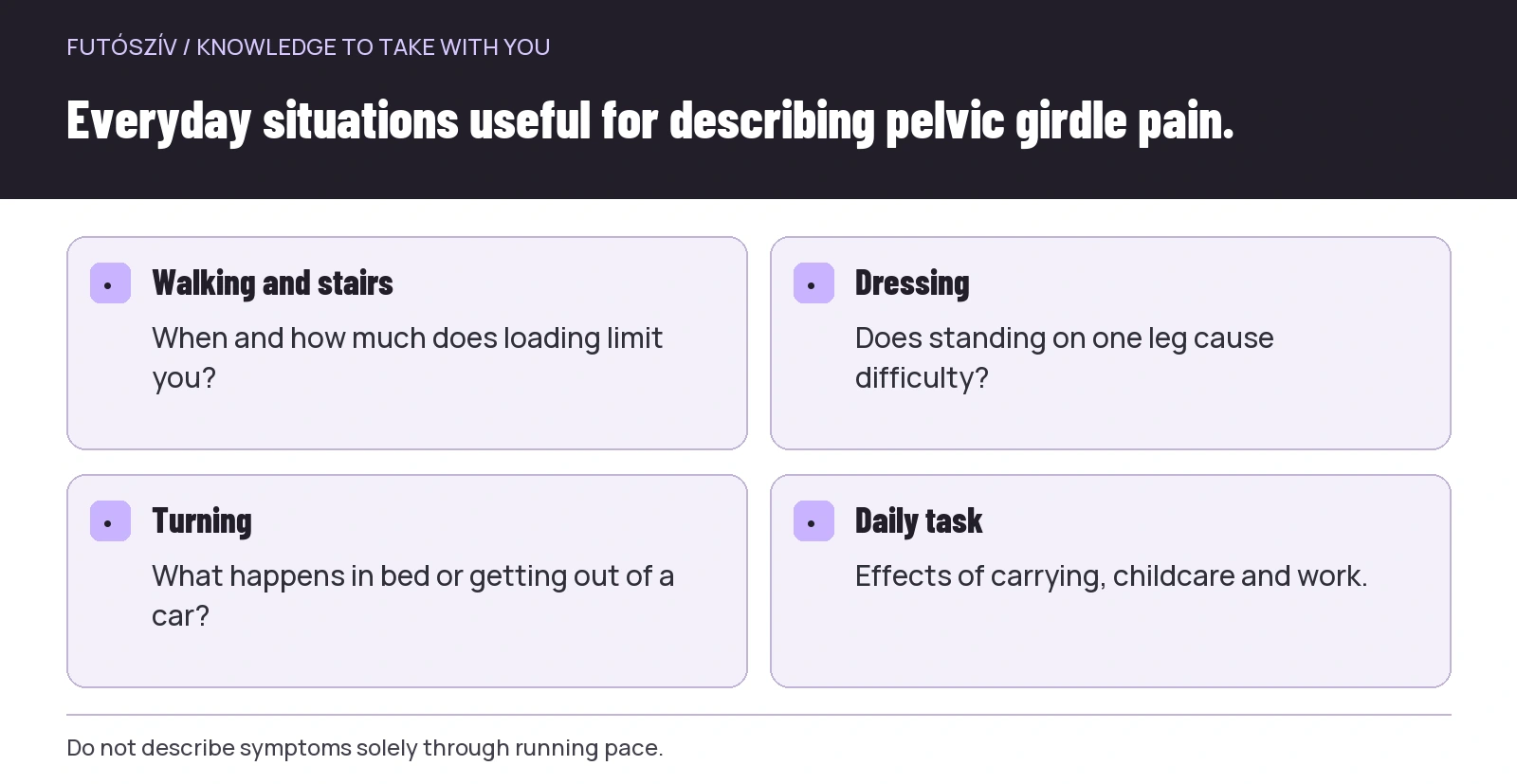 Enlarge diagram
Text version of the diagram
- Walking and stairs
- When and how much does loading limit you?
- Dressing
- Does standing on one leg cause difficulty?
- Turning
- What happens in bed or getting out of a car?
- Daily task
- Effects of carrying, childcare and work.
What might physiotherapy assessment involve?
The NICE antenatal-care guideline recommends considering referral to physiotherapy services for pelvic girdle pain, for exercise advice and a non-rigid pelvic support belt where needed. This is neither a compulsory purchase nor an identical exercise sequence for every pregnant person. Choose appropriate solutions for individual symptoms.
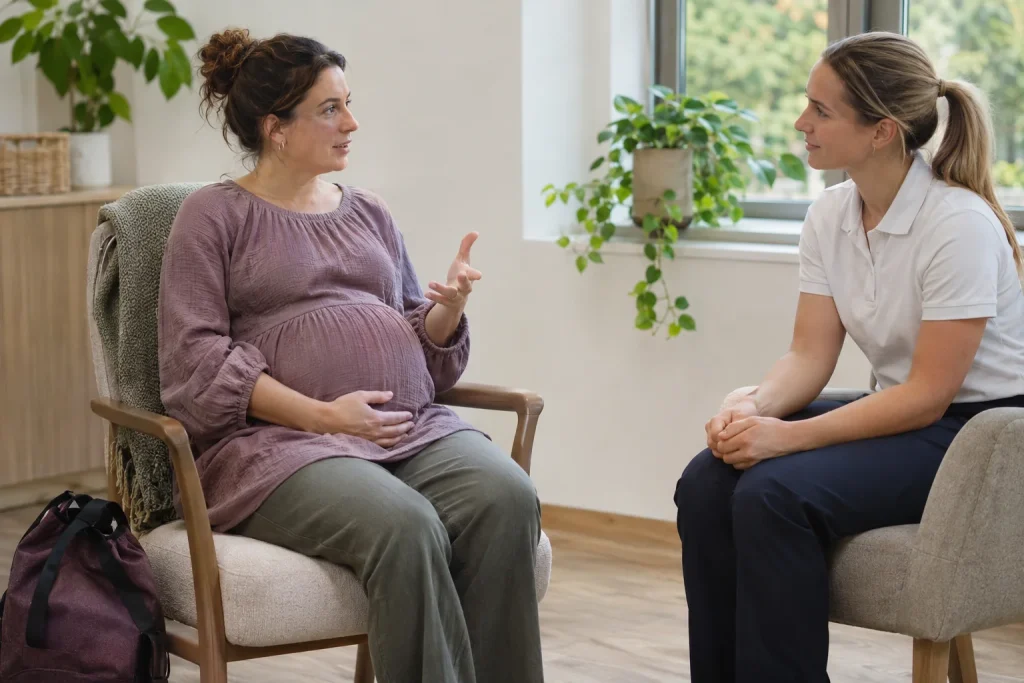
At assessment, explain running history, current demands and difficult daily movements. The Pelvic Obstetric and Gynaecological Physiotherapy professional society provides specific pregnancy information about pelvic and lower-back pain. Seek someone experienced with this life stage.
Ask a task’s purpose, how to perform it and which feedback requires changing it. You need not repeat painful exercises unchanged because they are called strengthening. Appropriate therapy includes followable instructions and evaluating change.
A belt or other aid is not general running clearance
An appropriately selected support can form part of a plan. Clarify its location, timing and fit individually. The tightest option is not necessarily best, and new pressure or discomfort caused by the device also needs reporting.
If a belt reduces pain, that can be positive comfort feedback without establishing that any distance or intensity is now appropriate. Discuss running separately. Symptom change and suitability for particular sporting demands are not entirely identical.
With substantial mobility limitation, temporary walking assistance or another daily aid may be considered in care too. This is not proof of losing your achievements as a runner. Its purpose is appropriate functioning and help, not another performance expectation.
Running: pain reduction should not be the only aim
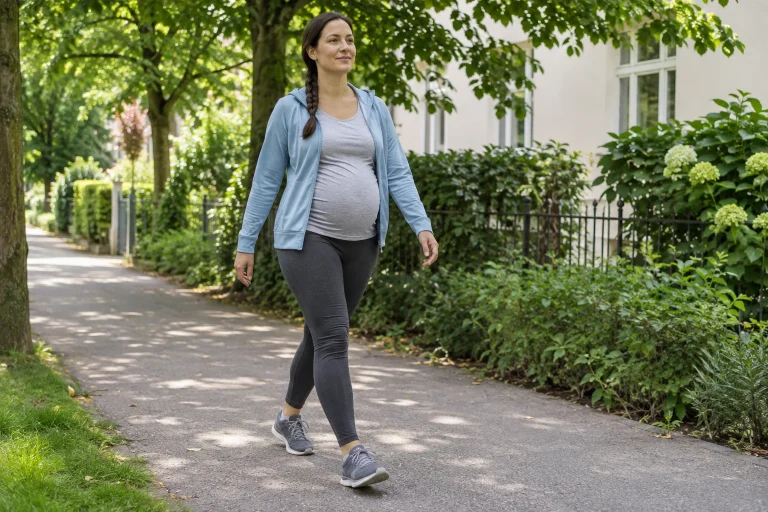
If running clearly provokes symptoms, stop that loading and discuss continuation. Walking or running altered by pain is not a good basis for collecting more kilometres. Completing the distance is unnecessary for the symptom to be valid.
The individual plan may permit another, more comfortable activity or temporarily prioritise easier daily movement. Do not treat alternative exercise as automatic quantitative replacement either. A long walk or another sport may also be excessive if it triggers the same symptoms.
Clarify with your coach what changes and according to which healthcare feedback. They need not prescribe new technique, stronger trunk bracing or higher cadence for every pelvic pain without assessment. Sports planning should connect to clinical assessment.
Loading is not only training
If you omit running but still use stairs repeatedly, carry heavy bags and hold a child on one hip, the day may remain demanding. RCOG also discusses identifying aggravating everyday movements and involving help. Not every task can be solved alone through better technique.
List specific situations: carrying shopping upstairs, bathing a child, getting into a car or commuting. Review with a professional where changes or another person’s involvement may help. You need not regard every movement as dangerous; simplifying repeatedly troublesome situations may be the aim.
At work, request discussion of prolonged unchanged positions, carrying or travel too. Healthcare advice helps when implementable in the real setting. If recommended changes are unavailable, report that so alternatives can be explored.
Dressing, turning and resting: small situations with large daily effects
Putting shoes on while seated, bringing needed items within reach and reducing unnecessary stair trips may provide practical relief. These are organisational options to adapt to your situation, not treatment guarantees. Use pain-reducing strategies alongside personal advice.
Turning in bed or finding a comfortable resting position can be a separate physiotherapy question. You need not continuously maintain one perfect posture. Discussing comfortable, changeable positions and appropriate support may help more than constant bracing.
Report pain disturbing sleep to your provider. Lack of rest can burden the whole day. The answer is not necessarily another exercise restriction, but reviewing symptom care, daily schedule and nighttime comfort together.
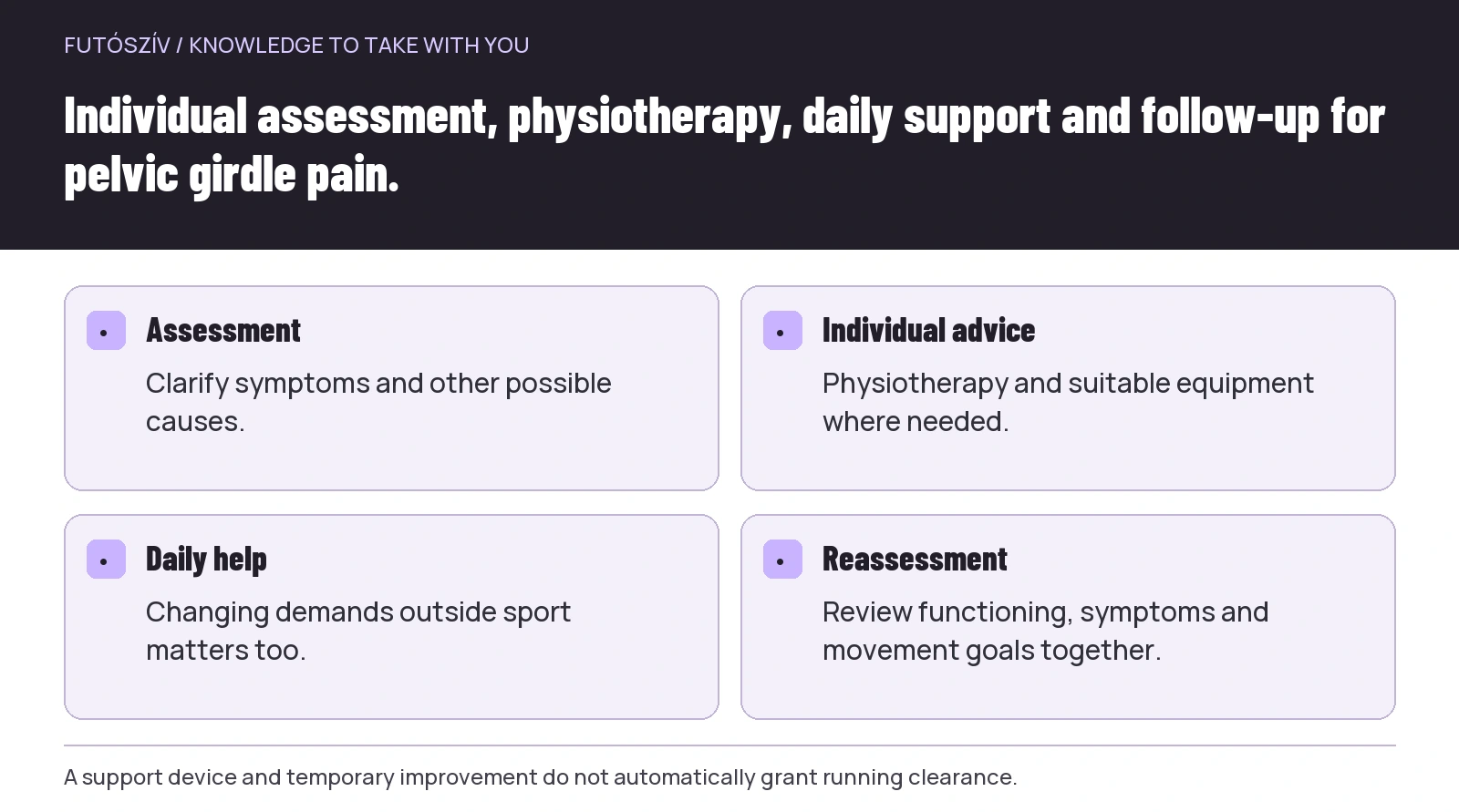 Enlarge diagram
Text version of the diagram
- Assessment
- Clarify symptoms and other possible causes.
- Individual advice
- Physiotherapy and suitable equipment where needed.
- Daily help
- Changing demands outside sport matters too.
- Reassessment
- Review functioning, symptoms and movement goals together.
Symptoms do not prove you prepared badly for pregnancy
HSE describes several interacting factors in pelvic girdle pain. Not every case can be attributed to weakness, poor running or insufficient strengthening. Self-blame does not help find appropriate treatment now.
A trained background does not mean such symptoms cannot occur. Experience can help recognise bodily signals without making you immune to every pregnancy difficulty. A health change does not diminish previous sporting achievements.
If reduced movement because of pain is emotionally difficult, discuss it. Support may include practical help, information and mental healthcare where needed. The reality of physical symptoms and care for emotional burden both matter.
New or severe symptoms require reconsidering the diagnosis too
The general NHS pelvic-pain guidance also emphasises severe or worsening symptoms, bleeding, fever and other accompanying signs. During pregnancy, do not automatically classify abdominal pain, fluid leakage, contractions or feeling unwell as the known musculoskeletal problem.
Seek prompt help for sudden severe pain, inability to walk, substantial weakness, fainting or another serious deterioration. New sensory changes or altered bladder or bowel functioning also require appropriate medical assessment. You need not test symptom seriousness with another run.
Clarify beforehand with maternity care whom to call for worsening familiar symptoms and which signs need urgent care. Clear distinctions can reduce uncertainty: every sensation need not become an emergency, but important new symptoms still receive care.
Do not treat post-birth improvement as automatic start clearance either
The condition changes after birth for many people, but progression is individual. Seek follow-up if pain persists or recurs. Returning to running involves birth mode, recovery, current symptoms and actual exercise tolerance together.
Comfortable walking again is welcome, but running is a different loading form. Do not build later plans around one old mileage figure or another mother’s return week. A physiotherapist experienced in pelvic health can support individual progression where needed.
Five sentences for the next discussion
- This is where I feel pain and the movements during which it appears.
- These are the everyday tasks it makes difficult.
- This is what I changed so far and the effect it had.
- This is the movement I want to return to safely or find an appropriate alternative for.
- This is the help or clarification I request for the coming period.
Changing a running plan may matter with pelvic girdle pain, but the aim is not organising your whole life around symptoms ever more skilfully without help. Appropriate assessment, followable daily changes and a personal exercise plan together can provide more comfort and flexibility.
Sources and further reading
- HSE: Pelvic girdle pain in pregnancy, reviewed March 2026
- RCOG: Pelvic girdle pain and pregnancy
- NICE NG201: Antenatal care, recommendations on pelvic girdle pain
- POGP: Pregnancy, pelvic girdle pain and low back pain
- NHS: Pelvic pain in pregnancy
- NHS: Pelvic pain
How Futószív articles are prepared: our editorial guidelines.