A rice or grain bowl is a flexible food format: choose a main component, vegetables and seasoning fitting your diet alongside the base. The same kitchen logic can produce a different flavour the next day, so every running day need not require a separate complicated recipe. Preparation also needs organisation of the food’s later journey, however. Cooked rice must not remain in the pan for an uncertain period, and refrigeration does not automatically make it a safe base for the whole week.
This article offers everyday cooking ideas for adult recreational runners. Adapt quantity and composition to your needs, diet and load. It is not a pre-race loading protocol or a diet treating illness. With an allergy or another prescribed restriction, check every ingredient; do not automatically treat wheat-based and other grain products as interchangeable. For storage suggestions, specific product instructions and food-safety conditions matter together.
Choosing the base involves more than colour
Rice, bulgur, couscous, pearl barley and other cookable bases fitting your diet are different products. Their composition, preparation and preferred texture differ. Start from the exact name and instructions on the package rather than a cooking time remembered for another ingredient. Quick-preparation and longer-cooking products need different processes. Choose something you can prepare appropriately within your actual time.
Wholegrain status and a particular product’s exact nutritional information can be checked separately. A brown shade or natural-looking packaging picture is not a complete ingredients description. If your diet makes a fact important, find it on the actual product label. Do not predict pre-run comfort from colour either. Food quantity, other ingredients, timing and individual experience shape the situation together.
Get to know a new base first in a simple combination. What is its texture fresh and at the planned serving after appropriate storage? Is it easier to eat with a fork or spoon? Kitchen experience like this helps choose a version for a workday container. You do not need a new grain, sauce and several new spices together. With one new element, you can describe more precisely what you liked.
Plan four separate roles in a bowl
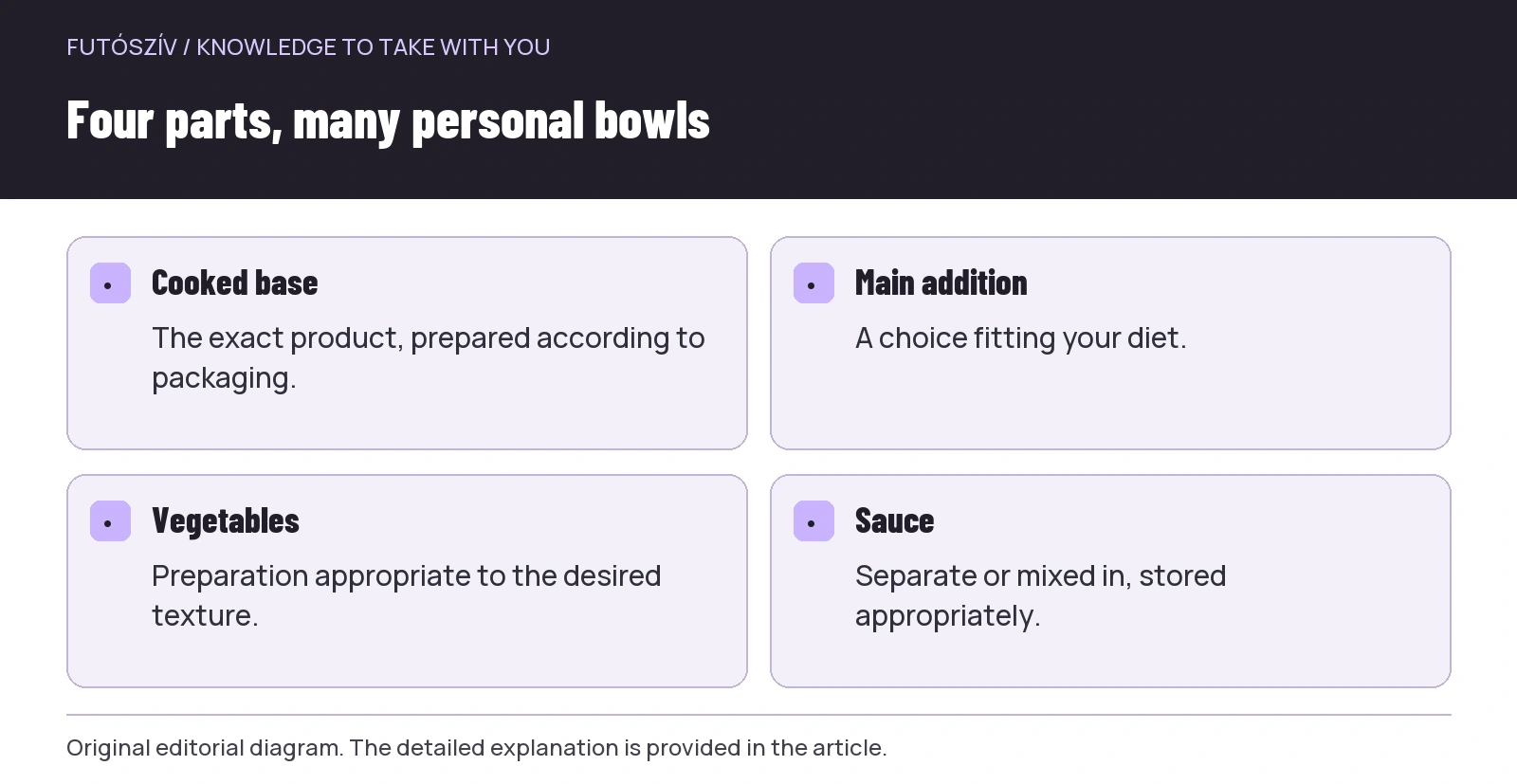
The first part is the cooked base, the second a main addition fitting your diet, the third appropriately prepared vegetables and the fourth preferred seasoning or sauce. These roles do not necessarily mean four separate cooking jobs. One dish may connect several parts, but seeing them separately helps plan serving. It reveals what is already at home and which element is missing from a full meal.
The NSW Institute of Sport material presenting varied meal ideas shows combinations of several food groups and relates quantities to individual circumstances. A bowl makes that flexibility visible. Your own needs cannot be inferred from equally sized compartments or a social-media photograph of a bowl. The structure supports kitchen assembly; personal quantities need choosing separately.
You need not immediately mix the sauce into everything. Serving it separately lets you control texture and different family members shape their own plates. Vegetables may be freshly prepared or appropriately cooked according to your recipe and intended use. Separate containers increase flexibility but do not automatically extend shelf life. Consider every component’s storage conditions.
 Enlarge diagram
Text version of the diagram
- Cooked base
- The exact product, prepared according to packaging.
- Main addition
- A choice fitting your diet.
- Vegetables
- Preparation appropriate to the desired texture.
- Sauce
- Separate or mixed in, stored appropriately.
Three serving directions within the same simple system
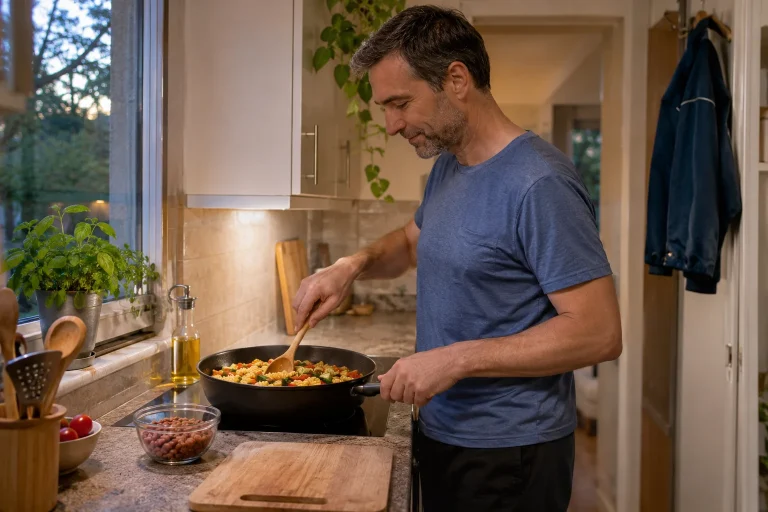
For a warm tomato-based version, prepare a vegetable sauce and suitable main component fitting your diet alongside the base. Adapt piece sizes to the chosen base and utensils. If taking it to work, plan later reheating too. A sauce pleasantly thick when fresh can have a different texture after storage, so do not start the first trial with a whole week’s large batch. A recognisable version is easier to modify later.
For a separately served, crunchier version, pack vegetables and sauce separately beside the appropriately handled cooked base. Assemble your bowl when eating. This may suit someone who dislikes food mixed ahead. Eating cold still does not mean storage without refrigeration. Arrange the whole journey of base and additions under conditions appropriate to the foods, from morning departure until the actual lunch.
For shared family serving, prepare an appropriate base with several separately served additions. One person chooses different seasoning, another wants sauce separately and quantities may differ too. A running day need not require a completely separate dinner. Make allergen information and appropriate utensil use clear, however. A shared bowl does not mean everyone can eat the same things or needs identical portions.
| Element | Decision you can prepare | Part adjustable when serving |
|---|---|---|
| Base | Exact product and cooking routine | Quantity suited to your own meal |
| Main addition | Appropriate preparation and storage | Your own combination from the shared selection |
| Vegetables | Cleaning and desired preparation | Separate or mixed in |
| Sauce | Recipe and appropriate chilled storage | Serving suited to the preferred texture |
Cooked rice needs particular attention
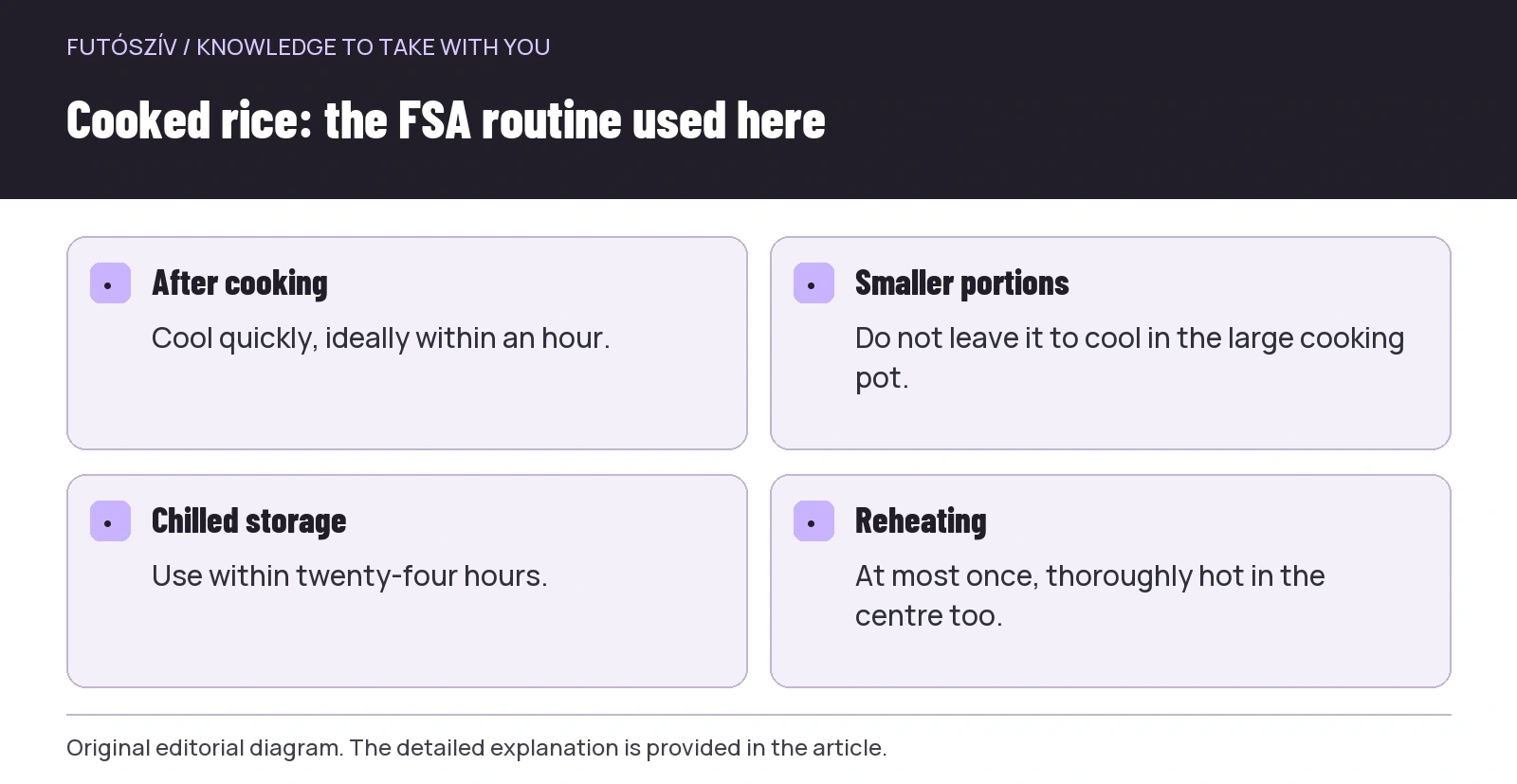
According to the Food Standards Agency home food-safety guide , cooked rice should be cooled quickly, ideally within an hour, then refrigerated and used within twenty-four hours. Do not leave it to cool in the rice cooker, steamer or large cooking pot. Dividing into smaller portions can help cooling. The source asks that rice be reheated only once and the entire food thoroughly heated through. Plan these conditions before cooking.
With rice, earlier storage is crucial: bacterial spores that may occur in the raw ingredient can survive cooking, and improperly handled cooked food can pose a risk. Later reheating does not correct every earlier mistake. Fresh sauce, a pleasant smell or attractive serving therefore cannot make rice left out for an uncertain period safe. Handling leftovers needs actual timing information, rather than reassuring guesses.
The twenty-four-hour rice guidance above is the cautious home routine of the FSA source used here. Do not substitute general leftover times for other foods, and follow any stricter instructions for the actual product too. Different authorities’ guidance may describe different food groups and circumstances. Use a clear, consistent kitchen system in which cooking, prompt appropriate cooling and use times are recognisable.
Make space for cooling in advance
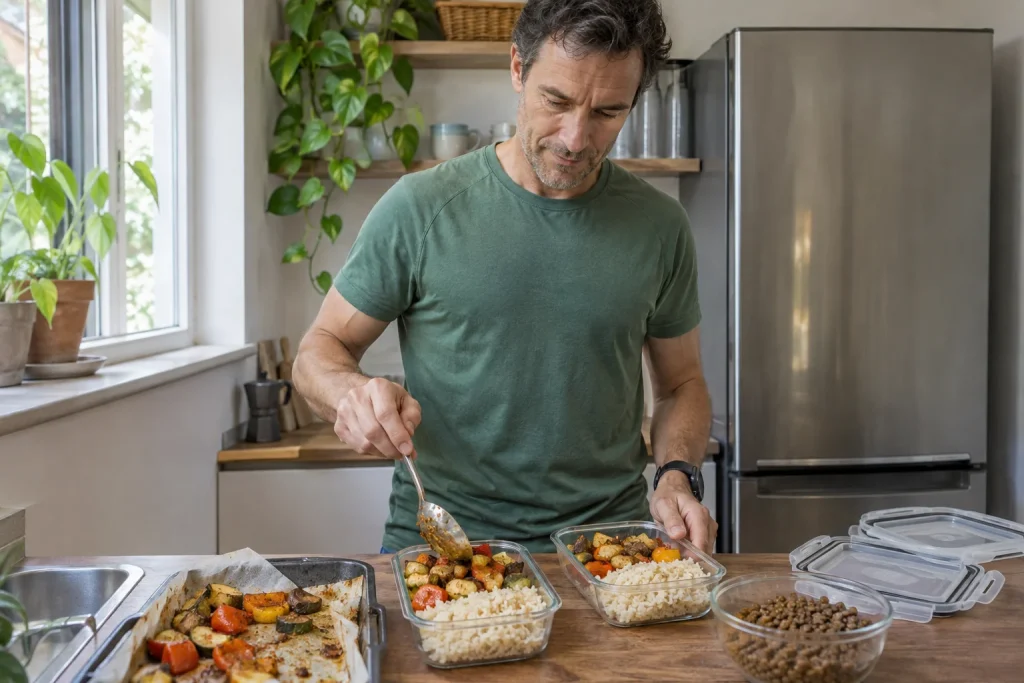
Before cooking, check which appropriate containers will hold the portion intended for later and whether there is fridge space. Searching for containers and rearranging shelves after food is ready can easily delay the necessary operation. Clearly separate the portion for fresh serving from that intended for later. Choose the container for its contents, rather than leaving a small amount in an oversized pan simply because it was at hand.
The NSW Food Authority leftovers guide connects division into smaller portions with quicker cooling and emphasises appropriate refrigerated storage too. Handle food according to relevant requirements, keeping the separate stricter timetable for rice described here. Maintain appropriate separation of raw and ready-to-eat foods too. In a full fridge, space is a process question as well as a convenience.
Put the specific contents and preparation time on the label. “Tuesday’s base” is ambiguous if nobody knows whether it means cooking day or intended eating day. Use consistent personal labelling that other household members understand. Do not arbitrarily write a new shelf life. The label helps follow appropriate conditions of use; it does not replace safe handling.
 Enlarge diagram
Text version of the diagram
- After cooking
- Cool quickly, ideally within an hour.
- Smaller portions
- Do not leave it to cool in the large cooking pot.
- Chilled storage
- Use within twenty-four hours.
- Reheating
- At most once, thoroughly hot in the centre too.
Preparation does not necessarily mean accumulating a week of cooked bases
You can plan shopping, measure dry ingredients for later cooking, prepare clean equipment and choose the recipe in advance. These save real time while letting you cook closer to actual use. Not every food needs to wait fully cooked from Sunday for Friday lunch. Different parts may suit different preparation times chosen on the basis of safe handling.
If freezing, follow official guidance and product instructions appropriate to the food, from suitable cooling through later thawing. Freezing is not a rescue step that erases the history of food stored for an uncertain period. Use smaller recognisable portions and precise labelling. Food put in the freezer should have a planned place in the menu; otherwise supplies may grow without genuinely simplifying everyday cooking.
For a ready-made grain mix or precooked product, instructions on the particular packaging are the basis. Unopened storage conditions can differ from those after opening or preparation. Do not overlook that change. If you do not consume the full pack, handle leftovers according to that product’s instructions. “Quick” and “ready” may describe preparation convenience rather than unlimited keeping time.
A bowl taken to work: travel and reheating are part of the recipe too
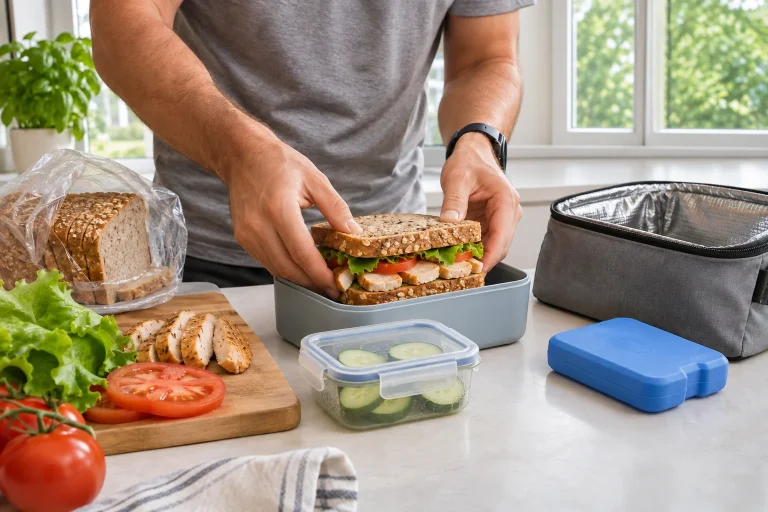
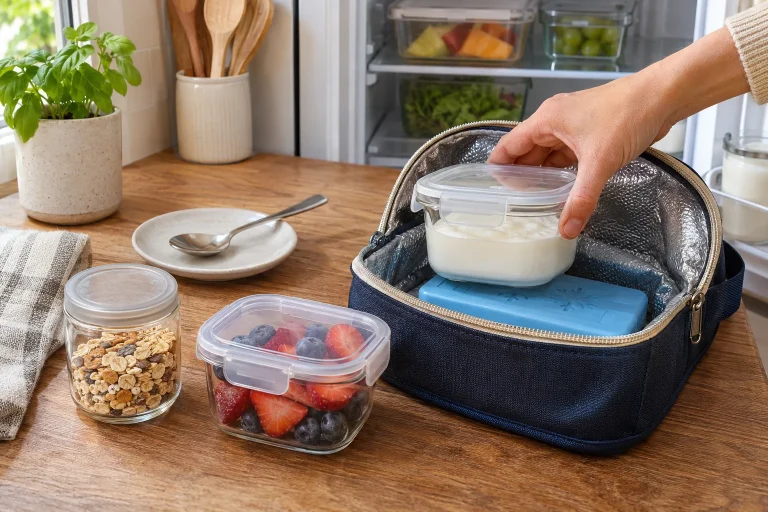
In the morning, pack appropriately stored food in a way suited to travel. At work, suitable refrigeration should actually be accessible, followed by eating and, where necessary, reheating facilities. A calendar lunch break works only when you can reach the food too. If work repeatedly disrupts timing, reconsider the planned dish and how you obtain it. A chilled bowl must not simply stay in a bag because a meeting ran late.
For reheating, follow the food and appliance instructions and ensure the centre is thoroughly heated through too. Prepare only your portion to eat then, rather than reheating the whole shared supply for one serving. With rice, keep to reheating once. If eating a cold bowl, earlier cooking and prompt appropriate cooling matter equally. Cold serving does not remove preparation safety steps.
Small substitutions can provide variety too
Make a recipe card for an established bowl with the exact base, main component, vegetables and sauce. Change one part next time: another favourite vegetable, different seasoning or separately served sauce can offer a new experience. Keep quantities fitting your needs and safe handling consistent meanwhile. Variety then starts from a known process rather than an entirely new cooking task each time.
A well-organised rice or grain bowl is both flexible and specific. Flexible in ingredients and serving, specific in product instructions, cooking routine and the food’s later journey. When the two connect, preparation can genuinely ease a working day that includes running. A good endpoint is appropriately handled food you enjoy eating, with storage and access details known beforehand alongside the recipe.
Sources and further reading
- NSW Institute of Sport: 38 Balanced meal ideas for athletes
- Food Standards Agency: Home food fact checker – Rice
- NSW Food Authority: Leftovers
How Futószív articles are prepared: our editorial guidelines.