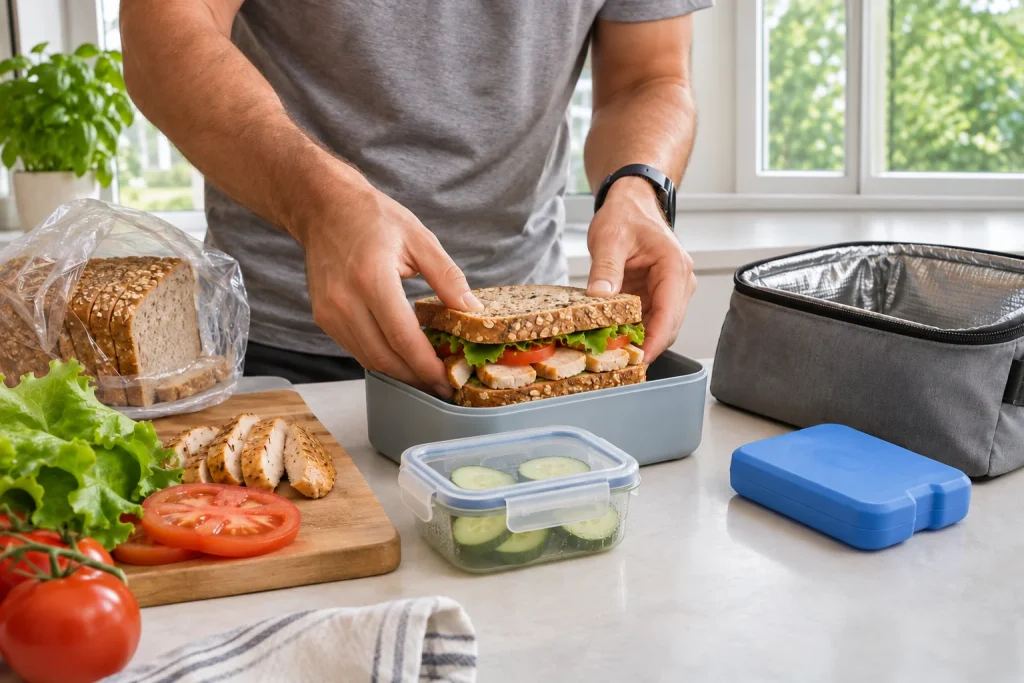
A sandwich can be a convenient food format on a day that includes running, since it needs little equipment and can use many ingredients. A useful version, however, involves several decisions: which bread holds the filling, what do you want inside, when will you eat it and how will it stay appropriately stored until then? You do not need to turn a running-day sandwich into a special sports food, but it is worth adapting it to your actual schedule and diet.
The following ideas provide a kitchen framework for adult recreational runners’ everyday eating. They are not personalised portions or pre-race prescriptions. With an allergy, illness or prescribed diet, the base and every filling must suit you. If eating immediately before running, choose according to previous personal experience and your individual plan. A more substantial sandwich for lunch or after running is a different situation from a smaller meal before departure.
Choose its role before the filling
When will you eat the sandwich? As lunch at work, on the way, dinner at home or part of a post-run gathering? The answer determines packaging, utensils and what can accompany it. At home, vegetables served separately and an open sandwich can be comfortable, while a secure filling or separately packed combination may work better when travelling. You need not use one unchanged format for every situation.
A sandwich alone does not automatically determine the right quantity for a whole meal. Bread size, filling and accompanying additions differ too. Adapt your needs to your day and load. “Two slices” can mean something very different with one bread than another. This article therefore concerns assembly and process; a general photograph or pack serving does not determine personal quantities.
The NSW Institute of Sport material presenting meal ideas lists sandwiches among formats with many variations and emphasises quantities adapted to individual circumstances. In your kitchen, bread, main filling, vegetables and further additions together make the meal. You can create variety by changing these rather than following a new, complicated recipe every time.
Bread structure is a practical property
Sliced bread, rolls, pita and wraps hold fillings differently. A soft, easily folded base behaves differently from thick-crusted, crumbly bread. Alongside taste, consider how you will eat: will you have a table, plate, knife or only a small space for a container taken from a bag? Manageability matters for a portable version, but still check ingredients and dietary suitability.
Bread colour is not complete ingredient information. The precise name and label tell you more than seeds sprinkled on top or a darker shade. If a specific dietary goal or requirement makes the choice important, look for the relevant information. Get to know a new bread as part of your own breakfast or lunch before placing it before an important event. A familiar name can conceal different slice sizes, textures and ingredients.
Keeping bread in the freezer can help availability when you pack the particular product appropriately and plan its use. Label contents and store portions you actually use. You should not have to select slices from a large frozen-together pack in the morning rush. Preparing the bread base simplifies the process; separate rules may still apply to storage of the filling added later.
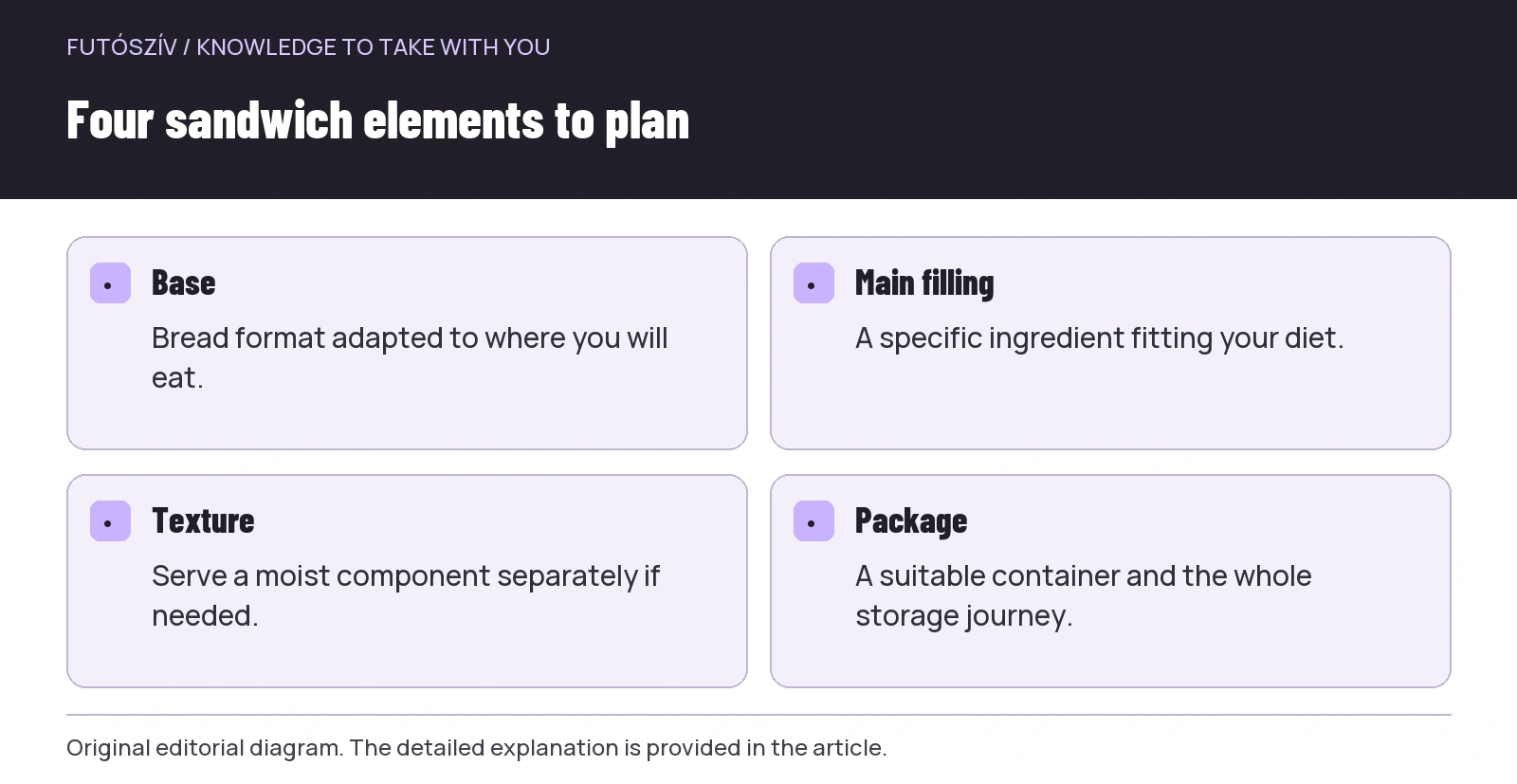 Enlarge diagram
Text version of the diagram
- Base
- Bread format adapted to where you will eat.
- Main filling
- A specific ingredient fitting your diet.
- Texture
- Serve a moist component separately if needed.
- Package
- A suitable container and the whole storage journey.
The filling can serve three purposes
The main component gives the combination its character: it could be cheese, egg, appropriately prepared meat, fish or a pulse-based option fitting your diet. A spread can shape texture and flavour. Vegetables and other additions can bring freshness, crunch or another serving experience. These do not necessarily mean three separate products; they help identify the role each ingredient plays in the sandwich.
Make filling easy to distribute. Pieces that are too large or a spread that is too runny can make a sandwich fall apart while eating. Chopping, packing separately or changing the bread format can help. Do not try to resolve a kitchen texture problem by forcing in more and more filling. Alongside a manageable combination, you can serve other components separately if appropriate and needed for your meal.
With stronger seasoning, test the balance in a small portion first. Hot sauce, an intense spice or a new spread can create a different experience from the familiar. Close to running, use your own established experience as a reference. You do not need to make every sandwich mild or identical; the aim is a choice fitting the occasion. New flavours can have a place in calmer everyday meals too.
Moisture and texture: what should you separate?
Vegetables releasing juice, runny sauce and bread can develop a different texture after longer storage together than when fresh. For a crunchier or less soggy sandwich, you can carry appropriately prepared moist components separately and add them when eating. This is a texture-planning solution, not an extension of food safety. Handle every component according to its own storage requirements even in a separate compartment.
The NHS soft cheese and salad sandwich recipe mentions sufficiently dried salad and a layer spread on the bread to help reduce sogginess. The source is a family recipe intended for children; we do not treat its portion as prescribed for adult runners. The kitchen principle is useful, however: filling moisture and layer arrangement can deliberately shape the desired texture.
If assembling ahead, test it once using your own bread and actual storage period until serving. Your opinion of a freshly made sandwich does not tell you what it will be like hours later. Keep any version requiring refrigeration appropriately chilled during the trial as well. Note which part might be better served separately. You do not need to replace every ingredient if the sole problem is tomato juice making the bread too soft.
| Experience | Possible kitchen adjustment | What you still need to check |
|---|---|---|
| Soggy bread | Pack the moist component separately | The filling’s storage conditions |
| Filling falling apart | Smaller pieces or another bread format | Taste and dietary suitability |
| An awkward size to eat | Manageable portions and a suitable container | Your total meal quantity |
| Uninteresting flavour | A targeted seasoning or serving adjustment | New ingredients and individual comfort |
Four everyday directions for assembly
For a cheese-and-vegetable version, choose cheese suitable for you, washed and appropriately prepared vegetables, and a preferred spread if wanted. Crunchy vegetables can be served separately. The task is to arrange ingredient storage alongside flavour and texture. When packing together, identify dairy-containing ingredients clearly and follow your own allergy or other dietary instructions.
For an egg version, use appropriately prepared and handled egg, then arrange the necessary storage with the other chosen ingredients. Smaller pieces of egg filling can be easier to spread evenly. Bread and vegetables can travel separately if you want to assemble at serving time. Egg need not be presented as an ideal pre-run food for everyone; its place in your plan and individual tolerance matter.
For a pulse-based spread, check the particular product’s ingredients. Similarly named spreads may contain different oils, spices or allergens. For homemade versions, follow the recipe and safe preparation routine consistently. You can pack the spread separately beside the bread if that preserves texture better. Do not infer shelf life from “plant-based”, but from handling of the particular food and its guidance.
For a filling made from leftovers, first check that the food was stored appropriately and remains safe to use. Fresh bread and new seasoning do not make leftovers with an uncertain history safe again. If use is appropriate, you can eat an already prepared main component in another serving format. This can reduce cooking work, but plan the new transport and storage stage just as for a freshly made sandwich.
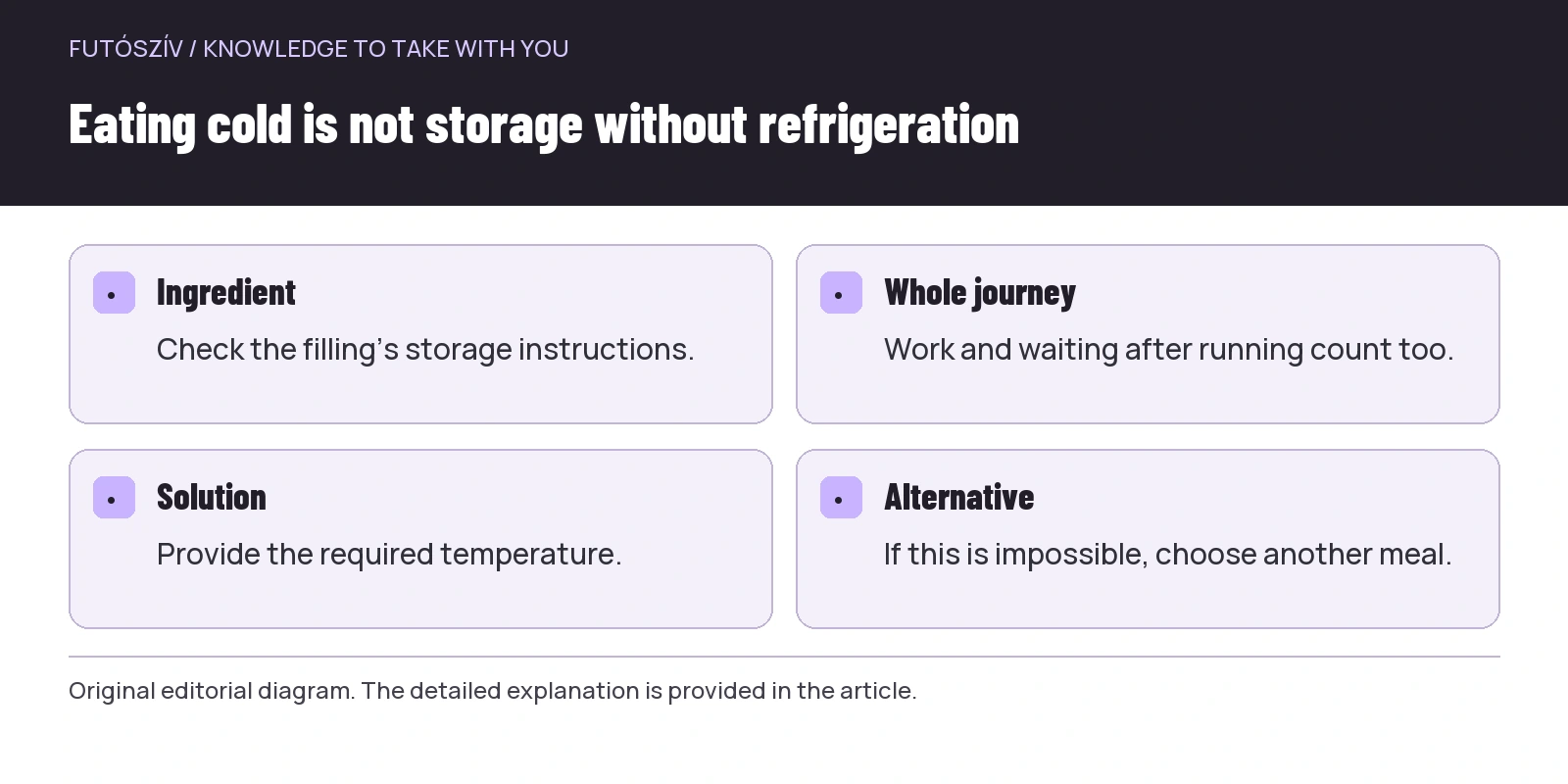 Enlarge diagram
Text version of the diagram
- Ingredient
- Check the filling’s storage instructions.
- Whole journey
- Work and waiting after running count too.
- Solution
- Provide the required temperature.
- Alternative
- If this is impossible, choose another meal.
Eating a sandwich cold does not mean storing it without refrigeration
Food eaten cold and food not needing refrigeration are two different concepts. Many sandwich fillings need suitable refrigeration from preparation to consumption. The Nébih shopping guide emphasises appropriate transport of products requiring refrigeration too. For your own bag, consider ingredient instructions together with actual conditions along the entire journey, rather than merely the convenient name sandwich.
Leaving in the morning, a working day, travel to the running location and waiting after the run: a pack can pass through several stages. If you plan to eat only in the evening, those hours belong in the storage arrangement too. A secure container can keep food clean but does not replace appropriate temperature. If the required conditions cannot be provided, choose another meal or buy food locally.
Do not judge food left in a car by the outside air temperature. The history of a sandwich in a bag does not become clear because the bread looks pleasant. Safe storage needs a checked routine, following labels or food-safety guidance. A thought-out alternative to an uncertain pack fits a running day better than trying to reassure yourself retrospectively when hungry.
A packing rehearsal in the kitchen
Put the finished sandwich in the actual container you intend to use. Is there room without the lid squashing it? Can separately served vegetables or sauce be kept apart? Packaging should be clean and suitable for food, with a separate place for used utensils. If packing similar food for several people, precise labelling helps prevent swaps. With different allergens, this is a particularly important practical detail.
In the running bag, do not place food unprotected beside shoes and used clothing. Keep the pack accessible when you want to eat. If it needs eating before baggage drop, reflect that in packing order too. After arriving home, clean the container and necessary utensils, then let them dry. Preparing food for the next running day begins by putting this pack in order.
A short recipe card is enough for your reliable sandwich
Record the base, main filling, component creating the desired texture, separately served addition and storage method. Add when and where you want to eat. You can record quantity according to your own needs in a meaningful form too. If one detail fails, modify only that: cutting, container or positioning of a moist topping. Kitchen experience can then genuinely transfer to the next occasion.
A good running-day sandwich becomes useful through more than towering fillings or a sporty name. Ingredients fitting your diet, pleasant texture, resolved storage and an actually accessible eating opportunity matter together. When they fit, the sandwich can be an easily varied part of the day. Adapt its format as you like while adjusting specific questions of quantity, timing and safe handling to the real situation each time.
Sources and further reading
- NSW Institute of Sport: 38 Balanced meal ideas for athletes
- NHS: Soft cheese and salad sandwich
- Nébih: Vásároljunk okosan!
How Futószív articles are prepared: our editorial guidelines.