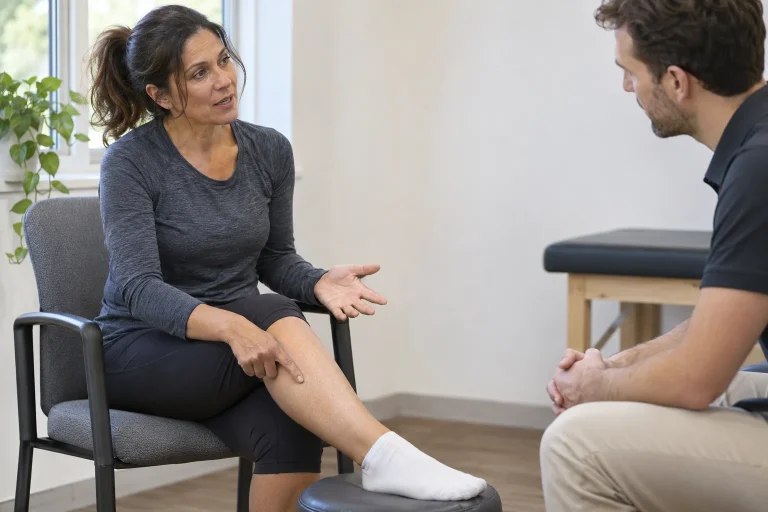
The medicine’s purpose and sporting risks matter together
Running while taking an anticoagulant is not simply a question of bleeding. Why you need the medicine, your current condition and the movement you want to do matter just as much. The benefits of treatment and consequences of injury need considering together. This cannot be tailored to another runner’s medicine or one online story.
The American College of Cardiology analysis of athletes recommends an individual decision process considering the underlying condition, treatment benefit and particular sport together. The word running alone is too broad: a flat route with good visibility and a rocky night trail race present different injury situations.
This article does not change medication, dosage or the time you take it. The following questions provide a framework for discussing a specific activity plan with your clinician. Skipping medicine for a session or start is not an independent sports-safety solution.
First know precisely what you take and why
The everyday term blood thinner can cover different medicines. Bring the exact name, dose and instructions you received to the appointment, alongside a list of other medicines. You do not have to identify the medicine group in technical language, but the healthcare provider needs to know what you are discussing. Two medicines with similar names or purposes are not necessarily the same.
For a sports plan, the reason and timing matter too. After a recent thrombosis, with prevention related to a heart-rhythm disorder or with another condition, exercise capacity after illness may be a separate question. The reason for treatment is more than your skin bruising more easily. Ask for activity advice relating to the underlying condition as well.
Note who monitors treatment and what review is necessary. The prescribing doctor, care service and GP may have different roles. A coach can incorporate the stated activity framework, but deciding whether you still need the medicine is not their job. Do not transfer decision-making responsibility to a running session or watch graph.
What does injury risk mean along a running route?
Alongside the sport’s classification, examine the actual environment: are there descents with a risk of falling, roots, dense crowds, bicycle traffic or crossings with poor visibility? Fatigue and darkness are part of the event’s real circumstances too. Not every risk can be removed, but risks can be named and discussed.
The NHS guide to anticoagulants warns of increased bleeding tendency with injury and notes that a clinician may recommend avoiding certain contact sports. For a runner, no contact does not mean no possibility of injury. The goal is individual consideration, rather than a programme artificially described as entirely risk-free.
Bring a specific route or event description to the appointment. Explain distance, terrain, expected duration, opportunities to stop and how far away help would be. “I would only run a little” is less useful than a precisely described loop. Professional advice can then connect with the real task.
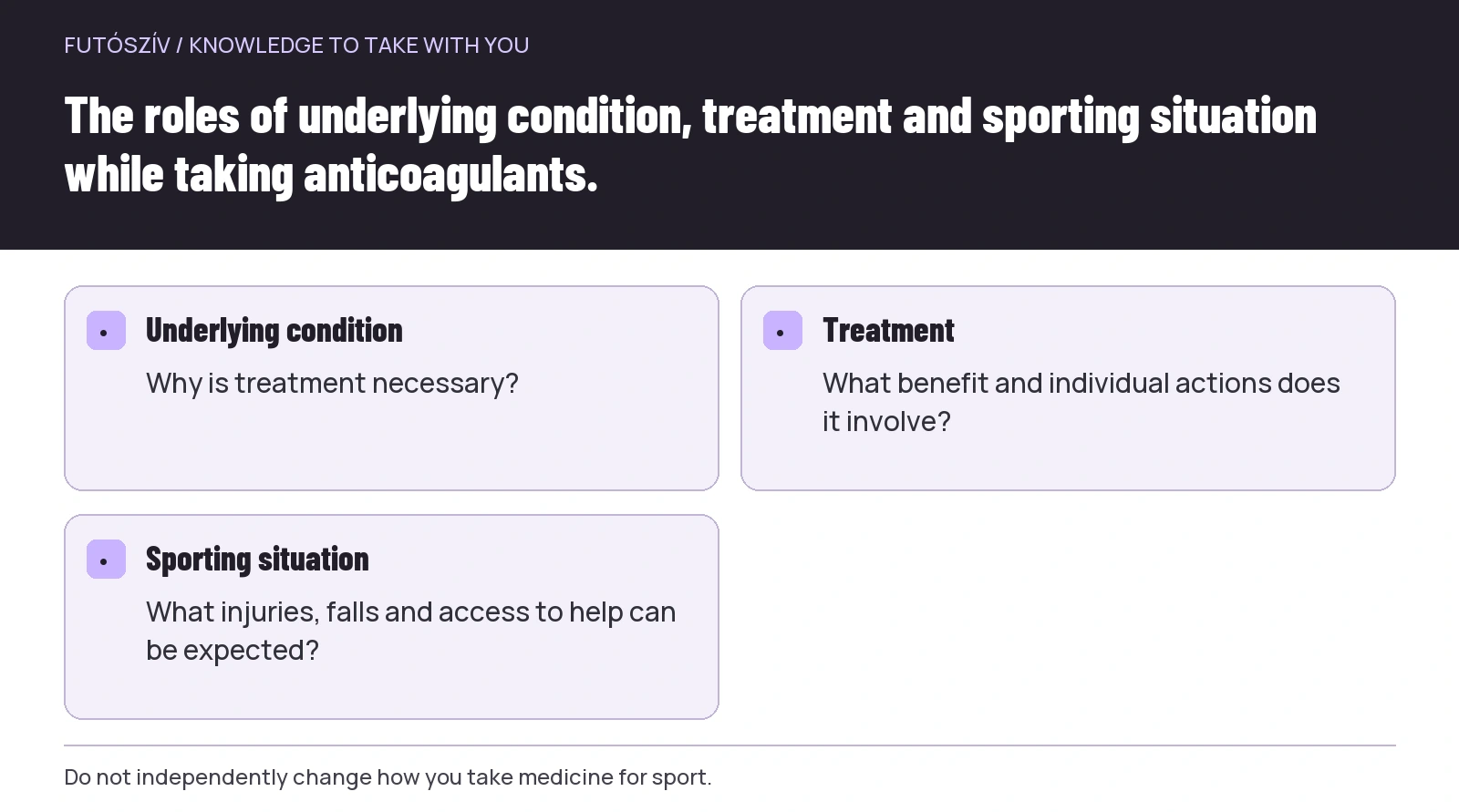 Enlarge diagram
Text version of the diagram
- Underlying condition
- Why is treatment necessary?
- Treatment
- What benefit and individual actions does it involve?
- Sporting situation
- What injuries, falls and access to help can be expected?
After a head injury, feeling well is not enough reassurance
While taking an anticoagulant, seek healthcare advice and appropriate assessment without delay after a blow to the head or fall. The King’s College Hospital information particularly emphasises that internal bleeding is not always immediately obvious. Do not continue running because you could get up, or let a companion’s quick glance be the only check.
The NICE head-injury guideline treats anticoagulant therapy as a separate consideration in emergency assessment and decisions about imaging. You do not need to decide whether a CT is necessary. Your task is to describe the event and medicine accurately, even without a conspicuous external wound.
For a serious head injury, loss of consciousness, confusion, a new neurological symptom or another sudden severe illness, call 112. Do not drive yourself for care. Involve the race’s medical service immediately as well if available, but this is no reason to delay a necessary emergency call.
Which bleeding signs require prompt help?
The NHS side-effects information recommends immediate medical attention for severe or recurring bleeding, bleeding that will not stop and significant injury. Blood in urine or stools, black stools, vomiting blood or coughing up blood can also be important warning signs. Do not automatically attribute them to usual consequences of a long run.
Discuss large or unusual bruises, prolonged bleeding and significantly heavier periods with your healthcare provider too. You do not have to endure them silently because they may be a known medicine side effect. Appropriate assessment can clarify action, while you must not change the medicine independently.
Severe bleeding, fainting, difficulty breathing or feeling significantly unwell requires urgent help; in Hungary, call 112. When seeking help, state the medicine’s name and injury or symptom. Clarify individual emergency instructions with your care provider beforehand; in the actual situation, follow the emergency dispatcher’s guidance.
Painkillers and supplements: discuss them first
After running, painkillers or anti-inflammatory medicines often come up. With anticoagulants, interactions with other medicines are particularly important. The NHS recommends discussing any new medicine, over-the-counter remedy, herbal product or supplement with a doctor or pharmacist first. It also lists ibuprofen and other non-steroidal anti-inflammatory drugs as possible interactions.
Do not choose a medicine because running companions regularly use it in long races. Your own medicines and history matter. A product called natural is not automatically irrelevant either. Bring the box or exact ingredients, because a brand name does not always reveal what it contains.
The cause of pain also needs assessing if symptoms are new or worsening. Masking an injury with medicine does not make it appropriately loadable. The clinician and pharmacist can help with medication questions, while the coach can help within the clarified activity framework. Do not confuse these decisions.
Race day should not arbitrarily change treatment
Do not miss a dose, deliberately delay taking it or switch products to fit in a higher-risk event. Individual strategies discussed in sports literature are not instructions to apply at home. A special sporting goal needs discussion with the care team in light of the reasons for treatment and its risks.
Before travel, a prolonged start wait or an overseas event, clarify how to follow your own prescription. For a missed dose, follow the specific medicine’s instructions and professional advice; this article gives no general catch-up rule. Different instructions for two medicines mean your friend’s solution may not apply.
Arrange packaging and reserves beforehand too, according to the storage instructions received. Do not discover on race morning that you lack the necessary medicine or your care provider’s contact details. The event’s medical service is not a substitute for a medication plan.
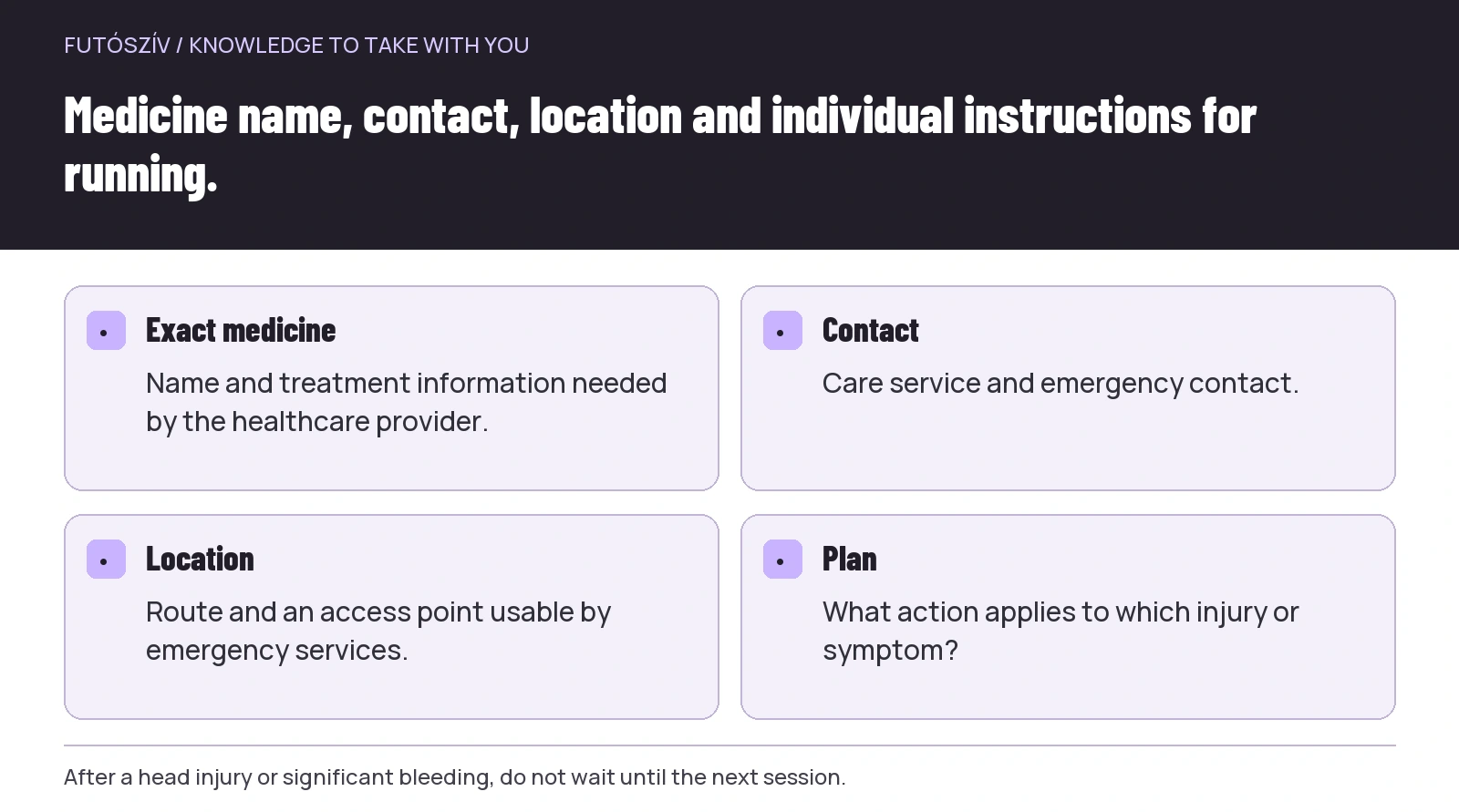 Enlarge diagram
Text version of the diagram
- Exact medicine
- Name and treatment information needed by the healthcare provider.
- Contact
- Care service and emergency contact.
- Location
- Route and an access point usable by emergency services.
- Plan
- What action applies to which injury or symptom?
What information should be easy to access?
A short card or accessible medical information can contain your name, exact medicine name, necessary emergency contact and important individual instructions. You do not need to write your entire medical history on the race number. The aim is to give a provider essential information in a problem, rather than make them search deep inside a locked phone.
A running companion should know where this information is and what to do for a significant injury. Changing dosage or scoring bleeding risk is not their role. Being present, identifying the location precisely and requesting help are important. They should not leave someone unwell alone on the promise of calling later.
Privacy can be respected too. Share necessary information with the person’s consent and do not turn their medication into a social-media story. A supportive environment is not about constant surveillance, but making the agreed plan genuinely workable.
How should you choose manageable movement within your individual framework?
If your clinician considers running appropriate with your condition, organise it around location, duration and access to help. A route with good visibility that can be shortened is easier to manage than a remote section that is difficult to leave. Lighting, footwear and weather are practical factors, but none eliminates every possibility of injury.
Slowing down or choosing alternative movement is not an inferior solution. A particular event may currently present too much risk for your situation while another activity remains manageable. This should not be treated as a decision about your courage or worth as a runner.
Alongside sporting goals, discuss daily work, transport and other illnesses. The need for medication and activity options may change later, making review-linked reassessment important. Clarify the meaning of an old permission or prohibition if treatment or condition is now different.
Four questions that can lead to a specific decision
What is treatment for, and which limits relating to the underlying condition must I consider? What injury risk comes with the planned route and event? Whom should I contact for which symptom or accident? When should the next review or sporting-goal reassessment happen? These questions address the actual decision, rather than confirming a general sports ban.
Bring a specific event description and medicine list, then ask for an answer understandable in your own words too. If something is impractical, such as no easy way home from a planned route, say so. Discuss options so the plan is manageable in more than theory.
The benefits of treatment, underlying condition and consequences of injury together inform movement while taking anticoagulants. An informed sporting decision does not consist of changing medicine arbitrarily. An individual plan needs appropriate professional help and practical organisation thought through in advance.
Sources
- NHS: Anticoagulant medicines, considerations
- NHS: Anticoagulant medicines, side effects
- ACC: Antithrombotic therapy in athletes, a balancing act
- NICE NG232: Head injury assessment and early management
- King’s College Hospital: Thrombosis and haemostasis
How Futószív articles are prepared: our editorial guidelines.