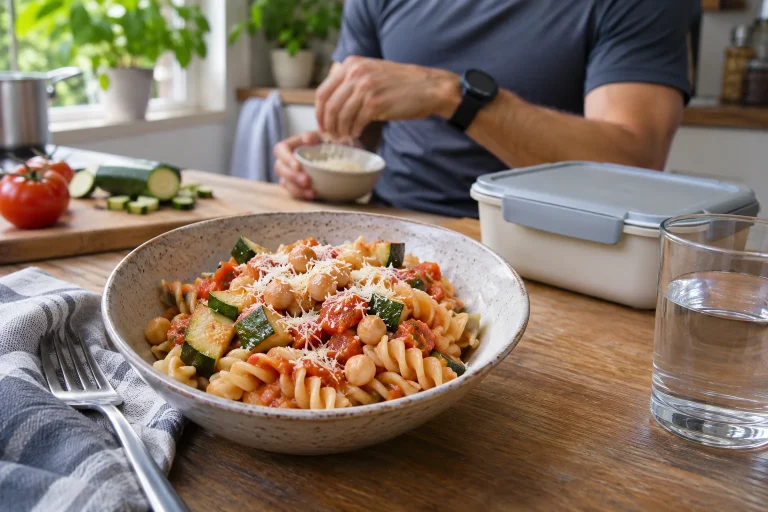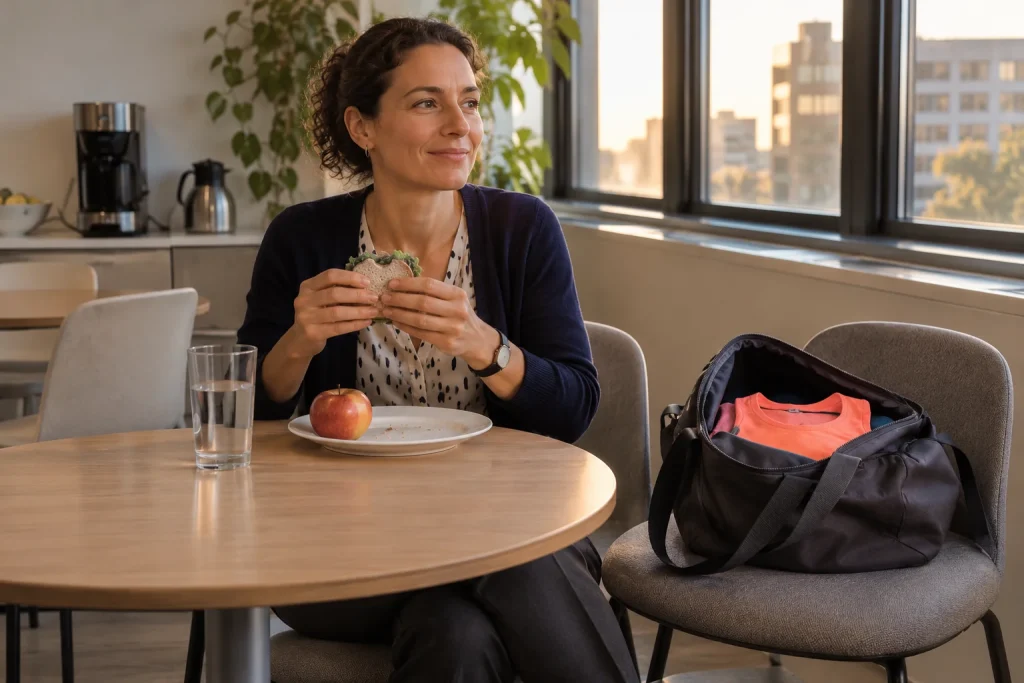
Running after work is often difficult because there is barely a transition between the day’s last task and training. Shoes and clothing are already in the bag, but eating remains among the morning’s intentions. After a meeting runs late, a runner sets off with lunch long behind them and the afternoon food inaccessible. Usually, a new sports product does not organise this situation; making genuine room for eating in the working day does.
This guide offers organisational and kitchen ideas for adult recreational runners. Portions and exact timing depend on your own needs, load and health. With a known allergy or prescribed diet, choose suitable ingredients. If eating regularly seems inadequate, you have symptoms or you are undertaking complex race preparation, a sports dietitian can help personalise the day. This article organises practical details without which even a good plan can easily fail to happen.
Map the handover between work and running
Write down where you start running: from the office, home or a group meeting point. How long is the journey, where do you change and what goes into your bag along the way? Time between work ending and running beginning is not always free time. It may include the metro, driving, collecting a child or dropping off belongings. Seeing these on separate lines makes it easier to identify when you can eat calmly and when the opportunity exists only on paper.
Mark fixed points and those you control as well. The group session’s start may be fixed, while lunch location or preparing afternoon food may be changeable. Look for a solution across the whole map. If you travel straight from work to the running location, food left in the fridge at home is not an accessible backup. The plan needs to contain what you actually have with you or can reliably buy during your own day.
The NSW Institute of Sport information on training during meal times emphasises planning the whole day ahead. In everyday life, that means not trying to resolve an evening run only in the final ten minutes before departure. Lunch, the afternoon opportunity and dinner after running go onto the plan together. Personal requirements can then be fitted to the real timetable.
Do not replace a reliable lunch with an uncertain later opportunity
If lunch regularly gets missed, identify why first. Is there no suitable break, is your packed food inaccessible or are local choices unusable for you? A short eating window and a lack of refrigeration call for different solutions. Name the problem precisely. A calendar reminder does not, by itself, create a place to eat, but it can help protect an opportunity that is genuinely available already.
You can build lunch around a few familiar bases: bread with a suitable filling, a pasta or potato dish, or a grain bowl fitting your diet. These are not running menus recommended in identical portions for everyone. They are kitchen formats adaptable to the equipment available. Choose something you enjoy and can transport, store and, if needed, reheat safely.
The NSWIS material on varied meal combinations shows combinations of several food groups and notes that quantities depend on individual circumstances. Look at your whole lunch too, rather than one fashionable ingredient. In practical choices, the base, an accompanying main component, vegetables and other additions matter together. You need not reinvent everything as an entirely new recipe each day.
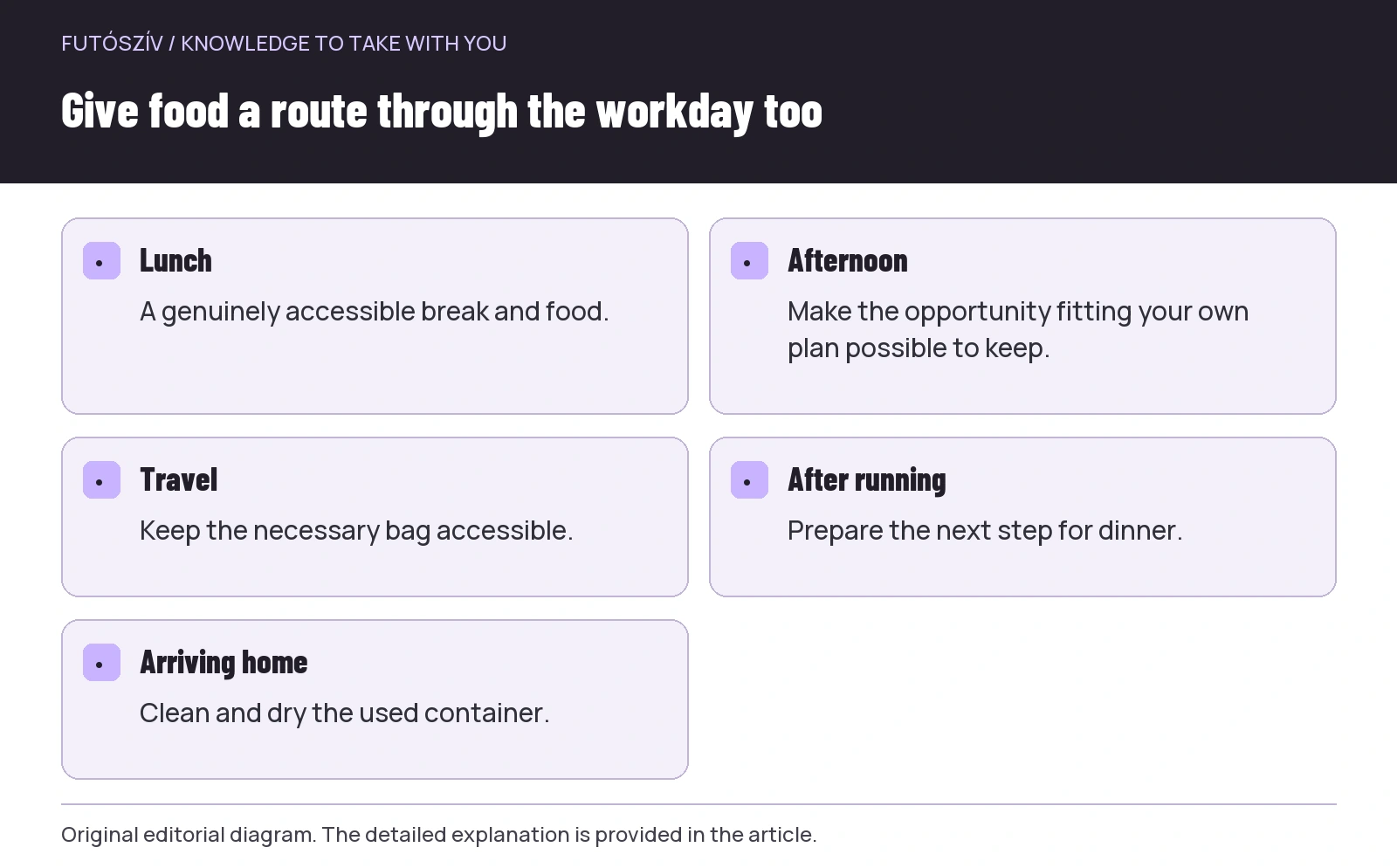 Enlarge diagram
Text version of the diagram
- Lunch
- A genuinely accessible break and food.
- Afternoon
- Make the opportunity fitting your own plan possible to keep.
- Travel
- Keep the necessary bag accessible.
- After running
- Prepare the next step for dinner.
- Arriving home
- Clean and dry the used container.
Make the afternoon eating opportunity real
Identify the last calmer point when you can still reliably access food. It might be a break at work or a short period before leaving for the running location. Do not rely on a quarter of an hour regularly occupied by travel or unfinished work. If your own plan calls for an afternoon snack, organise access to it as specifically as you organise running clothing.
Familiar, previously tested food provides a useful reference for choosing. A banana or another suitable fruit, a simple bread item or a chosen combination stored appropriately creates different packing tasks. They are not all long-lasting, not all suitable without refrigeration, and not all comfortable for every runner immediately before movement. Consider the particular food and timing together. Convenient packaging does not override individual tolerance.
The Sports Dietitians Australia guide to pre-exercise eating places individual food choice and timing at the centre. If you seek a new afternoon option, try it on a calmer training day. Do not change food, quantity and timing together before important intervals. Your own tested choice is more useful than copying the routine of a colleague or running companion whose day is entirely different.
Three workplace settings, three packing systems
With a reliable fridge and eating area, you can plan your own food requiring refrigeration. Put it into appropriate storage in the morning with an identifiable label. You should not need to search the back of a shared fridge when leaving for the run. If you take some food onwards, suitable storage is needed again for travel. Workplace refrigeration does not automatically resolve a longer journey to the running venue.
If there is no fridge, account for that when choosing products from the outset. Choose food fitting your diet whose label and conditions of use match actual storage, or arrange appropriate cooling. “Sandwich” alone does not identify suitable storage conditions because fillings differ. Do not expect the food’s name to provide the answer; specific ingredients and the whole day’s timetable matter.
If you work at changing locations all day, a reliable place to buy food can be part of the plan too. Check opening hours, choices usable for you and whether you can genuinely reach it between work stages. Have a thought-out alternative if it is closed. Many shops along a route do not always mean a suitable eating opportunity. A specifically checked location and backup together provide predictability.
| Work environment | Main question | Practical check |
|---|---|---|
| Fridge and eating area | Can you reach the bag in time? | Labelling and the location of the eating opportunity |
| No fridge | Can the product be stored appropriately? | The label or cooling suited to the journey |
| Changing location | Where is a reliable place to buy food? | Opening hours and specific choices |
| Travelling directly to running | What remains accessible on the way? | Food should not stay at home or in an inaccessible closed bag |
Count the food’s journey from leaving in the morning
Food put into an evening running bag in the morning can travel all day. The journey to the office, working day and onward travel to the running location all count towards its handling. The Nébih guide to thoughtful shopping also discusses appropriate transport of products requiring refrigeration. For the particular food, provide the specified conditions throughout the whole journey, rather than only when you happen to look at the container.
A cool bag and a food container have different jobs. The former can help maintain an appropriate temperature when used to suit the circumstances; the latter separates and transports food. A tight lid is not refrigeration. A separate compartment does not make a chilled filling suitable for all-day room-temperature storage either. Choose the storage arrangement according to ingredients and follow the manufacturer’s instructions.
Keep the food bag separate from used sports clothes and shoes. After running, the empty container can go back into the bag, but provide a place for used utensils too. Do not leave washing up until the morning of the next running day. Preparing a clean, dry container is one of the next occasion’s simplest reliable points. The system works because cleaning and repacking close the loop as well.
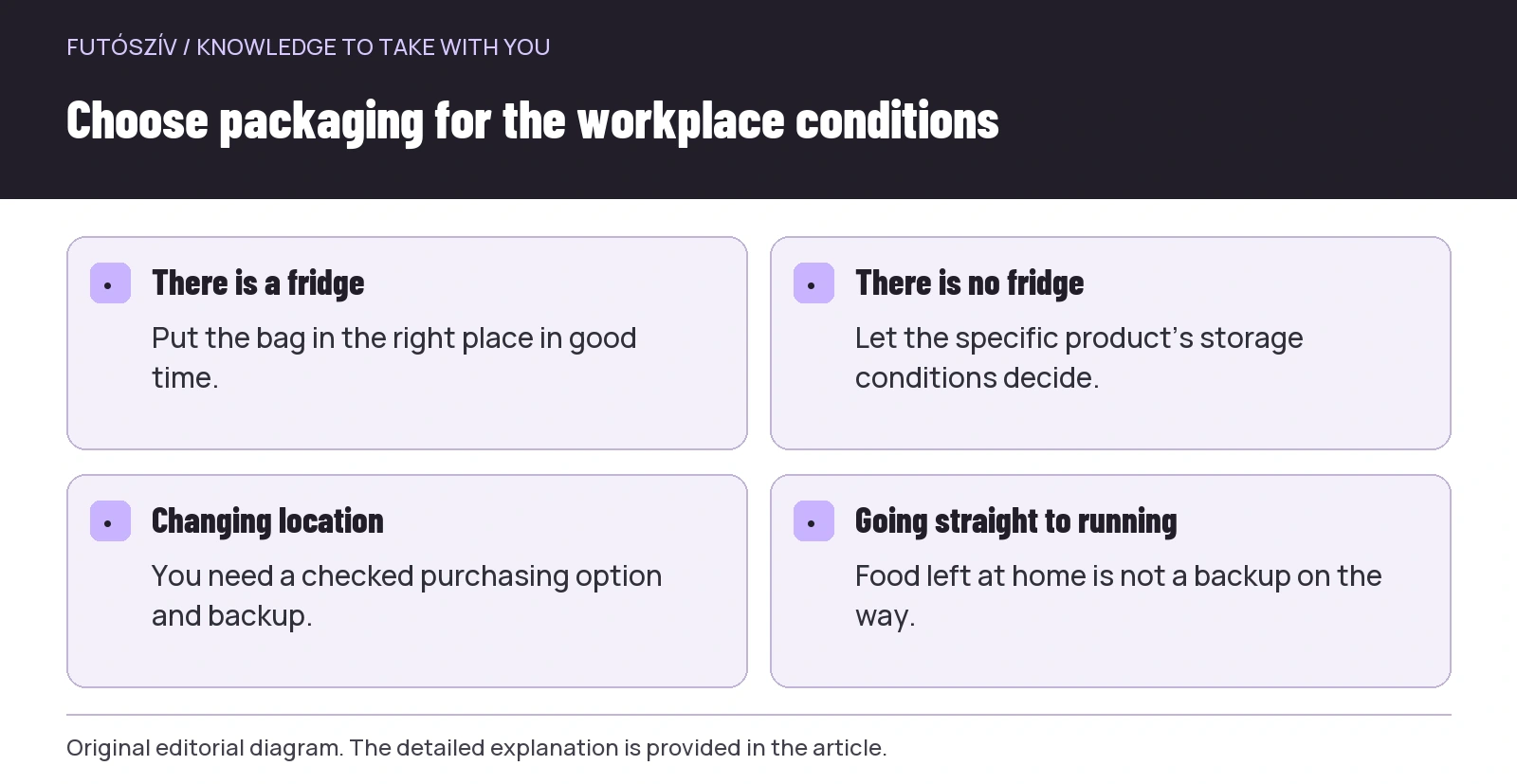 Enlarge diagram
Text version of the diagram
- There is a fridge
- Put the bag in the right place in good time.
- There is no fridge
- Let the specific product’s storage conditions decide.
- Changing location
- You need a checked purchasing option and backup.
- Going straight to running
- Food left at home is not a backup on the way.
Make dinner easy to finish before you leave
If you arrive home late, do not leave the whole meal to be invented then. Before the run, choose what you will eat and which part has been prepared appropriately. This may be a cooked dish safely cooled and stored, or a combination you can prepare fresh with little work. In both cases, follow labels and food-safety guidance for handling. Preparation does not mean leaving a finished meal out for a long time.
Three simple kitchen formats can help on different days. Bread served with a suitable topping and vegetables can require little cooking. For a pasta dish, the sauce or addition can be prepared ahead while pasta is cooked fresh. For a warm bowl, you can assemble separately stored components with appropriate handling. Adapt actual amounts and composition to your own daily needs; the format simplifies the process.
In a shared household, agree which food will be ready when. If the family is already having dinner, arrange appropriate storage for your portion too, rather than just setting it aside on the table. Several serving options can come from one shared base, so a running day need not require separate cooking for everyone. Fit the evening solution into household routines. A good plan is understandable to the people you live with too, rather than existing in only one person’s head.
What should happen if the day falls apart?
Identify the most common delay in advance. Is lunch late, does a meeting overrun or is the journey home unpredictable? Choose one specific backup for that situation. If your own eating opportunity has disappeared completely, changing the run’s start or the day’s arrangements may also be needed. Do not expect flawless improvisation from yourself in an already disrupted situation. An option named beforehand reduces the burden of deciding.
If you feel unwell or unusually weak at the end of the day, sticking to the plan should not take priority. How you feel and appropriate help where needed matter more than the originally intended run. Discuss regular, difficult-to-interpret symptoms with a professional. Observations of your schedule can provide useful information, but cannot replace identifying the cause. Completing training alone does not prove the eating routine was appropriate.
After a week, improve only what genuinely got missed
Briefly review running workdays. Did lunch happen? Could you access the planned afternoon food? Was the packaging appropriate? Was dinner ready after you got home? Answers often reveal one recurring obstacle. If the afternoon container always stayed at home, for example, change the packing location first. You do not need to replace your whole diet with a new system because of that.
Try the same adjustment consistently the next week: put the food bag beside what you take when leaving, or give the eating break a realistic place in the calendar. Here, feasibility and individual comfort are the measures of success. Running time alone does not check the whole day’s nutrition. Eating around after-work running becomes more organised in a lasting way when it is built around your real route and commitments, with food having as reliable a place as your running shoes.
Sources and further reading
- NSW Institute of Sport: Training during meal times
- NSW Institute of Sport: 38 Balanced meal ideas for athletes
- Sports Dietitians Australia: Pre-exercise fuelling
- Nébih: Vásároljunk okosan!
How Futószív articles are prepared: our editorial guidelines.