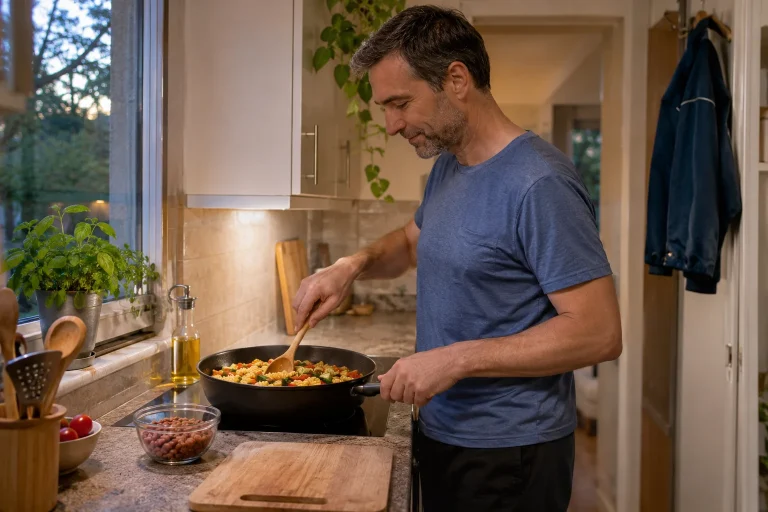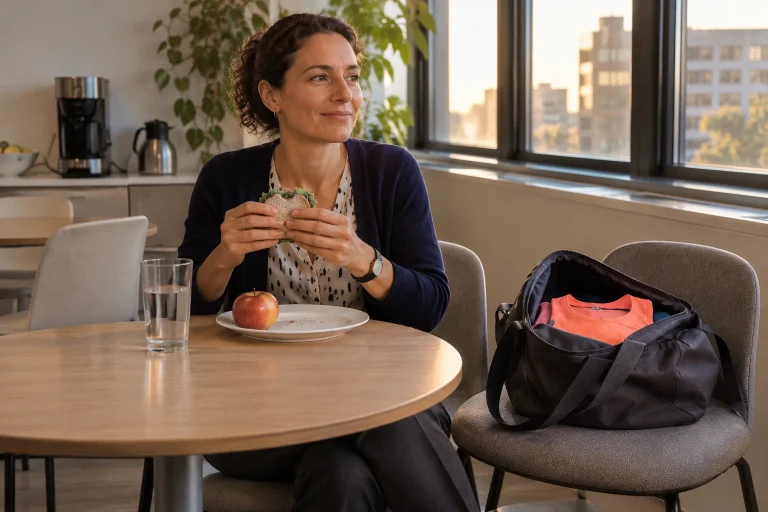
Planning a run after lunch takes more than two times. It matters not only when you ate and when you want to leave, but also what kind of meal and session are involved. An easy loop after a relaxed weekend lunch, a short run squeezed into the middle of a working day and late-afternoon intervals are very different practical situations. A useful routine starts from those actual circumstances. The aim is to make room for both eating and movement without rushing or regularly missing food.
This article helps adult recreational runners with everyday planning, without individual portion or dietary prescriptions. With a known condition, allergy or symptoms associated with eating, follow your own professional guidance. Do not try to resolve recurring gastrointestinal discomfort with an ever-longer prohibited-food list. You can describe your schedule and specific observations well at home, but investigation and personalised dietary planning are different tasks.
Identify the actual lunch
“I had lunch” can mean a simple sandwich, a bowl of pasta or a multi-course meal. Do not treat them as identical starting points. Describe the food’s main components, preparation and your own approximate quantity. You do not need to take scales to the canteen every day, but later experiences are easier to interpret when you know what was on the plate. Note when you finished eating too if you want to see its timing relative to departure.
A familiar food has the advantage of previous personal experience. That does not mean eating the same thing forever, but you need not introduce several new things at once before an important session or one requiring more attention. A new restaurant dish, a larger-than-usual portion and a hard run immediately afterwards make a trial difficult to interpret. It is easier to think clearly about the result of a single change.
According to the Sports Dietitians Australia guide to pre-exercise eating , there is no single best food or snack for everyone. For most people, a main meal several hours before activity, with a smaller meal possible closer to it, can work, but individual tolerance is crucial. Do not treat the source’s general timing framework as automatic permission for any portion and intensity. You need to fit your own situation to it.
Specify the run too
When does the actual running part of the session begin? What kind of load are you planning? Changing and travelling to the location do not always mark the same time as starting movement. A group session’s advertised meeting time may be followed by a briefing and warm-up, whereas in a work break you may start almost immediately. Include these details in your own plan so you relate lunch to a real timetable.
Take the planned run’s length and intensity from your training plan, rather than increasing or making it harder around the meal. If lunch is substantially delayed, it may be worth changing the run time or the arrangement of the whole afternoon. Good organisation is not only about reducing food. A flexible route, later start or another time that fits the plan may also work when the day’s real circumstances turn out differently.
If you work with a coach, it is useful to say which days have fixed lunch breaks and afternoon commitments. Coordinating nutrition and training plans also requires knowing practical limits. An expectation to “always start on the dot” can cause difficulty when lunchtime regularly changes. Discussion based on the actual work schedule is more useful than trying to squeeze in food at the last minute every time.
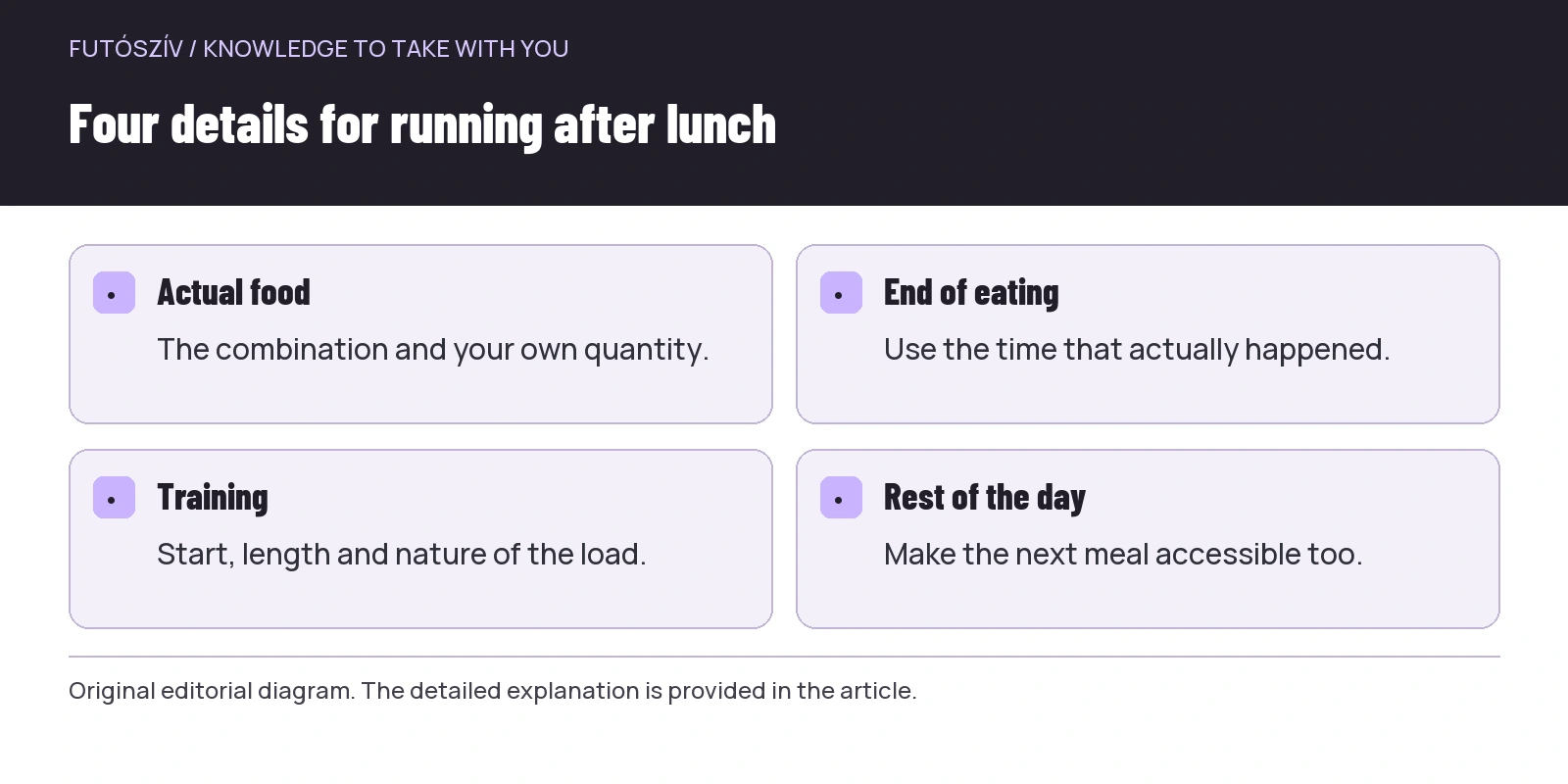 Enlarge diagram
Text version of the diagram
- Actual food
- The combination and your own quantity.
- End of eating
- Use the time that actually happened.
- Training
- Start, length and nature of the load.
- Rest of the day
- Make the next meal accessible too.
The time frame is a compass, not a countdown
The British Dietetic Association sports nutrition information recommends regular eating and carbohydrate-containing food choices fitted around exercise. For a light meal, it also gives two to three hours beforehand as a general example. This is a reference point, rather than a precise digestion deadline for every person. Meal size, composition and the activity’s character mean the same interval can describe different situations on two days.
Do not plan the day around a universal waiting period expiring to the minute before your run. Instead, consider what previously felt comfortable and was feasible, then use that under similar circumstances. If troublesome fullness or other symptoms occur regularly, show a professional the actual lunch and movement timetable together. An online rule that sounds certain cannot replace assessment of an individual situation.
The next meal belongs in timing considerations too. If you move lunch much earlier because of the run, what happens during the rest of the afternoon? Will suitable food be accessible, or will another long organisational gap appear before dinner? See the day’s elements together. Lunch fitted before training is useful when it does not leave subsequent work, travel and evening eating unresolved.
Three common daily schedules
In the first situation, you want to run during a lunch break. Here it is worth finding separate space for food and movement, because a full main meal, running, changing and returning to work can require substantial time together. If the break genuinely cannot accommodate them, reshape the plan. You do not need to skip lunch regularly simply to keep the original idea unchanged. A dietitian can also help establish a routine suited to adequate daily nutrition.
The second situation is a late-afternoon run after an early lunch. Several hours and work tasks lie between them. Alongside lunch, plan access to a snack fitting your own plan if needed. “I will buy something when I leave” can easily fail if the last meeting runs late. An option checked in advance that can be stored appropriately reduces chance decisions.
The third situation is a shared weekend lunch followed by a planned run. Family timing can change and the meal may last longer. You can adapt movement to that day; you do not have to turn a shared meal into a pre-race experiment. If an important session is planned, arrange it in another time window beforehand or discuss it with those around you. The social aspect of eating is a real circumstance that can be included in the schedule too.
| Situation | Main planning question | Specific next step |
|---|---|---|
| Short lunch break | Is there room for eating and running separately? | List changing and getting back as well |
| Several hours between lunch and running | What is accessible in the afternoon? | Plan the eating opportunity you personally need |
| Variable weekend lunch | How fixed is the session’s start? | Coordinate or choose a flexible time window |
| Food arriving late | What can change in the day? | Review the movement timetable too |
In a canteen, look at the whole plate first
Start from the food’s actual components rather than the menu name. What is the side dish, main ingredient, sauce and preparation method? Even dishes with the same name can differ between kitchens. If there is a choice, look for an option fitting your diet and earlier experience. You do not need a special menu on every running day, but it is worth asking about unfamiliar ingredients, particularly with an allergy.
For portions, your own needs and day matter. A canteen ladle is not a personalised sports nutrition measurement. If eating regularly feels inadequate or difficult to fit around work and training, review the whole daily pattern with a professional. Do not seek the solution only in eating an identical portion every lunchtime regardless of circumstances. Dietary planning works with more factors than that.
If you run after lunch, a dish previously found comfortable can be a good practical reference. You can try a new, unusually spicy food or one substantially different from the familiar on a calmer occasion too. This does not label the dish bad; it simply reduces new elements before a particular session. Everyday variety and a predictable routine before important training are not mutually exclusive.
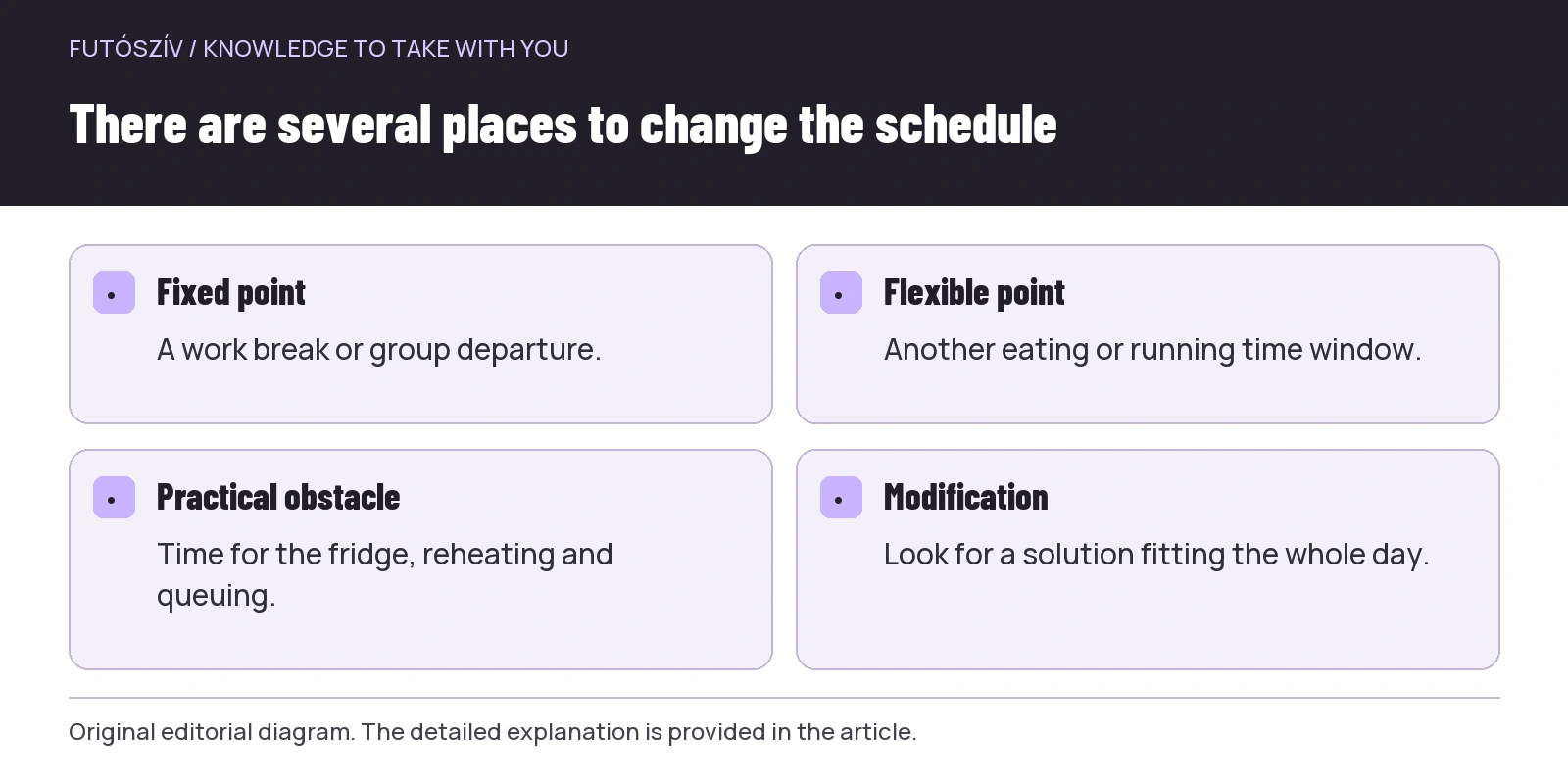 Enlarge diagram
Text version of the diagram
- Fixed point
- A work break or group departure.
- Flexible point
- Another eating or running time window.
- Practical obstacle
- Time for the fridge, reheating and queuing.
- Modification
- Look for a solution fitting the whole day.
For lunch brought from home, access matters too
Before choosing food, check workplace facilities. Is there a fridge and a suitable opportunity to reheat, and can you genuinely access them when planned? Follow storage and transport requirements for prepared food. Lunch delayed because of running must not remain in a bag for an uncertain period. If your work schedule is unpredictable, plan an option you can handle safely in that setting.
Separately packed components can make serving more flexible. A side dish, an accompanying main component and a separately served addition may retain a preferred texture, but separation does not automatically extend shelf life. Consider the requirements for the chosen ingredients together. Test container size and closure with the actual food, and do not leave utensils out of the bag.
We often underestimate the time involved in lunch. Reaching the fridge, reheating, queuing and finding somewhere to eat may all form part of the break. Including them produces a more accurate timetable. Rather than a rushed lunch finished in the final minutes before running, an earlier, genuinely accessible eating opportunity often resolves the difficulty. Reviewing the work schedule can therefore produce a directly usable change.
Observations you can learn from
Choose a few ordinary running days and briefly describe lunch, when eating ended, the run’s start and the session’s character. Describe the experience specifically: starting felt pleasant, you arrived hungry, fullness was troublesome or the meal did not happen on time. “Bad lunch” does little for the next decision. A precise description can reveal whether you face a food-choice, timing or organisational question.
If you change something, begin with one detail. This could be an earlier lunch, a different preparation of a familiar dish or arranging an afternoon eating opportunity. Keep other circumstances similar where possible. One favourable run does not establish a general rule, but consistent observations can help create a working routine. If the situation recurs, seek appropriate help rather than maintaining restrictions because of symptoms.
Show the whole day when asking for help
The NSW Institute of Sport guide to training during meal times puts planning ahead at the centre. For your own consultation, bring not only a photograph of lunch but also the workday and running timetable. Where is a fixed break, what regularly slips, what is available on site and when does dinner follow? These details determine the feasibility of an individual plan.
Well-coordinated lunch and running do not mean observing one waiting period identical for everyone. You place the actual food, load, personal experience and available eating opportunities alongside one another. The routine becomes useful when it works on an ordinary workday too, with sensible options for changing circumstances. It is easier to start comfortably from that arrangement than from a minute-perfect plan that never meets your actual lunch break.
Sources and further reading
- Sports Dietitians Australia: Pre-exercise fuelling
- British Dietetic Association: Sport and exercise
- NSW Institute of Sport: Training during meal times
How Futószív articles are prepared: our editorial guidelines.