A savoury breakfast can take many forms: a hot egg dish, pulse-based spread, bread with vegetables or another combination fitting your diet. “Savoury” here describes flavour, not adding as much salt as possible. Runners need not choose one compulsory breakfast either. What matters is that a dish can be prepared appropriately, is enjoyed and fits individual needs. This article offers kitchen ideas and an organising method for healthy adults rather than personalised nutrient targets, portions or clinical diets.
Choose a meal type for your morning
A calmer morning at home allows different options from a period squeezed between early running and work. First check whether cooking, reheating or packing is possible and when running follows eating. Choosing an appropriate breakfast is more than a recipe question. An available refrigerated ingredient, clean work surface and actual opportunity to eat contribute to usability too. If only brief assembly fits, do not appoint a multi-pan dish as the compulsory routine for every working day.
Write down two proven versions: a cold option with few steps and a hot one realistic for you. Develop them according to your dietary restrictions and tastes. They do not necessarily mean identical quantities or nutritional composition, so adapt to personal needs. The plan aims for access and easy decisions. You need not eat the same thing every morning, nor invent a new dish daily. A few familiar basics can vary through many additions under appropriate handling conditions.
Three roles to help assembly
Think of a base, main topping and additions. The base might be bread fitting your diet or another appropriate element; toppings might include suitable egg, pulse, dairy or other options; additions may be vegetables and seasoning suited to the dish. This is a kitchen division, not a complete dietary model. Assess quantities and suitability according to your needs. The roles help because, at shopping and preparation, they reveal which element is missing from the actual meal.
The adult OKOSTÁNYÉR guide supports general food choices in Hungary. When assembling savoury breakfasts, consider variety across the whole day rather than expecting one meal to solve every task. Personal amounts and timing relating to running demands are separate questions. With a special diet, clarify suitable substitutions with an appropriate professional. The three kitchen roles make implementation easier rather than prescribe identical portions to everyone.
 Enlarge diagram
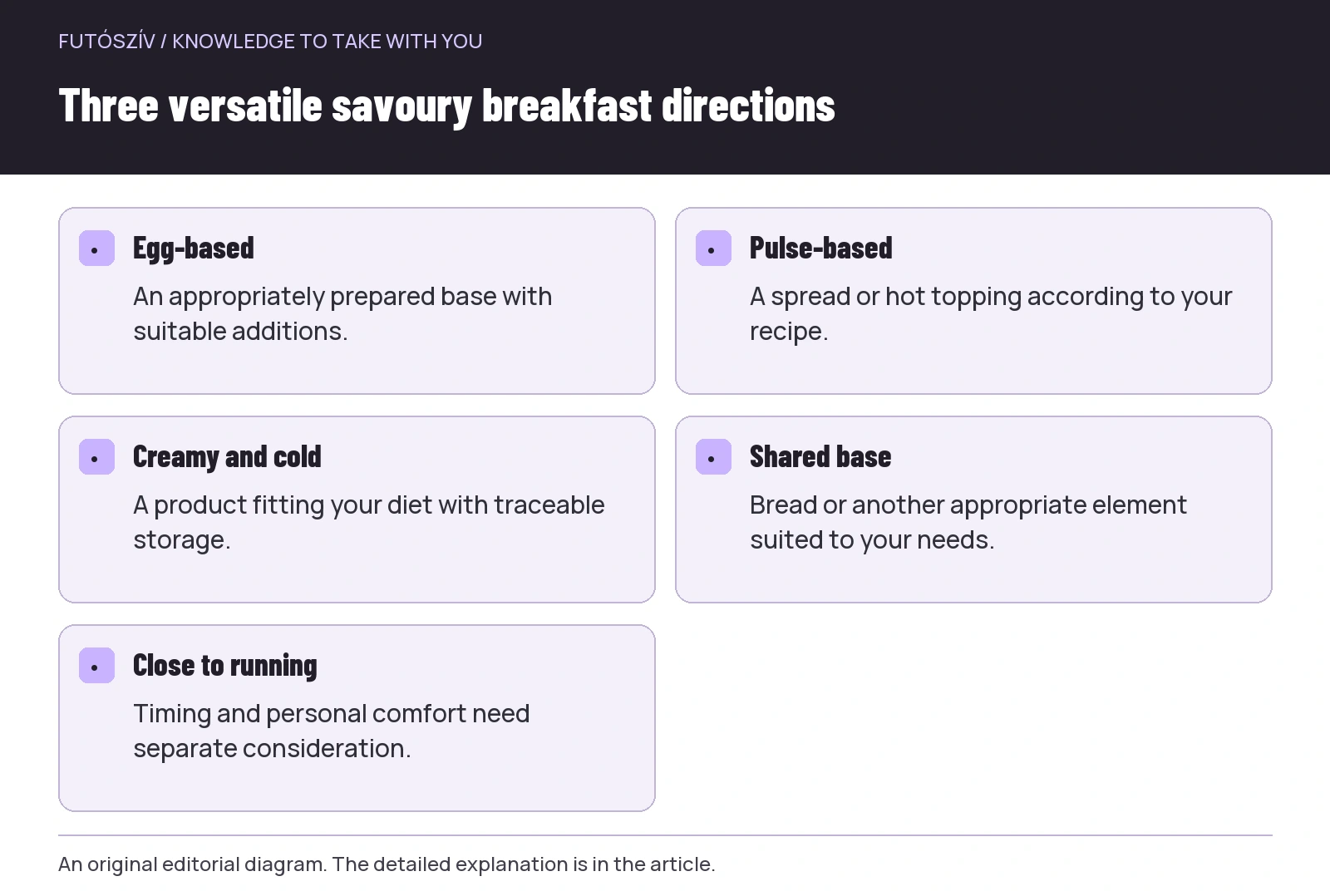
Text version of the diagram
- Egg-based
- An appropriately prepared base with suitable additions.
- Pulse-based
- A spread or hot topping according to your recipe.
- Creamy and cold
- A product fitting your diet with traceable storage.
- Shared base
- Bread or another appropriate element suited to your needs.
- Close to running
- Timing and personal comfort need separate consideration.
Egg-based: a hot base and fresh additions
If eggs suit you, an appropriately cooked egg dish can be one choice. Suitable, appropriately handled vegetables, the bread base and seasoning can provide breakfast variety. Every ingredient need not be mixed into the egg dish. Some additions can be served separately, allowing texture and flavour to match preferences better. Follow the specific recipe’s preparation and food-safety steps. Quick cooking does not justify omitting required cooking or cleaning.
The FDA egg-safety information treats appropriate storage, thorough preparation and handling surfaces contacting raw egg as parts of safety. General home guidance emphasises cooking until both white and yolk are firm. Follow appropriate instructions for your product and situation too. Do not taste raw mixtures or use equipment contacting raw egg for ready-to-eat food without cleaning. Cooking and tidying afterwards are real actions within the morning timeline.
Pulse-based: a spread or hot topping
Pulses fitting your diet can become a spread made to your recipe or a warm topping with sauce. Follow the particular product’s preparation and use instructions; dry ingredients and canned versions do not involve identical work. Favourite spices and suitable vegetables can provide different character while the base remains. Do not make a large amount from the whole package merely because using it for one breakfast. Storage after opening and actual consumption determine which pack size fits your kitchen. An appropriate food is not automatically an identical dietary choice for everyone.
The NHS beans-on-toast recipe offers a specific example of combining a vegetable-and-pulse base with bread. This article does not copy the recipe or its family portions as a runner’s diet. The underlying idea is kitchen variety: pulses can have a place beyond lunch if the dish suits you. Examine the whole combination and your needs in your version. Personal comfort with a high-fibre or other ingredient-rich dish close to running is a separate question not resolved by a general recipe title.
Creamy and cold: an easily assembled bowl
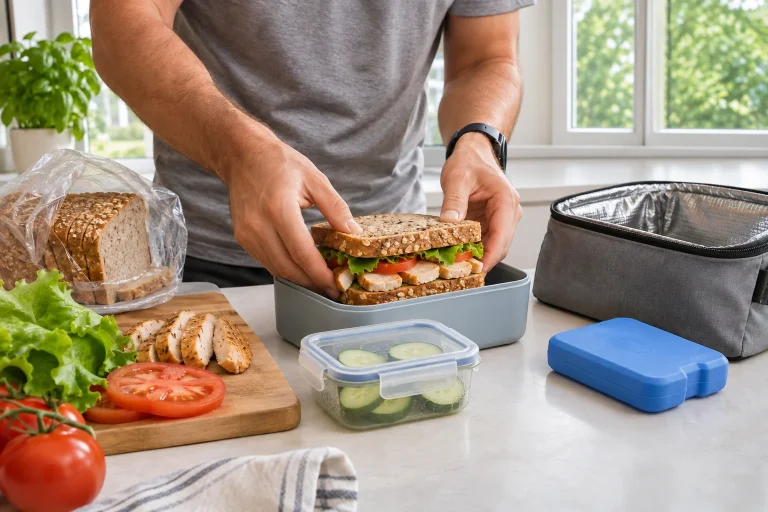
A creamy topping made from an appropriate dairy product or another base fitting your diet can make a simple breakfast. Check its particular composition, allergen information and instructions after opening. Substituting another product is not automatically an identical nutritional exchange. Seasoning and suitable vegetables can vary your recipe, with bread or another base served separately. When time is short, arranging kitchen elements the previous evening helps while keeping ingredients requiring refrigeration in the right place.
The way vegetables are cut and toppings layered can affect texture too. If bread quickly becomes soggy, keep wetter elements separate until serving according to storage instructions. A packed version may need another arrangement from one eaten immediately. The goal is not a single perfect spreading technique but food pleasant to eat within your workflow. If one approach regularly needs too much preparation, simplify the number of elements or choose another proven dish. A breakfast’s value does not depend on complexity.
| Meal direction | What can provide variety? | First check |
|---|---|---|
| Egg-based | Suitable vegetables, bread base and seasoning. | Appropriate cooking and raw/ready-to-eat separation. |
| Pulse-based | A spread or hot vegetable topping. | The particular product’s preparation needs. |
| Creamy and cold | Another suitable flavouring and serving order. | Composition and storage after opening. |
| Individually assembled | The same suitable elements in several combinations. | Individual needs, not compulsory identical plates. |
Savoury flavour does not rely on one seasoning
Herbs, ground spices, an appropriately used acidic element and different textures can shape the dish according to your recipe. A savoury breakfast need not mean continually adding more salt. Ready toppings, cheese, sauces and other products may already contain salt and other ingredients, so read ingredient lists. With known dietary restrictions, follow personal instructions. Kitchen seasoning aims for an enjoyable dish, not self-prescribed salt replacement because of running; that may be a quite different, individual sports nutrition question.
Choose a few familiar flavour profiles, for example herbs, paprika or tomato for an appropriate base. Adapt to particular products and your diet. Every version need not require a new jar if existing seasonings work. Check opened seasonings’ storage and condition just as with main ingredients. A topping long on the shelf is not definitely suitable merely because little goes into the dish. Simple, manageable supplies make morning decisions and maintaining variety easier.
 Enlarge diagram
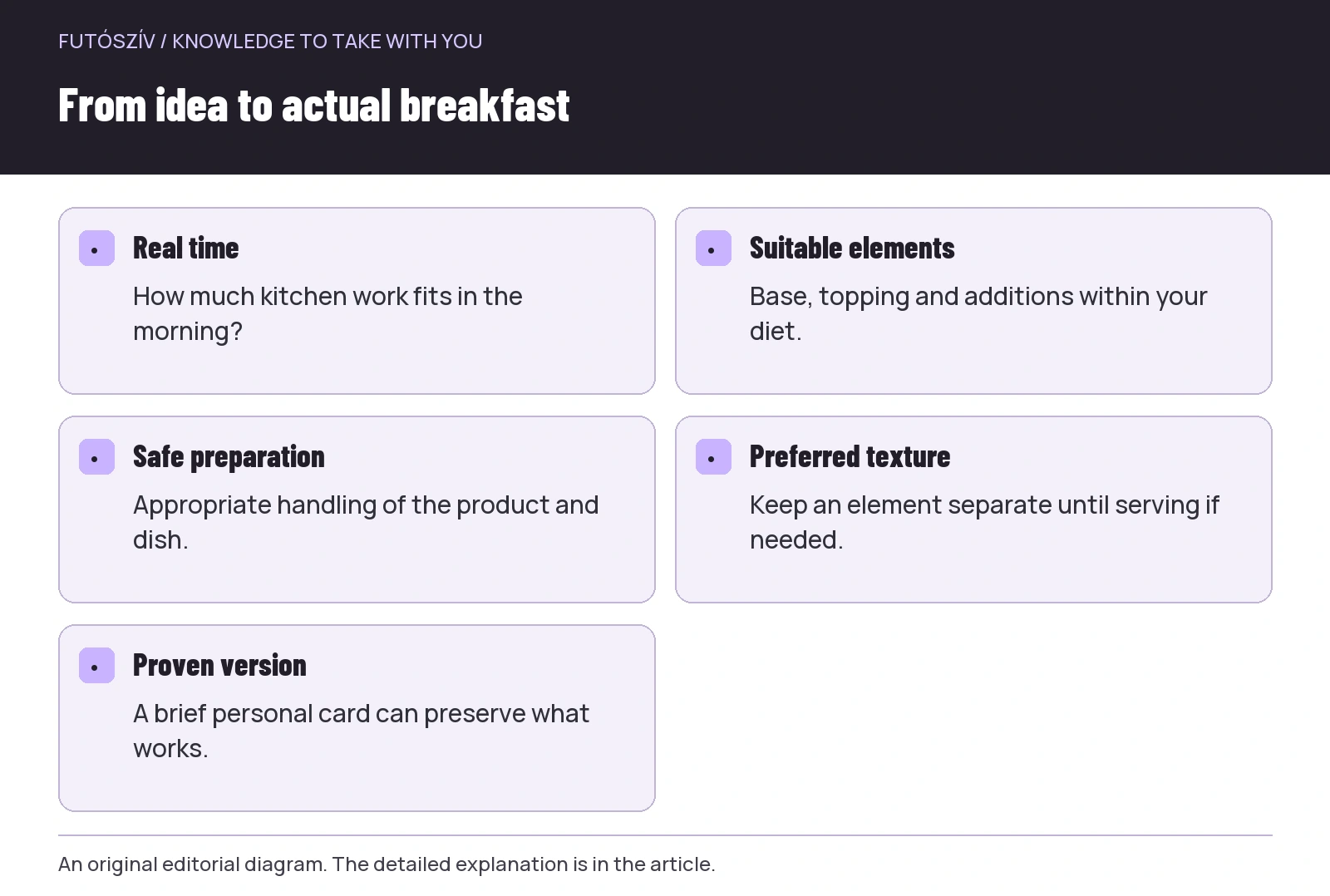
Text version of the diagram
- Real time
- How much kitchen work fits in the morning?
- Suitable elements
- Base, topping and additions within your diet.
- Safe preparation
- Appropriate handling of the product and dish.
- Preferred texture
- Keep an element separate until serving if needed.
- Proven version
- A brief personal card can preserve what works.
Different questions may matter before or after running
The Sports Dietitians Australia pre-exercise guide emphasises individual timing, familiar food and digestive comfort. A substantial breakfast with several savoury toppings is not automatically suitable immediately before running, while a general article cannot determine exactly what fits you. Assess your situation and needs. Variety across the whole day and a specific food choice close to running are not identical tasks. A sports dietitian can help with a personal plan where needed.
If trying a new savoury breakfast, do not make an important event its first test. Choose calmer, appropriate circumstances to learn preparation and your comfort while respecting known dietary restrictions. Make observations specific rather than general food judgements. For example, preparation involved too many steps or you enjoyed that texture. Do not try to replace assessment of persistent symptoms solely by changing recipes. Separating kitchen experience from healthcare questions preserves what an observation can explain.
What can you arrange the previous evening?
Prepare suitable equipment, check necessary ingredients and decide which version to make. Chilled ingredients should remain under appropriate conditions and dry elements in storage matching their labels. If making part ahead, follow safe storage and onward-use arrangements for that food. Every breakfast does not need a complete cooked meal prepared beforehand. Organising tasks and ingredients can reduce morning rushing while leaving room for fresh preparation. Your time and kitchen facilities determine the appropriate level.
Keep opened packages’ condition traceable, particularly when several family members use them. There should be no guessing at the fridge about which spread was made when. Labels and a brief discussion help but do not replace food-safety requirements. If taking breakfast with you, plan storage and eating opportunities too; a lidded container alone is not refrigeration. Your food is a good backup when its entire path is arranged, from preparation at home through actual eating to appropriate cleaning of the used container.
A proven version can become your own breakfast sheet
Record the favourite base, suitable topping and few additions regularly used. Add what is made fresh and which preparation helped. Do not equate personal portions and needs with another recipe’s four-person or one-person label; that is a starting quantity for making a dish, not a personalised sports diet. If a version is insufficient or otherwise unsuitable, examine your whole eating situation. The card is an aid, not a rule sheet restricting food.
A functioning savoury breakfast provides a few familiar, suitable elements adaptable to your morning and needs. Variety comes from enjoyable combinations and appropriate kitchen organisation, not unusual sports products or many new toppings. Egg, pulse and creamy directions can all be possibilities within your diet. The right choice is one you enjoy, can prepare safely and can actually make within a real running week.
Sources and further reading
- MDOSZ: OKOSTÁNYÉR for adults
- FDA: What You Need to Know About Egg Safety
- NHS: Brainy beans on toast
- Sports Dietitians Australia: Pre-exercise fuelling
How Futószív articles are prepared: our editorial guidelines.