Weekend food preparation helps a week filled with running and work when it removes a real later task. You do not need to finish cooking every dish on Sunday. Often, preparing a few ingredients, an appropriately handled meal or the basics for quick fresh cooking is better. Storage capacity and food safety matter alongside time in making the decision. This article is an everyday organising guide, not a personalised sports diet. Follow your own health, allergy and dietary requirements when applying the examples too.
Do not make the number of containers the goal
Begin with the days when time really will be short. Which meal would require the most preparation, and which part can reasonably be done beforehand? Suitable prepared food may help a crowded Monday evening, whereas a Wednesday spent at home may not need an entire weekend-cooked meal. Derive the task from the calendar and your own kitchen routine. Many neatly lined-up containers do not reveal whether food will actually be eaten or can be stored appropriately.
Write down the intended result: less chopping, quicker cooking, an accessible dinner or an appropriately arranged workday lunch. These are different goals. If searching for ingredients is the only problem, a whole cooking day is not necessarily needed. If using the cooker late at night is unrealistic, a different preparation level is required. A good plan addresses the specific bottleneck experienced during the week. Running’s place also belongs to the routine, but does not by itself determine every meal to prepare ahead.
Three levels of preparation
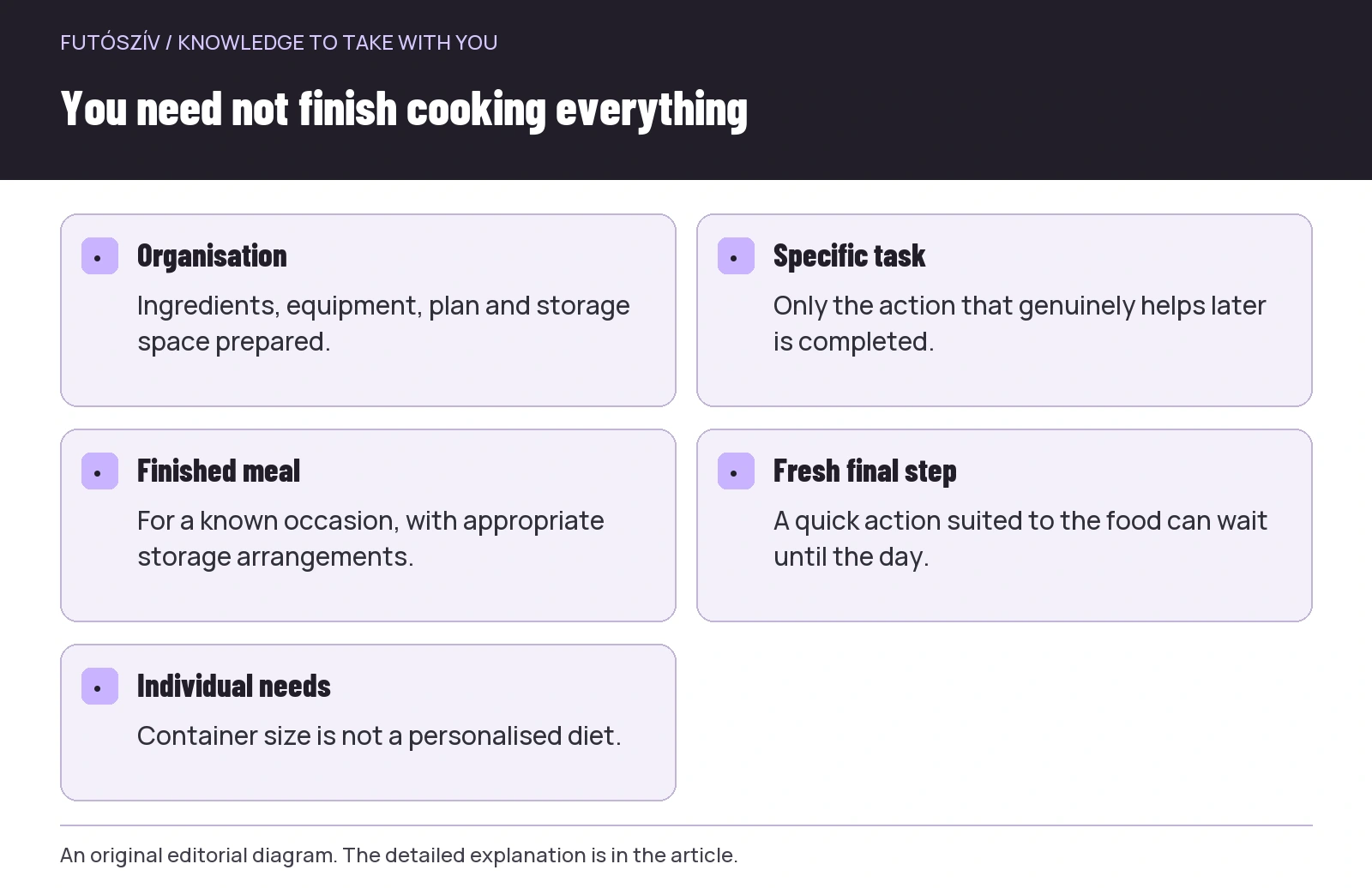
The first level is organisation: choosing a recipe or meal idea, checking suitable ingredients are available and preparing equipment and storage. The second involves specific tasks, such as preparing an element appropriate to a particular dish that can be handled safely. The third is a finished meal that you chill, store or freeze appropriately for later use. Every meal need not reach the third level. The smallest sufficient preparation is often more flexible because fewer finished dishes await consumption at uncertain times. Follow the particular food’s handling requirements when choosing.
The Nébih Menu Planning Without Leftovers publication connects menus with supplies and actual eating habits. In preparation, this means the amount of food intended for the week and its storage time should not become assumptions. The publication’s refrigerated-storage examples are conditional on an appropriate fridge at 1–5 °C and cooling and refrigeration within no more than two hours. These are conditional instructions, not an identical storage period for every food. Examine the particular food and circumstances separately.
 Enlarge diagram
Text version of the diagram
- Organisation
- Ingredients, equipment, plan and storage space prepared.
- Specific task
- Only the action that genuinely helps later is completed.
- Finished meal
- For a known occasion, with appropriate storage arrangements.
- Fresh final step
- A quick action suited to the food can wait until the day.
- Individual needs
- Container size is not a personalised diet.
Check fridge and freezer capacity beforehand
Before a large cooking session, make room for appropriate storage. A crowded fridge without organised space for finished dishes is not a minor detail to resolve afterwards. Separation, suitable packaging and storage conditions for raw and ready-to-eat foods matter. The freezer also needs an identifiable space and an actual use plan. Every free compartment need not be filled; the aim is supplies you can track and use. An unseen, unlabelled container is easily forgotten even if carefully prepared.
Check suitable containers and labelling options. Food containers should be clean, appropriate for the intended task and seal properly. Do not infer suitability for freezing, reheating or another process solely from container shape. Its own markings and instructions matter. Prepare enough labels to keep contents and storage time clear. This is not post-cooking decoration: it is a practical tool for later safe use and avoiding unnecessary repeat purchases.
What is worth leaving fresh?
Steps that are quick and for which fresh preparation better fits the food and routine need not be completed ahead. Final assembly of a fresh bread-based meal, preparing a particular vegetable according to its recipe or the last step of a simple hot dish can remain for the day. The decision is not only about texture: safe storage and product instructions matter too. Not every ingredient behaves identically after cutting, mixing or storage, so choose an approach suited to the specific food.
If storing a topping or dressing separately helps later assembly, keep it separate appropriately. Refrigeration requirements do not disappear; only assembling the meal becomes more flexible. Continue following the opened product’s own storage period. A common preparation mistake is losing the original after-opening information when transferring an ingredient into a new container. Keep or copy the necessary information. An attractive container does not restart food’s storage life.
What can you prepare as a specific task?
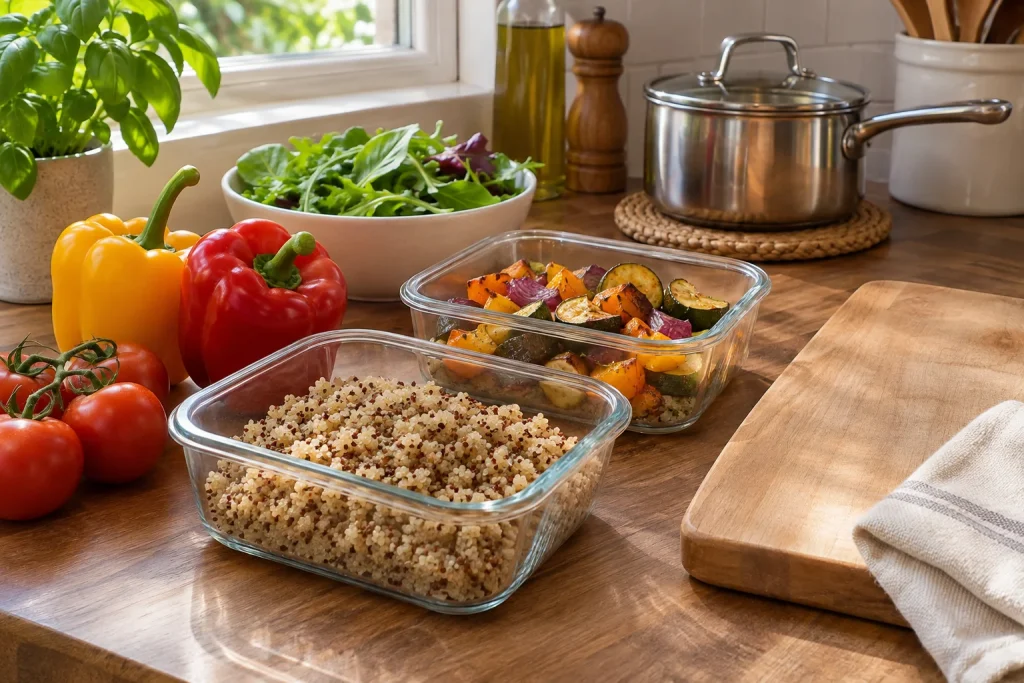
A specific task might be measuring dry ingredients for your recipe, preparing ingredients that can be handled appropriately or making the base of a particular dish. Organise work with raw and prepared elements separately, using clean tools. Do not automatically chop every vegetable for several days simply because containers are available. The particular ingredient and storage conditions are decisive. Weekly preparation’s value lies not in ticking off every possible action but in easing later cooking with ingredients in suitable condition.
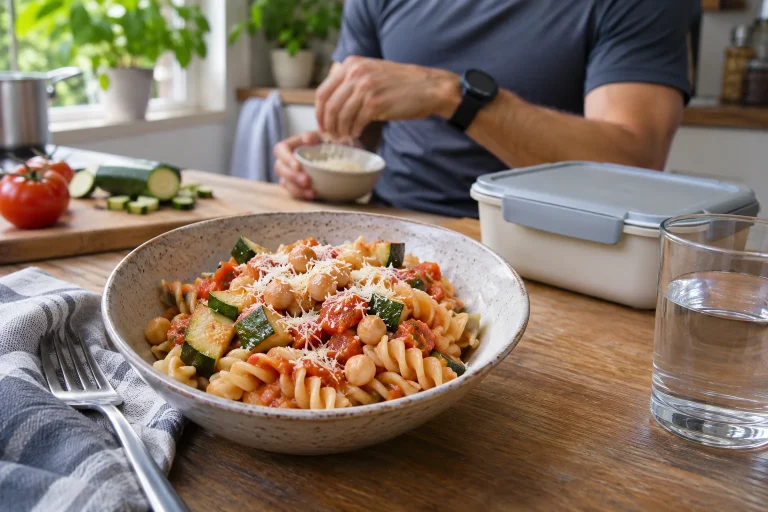
Your own meal card can also help: ingredients are available, necessary equipment is known and the package’s preparation step is immediately visible. For a pasta dish, for example, you need not necessarily cook the entire meal days earlier; having an appropriate sauce or ingredients available can remove much evening work. Follow the particular storage instructions here too. Partial preparation means fewer finished meals await eating if routines change. Match the decision to the actual day of use, not a general online meal-preparation trend.
A finished meal: for a known later occasion
When making a finished dish, identify the next eating occasion and storage path. If the time falls beyond safe refrigerated storage for that food, examine appropriate freezing or choose another preparation method. The Nébih educational material The Journey of Food discusses storage, thawing and repeated reheating as parts of safe handling. Prepared-ahead food is no exception. A well-planned container includes how it will be used later.
Do not plan to reheat an entire large pot of leftovers daily and put it back. Appropriate portions matching actual use can help avoid unnecessary repeated handling. The storage history of prepared food should be known. Your own sensory impression does not replace appropriate time and temperature handling. Uncertain storage history is not resolved by the effort invested in making the dish. Preventing waste begins here with realistic cooking quantities, correct storage and traceable use.
| Preparation level | What does it solve? | What question remains? |
|---|---|---|
| Organisation | No searching for ingredients and a recipe. | The food still needs preparing on the day. |
| Specific task | Fewer actions are needed later. | Safe storage of the prepared element. |
| Refrigerated finished meal | A dish accessible within an appropriate period. | Food-specific conditions and use. |
| Appropriately frozen food | Supplies planned for a later occasion. | Thawing, preparation and identification. |
| Fresh final assembly | Flexible serving and a preferred texture. | Time and suitable ingredients must actually be available. |
 Enlarge diagram
Text version of the diagram
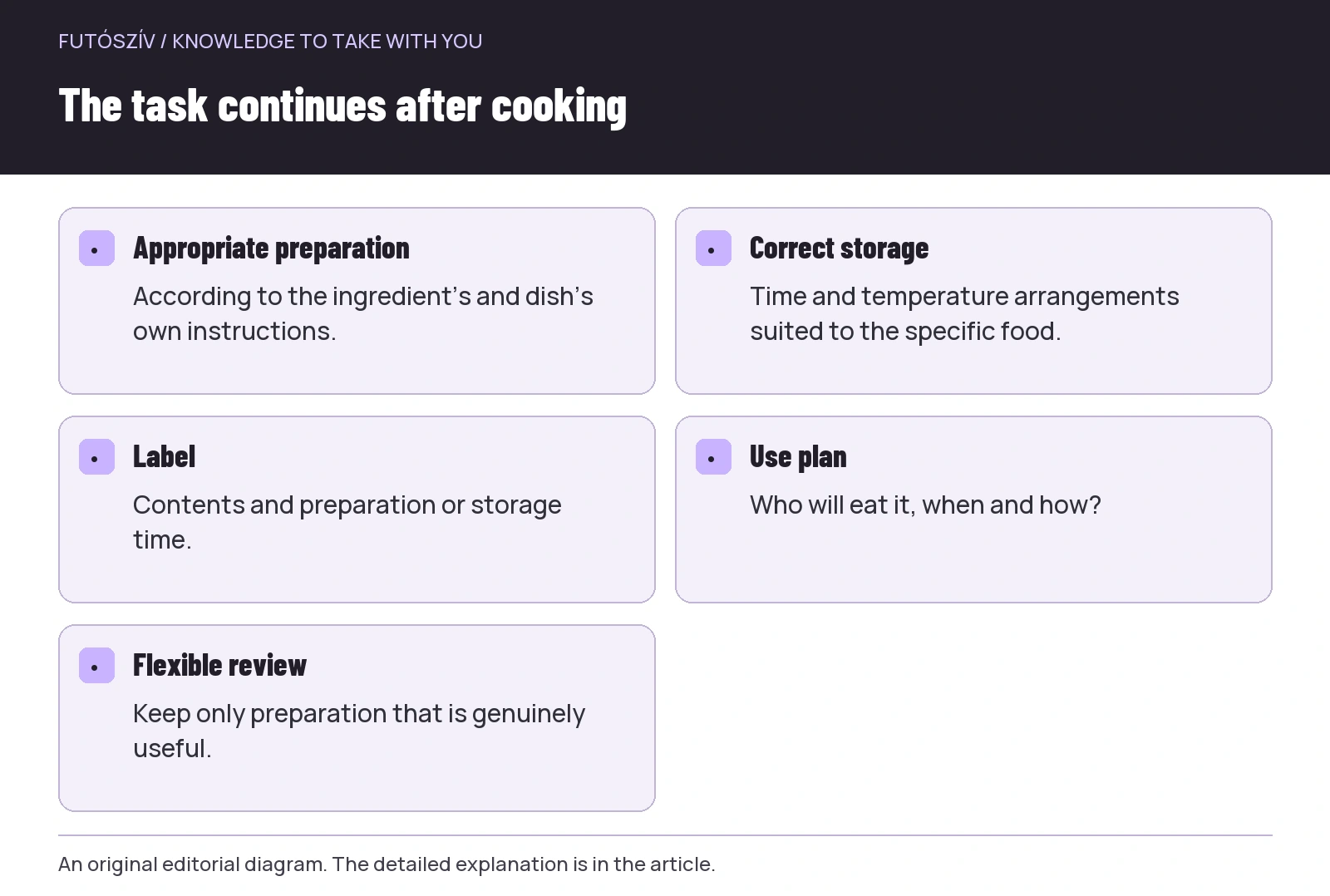
- Appropriate preparation
- According to the ingredient’s and dish’s own instructions.
- Correct storage
- Time and temperature arrangements suited to the specific food.
- Label
- Contents and preparation or storage time.
- Use plan
- Who will eat it, when and how?
- Flexible review
- Keep only preparation that is genuinely useful.
Do not let one repeated dish become the whole week’s eating
Preparation can make appropriate eating easier, but variety is worth planning too. The NSWIS sports nutrition meal ideas show combinations of several basics while noting that individual portions differ. In your system, a few shared basics can produce several favourite dishes. Every day need not bring a completely new recipe, but preparation convenience need not mean eating the same thing all week if it is unsuitable or unenjoyable. Preserve specific dietary needs alongside simplification.
Do not let available container size decide quantities and timing related to running demands. One basic meal can appear in different portions and with additions according to individual needs. If following a personal sports nutrition plan, its implementation can be adapted to the kitchen method. Packing containers is organisation, not an independent dietary prescription. If prepared amounts are regularly insufficient or meals are repeatedly difficult to arrange, review individual nutrition questions with an appropriate professional alongside the daily routine.
A simple workflow for a preparation afternoon
First examine the plan, ingredients, storage space and containers. Then follow safe workflows for the particular dishes, separating raw and ready-to-eat foods. Do not begin several large cooking tasks at once if you can no longer follow appropriate later handling. Time for cooling, storage and labelling belongs to the work, not an extra somehow fitted in at the end. Apply necessary instructions according to the particular food and ingredients. The aim is not maximum simultaneous action but supplies that are manageable and complete.
Keep a brief list of finished items: what exists, where it is and the planned use. If several people cook and eat from the same supplies, coordinate so two plans do not count on the same portion. Information should be easy to read on the container at the later meal. Among identical freezer containers, identifying contents is particularly helpful. Do not rely on lid colour if it can later be swapped or moved. Labels support using supplies and reduce the chance of further unnecessary cooking or shopping.
What if the week changes?
If a planned meal at home does not happen, examine the food’s actual condition and safe onward options. Do not automatically extend every item’s deadline by one day. Suitable freezing or other uses depend on the food and its history. An uncertain condition discovered late cannot be rescued merely by relabelling. Flexibility is supported by not having unnecessarily prepared everything ahead and retaining a few simple meals that can be made fresh. Partial preparation can therefore adapt better to small changes.
At the end of the week, note which prepared elements saved real work and which repeatedly went unused. Every missed dish need not be called a failure. Perhaps too much finished food was made, you prefer the dish fresh or the working day unfolded differently. Modify one specific point next time. Good weekend preparation does not close the entire week in advance; it provides appropriately handled, genuinely usable basics for changing days while leaving room for fresh cooking and individual choice.
Sources and further reading
- Nébih: Menu planning without leftovers
- Nébih: The journey of food
- NSWIS: 38 balanced meal ideas for athletes
How Futószív articles are prepared: our editorial guidelines.