Make the next step clear in the first few minutes
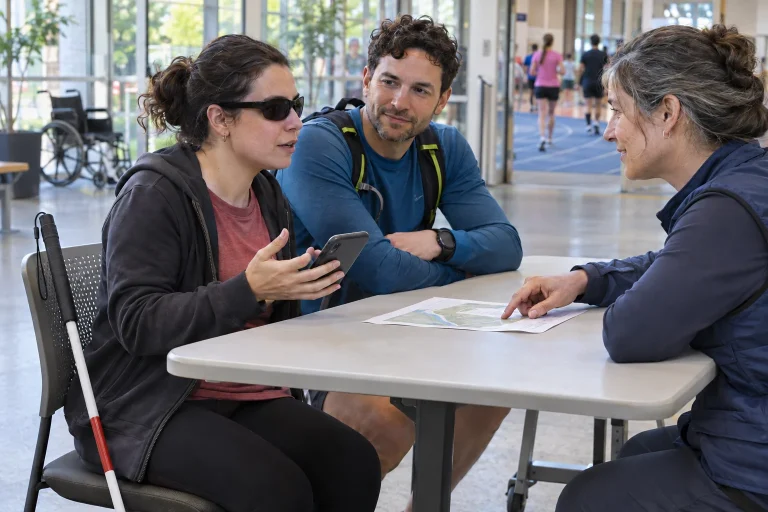
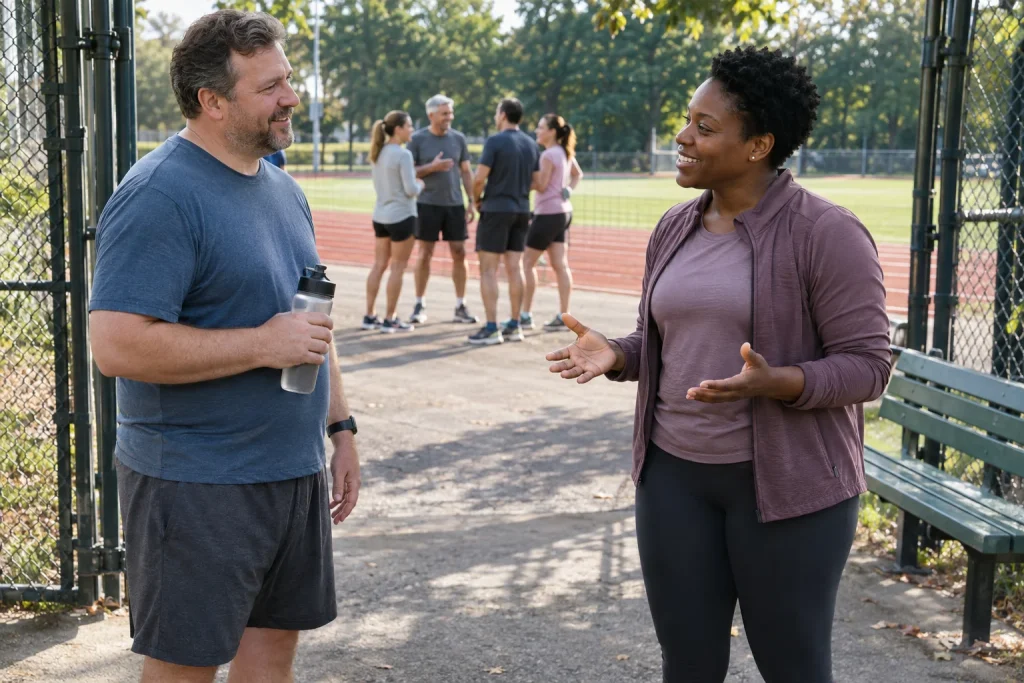
Someone new arrives at an adult running group’s meeting. Others know each other, discuss the weekend race and seem to know where they are going. The guest may not even be sure they are standing in the right place. Welcoming therefore begins with settling basic uncertainties rather than an impressive introduction circle.
A personal greeting helps when the newcomer knows whom to approach, what will happen and which choices are available. They need not recite their complete running history or immediately announce a target time to everyone. A connection can begin with a few calm, concrete sentences followed by consistent group practice.
The welcome begins before the meeting
Give an exact meeting place and recognisable contact in the invitation or registration response. If several groups gather at the park entrance, “We will be in the usual place” tells a newcomer nothing. They should not have to ask every group in turn whether they have arrived correctly.
Say when to arrive for the briefing and what to know beforehand about the outing’s character. Make the greeter’s contact usable within necessary boundaries. If weather or location changes, identify the current version clearly.
Clarify personal preparation questions appropriately before departure. An on-site greeting cannot replace establishing whether the session suits the applicant. The guest should not first learn distance, format or participation conditions at the moment of starting.
Give someone the actual task of greeting arrivals
Everyone being generally friendly does not ensure anyone approaches a newcomer. A designated welcome role can reduce this organisational gap. The person should know the session, its leaders and have time for basic questions.
The parkrun description of its first-timers welcome volunteer role connects a friendly welcome with site-specific information. This is parkrun’s own role description, not a compulsory system for every club. It illustrates greeting as a tangible task alongside good intentions.
Do not turn the greeter into someone supervising the guest all evening without agreement. The role supports initial orientation and relevant connections. The guest remains an independent adult whose choices deserve respect.
 Enlarge diagram
Text version of the illustration
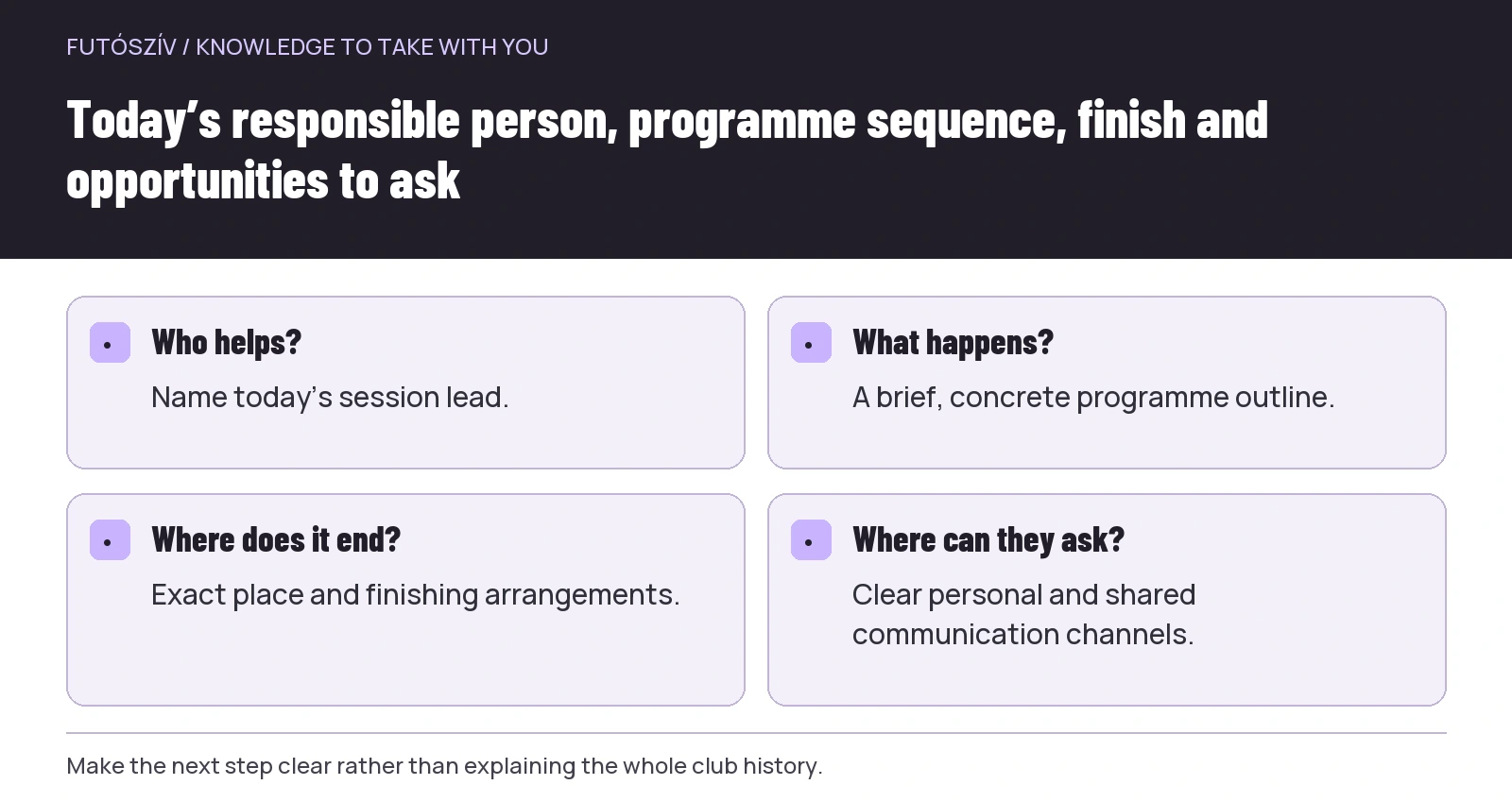
- Who helps?
- Name today’s session lead.
- What happens?
- A brief, concrete programme outline.
- Where does it end?
- Exact place and finishing arrangements.
- Where can they ask?
- Clear personal and shared communication channels.
Give four details instead of the whole club history
| Information | Purpose of simple wording | What can it prevent? |
|---|---|---|
| Whom to approach | Name today’s responsible person | Searching among strangers for help |
| What happens | A short, concrete session sequence | Planning from assumed customs |
| Where it finishes | Exact finish location and arrangements | Guessing by following others |
| How to ask | Appropriate personal and shared channels | Every question becoming public performance |
These are editorial considerations, not one compulsory greeting script. The next step should be understandable. Club history, inside jokes and past results can follow later when they no longer crowd out information needed to start.
Let people choose how much to introduce themselves
Ask how they would like to be addressed and whether they want to share anything briefly. Do not require identical personal stories. Some welcome discussing goals; others prefer observing first. A quieter arrival does not mean lack of interest.
Use performance details for a purpose too. Information needed to choose an appropriate session or group belongs in discussion with the leader. This differs from publicly listing everyone’s times. A guest should not have to prove worthiness in the opening minutes.
If welcoming newcomers in a group circle, keep personal speaking brief and optional. Explaining the session can address everyone; the guest’s personal information need not automatically enter the same public segment. Handle these communication tasks separately.
Prepare existing members to welcome people too
A designated greeter helps, but one person does not create the whole atmosphere. Regulars should know how to connect without surrounding the guest with questions. Introducing themselves by name and one simple comment relevant to the session may be enough.
The England Athletics inclusive-club resources emphasise feeling welcomed, valued and able to participate. Small steps and listening to new members also appear in the practice described. Turn this into concrete club operation rather than an adjective in introductory copy.
Nicknames, abbreviations and old stories can leave a guest outside. You need not interrupt every familiar conversation, but explain necessary programme information clearly. Deciphering club language should not become a newcomer’s extra task.
A buddy should not become a forced relationship
An experienced member can help at the first session when both understand and accept the role. They can explain local customs, show the finish and answer practical questions. This does not automatically make them a coach or personal fitness assessor.
The England Athletics page of volunteer examples includes club practice where newcomers receive a personal welcome and an experienced companion’s support on the first run. This is a specific operational example. Choose the person and role for your actual session.
Let the guest connect differently if preferred. After a short briefing, they may want to follow the shared programme independently or consider another group format more suitable. Support helps when it eases choice rather than creates another compulsory social situation.
 Enlarge diagram
Text version of the illustration
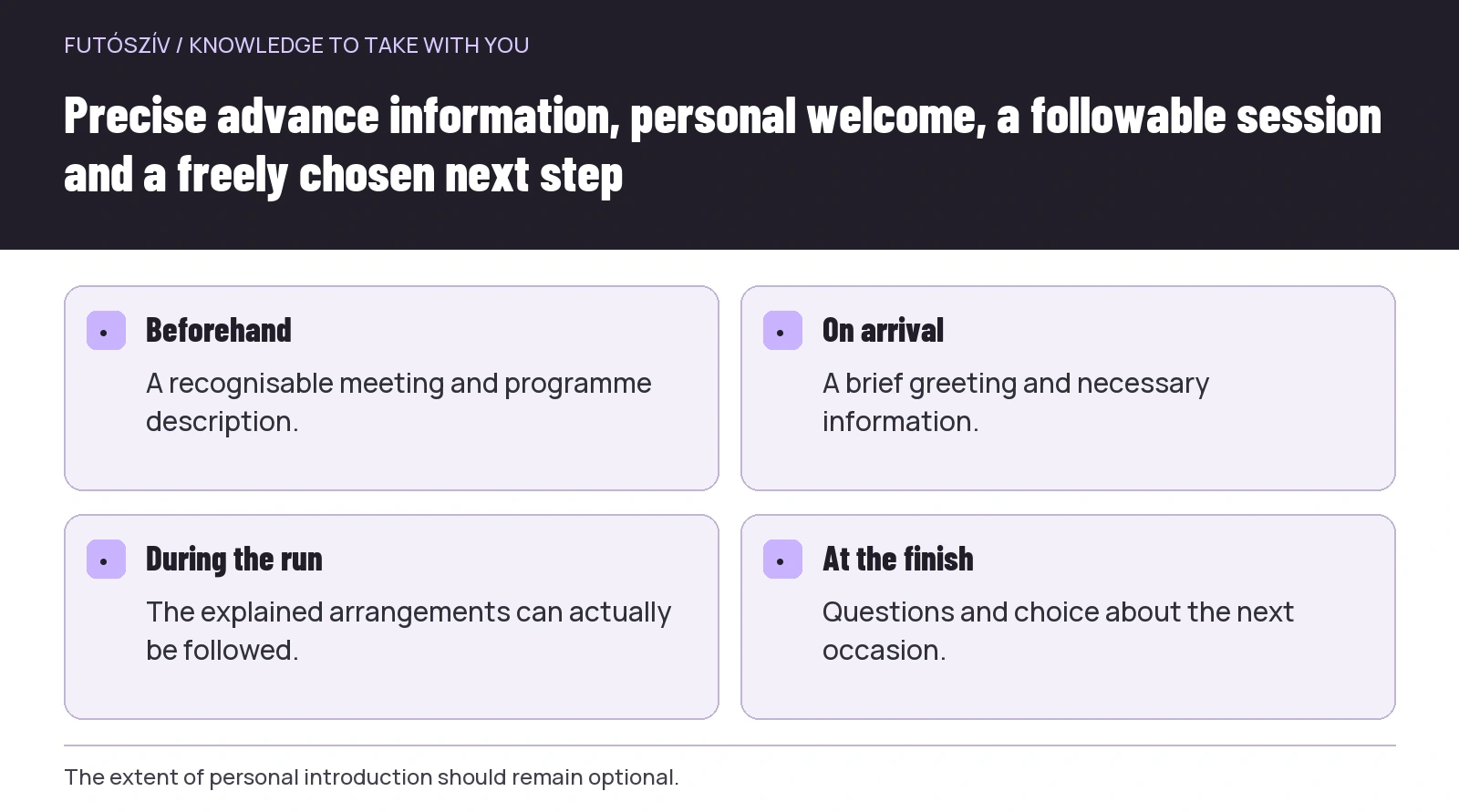
- Beforehand
- A recognisable meeting and programme description.
- On arrival
- A brief greeting and necessary information.
- During the run
- The explained arrangements can actually be followed.
- At the finish
- Questions and choice about the next occasion.
Let the run reflect the arrangements explained earlier
A friendly arrival sentence is insufficient if what happens on the route becomes unclear. New participants should understand group progress and meeting arrangements too. If splitting into groups, organise the actual process clearly.
Do not treat a guest’s question as disruption because others know the answer. For someone on the loop for the first time, the next turn or final section is new information. The leader should make it accessible appropriately, with attention suited to the place.
Report changes to earlier information. Regulars adapting automatically to habit does not resolve uncertainty. The newcomer needs to understand the next step just as much as someone attending for months.
An illustrative brief welcome
The new participant arrives at the precisely stated point. The greeter approaches, introduces themselves, asks the preferred name and explains who leads today. They briefly show the programme and finishing location and where personal questions can be clarified. They do not demand a public sporting biography.
Then they offer an introduction to one or two companions rather than a compulsory presentation to everyone. The shared briefing addresses all participants. The guest receives both information and connections while choosing how personally to open up.
This is our editorial example, not the single correct script. It shows the order of tasks. A welcome works when people know where they are and what follows, not because they immediately learn every tradition.
Photographs and group platforms require separate agreement
At the first finish, photographing, tagging and adding the guest to every social channel should not be automatic. Ask which communication format they prefer and explain what joining a particular group means. Access to logistical information and public appearance are separate tasks.
Someone declining a shared photograph or activity post can still participate. Choice should have no hidden social cost. Skipping photography should not mean missing practical information about the next session.
Explain your community’s data and membership arrangements appropriately and clearly. This article cannot replace relevant legal or administrative information. During welcome, ensure the guest knows where necessary details are available and which decisions you request.
At the finish, offer more than the next race entry
Briefly ask whether the programme was clear and any practical questions remain. No immediate satisfaction interview is needed. The guest may be rushing or still reflecting. A feedback channel usable later may help more.
Explain the next step precisely: next session, where its description appears and how to register or ask. Offer more than membership or race entry alone. A first trial can also help someone understand the group format they seek.
If they do not return, do not automatically infer personal failure or disinterest in running. Many organisational and personal reasons are possible. The community should provide promised information and operation rather than force sustained participation.
Make a simple welcome process repeatable
Agree who watches for newcomers, which basics they explain and how the leader learns a new participant has arrived. No complicated administration is needed. Detail should be sufficient to avoid welcome depending exclusively on one person’s presence.
Look for specific gaps in feedback. Was the meeting place hard to recognise? Was the finish unclear? Did the description use different language from the briefing? These are fixable organisational points. “Let us be even nicer” alone does not identify the task.
Welcoming becomes a natural community practice when clear operation follows the greeting. A guest receives necessary starting information, can ask and choose. Personal connections may develop later without compulsory performance in the first minute to prove participation.
How Futószív articles are prepared: our editorial guidelines.