Put the complete return journey beside the sunset view in your plan
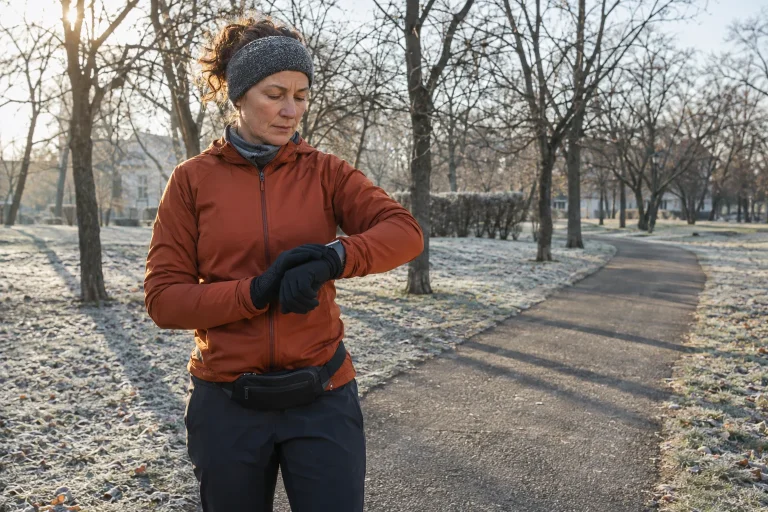
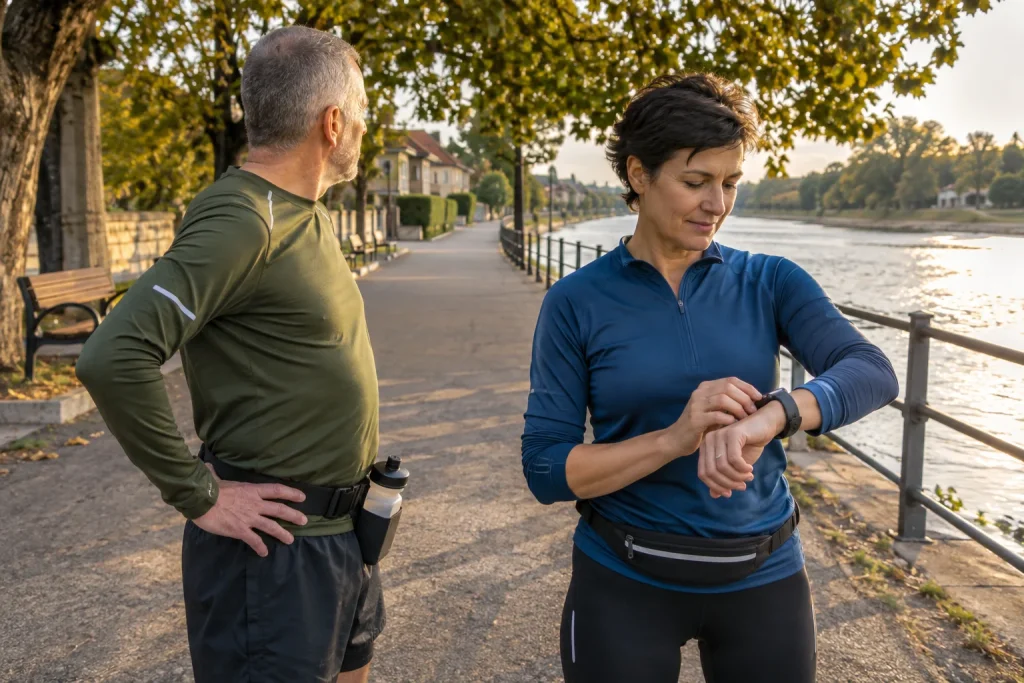
You want a sunset run: reach an attractive point, stop briefly and head home. The outing can easily revolve around the view while the return remains a faint map line. Yet after reaching the destination you must still follow a route, possibly under changed light, and consider that day’s access throughout.
This guide organises an outing timed around sunset. Its focus is timing and finishing, not evening photography technique. The view can be part of the programme but cannot override your experience, local rules or checked return conditions.
Decide what a sunset outing means for you
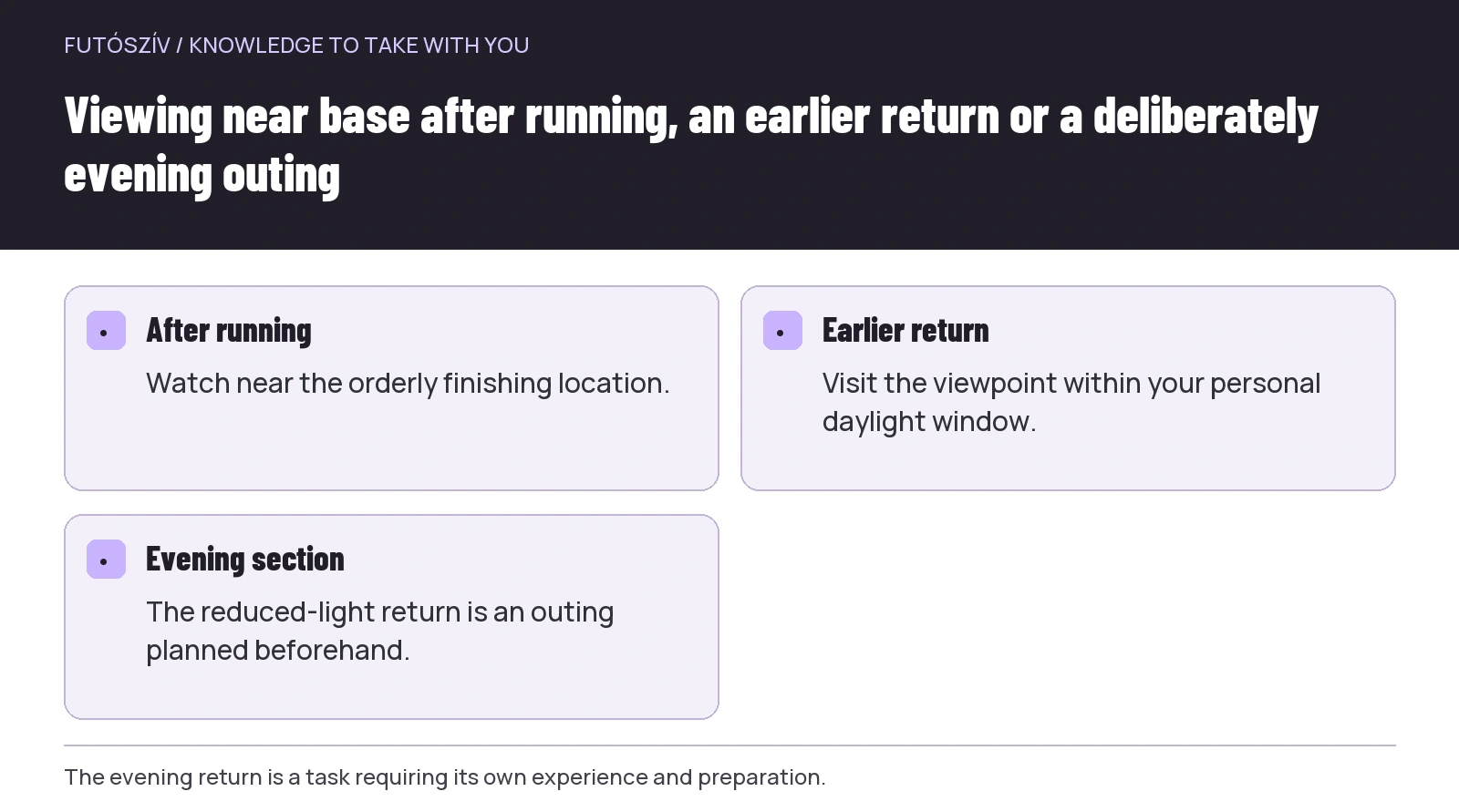
Three ideas can mix. In the first, you run in daylight and watch the day end from the orderly finishing location. In the second, you visit a nearby point and return within your personal daylight window. In the third, you deliberately plan a return in reduced light.
These require different preparation. If a darker return is outside your experience and equipment, do not discover on site that you actually chose the third version. Reaching sunset does not oblige you to continue afterwards in an unfamiliar way.
At the top of your sheet, define the chosen format in one sentence. For example: I will finish running in daylight and stay near an accessible, suitably usable base to watch. That is a concrete organisational decision around which to choose route and timing.
Check sunset for the appropriate place and day
The HungaroMet Sun–Moon page provides sunrise and sunset information with guidance for interpreting its tables. Check date, location-related interpretation and time system. Do not copy information from a previous outing’s message to a new occasion.
The tabulated time is not the same as suitable visibility on every part of your route. Surroundings and current weather influence what you see and the task of returning. Do not build every later movement around one boundary moment.
The view is not guaranteed either. Cloud and site characteristics may mean different light rather than the expected sun disc. An orderly outing retains a workable homeward plan even if photographs or scenery differ from your idea.
 Enlarge diagram
Text version of the illustration
- After running
- Watch near the orderly finishing location.
- Earlier return
- Visit the viewpoint within your personal daylight window.
- Evening section
- The reduced-light return is an outing planned beforehand.
The viewpoint cannot be a detour invented on a map
Choose a point whose approach and usability you understand. A beautiful photograph does not necessarily identify a suitable running endpoint. Check permitted access, opening or visiting conditions and the route back.
The Duna–Ipoly National Park visitor guide also emphasises designated paths and avoiding disturbance to wildlife. A better angle or photograph therefore does not justify leaving the marked route where prohibited.
The destination must fit group size too. A group stopping for longer at a narrow point can obstruct others. If no suitable waiting space exists, choose another point or format. Enjoying sunset does not require occupying the most popular lookout at all costs.
Plan three separate time windows
| Time component | Main task | Your check |
|---|---|---|
| Outward journey | Reaching the chosen point in an orderly way | Actual route and complete access |
| Stop | Brief waiting or photography suited to the place | No obstruction or indefinitely extending the outing |
| Return | Reaching the known finishing point | Suits current light, experience and access |
Do not hide stopping time within estimated average running pace. Planning ten minutes of waiting adds ten minutes to the whole outing. This is an organisational example, not a general recommended waiting time. Interpret your total absence accordingly.
Prepare the return in at least as much detail as the outward journey. Examine waymark changes after the destination separately. An impressive arrival does not end the route’s task.
A margin should mean more than a few optimistic minutes
A return-time margin serves a function: keeping room for adjustment in the actual outing. Its appropriate size depends on route, experience and conditions. One compulsory number of minutes cannot apply to every sunset loop.
Name what the margin covers: checking a junction, waiting for a suitable stopping place, connecting to base or reaching transport can create separate time tasks. If the outing works only when none is needed, timing may be too tight.
Understand the shorter version beforehand. You might choose a nearer point, or end running earlier and continue the viewing part from there. The alternative is a separately checked outing, not a forest cut-through invented on site.
Decide return-light conditions in advance
Accepting a reduced-light return creates a task of its own. Illumination, visibility, route knowledge and equipment use matter together. Carrying a light does not automatically make a complex loop known only in daylight appropriate.
The NHS guide to starting running also highlights well-lit routes and visibility. At your site, check which light sources and use conditions actually exist, rather than relying on a video of an evening run in another city.
If an evening return does not yet suit your programme, choose a format where you watch sunset after finishing. View and running then remain one occasion without forcing a new navigation task at the end.
Check current access for the entire period
Daytime and evening use may have different conditions. Check the MTSZ warnings and relevant manager’s notice for your whole planned period. Do not examine only departure time if the route later enters another time window.
Precisely reading validity can be especially important for a sunset outing. A restriction’s daily window, a visitor site’s closing time and the last transport connection are three separate details. One favourable value does not resolve the other two.
If a return condition is uncertain, changing the destination can be appropriate too. Do not assume an exception to an unclear local rule for the view’s sake. Fit the outing to a framework genuinely available.
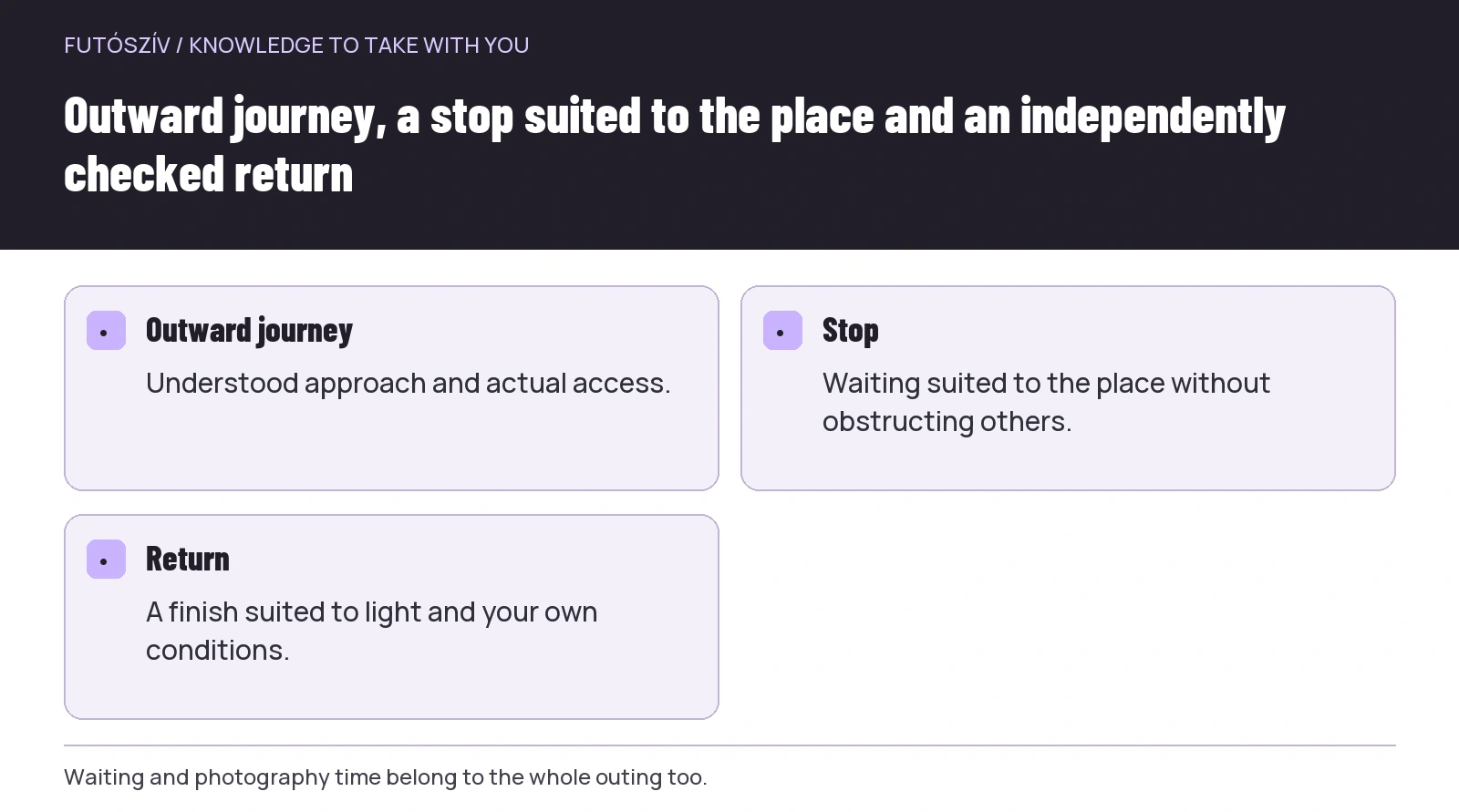 Enlarge diagram
Text version of the illustration
- Outward journey
- Understood approach and actual access.
- Stop
- Waiting suited to the place without obstructing others.
- Return
- A finish suited to light and your own conditions.
Do not lose track of time and surroundings while photographing
Taking out a phone and seeking the right image can easily extend a stop. Decide photography’s role beforehand. A few keepsake images differ from a dedicated content-creation outing. The latter may require another time frame and location.
Do not occupy the whole passage or enter unchecked places for a photograph. Other visitors, local rules and undisturbed wildlife still matter. A better composition does not override these conditions.
Keep the agreed return departure point visible in the plan. If a group is photographing, clarify who follows the next organisational step. You need no military timetable, but the whole outing should not revolve around one final quick picture.
An illustrative example of two possible outings
A runner wants to watch the day end from a distant high point. Distance looks suitable on the map, but full planning reveals several unfamiliar waymark changes on a reduced-light return. Their evening navigation experience does not yet match that task.
In the first revised version, they learn the route another day with appropriate preparation and support. Today they choose a nearby checked running loop and stay near its orderly finish to watch. In another possible version, they run earlier and choose a separate appropriately organised sunset activity.
The example does not say every high or evening route should be avoided. It shows matching personal task and conditions. The choice becomes organised when the runner recognises unfamiliar elements beforehand instead of substituting on-site enthusiasm for preparation.
In a group outing, everyone should understand the same finish
Before announcing a sunset run, clarify the group’s commitment: a daylight return, a stop near base or a deliberately evening section. Participants can then prepare and decide whether it suits them.
Someone joining only the run needs an understood departure option too. Someone staying for the view should know how to travel onwards. With shared car travel, differing plans are not exclusively individual decisions when they affect others’ journeys home. Agree this beforehand.
Appearing in photographs is a separate choice. Nobody needs to feature in a group image to belong. The social purpose and public content creation should not silently merge into one obligation.
Complete the support and communication plan too
If someone knows your outing, include the stop and return in the short summary. Waiting for sunset may separate the end of running from personal finish confirmation. Both people should understand this alike.
Location-sharing data cannot replace agreed communication. The other person should know your programme and expected message. If viewpoint or return changes, clearly report the new version where possible.
After returning home, close the agreement through the agreed personal confirmation. Do not assume an uploaded sunset photograph proves to the other person that the whole outing ended properly. A scenic image and a contact update serve different purposes.
Keep return-journey experience for next time
Afterwards, record more than whether sunset was beautiful. Review whether timing fitted, viewpoint access was clear and returning stayed orderly. Actual photography or waiting duration can inform the next plan too.
Recheck sunset time and access for each new occasion. Previous experience is no permanent weather or local-use guarantee. Add fresh information alongside familiar route knowledge.
A sunset run is considered from beginning to end when the view does not swallow the finish. Chosen format, understood time windows and a checked return together form the framework. Special light then need not come with organisational tasks left until the last moment.
How Futószív articles are prepared: our editorial guidelines.