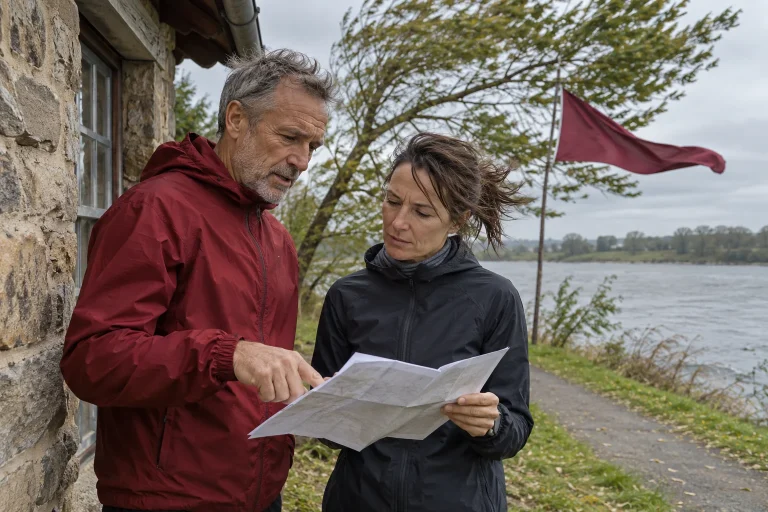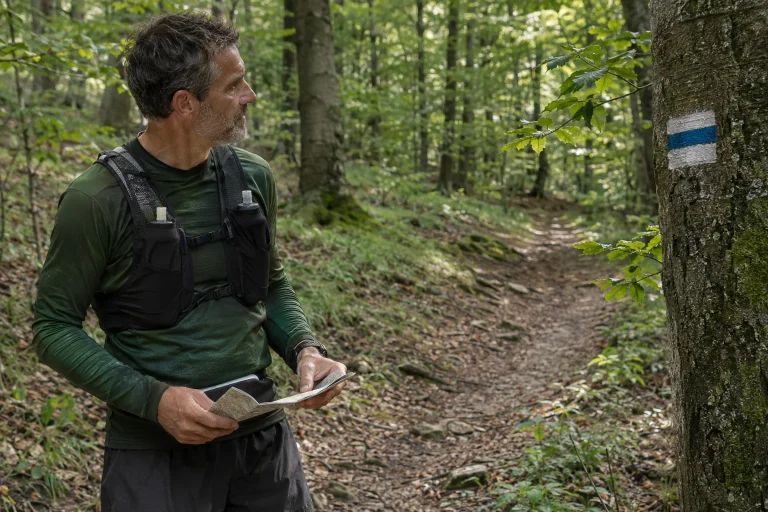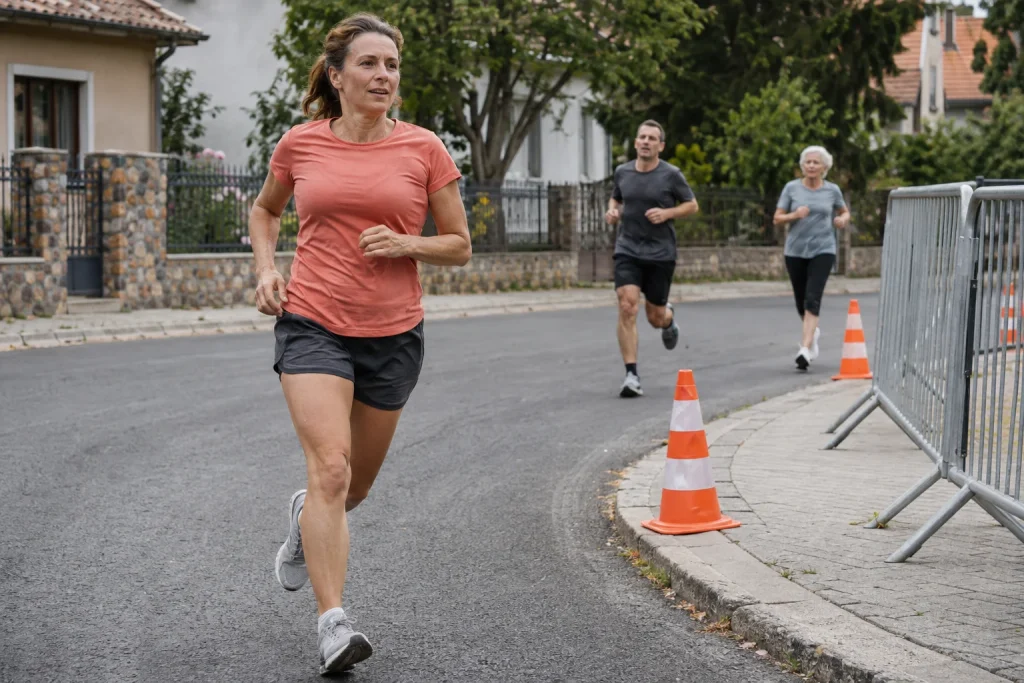
A course with many bends requires different attention from a long straight
On a road-race map, turns first appear as simple changes in a line. During running, following the route, other people’s movement, possible narrow sections and watch data all occur together. Trying to restore identical instantaneous pace immediately after every bend can turn the course into a sequence of hurried accelerations. Instead, make a plan that treats turns as a natural part of the race.
The aim is not to teach competitive cornering technique through a few general sentences. Appropriate movement requires individual practice and coaching help where needed. This article concerns reading the course, interpreting pace data and moving considerately together: organisational decisions you can address before racing.
Know which line to follow first
On the official map, locate actual turnarounds, ordinary street bends and sections crossing one another. A clearly visible street corner differs from a tight turnaround with runners also moving the other way. If several distances share the event, check which signs and junctions concern you.
Do not memorise the route from an unsourced phone image received just before starting. Use the official version for the correct year and distance. If the organiser announces a change, review notes added to the old map too. A route uploaded to the watch cannot override on-site direction.
Dividing the distance into three or four recognisable parts can help: blocks after the start, a long straight, turnaround and return, for example. This is your own orientation framework, not an official division. It helps you know the next task without remembering every street name on the move.
 Enlarge diagram
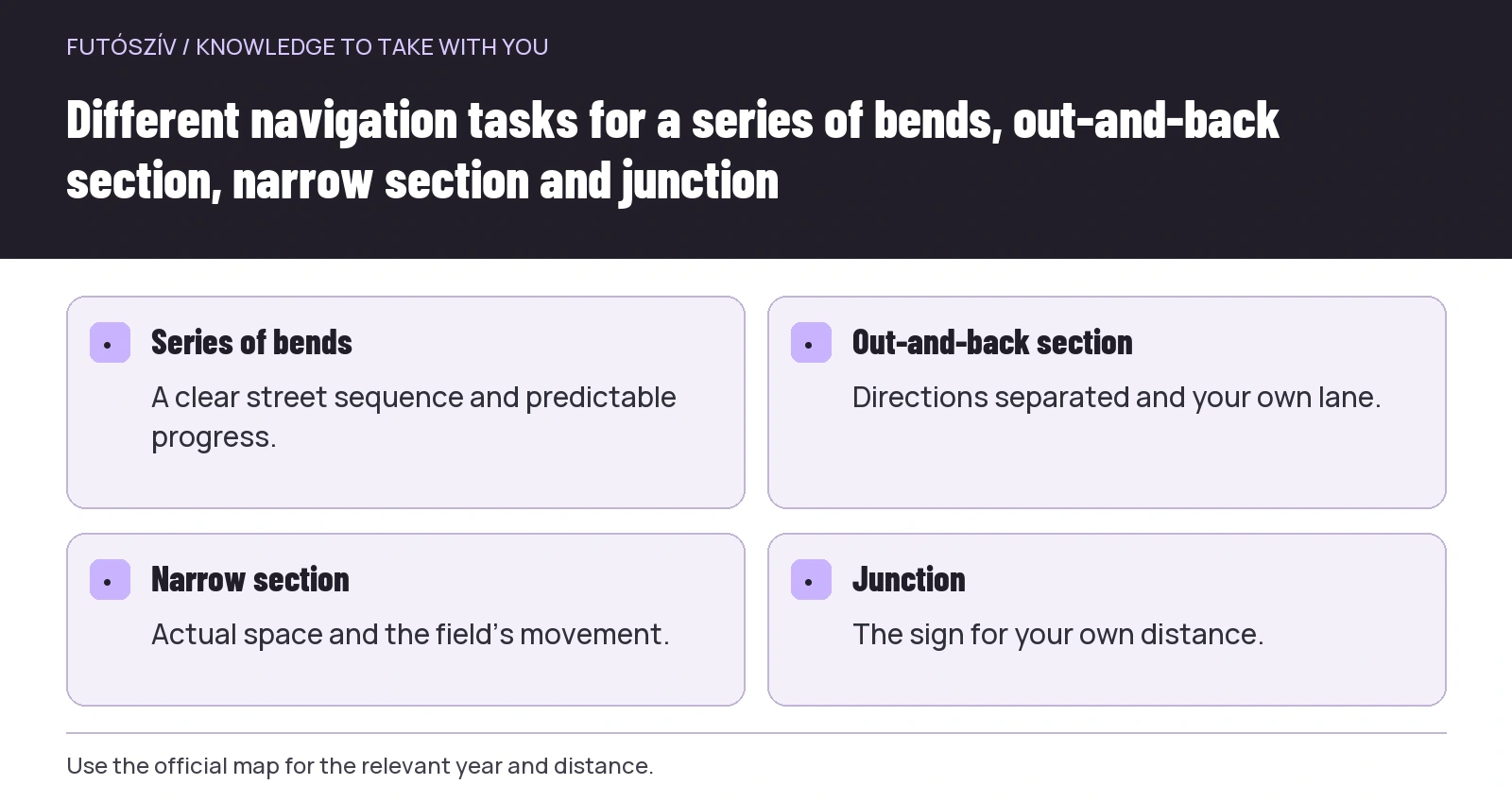
Text version of the illustration
- Series of bends
- A clear street sequence and predictable progress.
- Out-and-back section
- Directions separated and your own lane.
- Narrow section
- Actual space and the field’s movement.
- Junction
- The sign for your own distance.
Four course features, four questions
| What the map shows | Clarify before starting | Watch on the course |
|---|---|---|
| Closely spaced bends | Which streets do you follow, and in which order? | The designated corridor and surrounding runners |
| Out-and-back section | Where are the directions separated? | Your own side’s route and organiser signs |
| Narrowing passage | Is there specific participant information? | The field’s actual movement and following space |
| Multi-distance junction | Which sign belongs to your distance? | The direction identifiable in good time before branching |
Do not use this table to invent a danger list from a map. Mark unknown details as questions. If your distance’s line at a point is unclear, ask the organiser. Turning after other runners at the last moment simply because many go that way is not reliable navigation.
Official distance and watch distance are separate data
According to the AIMS course-measurement explanation the accepted AIMS and World Athletics method for road-course measurement uses a calibrated bicycle. A running-watch display therefore does not replace the official measurement report. First establish how the particular course is certified too; not every road event automatically has the same measurement status.
Your movement line and measurement conditions may affect watch-recorded distance. The Garmin GPS-accuracy support page mentions buildings and other environmental factors as possible disruptions to satellite measurement. Overinterpreting a briefly displayed pace can be particularly misleading on a city course with many bends and tall buildings.
If the watch announces the next kilometre before the course sign, do not make a sudden pace correction for that alone. Consider official markers and your measured data in context. One discrepancy does not mean you are running badly, the entire course is wrong or you must immediately accelerate.
Why is recovering every turn an unhelpful task?
Successive sections may differ on a twisting course. One has a tighter field, another is longer and straighter, a third includes an aid station. Comparing all with one rigid kilometre pace can make every discrepancy feel like a debt. The next section then concerns correcting the previous displayed number instead of its own task.
A more orderly approach accepts beforehand that different course parts may not show identical numbers. Your pacing plan can remain important, but evaluation need not be tied to the few steps after every direction change. An entire, well-defined section can provide more information than a value flashing as you leave a bend.
This is not an invitation to run the whole race by feeling without attention. Rather, you deliberately choose which information to use and when. On-site arrangements, your tested race approach and remaining distance together shape the next decision. The display remains one input, rather than an instruction overriding every other consideration.
On bends, predictable movement is a shared resource too
You use the course with others. Do not expect a whole row of runners to give way suddenly because the inside looks a few steps shorter. Within the designated route, seek predictable progress suited to your surroundings. The precise technique is not identical at every pace and participant situation.
If overtaking, judge the opportunity from actual space. You need not finish passing before a narrowing bend merely because the watch reports a favourable pace. Avoid contact, cutting unexpectedly in front of another runner or using space outside the course as a shortcut. Following organiser diversions is part of racing.
In a group, do not form a row wide enough to block others. Conversation or staying together does not give priority over the whole corridor. On a narrow section, reorganising the group and agreed communication can prevent other people’s movement becoming an obstacle to your shared run.
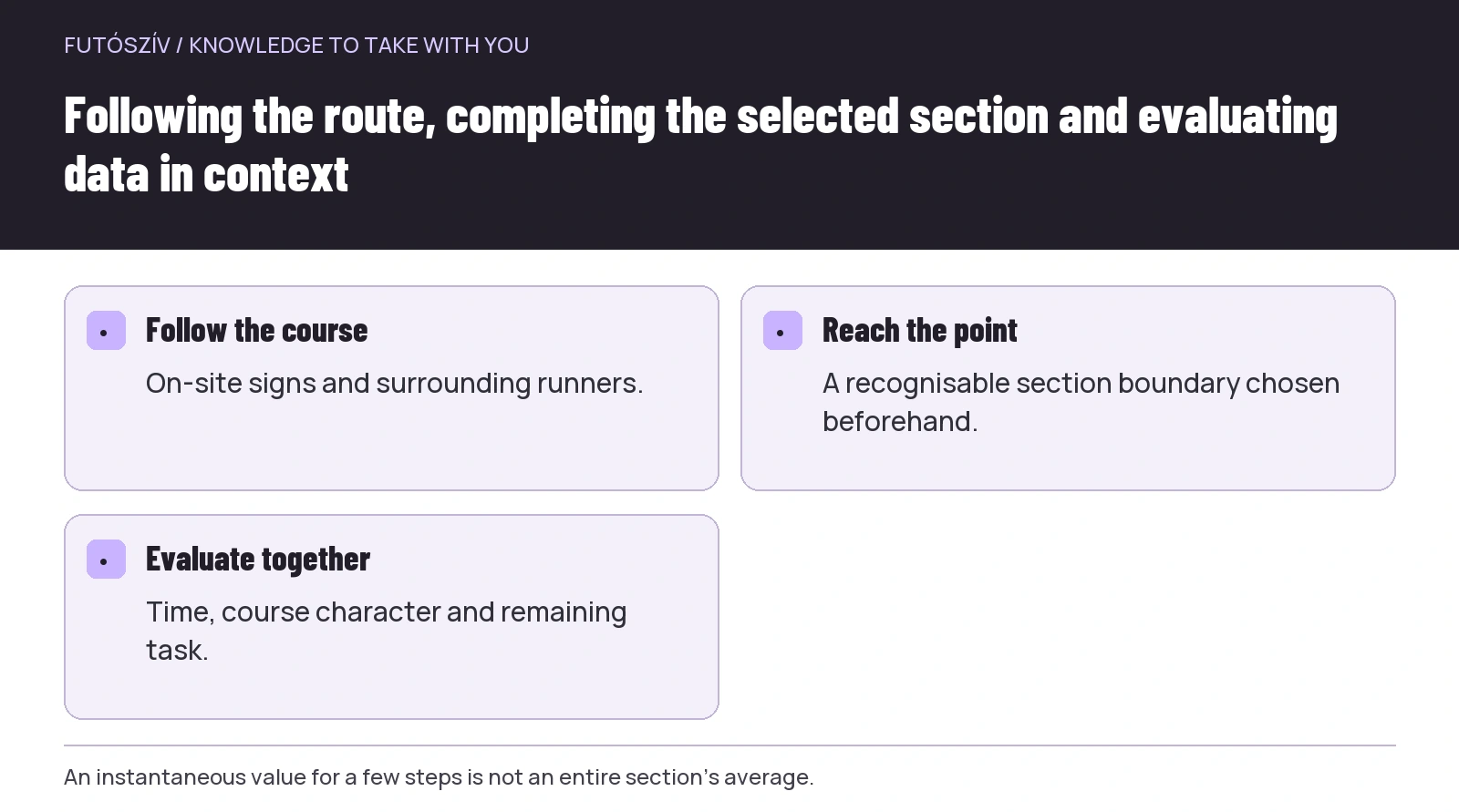 Enlarge diagram
Text version of the illustration
- Follow the course
- On-site signs and surrounding runners.
- Reach the point
- A recognisable section boundary chosen beforehand.
- Evaluate together
- Time, course character and remaining task.
Where an aid station meets a turn
Learn the aid station’s location from official information. Near a direction change, an organisational task joins your running plan: recognise the station, follow its arrangements and manage your fuelling routine while watching others. Its nutritional part comes from your tested personal plan, not an advertisement for a product seen mid-race.
Do not suddenly start searching pockets or stop to check phone data in the middle of a turn. If stopping is necessary, find an appropriate place and method following staff direction. On leaving the station, look beyond the display: surrounding runners and the continuation of the course remain part of the task.
In later split evaluation, note when a section included this organisational element. You need not remove it from total time; simply name what happened. This produces relevant questions for next time: did you know the station’s location, was your equipment appropriately placed and was the next route section clear?
Illustrative example for an urban ten-kilometre race
Suppose the first part loops around several blocks, then follows a long straight before a turnaround towards the finish. The runner originally prepared only ten listed kilometre paces. After reviewing the map, they name three tasks: orderly positioning after the start, following the tested plan on the straight, and reassessing the remaining task after the turn.
The instantaneous display fluctuates through the twisting opening part. The runner does not try to fix every flash. At the agreed official point, they examine the section so far. They assess time, the task completed and the next part’s different character together. They do not assume the first few bends automatically decided the whole race.
At the turnaround, a group bunches ahead. Their plan prescribes no compulsory overtake there, so they follow the designated corridor and actual movement. The example concerns no specific seconds gained. It shows how course knowledge becomes an actionable task without reinventing the race before every turn.
Watch screen and manual laps: use tested features only
If marking sections manually on the watch, practise in easy, familiar surroundings first. Know each button’s function and how it interacts with automatic kilometre alerts. After the start is a poor time to discover the selected button pauses the whole activity.
Put only understood fields on the screen. Instantaneous pace, current-lap average and whole-activity average answer different questions. Choosing a field suited to the split plan may help more than crowding five additional metrics onto one page. If your device cannot do this comfortably, choose a simpler information arrangement.
Watching official markers does not require pressing a button at every sign. The goal is interpretable data, not the densest possible log. Choose only as many checkpoints as you can genuinely handle alongside your race task. Technical operation should not distract from the current course situation.
Preserve section character in the review
After the race, pair splits with course parts in a simple table. Twisting city-centre section, long straight, aid-station area and section after the turnaround: a few short descriptions suffice. Add the decision you made. This reveals execution better than ten coloured kilometre values alone.
Choose one improvement task for next time. You might review a multi-distance junction earlier, simplify the watch screen or clarify with a companion how to move on narrower sections. These are specific changes you can try. “Corner faster” alone does not yet identify what you will do differently.
If the recorded track differs from the map somewhere, initially treat it as a data-checking question. Examine recording conditions and the official route before a definite conclusion. A city race combines route, field and timing. You retain useful experience when those components stay together in the review too.
How Futószív articles are prepared: our editorial guidelines.