Race fuelling does not begin with opening a gel found in your race pack. Weeks beforehand, it is worth learning which foods sit well before running, what you can comfortably consume while moving and how to adapt fluids to the conditions. A good plan is easy to follow, tested and flexible. It is not good simply because it matches an elite athlete’s social media post.
This article provides general information for healthy adult recreational runners. Diabetes, kidney disease, heart disease, pregnancy, an eating disorder, regular medication or other individual circumstances may require a personalised medical and dietetic plan. The calculations below are illustrative examples, not personal intake prescriptions.
First, consider how long you will be on the course
The same half marathon can take very different lengths of time for different runners. Do not plan fuelling from the distance’s name alone. Expected duration, intensity, weather, terrain and what you can access on the course all matter. A short, easy loop and an event lasting several hours need different preparation.
Read the current race information: where the aid stations are, what they provide, whether you must carry your own cup or bottle and how certain the selection is. “Refreshments provided” tells you little. If your diet or digestive tolerance requires a particular food, do not improvise from whatever is available on site.
Shorter sessions do not automatically need gels. The Australian Institute of Sport information on gels also notes that they are not necessary for every session and can be an unnecessary expense. Choose the product to suit the task, rather than the other way round.
Everyday eating is the foundation of the race plan
A well-chosen race breakfast does not make up for persistently inadequate energy intake. If food decreases as running volume increases, health and performance can be affected. The IOC REDs summary draws attention to this mismatch and its consequences.
A practical starting point can be very simple: do you eat regular meals, have food before and after longer runs, and avoid missing dinner because you arrived home late? Address these patterns first, before looking to special race supplements for the missing answer.
Eating should not become a way to earn the right to run. After a hard session, you do not need to think in terms of foods “worked off” or “permitted”. If eating causes anxiety or pressure about weight drives your decisions, a sports-experienced dietitian and mental-health support where needed can help.
Pre-race eating: familiar and tested
Practise breakfast during training, ideally under circumstances resembling the expected race-day schedule. What you eat is not the only issue; the time between eating and running matters too. Travel, an early alarm and waiting before the start can easily change your usual routine.
The USADA nutrition guide emphasises individual tolerance and timing suited to the event. A familiar meal containing carbohydrate can provide a useful foundation before a race. A larger portion may need more digestion time, while eating too close to the start or trying something unfamiliar can cause discomfort.
The choice might be porridge, bread or another familiar breakfast that has worked before, but your own experience decides. Food high in fibre, fat or spices may be harder for some people to tolerate just before running; this does not make those foods generally bad. Timing around a race is a separate issue from the quality of the everyday diet.
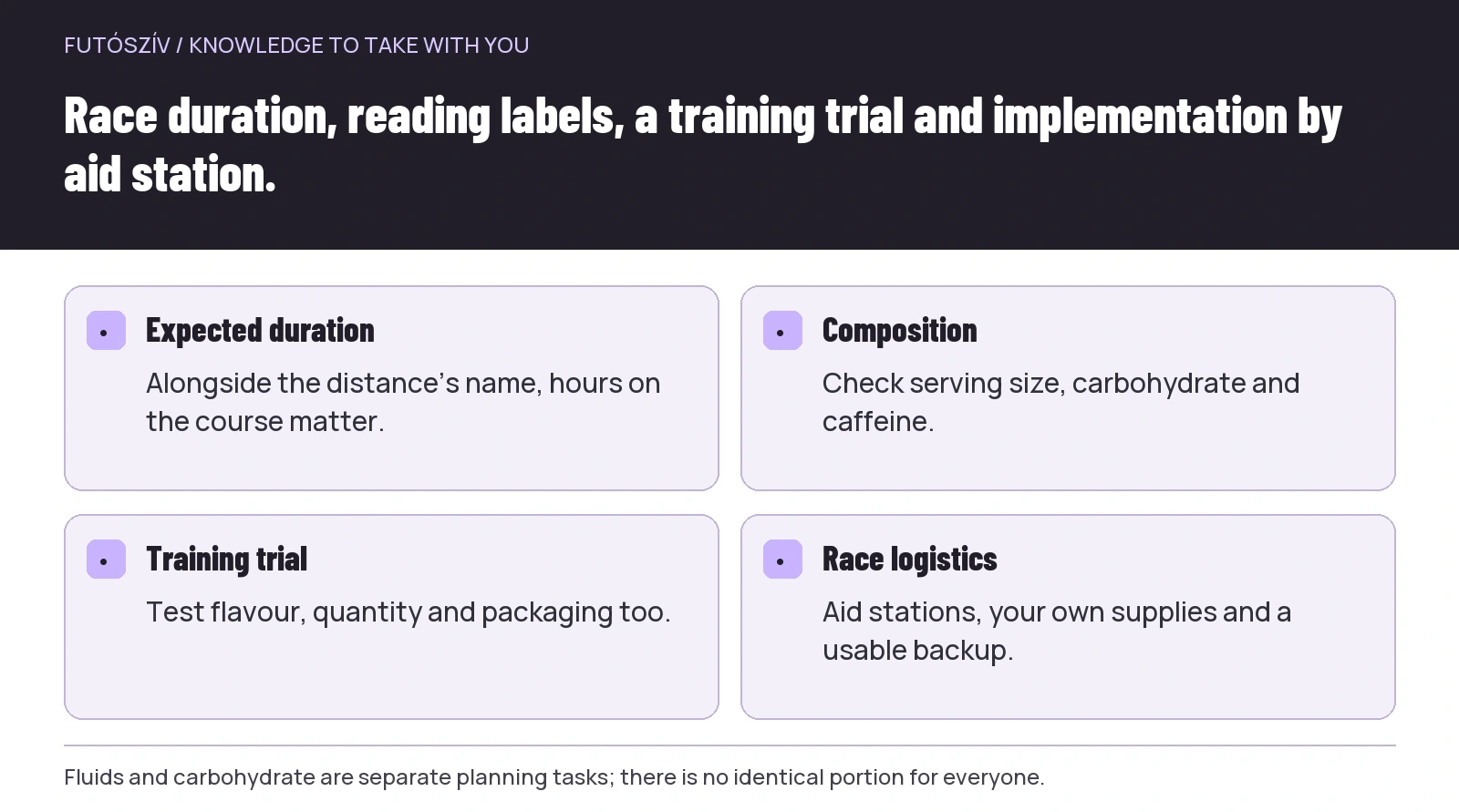 Enlarge diagram
Text version of the illustration
- Expected duration
- Alongside the distance’s name, hours on the course matter.
- Composition
- Check serving size, carbohydrate and caffeine.
- Training trial
- Test flavour, quantity and packaging too.
- Race logistics
- Aid stations, your own supplies and a usable backup.
What does a carbohydrate plan mean during longer efforts?
During longer runs, carbohydrate intake can help maintain energy supply, but the appropriate amount and approach are individual. The Victorian government health information describes intake adapted to duration, using different food and drink sources. The aim is not for every runner to chase the highest possible number.
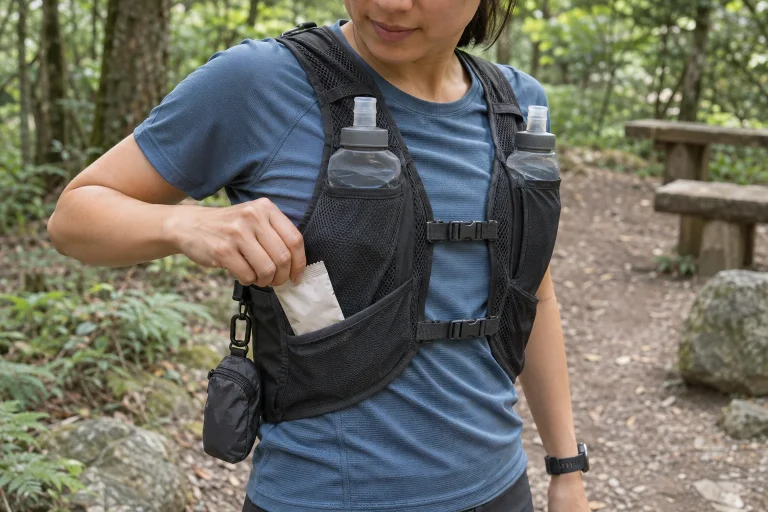
In practice, first find out what you can comfortably consume while moving. Gels, sports drinks, soft foods or another tested option may feature in the plan. Opening packaging, taking it from a pocket and storing the rubbish are practical tasks just as much as taste and composition.
The USADA article on fuelling during exercise also emphasises practising the nutrition strategy. Do not try a new product or a substantially larger intake for the first time at your most important race. If digestive problems persist, do not simply keep testing your willpower; seek targeted help.
Reading labels: one package is not necessarily one serving
Check whether nutrition information refers to a hundred grams, a hundred millilitres, one serving of powder or the entire package. Pay equal attention to mixing: a scoop and a bottle do not necessarily match the serving on the label. Fluid, carbohydrate and caffeine are separate lines; do not conflate them.
An illustrative example: if one sachet contains 23 grams of carbohydrate, three sachets provide 69 grams in total. If a full bottle of drink contains another 30 grams, together they provide 99 grams. This is simple addition, not a recommendation that you should consume this amount. Without the duration of the planned period and your tolerance, the number alone tells you little.
According to the AIS , gel composition and carbohydrate quantity differ between brands, and most concentrated versions require water or a more dilute fluid alongside them, according to their use instructions. “Isotonic”, caffeinated and higher-sodium labels may indicate different properties. Always read the specific product’s information.
More fluid is not automatically better
Sweating and fluid needs vary between individuals, weather conditions and intensities. The USADA hydration guidance also emphasises individual differences. Another runner’s bottle volume is not your personalised plan, and treating every aid station as a compulsory drinking stop is not a good general rule.
The NATA position statement on fluid replacement discusses excessive fluid intake as well as dehydration. During prolonged exercise, drinking too much can lead to exercise-associated hyponatraemia, a dangerous reduction in sodium concentration. Salt tablets do not make excessive drinking safe without limit.
Gather experience across several similar sessions and assess the plan alongside the weather. Thirst is an important signal, while particular health circumstances, very long events or serious performance goals may call for dietetic and medical help to refine a strategy. Do not set the same hourly amount for everyone.
Plan aid stations around your expected pace too
Two stations may be five kilometres apart on the map, but that represents different durations of effort. Convert distances into your own expected travel time. Consider what you carry, what you hope to get at the station and what happens if a favourite product has run out. A useful plan can withstand a small change without collapsing.
Near a station, do not stop unexpectedly in front of others. Look around, move somewhere predictable and walk while taking refreshments if needed. A few calm seconds are often better than choking or struggling with a cup while rushing. Practise handling your own cup and bottle in advance too.
On a long trail run or ultra, station access, packaging, food portability and changing taste preferences require additional planning. The ISSN ultramarathon position statement describes many such sport-specific difficulties. Do not automatically copy ultra strategies into a short urban run.
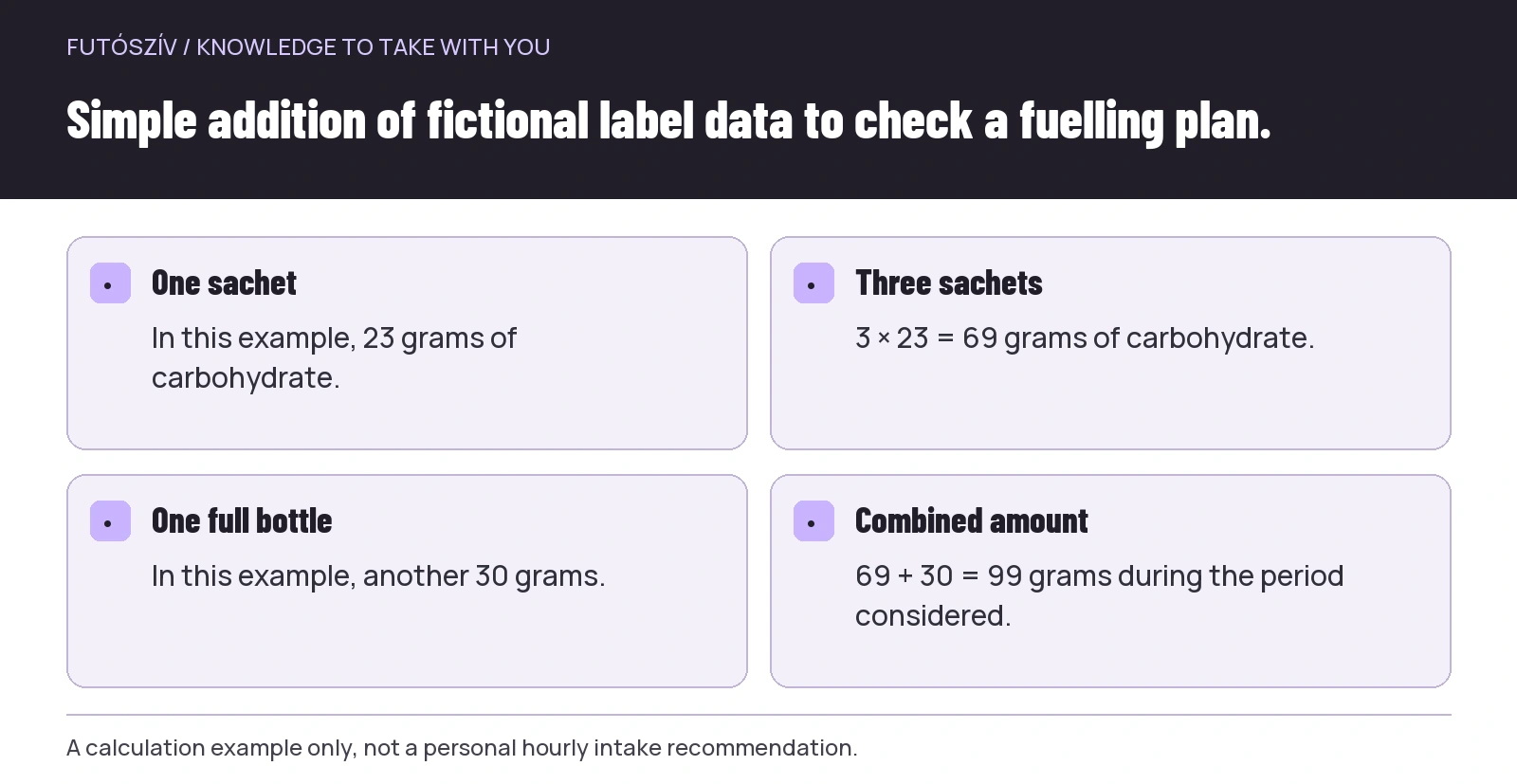 Enlarge diagram
Text version of the illustration
- One sachet
- In this example, 23 grams of carbohydrate.
- Three sachets
- 3 × 23 = 69 grams of carbohydrate.
- One full bottle
- In this example, another 30 grams.
- Combined amount
- 69 + 30 = 99 grams during the period considered.
What to record in a fuelling diary
Alongside the product name, note duration, conditions, the amount consumed and how you felt. Record whether a flavour became unpleasant towards the end, packaging was hard to open or a bottle was difficult to reach. These details make a fuelling plan genuinely usable.
Where possible, avoid changing every component at once. If you try a new breakfast, gel, drink and greater exercise load on the same day, interpreting the result will be difficult. A useful trial resembles the race but is safe enough and easy enough to shorten that a problem does not emerge in a situation with no options.
Digestive symptoms are not necessarily one product’s “fault”. Quantity, timing, intensity and earlier food can matter too. Recurrent or severe symptoms, or symptoms accompanied by other problems, deserve professional advice. Do not eliminate more and more staple foods without assessment and considered support.
Have a proper meal available after the finish
Getting home is not ideal at every race: a long queue, travel or late dinner may follow finishing. Plan familiar food and drink that fit your day. Total daily intake, rest and the time between repeated efforts also form part of recovery.
The USADA guide discusses meals containing carbohydrate and protein, along with personal tolerance. A run does not lose its value because a special product is unavailable. If a large portion is unappealing immediately afterwards, a familiar option that is easier to consume can be a first step.
Celebration can have a place too, but post-finish alcohol should not be the hydration plan. If preparing for a multi-day or multi-start event, meals between efforts also prepare you for the next one. Shopping and packing in advance can be especially useful then.
If you become unwell, do not guess beside the course
Severe headache, repeated vomiting, confusion, fainting or severe weakness require professional help. Symptoms of dehydration, overheating and conditions associated with excessive drinking can overlap; automatically forcing another large amount of fluid is not a good idea. Stop, tell medical staff what happened and explain what you consumed.
In immediate danger in Hungary, call 112. Finishing is not more important than safety. Know beforehand how to reach the event’s assistance points, especially on a long or isolated route. Recognising when to stop racing is also part of a fuelling plan.
Sources and checking
This article draws on the AIS, USADA, NATA, IOC, ISSN and Victorian government materials linked above. The composition calculation is a fictional illustration, not a product recommendation. Discuss personal intake targets, disease-related diets and persistent symptoms with a dietitian or doctor. Sources checked: 18 November 2026.
How Futószív articles are prepared: our editorial guidelines.