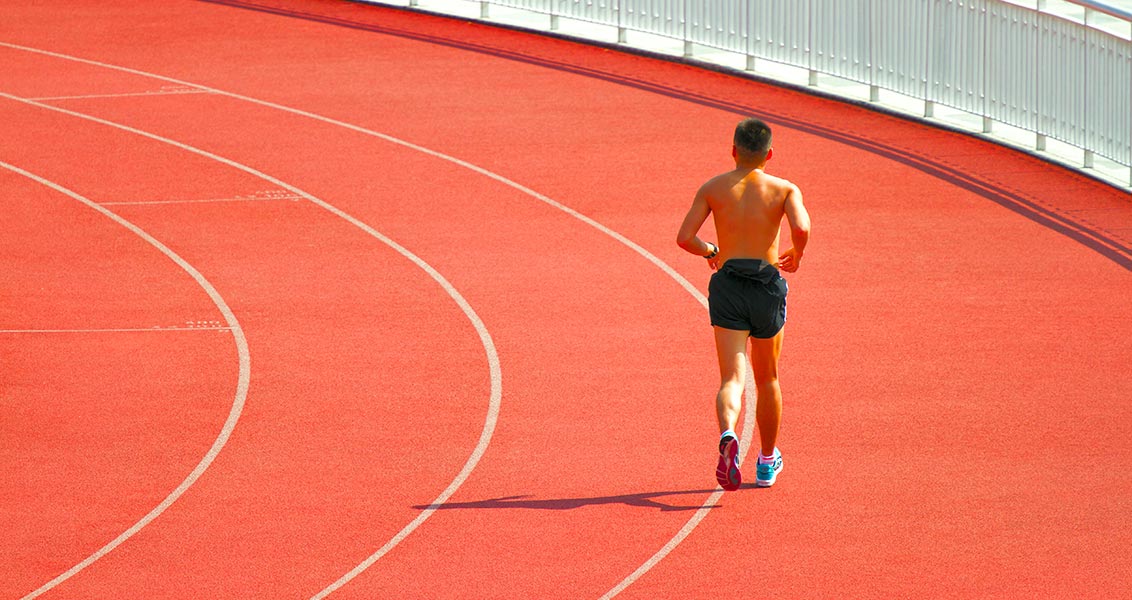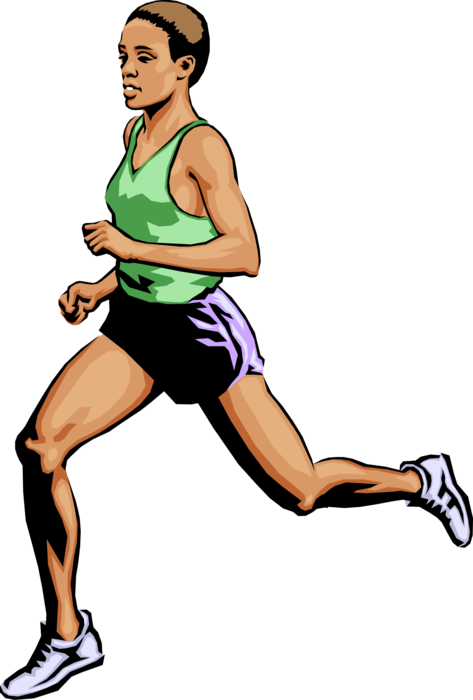
Correct running technique plays an important role in preventing injuries and running more efficiently. A person who runs correctly puts less strain on their joints and makes better use of their leg muscles.
- Pay attention to the following elements of correct running technique:
- Posture: Keep your head and gaze facing forwards, with your torso leaning slightly forwards but not hunched. Relax your shoulders and swing your arms out to the sides.
- Foot placement: Land on the middle of the foot rather than the heel or toes. Use an appropriate stride length and land softly.Editorial clarification · 22 November 2026. Midfoot striking is not compulsory for every runner. Changing strike pattern can shift loading to other structures, and evidence does not establish a universal injury-prevention benefit. Source
- Lower-leg position: Keep the lower legs extended and the knees slightly bent. The lower legs and hips move in synchrony while running.
- Arm position: Swing your arms out to the sides, with your elbows slightly bent. Arm swing helps maintain the rhythm of movement.Editorial clarification · 22 November 2026. The sideways arm-swing description should not be treated as a universal technique instruction. Consider the whole movement, comfort and individual goal together; do not force a painful movement on the basis of one sentence. Source
It is worth learning correct running technique from a professional or attending running training sessions.
- Here are some tips for learning correct running technique:
- Start on a running track where the surface is even.
- Begin slowly and gradually increase your speed.
- Pay attention to your body and stop if you feel pain.
- Wear appropriate running shoes.
With practice, you will soon feel an improvement in your running technique. Running will become easier and more enjoyable, and injury risk will decrease.
- How can I tell if my running technique is poor?
Pain: Pain in the foot, knee, hip, back or neck may indicate poor running technique.
Exhaustion: Poor technique can make you tire more quickly while running.
Inefficiency: Running is less efficient when technique is incorrect.
Specific signs that may indicate poor running technique:
- Your foot strikes the ground on the heel or toes rather than the middle. This way of landing places excessive strain on the joints.
- Your knees are bent too much while running. This increases the risk of knee injury.
- Your arms do not swing out to the sides while running. This can disrupt the rhythm of movement.
If you notice these signs, it is worth consulting a professional to assess your running technique.

How Futószív articles are prepared: our editorial guidelines.