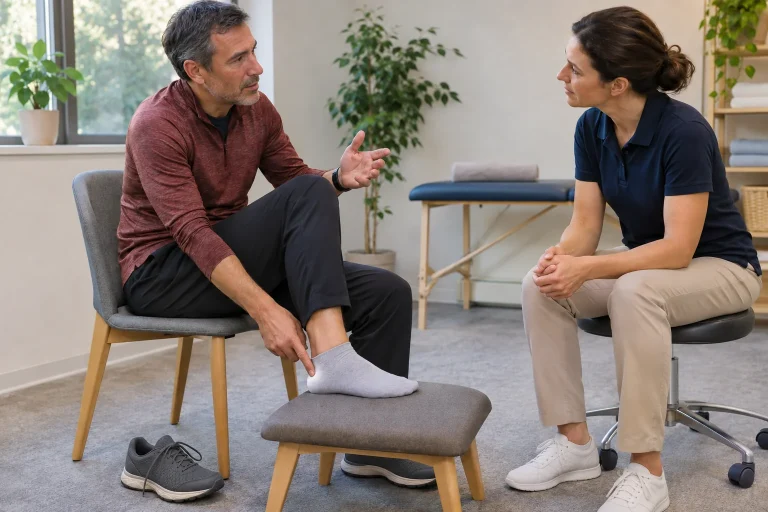
You were advised to use an insole, but mainly remember being told it would ‘put your foot right’. That is not enough to know what to expect. An insole may be useful in an individual care plan, but does not serve the same task for every runner. Start by identifying the symptom, functional difficulty or pressure problem you aim to influence and how you will judge whether it supports that purpose.
If foot shape newly changes, inner-ankle or arch pain, swelling or worsening function appears, do not close the question by buying a generic arch support. Individual assessment is needed. A long-familiar foot shape, a new symptom and treatment of a recognised condition are different situations; the word insole does not combine them into one diagnosis.
Make the purpose more specific than ‘correction’
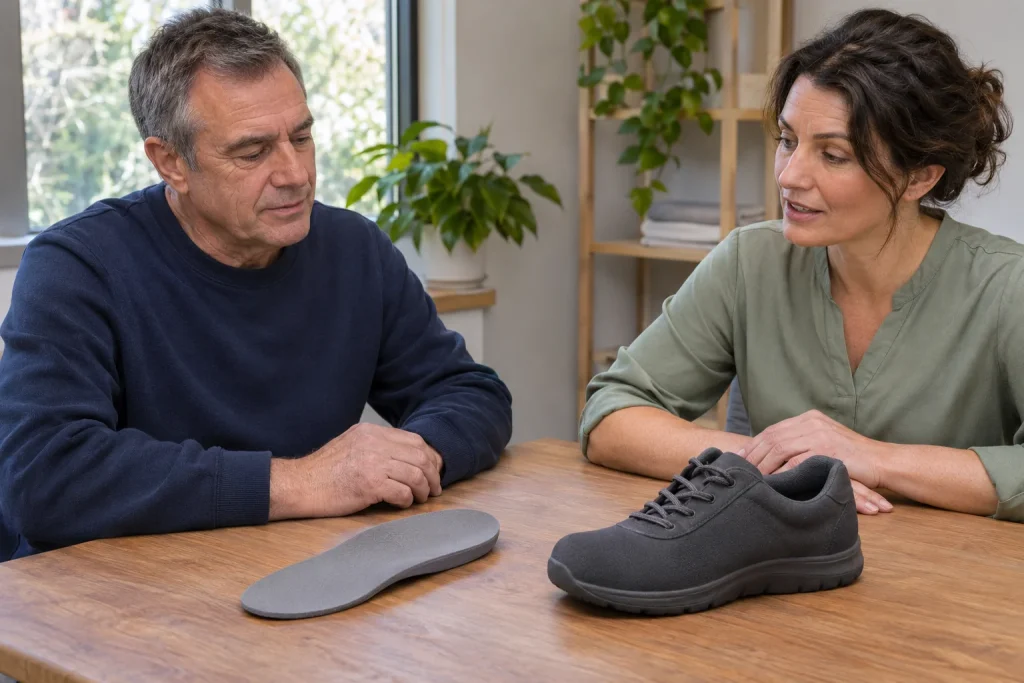
The Guy’s and St Thomas’ 2026 information describes insoles with different tasks. Some aim to support and influence function, others to reduce pressure or cushion a particular area. These are not two diagnostic categories to select at home, but examples of differing intentions behind devices.
Replace ‘it will help’ with a situation important to you, such as symptoms during standing work, a daily journey or an area under pressure in a shoe. You do not need to assess it immediately on a long run. If the original aim was everyday travel, running may remain a separate question. Clarifying purpose prevents expecting one general device to solve every movement problem.
A useful question is: ‘Which symptom or task are we trying to change with this insole?’ Then ask how change will be recognised. Price, an impressive manufacturing process or a material’s name are not that outcome. Link the individual goal to experience you can report from real life.
A new arch change is more than a shoe-sizing issue
The AAOS information on progressive collapsing foot deformity describes several supporting structures, including tendons and ligaments. Pain in this condition can precede visible shape changes. Insoles or braces described there are options for a recognised problem, not automatic solutions for every flatter-looking foot.
If you notice change from an older photograph or shoe, report it without staging the condition at home. Shape, movement and symptoms are assessed together. One standing photograph cannot identify the condition or an insole’s possible role. This article therefore does not prescribe a single-leg heel rise or another self-examination test.
A timeline helps with visible change: when you noticed it, which function became harder and whether injury or another change preceded it. This does not necessarily identify one cause. It prevents an old general label of ‘that is how my feet are’ hiding new symptoms. A previously comfortable insole cannot replace assessment of a new situation.
 Enlarge image
Knee and foot symptoms can mean different indications
The NICE NG226 recommendation for osteoarthritis does not routinely recommend insoles and support devices for everyone. It considers particular functional circumstances and expected contribution to therapeutic exercise. A knee report alone is therefore not enough to call one insole necessary in every case.
Nor does the opposite follow: that insoles cannot help any foot condition. A device for local foot pressure and one considered for knee osteoarthritis may answer different questions. Link evidence to condition and purpose. Do not extend one patient group’s finding to every joint symptom in every runner.
In practice, understand why the recommendation was made. Is it intended to alter local pressure, support more comfortable travel or connect to a specific rehabilitation task? These differ from changing the entire body’s posture. Clarify the reason before evaluating results.
The shoe and insole form the actual use situation together
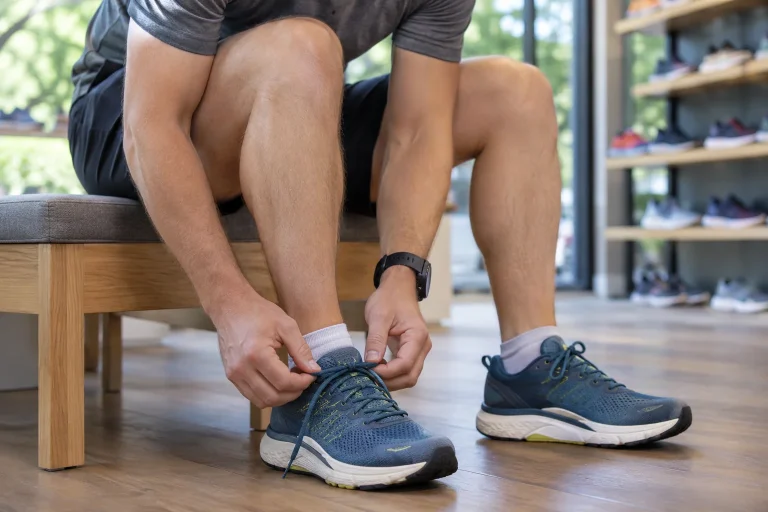
An insole does not function alone on a table. It fits between foot and shoe, so assess fit together. The Royal National Orthopaedic Hospital guide emphasises footwear that stays comfortable with the insole and advises taking your own device when choosing new shoes.
If the upper presses over your toes, the heel becomes insecure or the shoe is hard to close after insertion, that is more than appearance. Describe which shoe and situation. Do not force the setup into old footwear with extra layers, padding or tighter lacing. Clarify fit with the professional who knows the device.
Ask specifically about the original factory insole in that shoe and device. Not every lining is removable and different insoles need different depth. Instead of a promise that it fits every shoe, actual footwear compatibility matters. Moving between work, everyday and running shoes is not automatically the same use.
Getting used to it is not a pain-tolerance contest
The hospital information describes gradual familiarisation and reporting persistent discomfort. Agree your own schedule when receiving it instead of copying another device’s break-in plan. Gradual use does not mean enduring every discomfort indefinitely or treating pain as necessary proof of effect. Request a check if experience differs from the agreement.
Look beyond your watch during a trial. Skin, pressure within the shoe, usability and daily function can all provide feedback. Describe what actually happened rather than creating new exertion just for a measurable result. If initial advice was everyday use, clarify the first run’s timing and conditions separately.
Several changes alongside a new device make reporting harder. New shoes, routes and greater load together make a better or worse day difficult to attribute to one factor. You do not need to become a study participant. Simply name changes separately and adapt activity according to your plan.
Define usefulness before the trial
A result is meaningful against a starting point. That may be an important task, not necessarily sporting performance. Perhaps pressure previously occurred during a certain work period and you want to follow its change. This is more precise than saying the device ‘makes walking healthier’ without defining that statement.
| Evaluation question | What should you record? |
|---|---|
| What was the original goal? | A specific symptom or daily task to which the advice applied. |
| Which shoes did you use? | The actual footwear and fit experience. |
| What changed? | Comfort, function and any new symptoms named separately. |
| What comes next? | The agreed review or way to contact someone sooner. |
This table is not a fitness scale or guarantee of effectiveness. It is a conversation outline to avoid shifting expectations afterwards. If the goal was easing a local symptom, retrospectively demanding a better race time is unfair. Equally, attractive workmanship does not replace feedback about your function.
 Enlarge image
Review does not necessarily mean another purchase
If an insole is uncomfortable or does not support the agreed goal, first clarify the problem. A professional can check fit and the care plan. Do not immediately assume only a pricier material, higher arch section or another shoe will solve it. Buying again does not answer the original question.
The RNOH guide advises against independently heating, bending, gluing or adding padding to its orthosis. The point is not to alter an individual device at random. Seek advice about checking a sharp part, damage or substantial wear. A home-modified insole’s later behaviour is harder to connect to the original recommendation.
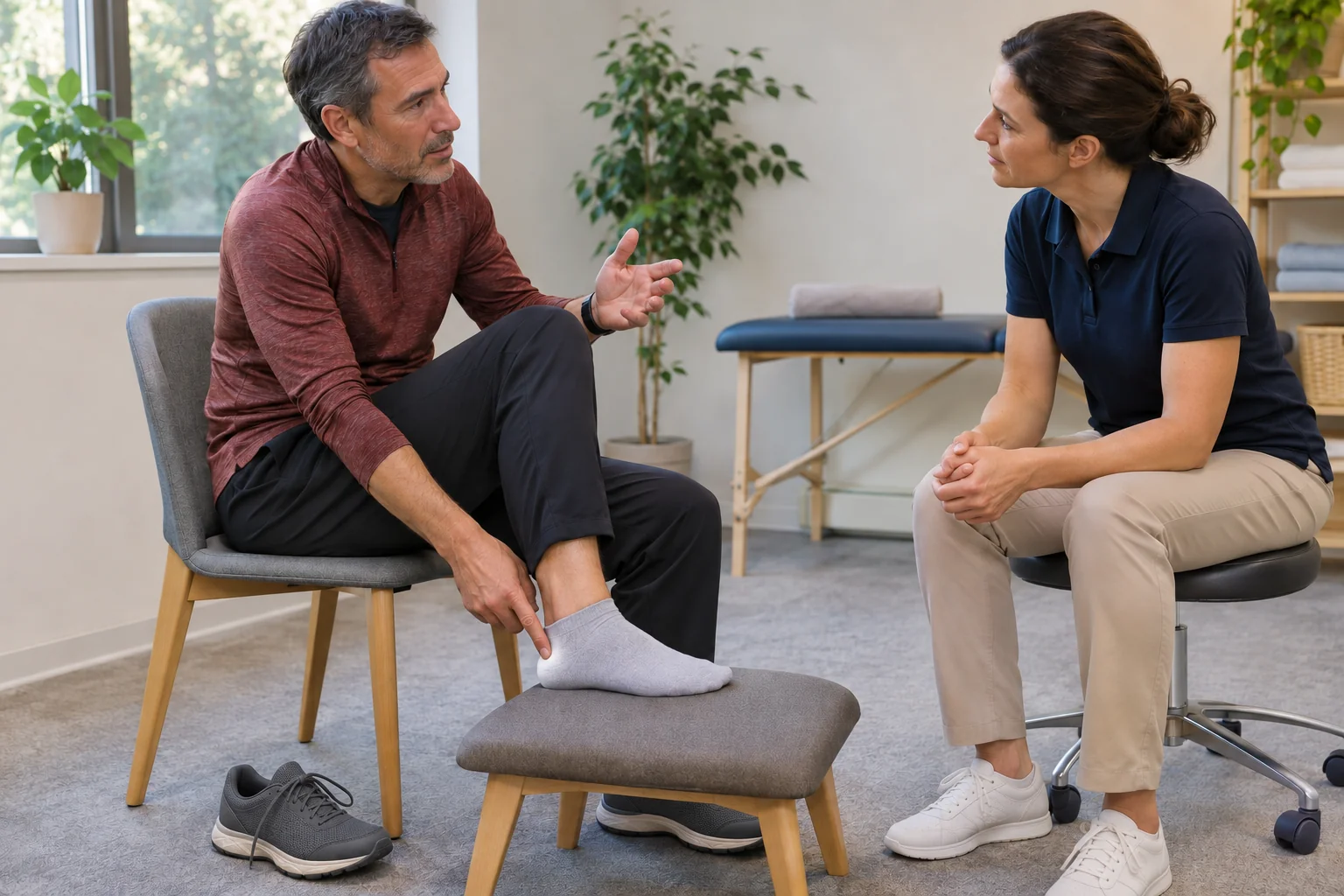
Bring the shoe in which the problem occurs and any device documentation to review. ‘It presses only in this footwear’ is important. Mention use tied to work or caring duties too. The aim is not for a short clinic trial to validate the earlier decision at all costs, but for the plan to make sense in real life.
An insole does not automatically change running advice
If pain required modifying running, receiving the device alone is not a signal to resume the full previous load. Discuss a personal return plan and permitted activity separately. ‘Running insole’ describes an equipment category, not a clinical assessment of your condition. Symptoms and sporting goals remain part of overall care.
Welcome more comfort while retaining follow-up. You do not need to prove improvement immediately with more distance or make up missed training on the first good day. If nothing changes, report that objectively. Insole use is not a personal exam where effectiveness proves your cooperation.
Take this question to the next conversation: ‘Which task does this insole support, in which shoes and with what usage plan should I try it, and how will we decide whether to continue?’ It replaces a general correction promise with something specific. Start from symptoms, function and real use rather than judging your foot’s shape.
Sources
- Guy’s and St Thomas’: purpose and follow-up of insoles, 2026
- Royal National Orthopaedic Hospital: using and fitting foot orthoses
- AAOS: progressive collapsing foot deformity
- NICE NG226: devices in osteoarthritis
How Futószív articles are prepared: our editorial guidelines.