On a long trail run, a watch’s value often appears in a small action: can you start the recording when setting off, and retain the few data you rely on throughout? Ultra 4’s larger case alone answers neither. The dedicated Action button and longer workout modes help when operation fits your running. This interprets November 2026 manufacturer documentation without our own device test.
A larger watch is first a wearing decision
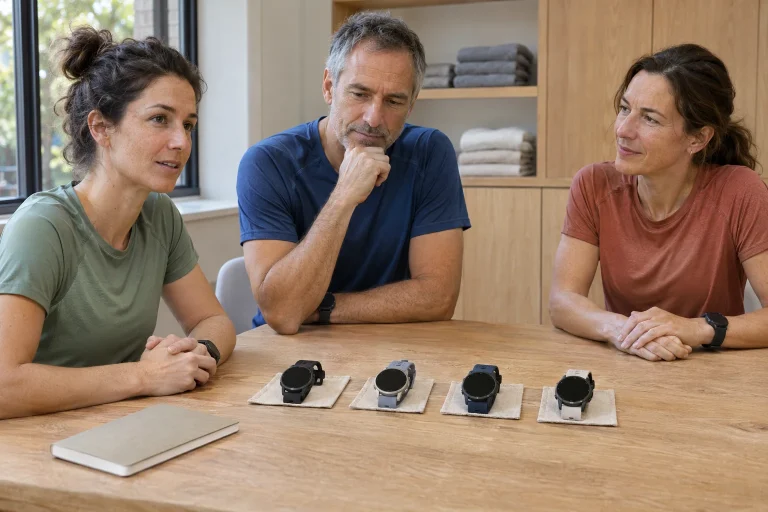
Ultra 4’s titanium case is 49 mm high, 44 mm wide and 12 mm deep; the natural version weighs 63 g without a strap. A flat sapphire display and dual-frequency GPS appear on the specific model’s technical sheet. Check physical dimensions beforehand because a shop photograph cannot show how it fits beneath your jacket cuff.
Try a running-style top, flex your wrist and mimic removing a bottle from a vest. Comfort should remain when not viewing it with an extended arm. Examine strap adjustment separately: excessive tightening is an unpleasant solution to slipping. A size impressive for ten seconds may not be enjoyable throughout a long weekend day and following night.
Separate three situations: workday wear, short city training and your longest planned trail day. If the larger case helps only the last, consider how often it occurs. An annual event and a basic watch used three times weekly deserve different weight. Size then relates to a task rather than the idea that serious runners necessarily wear bigger watches.
Give the Action button a clear task
The watchOS 27 button guide says the first press with Workout selected opens the app or starts the chosen workout; the next action depends on that workout. Pressing Action and the side button together pauses it. Settings allow other tasks, including waypoints or Backtrack. Third-party apps have their own button handling; a physical button does not imply identical control everywhere.
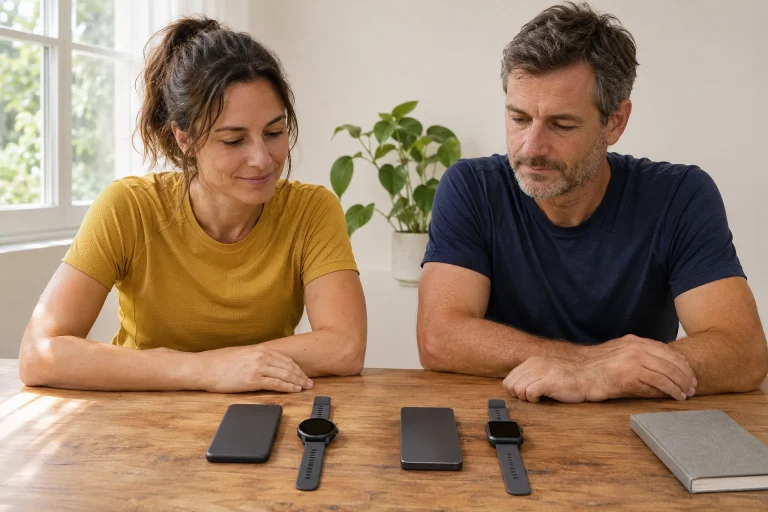
A useful home trial is short and specific. Assign the app you would actually use for the race. Start a brief walk, mark a segment, pause, resume and save. Then inspect where timing began, whether the segment exists and whether rest appears in elapsed time. These are control checks rather than tests of GPS or heart-rate accuracy.
Include clothing. Make presses deliberate and notice the other hand when reaching two buttons together. If switching between running and hiking, know which assignment is active. A clear learned sequence demands less attention at the start than first searching there. Repeat the routine after a software or app change.
Precision Start organises the start of your own recording
The Apple running guide describes countdown-free Precision Start on Ultra models. After selecting a running workout, starting can use the screen or an appropriately assigned Action button. The guide separately covers segment marking, custom workouts, Pacer targets and Race Route comparisons. Know which task you prepared before starting.
In our example, you reach the start gate two minutes early but want watch time to begin only as you pass through. Prepared starting can help choose that moment, but recording still relates to your press. The organiser’s system measures chip time; the watch does not become an official timing gate. Interpret small differences accordingly.
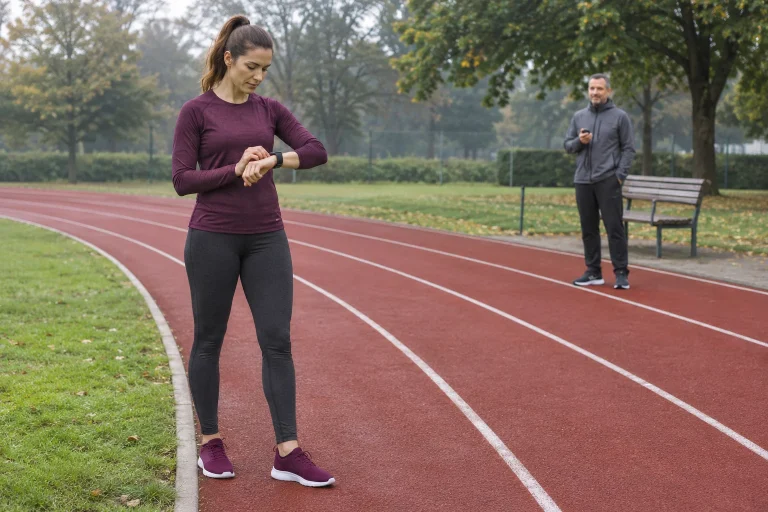
Give segment marking a consistent meaning: the start and end of a long climb or an agreed training block, for example. If pressing for different reasons each time, identically labelled segments are not comparable. A track trial separates handling errors from the session itself. The button marks an event; meaning comes from the rule you use consistently.
 Enlarge image
Five battery figures, three separate questions
The manufacturer’s battery test lists 50 normal and 84 Low Power daily hours with mixed activities. Continuous outdoor workouts have separate 18-hour standard, 25-hour Extended and 45-hour Max Extended figures. Workout testing used no iPhone and enabled heart-rate sensing. Extended uses low power without running-dynamics metrics; Max Extended also disables alerts and splits, with certain metrics unavailable.
“I’m going for two days” is therefore insufficient. Two days sightseeing with short runs differs from one very long recording. List workout time, travel and waiting separately, plus intended connections and functions. Do not divide a daily maximum by imagined workout hours; factory conditions do not describe uniformly consuming operation.
In our planning example, compare both an estimated ten-hour route and a worse-case fourteen hours with experience in the chosen mode. Those four hours represent uncertainty in your schedule, not a compulsory battery-reserve percentage. A prior familiar-terrain trial reveals your configuration. Do not turn a laboratory upper limit into an individual finishing guarantee.
Longer recording also means relinquishing data
The Ultra 4 introduction mentions full GPS and heart-rate recording in Extended and one-second GPS samples in Max Extended outdoor running, walking and hiking. This generation-specific detail matters: do not automatically equate longer time with an older watch’s reduced GPS sampling. Still read available data against the mode’s own description.
Make two columns for priorities: what you rely on during the run, such as elapsed time and consciously starting a segment, and what you analyse only later. If following running dynamics is the training goal, a mode omitting them creates different material. Preserving a whole route on a long exploration may justify another compromise. Give either choice a clear reason.
Record a short familiar loop in the intended mode. Write expected feedback beforehand, then inspect the screen and saved summary. Discover missing favourite splits or alerts before the start. A completed file does not prove every familiar field exists. The trial clarifies features rather than recreating a forty-hour race in the living room.
Make a charging stop part of the day
Apple’s measurement gave about 45 minutes from zero to 80 per cent and about 75 to full, with the specified fast-charging cable and twenty-watt adapter. The test conditions specifically note the environment and charger. Daily-use hours gained through a quick charge are not identical hours of continuous running. Learn your power-bank result using your own setup.
Actually connect watch, suitable puck and power bank during equipment practice. Check where the removed watch rests securely and whether reaching for a bag pulls it off the bench. Consider dry placement and repacking. Charging works when all required elements are available together; a cable in the bag with the wrong connector does not help at that stop.
If overnight wear matters, choose a charging window that does not conflict with the recording. Showering and organising before dinner are examples, but your day determines the solution. Give the charger a familiar place and a pre-departure check rather than improvising on race day. Longer battery life then serves whole-day organisation rather than only the biggest table figure.
Positioning and communication are separate systems
Dual-frequency GPS describes positioning rather than automatic messaging. Current specifications require iPhone 11 or later, or second-generation or later iPhone SE, with iOS 27 for setup. Cellular service is a separate contractual question. The Apple carrier list names Magyar Telekom and One for Hungary, but check exact tariffs and eligibility with your provider.
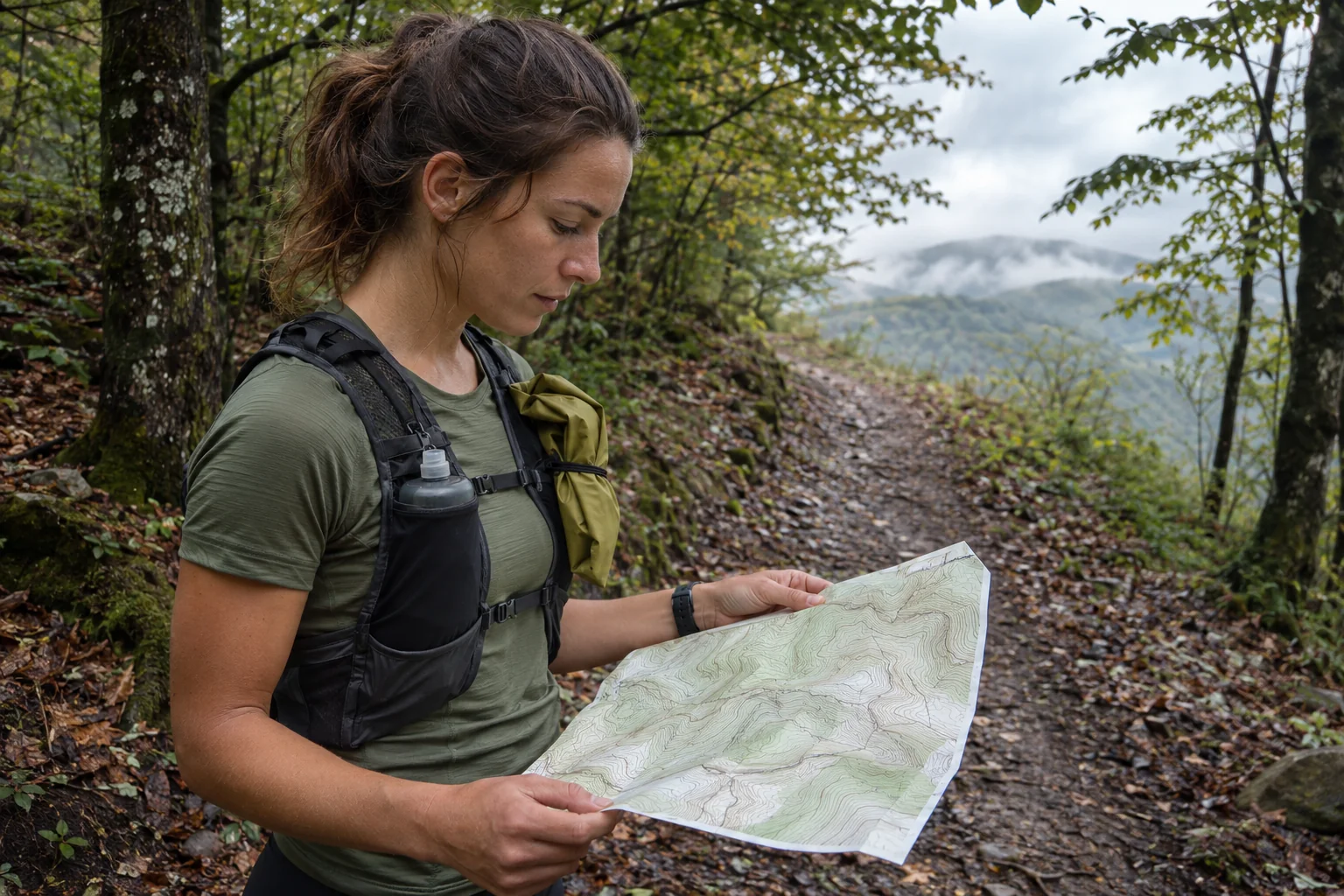
For a trail day, ask what works without the phone, what requires a network and which content is prepared. Do not inspect maps, routes and contacts only on home Wi-Fi. Check the required display at a practice location and agree with companions what happens if one device fails. Losing connection and losing a recording are not necessarily the same event.
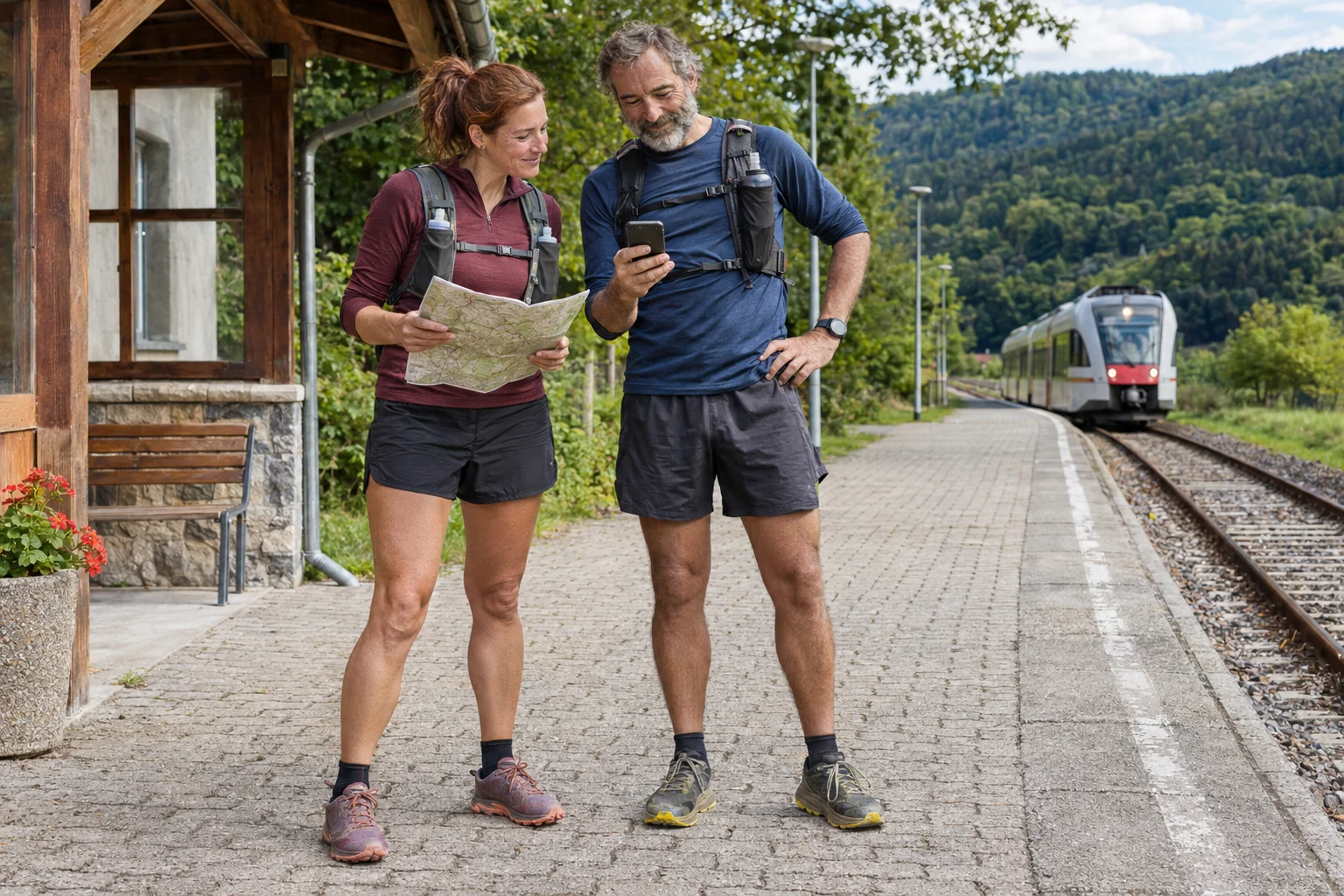
Include getting home in route planning. A long start-to-finish recording does not establish whether a bus still runs from the finish or whom to tell about delays. Agree departure, expected arrival and the next action after a missed check-in. These are organisational tasks. Better radios help when someone knows what information to expect.
 Enlarge image
Check satellite options by country and feature
The satellite setup guide describes two initial free years and requires an active cellular plan for messaging and location sharing. Availability depends on country and model market. Hungary does not appear on the Emergency SOS country list checked in November 2026. This article therefore makes no promise of satellite emergency calls in Hungary; check the specific service’s current country list before travel too.
The user guide requires a clear sky view; dense canopy, buildings or other obstructions can block connection. Satellite location sending is not continuous second-by-second tracking: the guide permits sending every fifteen minutes. A nearby paired iPhone in airplane mode creates a separate limitation. Emergency messages, ordinary messages and location sharing should not become one “has satellite” label.
Practise with the documented demo where available, never by making a real emergency request out of curiosity. A companion should understand a sent point may represent a moment, not continuous movement. Do not base a valley run’s entire communication plan on this alone. Device, service and location together determine a usable link; the product name does not reveal all three.
For whom does Ultra 4 add meaningful value?
One candidate regularly plans longer independent days and will clarify workout-mode compromises beforehand. Another genuinely finds starting and segmenting easier with the physical button in their app. A third wears the larger case comfortably and already uses the iPhone system daily. These are use situations rather than entitlements assigned by performance.
For someone else, basic Workout features, shorter evening sessions and a lighter case may decide. Choosing smaller does not make training less serious. Assess the premium through two or three recurring occasions when the difference helps. You can choose theoretical reserve too, but recognise that is what you buy rather than an undefined promise of speed.
Before buying, form your own checking statement: I can set it up with a suitable phone; wear it comfortably with running clothing; know start and pause; retain important data in the chosen mode; and have workable charging and communication plans. Consider health features separately rather than as clearance for a long run. Resolving these five practical questions gives Ultra 4 specific tasks in your day.
Sources
- Technical specifications
- Using the Action button
- Running with Apple Watch
- Manufacturer battery test
- Ultra 4 introduction
- Satellite settings
- Using satellite features
- Satellite SOS country list
- Cellular carriers
How Futószív articles are prepared: our editorial guidelines.