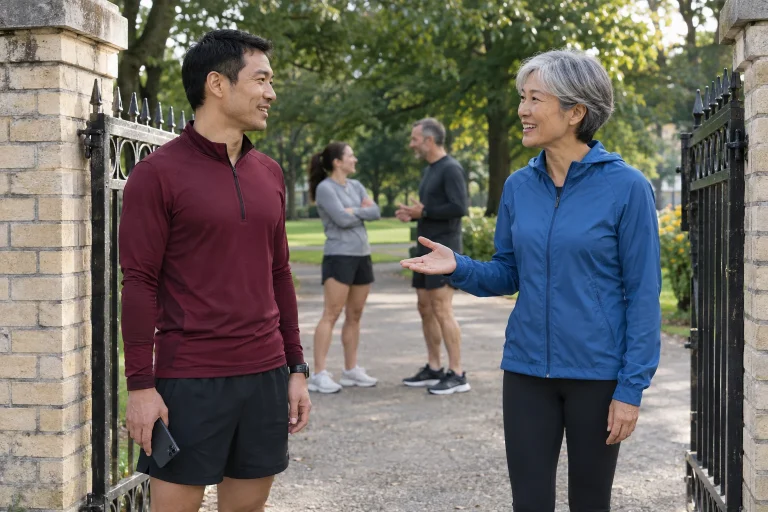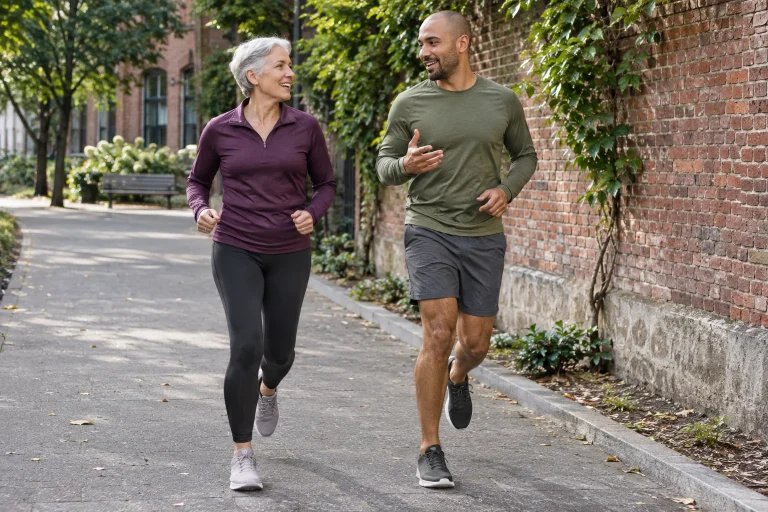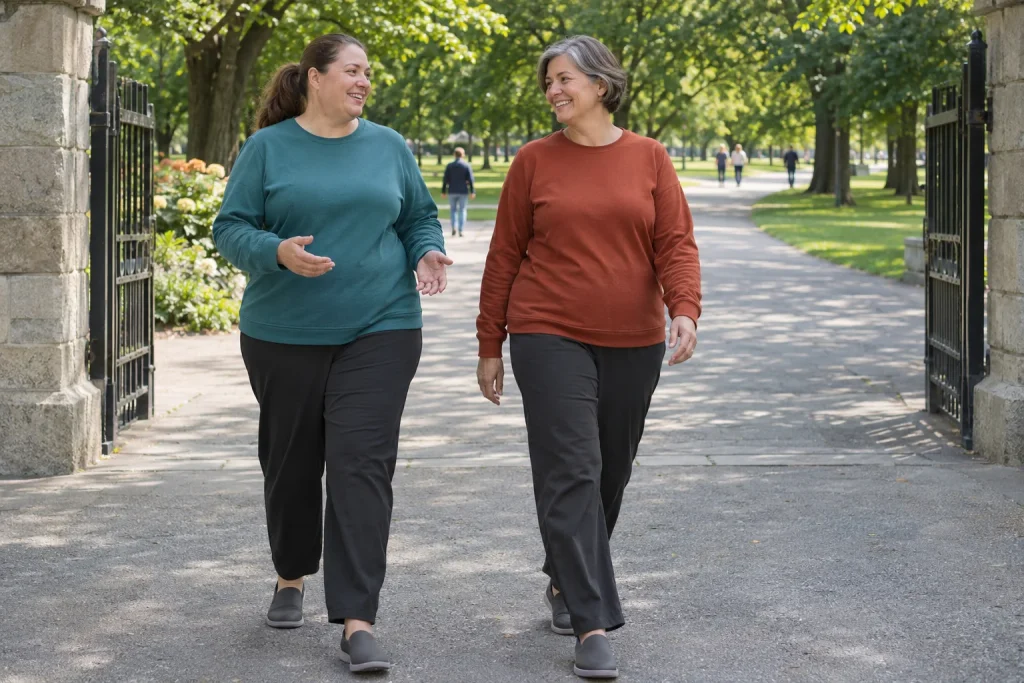
You would like to head out to exercise, but while getting ready you are already wondering who will look at you. Your attention is occupied not only by the route and activity, but also by how you appear to other people. As a beginner or returning participant in a larger body, you may also bring memories of comments and bad experiences. You do not have to deny that tension in order to choose an activity goal of your own.
You can change several aspects of the situation: who you go with, where you meet, what the setting is like and what a group expects. These are options you can use, not rules for becoming invisible. Your body is not responsible for someone else’s hurtful behaviour. Planning an exercise setting can give you more choices of your own, rather than making you adopt other people’s prejudices.
Identify which part of the situation is difficult
Different circumstances can lie behind the feeling that “people are watching”. Arriving somewhere new differs from choosing equipment in a crowded gym; feeling uncomfortable about clothing differs from worrying that a group will not accept your pace. You do not need to solve all of these at once. Naming the hardest part makes it easier to choose preparations that actually address it.
The NIDDK guide to staying active at different body sizes also identifies discomfort about exercising in front of others as a practical barrier. It discusses supportive company and exercising at home as options. This is not a compulsory sequence. You do not have to build confidence at home before choosing a public exercise venue, and you do not have to join a group just because others think that is what real exercise looks like.
One personal question may help: what would make the first visit easier to understand? Would you like to see the entrance beforehand, have someone familiar meet you or get more precise information about the activity? Make the answer specific. “I need to be more confident” is a large, difficult task to act on; “I would like to know where someone will welcome me” is something you can arrange.
A quieter place and a deserted place are different
It is understandable to want fewer crowds, but that does not require choosing a poorly lit or hard-to-reach route. The NIDDK guide includes well-visible places also used by others among its safety considerations. A quieter but easy-to-navigate park entrance or a less busy time is different from a completely isolated stretch of path.
When choosing, check how you will get there and home as well. Do you know where the exit is, where you can stop and what the neighbourhood is like at the planned time? If you want to leave early, can you do so easily? These details matter beyond tension about being seen. They are general arrangements that can help you avoid dealing with additional uncertainties while exercising.
If you like a central, livelier place, you can choose that too. A quieter setting is not more comfortable for everyone, and you do not have to claim less space in the city because of others. The question is which environment you find easier to navigate and suitable for your planned activity. It is not about deciding where other people would find your body more acceptable.
You can agree a supportive companion’s role beforehand
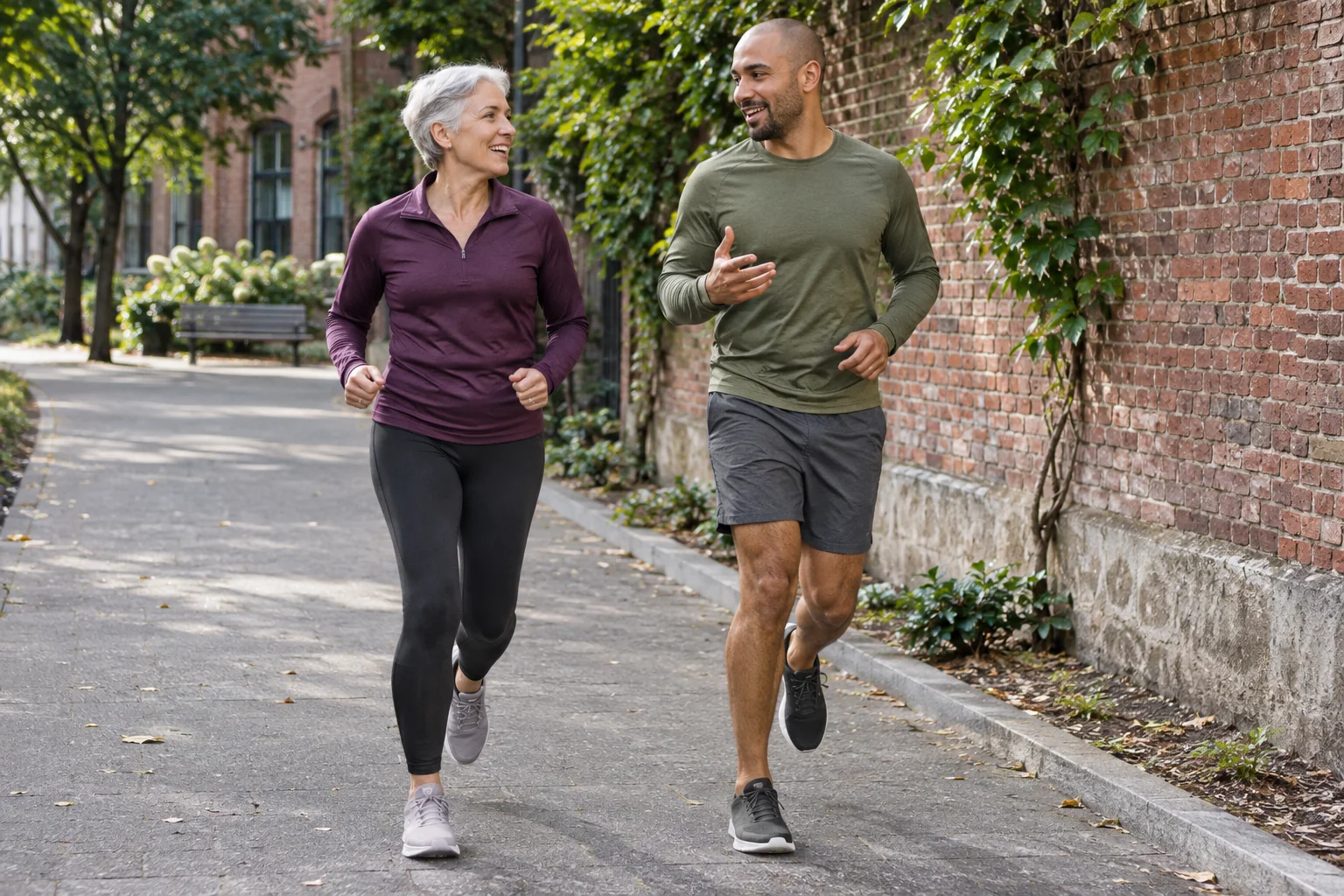
Having someone familiar there can help in many ways. They might accompany you to the entrance, arrive with you at a new class or simply spend time outdoors with you. Explain beforehand what you need. You may not want encouraging remarks or someone pushing the pace; perhaps what helps is ordinary conversation, without making your decision to turn up into a special achievement.
For example, you could say: “I would like to get to know the place, and it would be good to arrive together.” Or: “Let’s not focus on pace today; let’s stick to what we agreed.” Your companion is neither a supervisor nor a therapist. Their role is whatever you agree together that supports your choice. You do not have to pay for your own activity by completing their longer route in return.
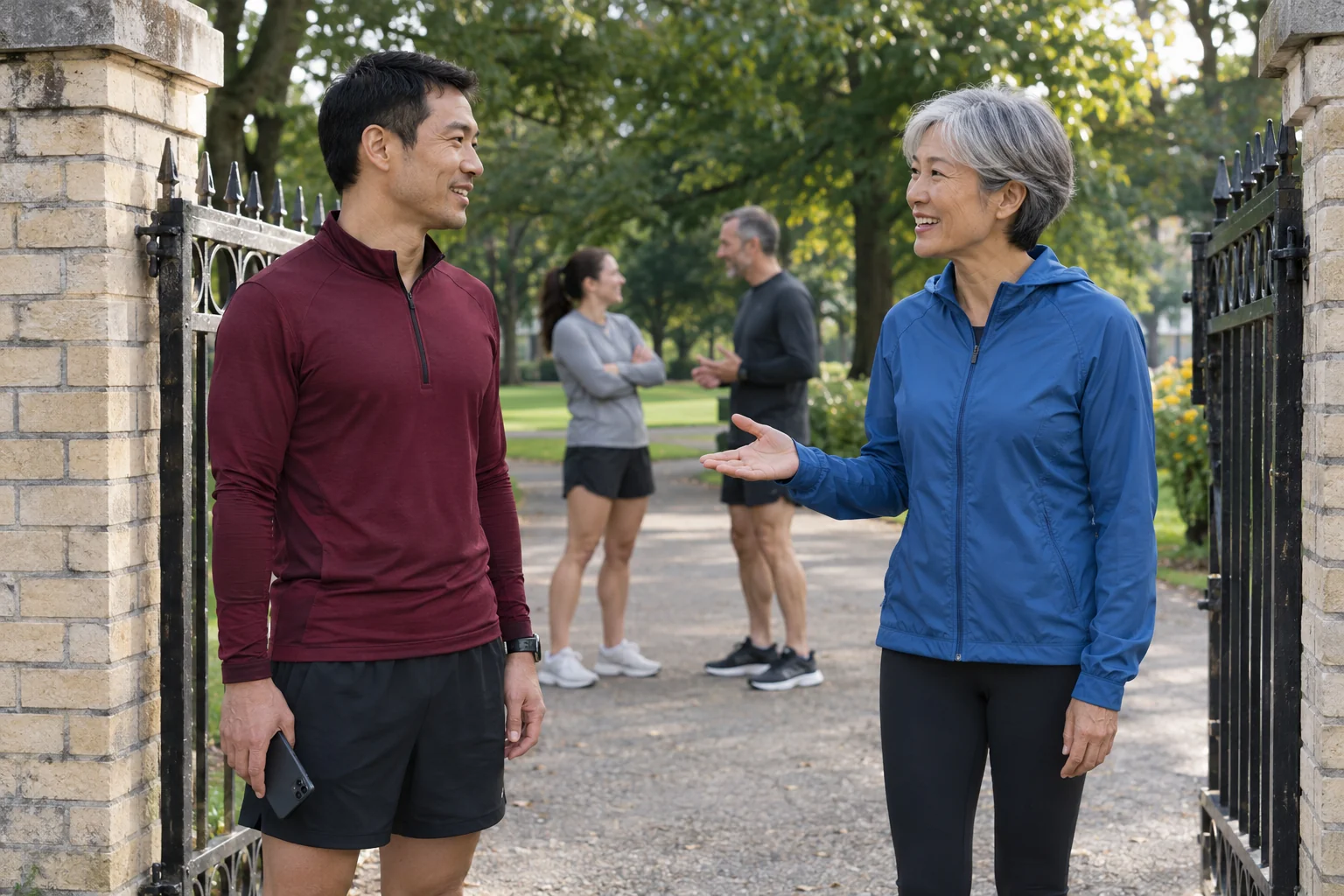
Consider a simple fictional situation: someone is visiting a new park with a friend and explains beforehand that they do not want conspicuous encouragement or photographs. The friend accepts this, they look at the meeting point together and then take part as agreed. Here, help is not a grand gesture but respect for a few specific requests. Another person may find a different kind of company comfortable.
 Enlarge image
Clothing should not become an entry requirement
If your clothes make you uncomfortable, a comfortable fit and your own taste matter. You do not have to show or cover a particular body to participate in sport. Finding the right size and cut is a practical task that does not need to become an assessment of your body. You can choose something you move easily in and that suits the weather or venue rules.
Try how your top, bottoms and storage work together during your usual movements. If something keeps shifting, adjusting it can take considerable attention on its own. Comfortable equipment will not solve every social tension, but it can remove one specific discomfort. You do not need to buy a whole new wardrobe immediately; first identify what genuinely creates difficulty in use.
Your preference for coverage can be respected without requiring clothes that are too warm or restrict movement. If the available sportswear does not suit you, that may also reflect a problem with what is offered. Your body does not need to fit an advertisement’s size range. Your choice should serve your own comfort and practical use, rather than managing other people’s gaze at any cost.
Find out how a group works beyond the adjectives in its advert
Calling a group inclusive or beginner-friendly may signal good intentions, but specific arrangements tell you more. How are new participants welcomed, is there a named contact, can you choose a different route and how do they respond to requests for modifications? You can ask in advance. The style of the answer itself gives you information about how naturally the group accommodates different needs.
The NICE NG246 general principles of care emphasise sensitive, non-stigmatising communication and consideration of individual circumstances. This is healthcare guidance, not a certification system for running clubs. The underlying consideration can nevertheless help you frame your own questions: the discussion should address the activity that interests you and what you need to participate, rather than only your body size.
You can also ask about photography and social-media sharing. Say if you do not want to appear in group pictures or public posts about your performance. Clarify the exact rules with the organiser; do not infer from silence what will happen. Taking part and being visible online may be two separate preferences.
| What is uncertain now | A question to ask beforehand |
|---|---|
| Arrival | Who can I approach at my first session, and where do we meet? |
| The activity | How can I choose my own distance, pace or finishing point? |
| Communication | Can I participate without comments about body size or weight loss? |
| Pictures | What are the photography arrangements, and how can I communicate my request? |
Exercising at home can also be your own choice
If exercising at home fits your day right now, it can have value in its own right. You do not need to treat it as a secret preparation phase that you may leave only once you have the right body. The home environment must still suit the chosen activity, however: allow enough space, suitable equipment and professional guidance where needed. A private space does not automatically make every online video appropriate for you.
You might want to become familiar with one activity at home first while choosing to try another in a group straight away. There is no compulsory ladder between the two settings. Your interests and condition matter. If you follow individual healthcare instructions, they still apply to the home programme; general statements from an instructor on a screen do not override them.
You may also have less privacy at home than in a properly organised session. Comments from family members, limited space or interruptions can mean it is not the calmer option. Consider your own surroundings rather than feeling obliged to follow generic advice. Choosing between home and a group is also a practical question, not a test of courage.
You do not have to answer hurtful behaviour with athletic performance
If someone makes a comment, you do not have to prove that you take exercise seriously by running a faster section or taking a longer route. Another person’s behaviour is not an authoritative assessment of what you are doing. What may matter in that situation is how to move on safely, whom you can turn to and whether you want to tell the organiser. You are not obliged to argue on the spot.
In an organised group, you can ask how hurtful comments are handled and who receives feedback. If you want to report an incident, describing what happened specifically may help: what was said, in what situation and what support you expect. You do not have to defend your body in a public debate for your request to make sense. The response and subsequent practice also reveal the group’s culture.
Choosing another place or different company does not mean the person who hurt you was right. You can equally stay somewhere that matters to you if that is what you want and the circumstances are suitable. The choice should serve your interests. You do not have to turn one incident into a general rule about where you may exercise in future.
 Enlarge image
When is it worth seeking separate help with the tension?
Occasional discomfort and persistent fear that significantly affects daily life are different. The NHS information on social anxiety recommends professional help when difficulties affect everyday functioning, relationships and activities. That does not mean your uncertainty while exercising is necessarily this disorder. You can nevertheless tell a professional about a persistently distressing feeling in its own right.
If fear increasingly limits situations that matter to you or causes significant distress, you do not need to keep proving through repeated attempts on your own that you can solve it. Describe where it appears and how it changes your day. Appropriate help begins with an individual assessment; this article does not replace treatment or prescribe a forced sequence of exposure exercises.
Seeking help does not invalidate practical choices that already work. A friend, a suitable place or an arrangement clarified with the group may remain important. The difference is that you do not have to deal with the burden alone simply by choosing another route or item of clothing. Both your needs and the difficulty you experience can receive attention.
Let the next session be about your own choice
Choose one circumstance you can genuinely clarify now. Agree the meeting point, call the organiser, try a more comfortable top or head out with someone you know. This is not a promise that all tension will disappear. It makes one concrete detail clearer and leaves more room for the reasons you want to move.
The visibility of your body is not a separate sporting task you have to perform well at. Choosing the circumstances can serve your own comfort and participation. You can be outside in the park, choose a group or private activity and seek appropriate help too. A good plan aims not to make you occupy as little space as possible, but to let you connect with your own experience of movement in clear, suitable conditions.
Sources
How Futószív articles are prepared: our editorial guidelines.