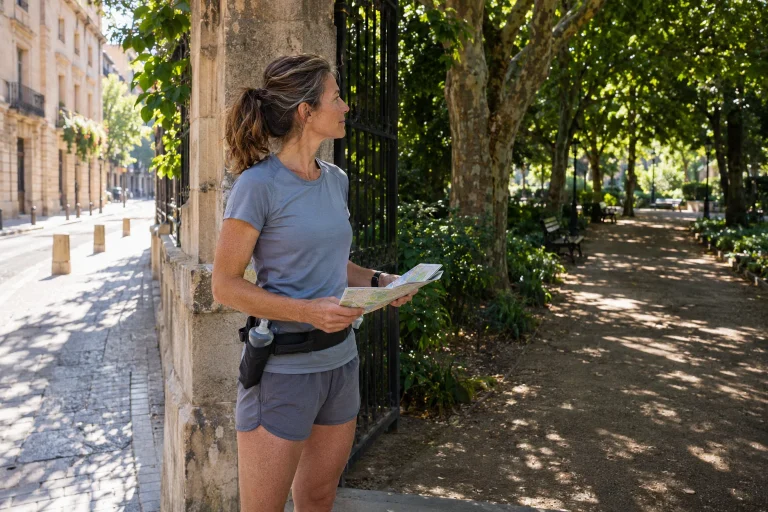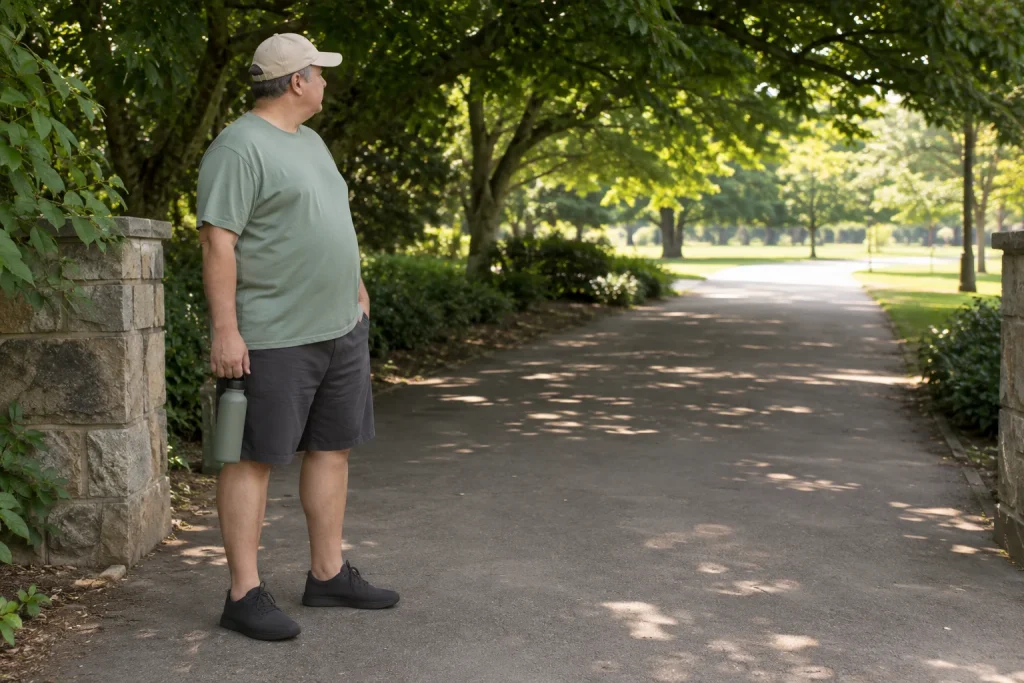
The same walk or running route can feel entirely different on a hot day. Getting ready is already difficult at home, movement quickly becomes uncomfortable on a sunny pavement and shade comes only later. If you are starting or returning to sport in a larger body, you may hear comments that you should simply cope better. But conditions are a real part of the task; changing them is sensible planning.
The useful question is how to choose a situation fitting your current condition. A different time, nearer location, cool indoor space or postponement may all be options. Having running in the calendar does not make the same activity compulsory in every weather. The aim is not to prove heat tolerance, but to give sport a manageable and medically appropriate place in your day.
Feeling unwell is not merely planning feedback for next week
Confusion, loss of coordination, a seizure or loss of consciousness in hot conditions require immediate help. The NHS information on heat exhaustion and heatstroke treats heatstroke as an emergency. Do not wait for someone to decide for themselves whether they are ill enough, or infer the cause from body size. Help them reach a cooler place, begin cooling and follow emergency-service instructions.
Dizziness, weakness, headache, nausea or an unusual feeling of being unwell also mean stopping exercise and moving somewhere cool. The CDC heat guidance for athletes specifically emphasises stopping if you feel faint or weak. Seek help if symptoms are significant, do not improve or you are uncertain what to do. Chest pain or severe difficulty breathing requires immediate medical help.
Do not leave someone who feels unwell to continue alone or turn the situation into a discussion of willpower. With urgent symptoms, you do not first need to ‘prove’ through fluids or rest that further help is necessary. The ideas below can support preventive planning; during an acute illness, appropriate care comes first.
Read the day’s weather in relation to your entire journey
A forecast figure does not describe the whole route. The pavement between the entrance and exercise location, where you wait and the journey home matter too. If reaching a shaded park requires a long sunny walk, a favourable exercise location has not solved the whole day. Plan from leaving home to returning: where will you be exposed to heat, and where can you genuinely get somewhere cooler?
The CDC’s 2026 overview of heat and health includes shade, choosing cooler periods and access to cooled places among protective measures. Heat can affect anyone, and some chronic conditions may require particular planning. This is not a matter of a single body-shape label. Even for the same person, one day can differ from another depending on circumstances and health.
Check local weather warnings and conditions for the actual time, then consider your programme alongside them. A morning opportunity helps if it is genuinely cooler and safely accessible. A late-evening option also raises questions about getting home and lighting. No single time of day needs to be declared the answer to every situation; you are seeking better conditions for your actual route and day.
 Enlarge image
A shaded route needs to be more than one attractive spot
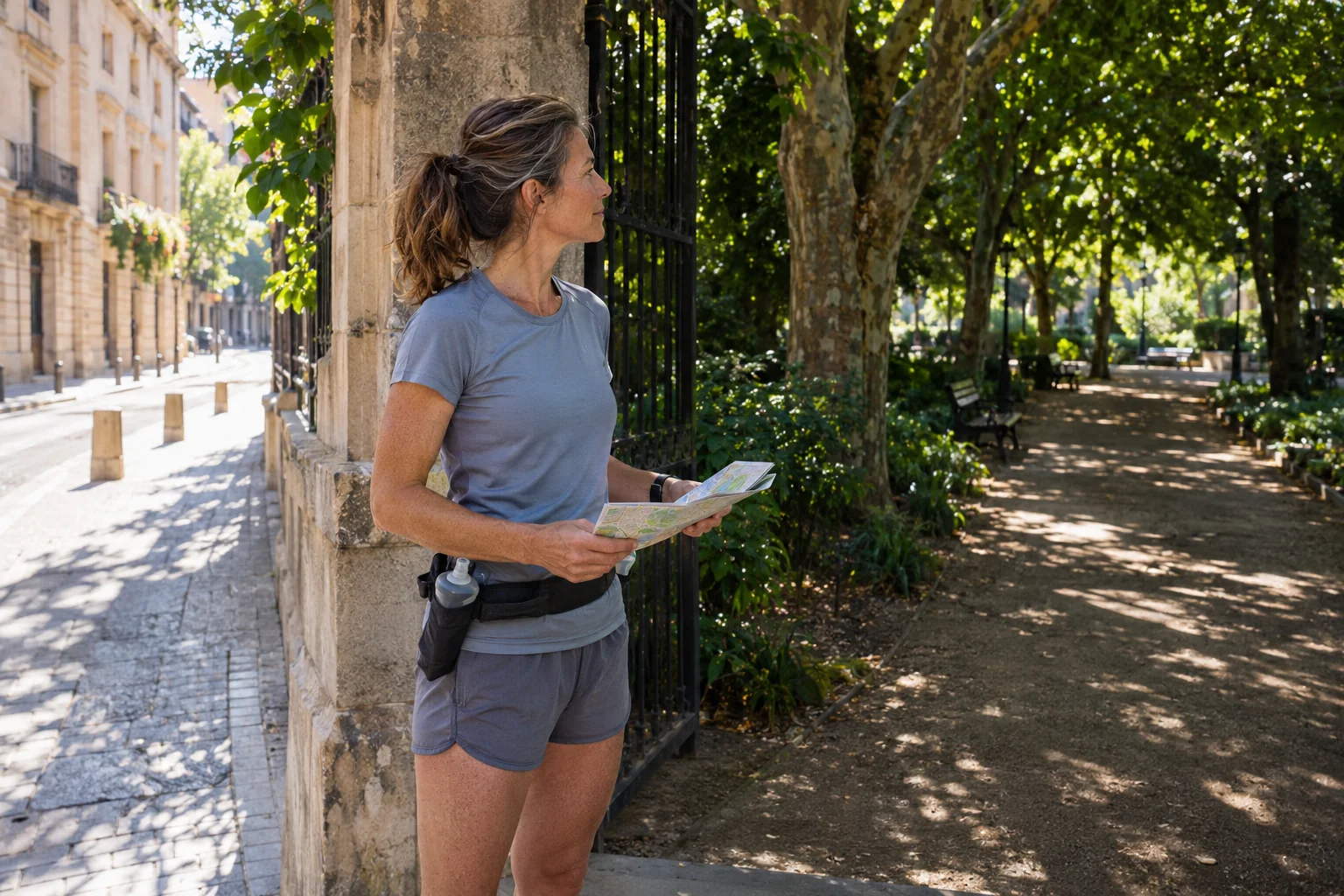
Shade offers a useful option when the approach and continuation are considered too. A distant wooded section may not be a good choice if long exposed stretches come before and after it and shortening the route is difficult. A nearer, less scenic place may be easier to organise. Route quality here comes not from kilometres or photographs, but from offering appropriate conditions for your chosen activity.
Ask specific questions about the location. Is the meeting point shaded, or only a later part of the route? Is the bench usable and in a pleasant spot at that time of day? Can you shorten the outing near an exit? If you leave early, would you have to return along the same sunny section? Someone familiar with the location can answer these details; you do not need an uncomfortable trial to discover them.
The option to sit or rest is an important practical feature, but does not make every weather situation appropriate. The same applies to a drinking fountain: knowing where it is and whether it works is useful, but water access does not override the need to modify plans because of heat. Choosing a location involves several conditions together. If they do not align, another place or postponement can be a considered decision.
Try clothing for today’s conditions
The CDC athlete guidance includes light, loose-fitting, light-coloured clothing among heat precautions. Individual comfort also involves cut, layers and how equipment works together. A thinner dark top, large vest or extra pockets are not merely matters of appearance. Consider which equipment you need for the chosen, permitted activity and what you are still wearing out of habit from cooler days.
Choice in larger sizes can be limited; that is a practical barrier, not a personal failure. When seeking an item, assess real fit: can you reach the zip, does the top ride up, how does the strap feel, can you access storage? You do not have to accept tighter or uncomfortable clothing because that is all that is marketed as athletic. Clothing should support your use, rather than requiring you to fit an advertising image.
Arrange sun protection according to the instructions for your products and clothing, but do not treat them as complete protection against heat. A cap, sunscreen and a comfortable top solve different parts of the task. None should be used to justify completing an otherwise poorly manageable sunny programme unchanged. Appropriate equipment belongs alongside more favourable conditions.
As well as a drink, you need a plan for reaching somewhere cool
Carrying a bottle can be useful preparation, but it does not answer every heat-related problem. Where can you go to cool down? How will you stop the session? Who knows if you set out alone, and how will you get help? These questions need consideration even when you have a drink. A larger bottle or sports product cannot buy unlimited adaptation to heat.
Fluid planning can involve individual circumstances too. If you have a medically prescribed fluid restriction or take regular medication, clarify hot-day actions with your care professional beforehand. The general CDC heat page also warns that medicines can influence heat-related risks and should not be changed independently. Do not skip a dose for a sports session or increase salt or fluid intake using an online formula.
A personal hot-day plan can be brief but specific: which activity you will replace, where a cool environment is accessible, which individual instructions apply to drinking or medication and whom to contact for symptoms. You do not need to invent it again each time. However, update it if your treatment, condition or daily route changes.
Indoors is an alternative only if it is genuinely suitable
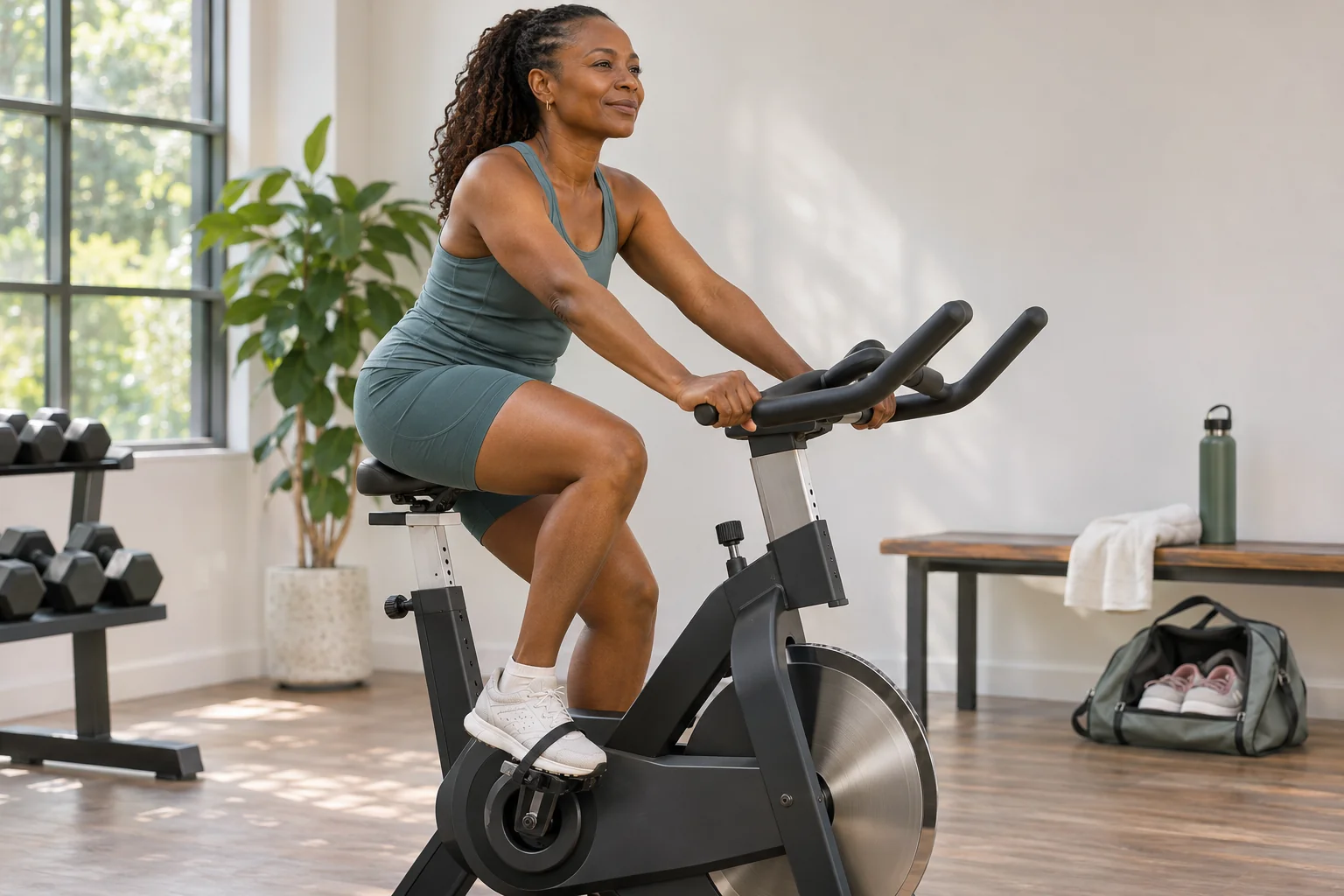
The NIDDK information on physical activity describes different exercise settings and planning to improve access. In hot weather, an indoor option helps if its temperature, access and chosen activity suit you. A stuffy room is not automatically better than a park because it has a roof. Learn how the place actually works rather than treating the word indoors as a safety guarantee.
You can ask about cooling, busy times, seating and an accessible toilet. If you would use equipment, check fit and load capacity separately. Trying an alternative does not necessarily justify buying a long membership. First clarify trial options, cost, cancellation and the return journey. A good choice also needs to be affordable and genuinely accessible.
Indoor activity does not need to reproduce the planned run’s kilometres or calories. A different activity can offer a different experience and task. The NICE NG246 guideline considers current ability and physical condition when choosing activity. The value of adapting a day to circumstances is not decided by a compulsory conversion. If rest and a cool place are appropriate that day, they do not need to be paid back with a substitute workout.
 Enlarge image
Group plans should also allow changes
Holding a meeting does not prove the same programme suits every participant. Good shared organisation can clarify in advance the options of shortening, changing the time or cancelling. You can tell the organiser that you do not currently want to spend a long time outside in the heat. You do not need to disclose your weight or share health details publicly. The discussion concerns conditions and your chosen participation.
Consider a fictional example: friends originally planned an afternoon on a sunny riverside. One participant asks for a shorter, shadier meeting. They could jointly choose another place or a conversation in a cool setting instead of sport. That can serve the friendship just as well. A poor response would turn the change into a public judgement of that person’s body shape or supposed lack of determination.
A companion’s attention can help if you agree beforehand to mention unusual feelings and help each other stop. This is neither diagnosis nor a supervision test. It means taking a reported symptom seriously rather than persuading each other into one more lap. You can organise the end of a programme together just as you organise its start.
Match the modification to the actual obstacle
Exercise becoming uncomfortable in heat can involve many practical details. If the sunny journey is the issue, changing the route or location may matter. If the meeting time is unfavourable, a shadier bend alone is insufficient. If feeling unwell recurs, discuss the situation with your care professional. The comparison below is not a medical decision rule; it helps identify more precisely what you want to change.
| Identified barrier | A practical change to consider |
|---|---|
| A long, sunny approach | A nearer location or another route, including the journey home |
| An unfavourable time | Look for a genuinely cooler and safely accessible period |
| No accessible cool place | Another environment, an indoor option or postponing the session |
| Pressure to keep up with the group | Agree shortening, separate participation or another shared programme beforehand |
Success next time might mean a simpler departure or choosing another option in good time. You do not need to set a heat-tolerance record. A flexible plan leaves more room for what matters to you in sport and less for pressure to prove yourself. How you feel, the environment and individual health considerations all count, even if others choose the original programme.
Sources
- NIDDK: Staying Active at Any Size
- NICE NG246: Physical activity and diet
- CDC: About Heat and Your Health
- CDC: Heat and Athletes
- NHS: Heat exhaustion and heatstroke
How Futószív articles are prepared: our editorial guidelines.