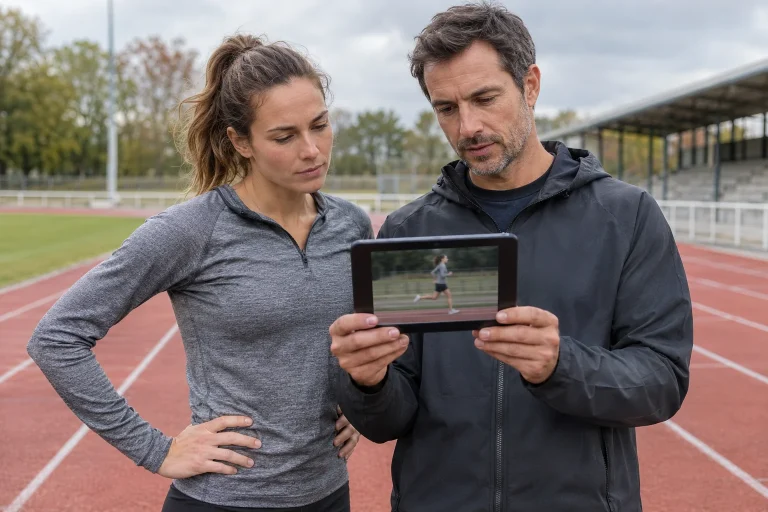
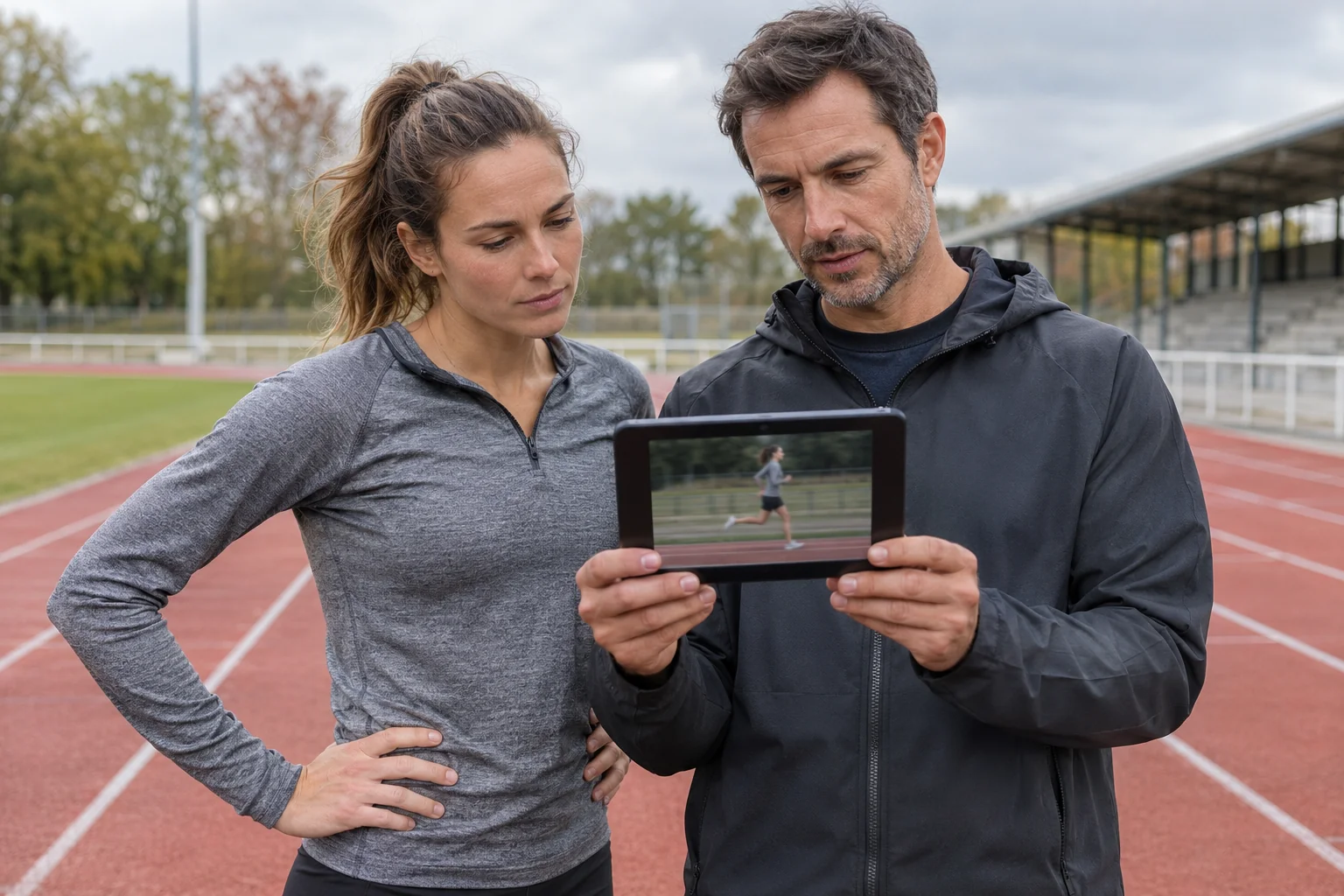
A running video is paused: the shoe heel tilts, someone draws a line and a diagnosis appears complete. The image, however, compresses several questions. What does the shoe show, what does the camera measure, how does the foot actually move and are symptoms even present? Original movement studies and injury follow-up explain why one rear-view frame is insufficient.
What are you actually seeing?
A rear-view running video may clearly show the shoe heel’s tilt, lower-leg direction and relative footprint positions. These are striking information, but first name what is observed. A shoe outline is not direct measurement of bone positions, and a line on a screen is not automatically a joint’s complete three-dimensional angle.
The everyday phrase ankle tilting can combine several movements and appearances. Heel rotation, lower-leg projection or overall foot position may be discussed using the same word. If analysis is imprecise here, a later diagnostic label will be even less precise. Good observation therefore begins with a simple description: in this view, this part moved this way.
The frame’s timing matters equally. Landing, mid-stance and near take-off show different positions. One isolated instant does not describe full movement range or its timing. Preserving motion is video’s real advantage; we lose it by explaining an entire run through one striking frame.
Foot movement is a multidimensional story
Foot and lower-leg movement occurs in several planes. Outward heel tilting may be one component; it is not identical to everything often grouped under pronation. The original study comparing three-dimensional running movement also followed separate foot and knee angles and angular velocities. It did not merge the distinct characteristics into one rear-view line.
The paper found movement differences between specified runner groups, but that differs from diagnosing disease from any visible tilt. Group naming, eligibility and method belong to the research. Individual assessment adds symptoms, function and history beside a visible sign. A geometric difference alone is not a complete clinical story.
A three-dimensional approach does not mean nothing can be observed outside an expensive laboratory. It means keeping two-dimensional information within its limits. Video can show a phenomenon, support questions and document it. An unseen dimension should not be filled with a certain personal explanation merely because the picture is persuasive.
 Enlarge image
Camera, shoe and lower leg are three separate references
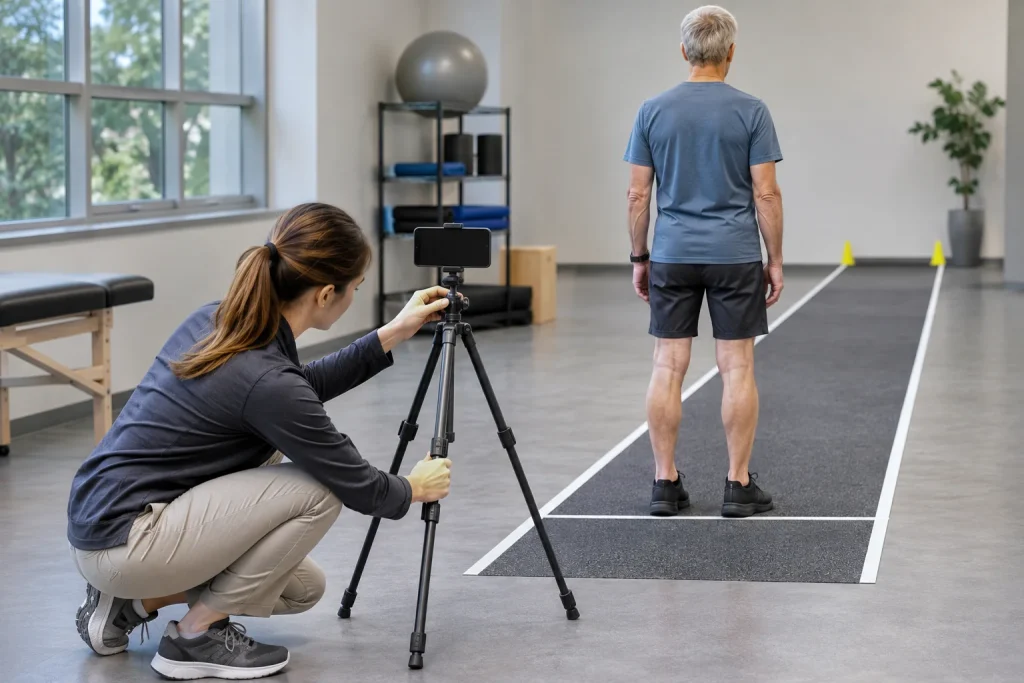
If a camera is not aligned with the intended movement plane, rotation can project movements in different directions onto one image. A foot may look different when its runner moves away at an angle rather than directly from the camera. The screen’s vertical axis does not always replace actual travel direction. Camera and route therefore matter together for comparable recordings.
The shoe upper can independently shape appearance too. Heel-counter curvature, stitching and folds in soft material are not anatomical landmarks. Aligning a line with decoration or an outline may not measure what a research procedure defined through body points measures. Describe visible shoe movement precisely under that name.
A lower-leg reference is not self-evident either. Which points were chosen, how visible are they and would someone else mark them identically? Cropping closer does not necessarily improve accuracy; an enlarged image merely gives a larger image. Measurement needs a reference and selection rule rather than only a thick line in video-editing software.
Changing step width can also change the heel image
The step-width experiment involving thirty healthy runners also found differences in certain rearfoot angles between wider and narrower conditions. This is an interesting connection: rear-view movement does not reflect only one foot property independent of every other circumstance. Changing the task can shift another visible characteristic too.
The research comparing step length and foot-strike conditions likewise found simultaneous changes in several lower-limb variables. The lesson is not to apply the same step-length change to every tilted heel. Several running characteristics can develop together, so understanding a difference between two videos requires the whole task.
An easy run in one recording and a faster pace, new shoe and deliberate technique instruction in another do not provide a clean single-variable comparison. A difference is observable, but one line cannot establish its cause. Retain when, under which conditions and with which instruction a video was made. That background often matters more than an isolated angle’s decimal place.
Measurement reliability is a separate question for each variable
The validation research on two-dimensional smartphone video compared particular angle measurements with a three-dimensional method in runners with patellofemoral pain. It found poor validity and variable repeatability for the procedure examined. This was verification of one method and specified outcomes rather than a general verdict on all phone video.
The paper did not study heel-tilt diagnosis, so should not be cited as quantifying every ankle analysis’s accuracy. It illustrates that the measurement value of an apparently easy-to-mark angle needs separate verification. A method’s result for one body part or view does not automatically apply to another variable.
Repeatability and correctness are different questions too. You can draw the same line consistently while describing something different from the selected reference method. Ask for which variable a procedure was checked and how large a difference is interpretable. Apparent precision on a frame differs from proven measurement accuracy.
What does actual injury follow-up say about a pronation label?
The original study following 927 novice runners for one year scored baseline foot posture, then collected running distance and injury data in neutral shoes. Foot posture classified as moderately pronated was not associated with the higher injury risk commonly assumed in the comparison examined. This is an important counterpoint to automatically equating pronation with trouble.
Baseline foot-posture scoring is nevertheless different from video measurement of heel movement during running. The study does not show every dynamic sign is irrelevant for everyone. The more extremely pronated group was small, and the authors considered further work necessary. A precise summary retains population, method and follow-up type.
Differences between studies organise the questions. One measures movement components, another checks recording methods and a third follows injuries over time. These provide different evidence. Impressive video does not replace all three, but actual injury-follow-up results should not become validation of one video label either. Several steps separate visible differences from clinical meaning.
The follow-up assessed both feet of 927 people at baseline, totalling 1854 feet. The number of feet therefore does not represent that many separate participants. When reading injury results, check whether outcomes were calculated per person or per foot. The data unit matters as much as the pronation group’s name.
 Enlarge image
Symptom-free observation and individual symptoms involve different tasks
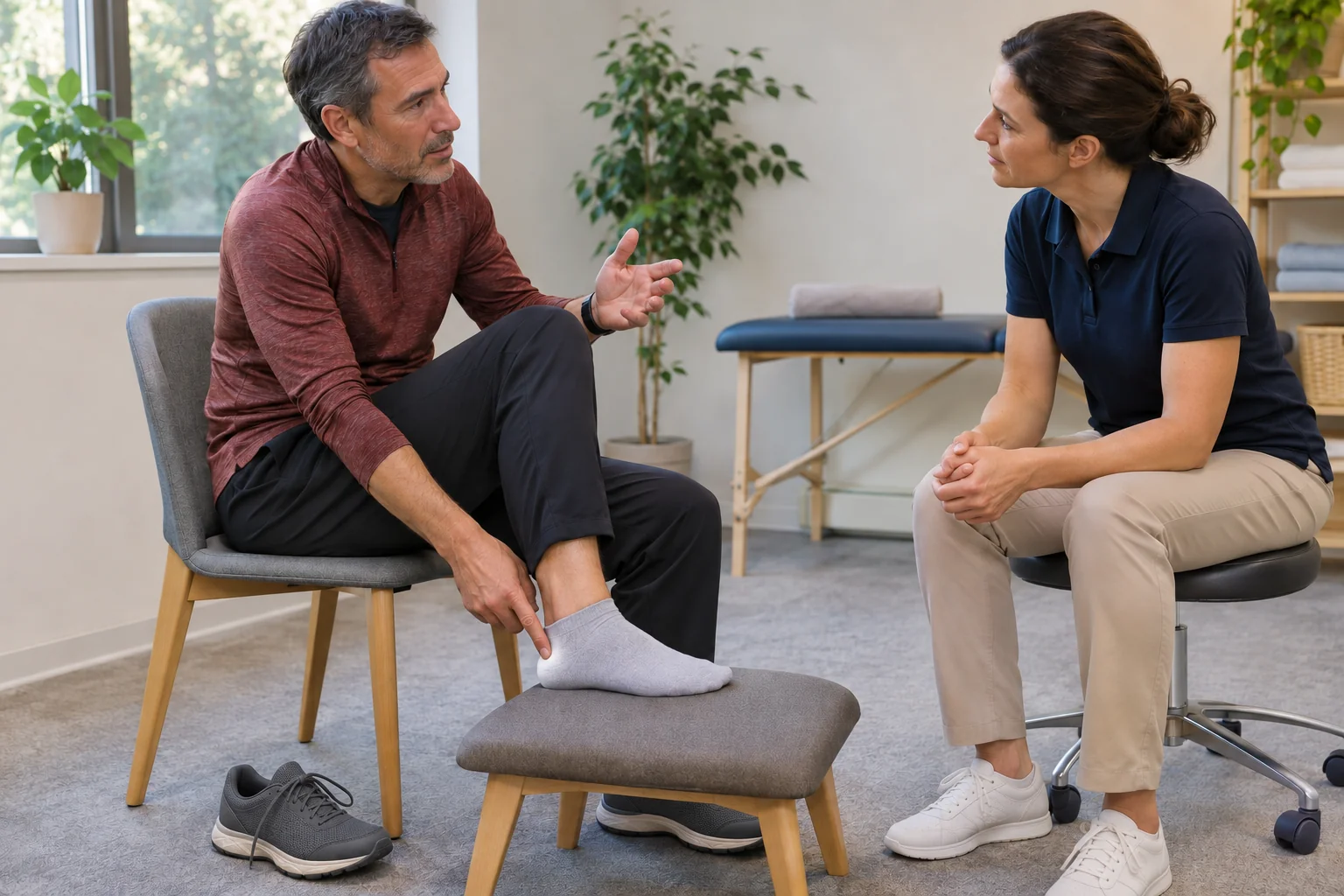
Without symptoms, movement footage may provide interesting self-observation or coaching information. Every difference need not become an error merely because slow motion looks unusual. Running is dynamic, and cameras highlight moments you do not distinguish at normal speed. Interest can remain without automatically becoming pressure to intervene.
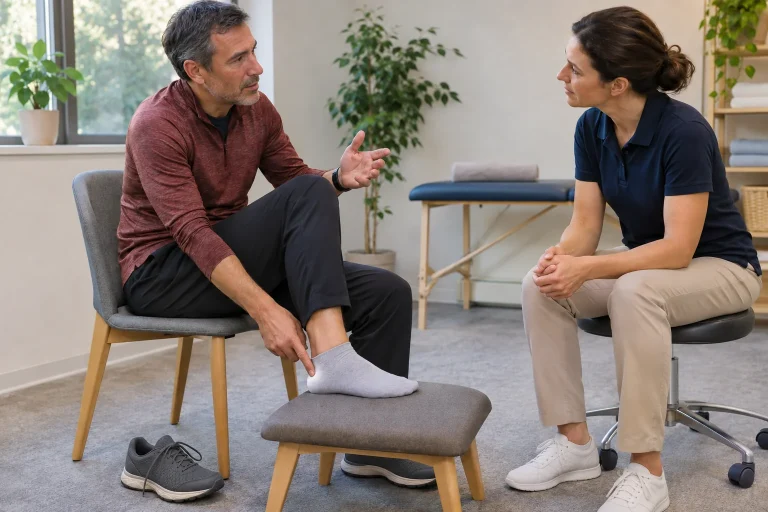
If pain or changed function prompted a video, put the symptom history first. When did it arise, during which task, how did it change and what differs from usual daily movement? Appearance can add information. Declaring a heel-tilt diagnosis first and organising later experience to confirm it reverses the useful order.
Persistent, worsening symptoms or those substantially changing movement require individual healthcare assessment. This article does not determine pain’s cause or recommend a shoe, insole or movement treatment from an image. Precise recording conditions and symptom timing may nevertheless help professional discussion. The aim is more reliable information rather than more striking labels.
Preserve video’s actual information
Keep the whole recording and note speed, shoes, surface and camera position alongside a cropped frame. Mark deliberate instructions or unusual circumstances. Matching conditions matter more than impressive side-by-side editing for later comparison. Background is needed to interpret differences.
Use a descriptive summary: in this view, during this part of the run, this heel or lower-leg movement appeared. Then ask how well the method measures it and why it matters to the individual goal. This sequence prevents observation silently becoming a finished diagnosis. Video then supports conversation rather than judgement.
The image called ankle tilting therefore does not establish disease by itself. Multidimensional movement, measurement view and the actual health question require separate interpretation. Video retains value when used for its real information: helping you see and question more precisely. Missing dimensions and an individual clinical answer need not be invented.
Sources
- Brindle and colleagues: step width and lower-limb movement.
- Boyer and Derrick: step length, foot strike and associated characteristics.
- Neal and colleagues: validity of a specific two-dimensional angle measurement.
- Nielsen and colleagues: foot posture and injury follow-up in novice runners.
- Comparison of three-dimensional running movement between different rearfoot-movement groups.
How Futószív articles are prepared: our editorial guidelines.