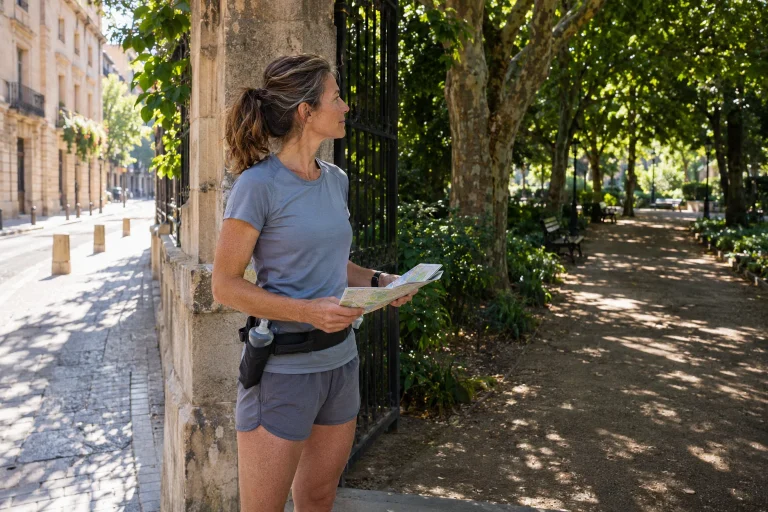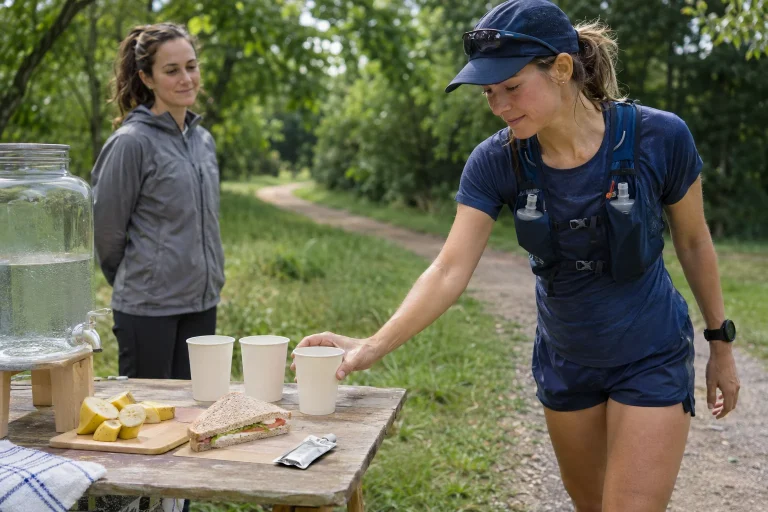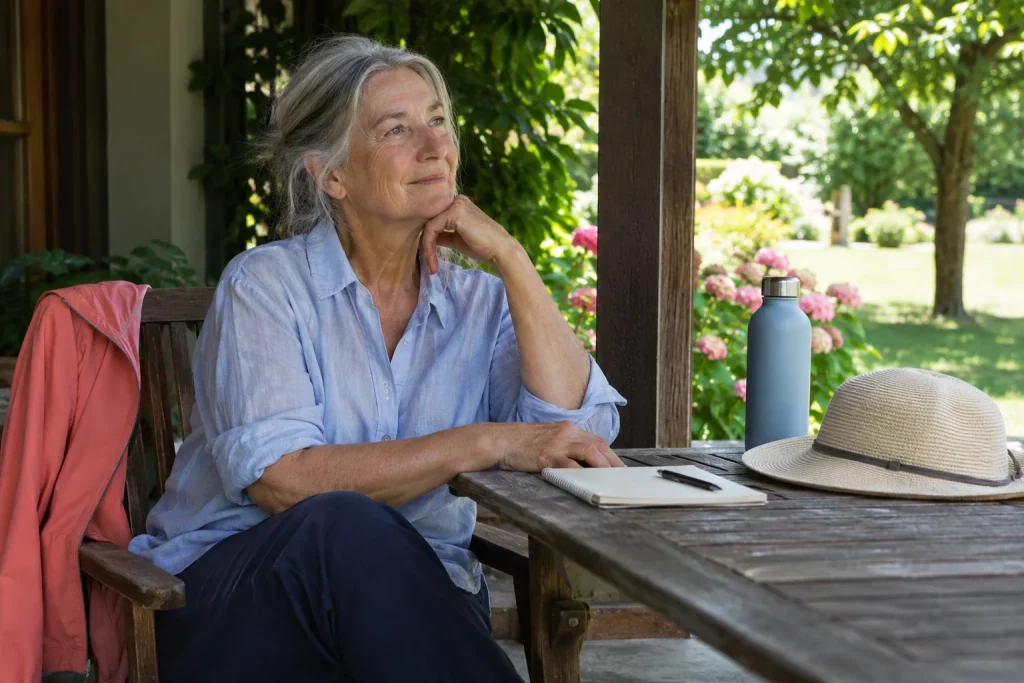
You want to head out for the usual loop on a hot day, but lately thirst gives less indication of when you would drink. One simple rule is tempting: rely only on thirst, or consume a compulsory large amount assigned to age. Neither sentence describes the whole situation. Individual condition, treatment and outdoor circumstances matter together.
Confusion, speech difficulty, collapse or loss of consciousness in heat requires urgent help. The CDC information on heat-related illness treats these as severe signs. Do not calculate bottle quantities then: seek urgent help, begin cooling and have someone stay with the person. Do not force drinks on someone confused or unconscious; the CDC heatstroke information also warns against giving drinks in this severe situation.
Thirst is an individual signal, not a complete heat-monitoring system
Not being thirsty does not establish that the whole outdoor plan is appropriate. It does not describe air temperature, time in the sun or medicines’ role. Thirst is important experience, but need not carry every decision alone. Planning for heat has several components.
An original study from 1984 compared small groups of older and younger men under specified water-deprivation conditions. The older group showed a reduced thirst response. This is not a drinking recipe for current athletes, and the experimental conditions must not be repeated at home. The study examined a possible age-related difference, not every reader’s fluid needs.
The everyday question is not how to place yourself within a research average. Clarify whether your own signals changed, in which environment, and whether treatment or illness needs consideration in heat. Individual decisions require more information than age and bottle capacity.
Response to heat and thirst can change separately
The CDC page on protecting older adults from heat explains that older bodies may adapt less readily to sudden temperature changes; illnesses and medicines can add risk. The practical conclusion is separate consideration of a hot-weather outing, not a general prohibition on running.
Time outdoors does not begin with running alone. Walking to a stop, waiting for a delayed bus and chatting before meeting all belong to the day. Omitting these can make a prolonged outdoor programme look like a short workout. Include the entire outward and return journey.
Finding a cooler time is more than checking the clock. The actual forecast, route shade and access to cool space provide a picture together. An early start does not mean identical conditions every day. If suitable conditions cannot be found, omitting the outing or changing its form remains possible.
Keep existing individual instructions visible with fluid restriction
If you received fluid restrictions or other instructions, do not rewrite them independently because of heat. The CDC older-adult information specifically advises clarifying personal amounts with fluid restriction or diuretics. Online “Drink more” advice does not know the care plan into which the change must fit.
Ask how existing instructions apply on hot days and what to do if outdoor plans change. You need not create a new number yourself. An earlier written plan’s date and current validity matter too. Summer scheduling needs an answer compatible with present treatment.
Nor should uncertainty about a restriction lead to taking no drink. Access and the quantity to consume are separate questions. Provide appropriate opportunities for the professionally agreed plan, and let the outing change as needed. A rigid sporting plan should not force guessing.
 Enlarge image
Medicines may need a separate hot-day discussion
The CDC professional guidance on medicines and heat explains several possible interactions and recommends an individual plan. Some products can affect thirst, sweating or circulation. This is not a home medicine-selection list: review treatment with the care provider.
Do not omit medicine because you would run in heat. Professional planning should clarify what constitutes a change, when to consult again and what happens when returning to the usual routine. “I will skip it just today” is also a treatment modification. Sport must adapt to safe boundaries.
Show current prescription and non-prescription products and supplements at the discussion. Storage in heat may be another question. Do not leave all equipment in a hot car assuming the run will be short. Arrange a particular medicine’s storage according to its instructions and professional guidance.
Have accessible cool space alongside the bottle
Drinking cannot replace reducing heat exposure. The NIA material on hot weather also highlights cool places and weather information. An outdoor plan therefore needs not only a drink source, but where and how the programme can end.
A shaded bench can be a useful meeting point without always equalling a genuinely cool indoor option. Know what is nearby, whether it is open and how to reach it. Opening hours should not first be searched on the phone during illness. Do not treat uncertain possibilities as dependable backup.
| Part of the plan | Specific practical question |
|---|---|
| Drink access | Is it appropriately available for your agreed plan? |
| Cooler surroundings | Is there a real, accessible place to interrupt the outing? |
| Contact | How can you ask for help, and who knows the planned location? |
| Getting home | Does it require more than a long return run in heat? |
This list does not automatically make hot-weather running appropriate. It reveals missing conditions. If a necessary option cannot be provided, more equipment need not preserve the outing at all costs. Another day, place or activity appropriate to current condition may be considered.
Do not leave practical barriers to drinking hidden
Thirst may not be the only difficulty. A bottle may be hard to open, a comfortable stopping place absent, or toilet access uncertain. These need not be embarrassing. Naming a practical obstacle enables different help from general self-criticism about “Always forgetting to drink”.
Try bottle handling in a calm place: can you reach it without opening a complex closure while moving? This is usability, not a hydration test. Toilets and stopping places also belong to the whole outing. Do not “Solve” an uncomfortable route by drinking less than your individual plan.
If reminders help follow an agreed routine, choose a simple option. An alert should not impose the same compulsory sips or quantity on everyone. Its purpose is keeping your plan from disappearing among daily tasks. A device’s generic setting must not override individual healthcare guidance.
Illness is not a suitable time for more data collection
With headache, nausea, dizziness or unusual weakness in heat, finishing the loop should not be next. Stop exertion, reach cooler surroundings and seek appropriate help. CDC heat-illness guidance may also indicate medical assessment. Do not automatically relabel symptoms as familiar training tiredness.
Severe signs do not require finding a thermometer or watch threshold to justify urgent help. Confusion or collapse is serious itself. Do not delay cooling and help by debating how much the person drank. Heat illness is not merely a disciplinary judgement on bottle use.
If someone beside you becomes unwell, stay and seek help. Follow emergency guidance for further actions. Your own running plan need not continue while another participant’s condition is uncertain. Shared outings work when stopping and assistance can be natural parts.
 Enlarge image
Replanning an imagined hot day
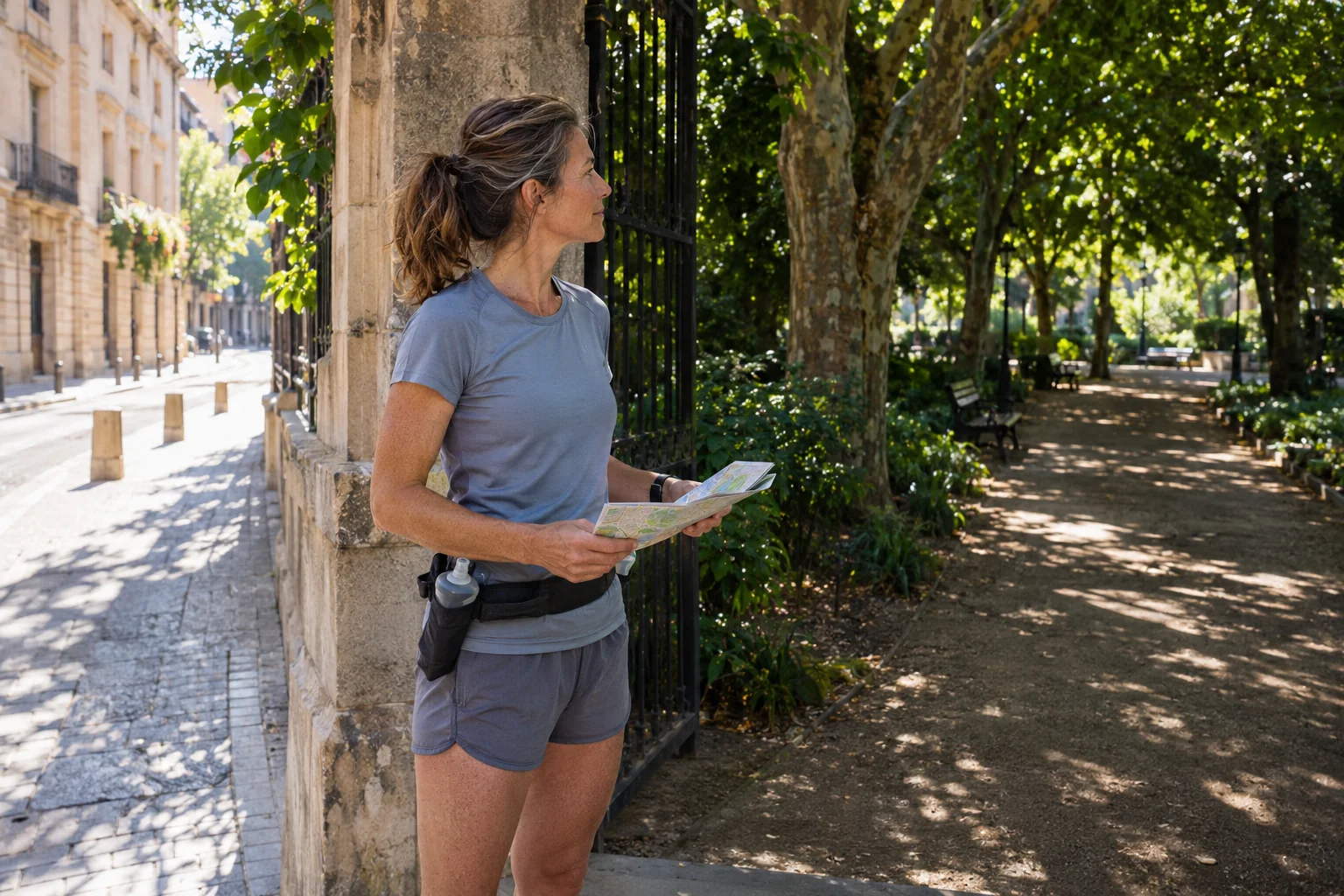
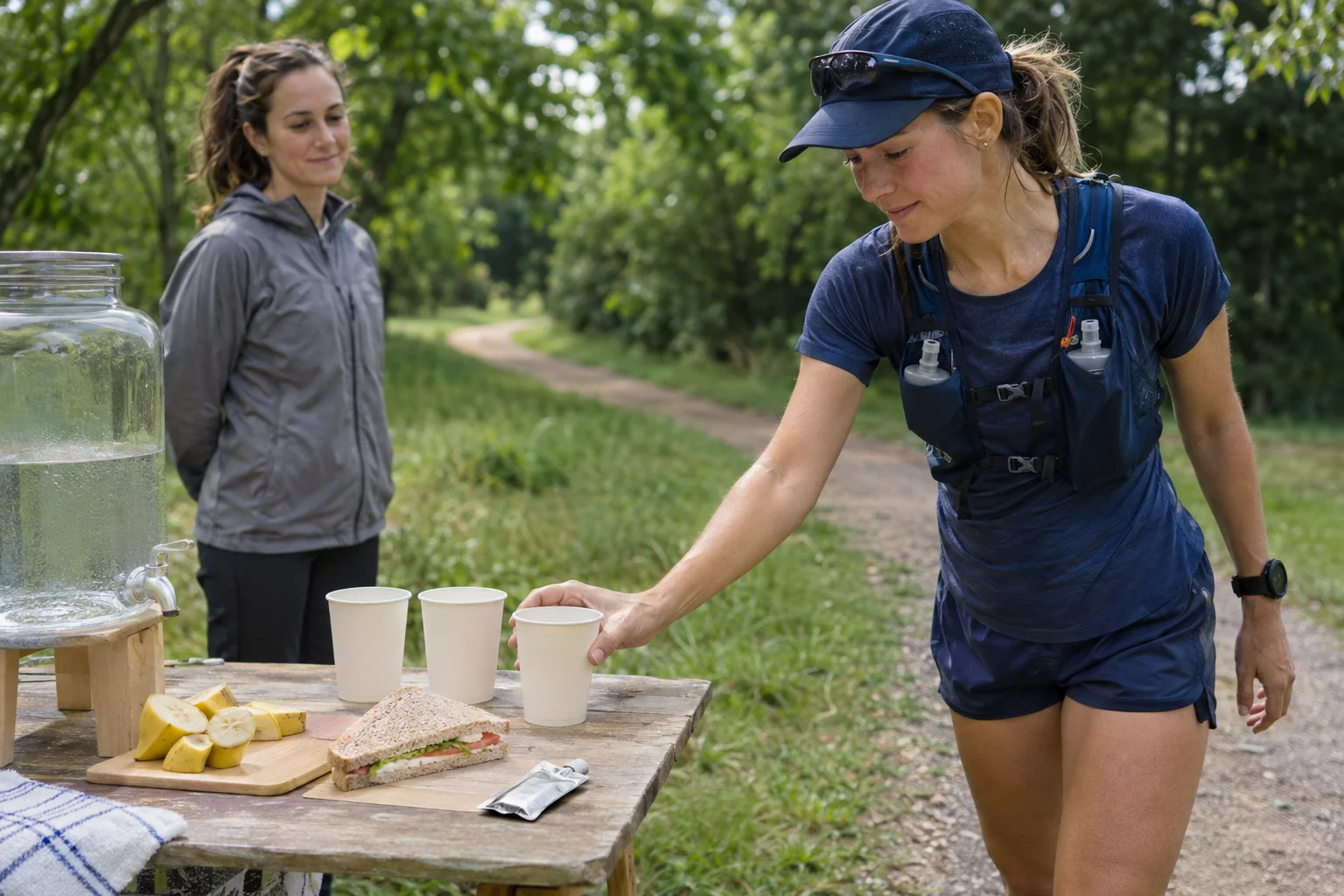
In the example, an older athlete shops in the morning and plans to run with a friend later. Waiting and travel run long, and the forecast shows a hotter afternoon. The bottle is in the bag, but the day has changed from when the outing was agreed. The decision must include this new situation.
They do not preserve the plan by independently prescribing more drink or changing medicine. They rearrange outdoor activity and request professional clarification if the personal fluid routine is unclear. Meeting the friend can take another form. The aim is not placing the original time above every other consideration.
This example yields no universal temperature threshold or drinking rule. It shows weather, accumulated outdoor time and healthcare boundaries shaping the decision together. A brief sporting plan cannot automatically be separated from the rest of the day.
Keep an individual hot-day plan understandable and retrievable
A professional discussion yields a more useful answer when the situation is precise: thirst signals drinking needs less strongly, you want regular hot-weather activity and do or do not have individual fluid instructions. Do not ask only how many litres correspond to an age. Seek understandable boundaries matching your condition and plans.
The summary should clarify scope, when to consult again and which symptoms need help. With consent, family or a running companion can know the parts needed for support. The entire medical history need not reach the shared group for the outing to remain flexible and followable.
Reduced thirst therefore deserves attention without dismissal or one forced quantity as a solution. Heat planning includes individual care, accessible drink, cool surroundings and genuine flexibility. Running has an appropriate place when it adapts to these conditions.
Sources
Phillips and colleagues: original study of thirst response; CDC: older adults and heat; CDC: heat and medicines; CDC NIOSH: heat-related illness and seeking help; NIA: hot-weather safety. Checked: 21 November 2026. The daily example is an editorial illustration, not a fluid prescription.
How Futószív articles are prepared: our editorial guidelines.