An independent woodland loop does not automatically have aid stations where you expect them in a race. A spring on a map, a shop marked at the edge of a settlement and a snack bar at a recreation site are different access possibilities with different uncertainties. Planning should cover not only what you want to bring but also what you can actually count on at each point and what happens if that option fails.
This article addresses access and route organisation. It does not give universal quantities for fluid, energy or salt replacement, or replace personalised sports-nutrition or medical advice. The aim is to keep a plan chosen for your own needs from depending on assumed opening hours or an unverified water point. A shorter route and simpler access can also be deliberate choices.
Make an access plan for the entire route
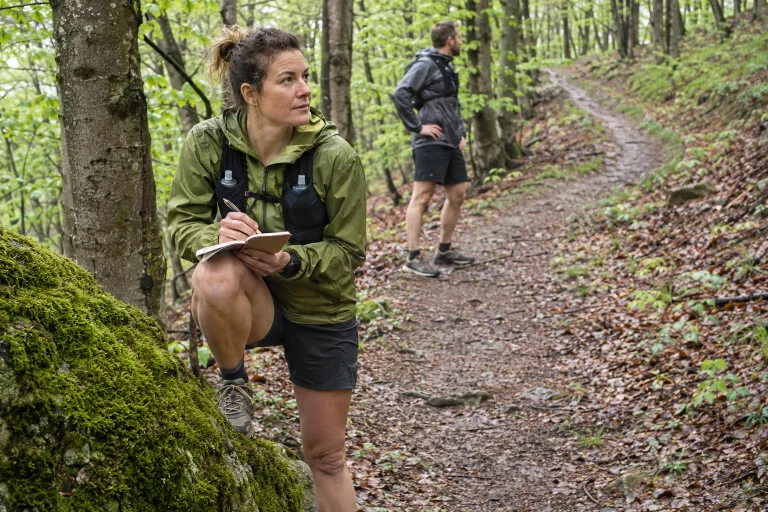
Check where the loop starts and finishes, which sections take you away from transport or inhabited places and where the route can actually be shortened. Marking one point is insufficient if no manageable alternative remains when it is unavailable. Access is a property of the whole route, not the number of icons scattered over a map.
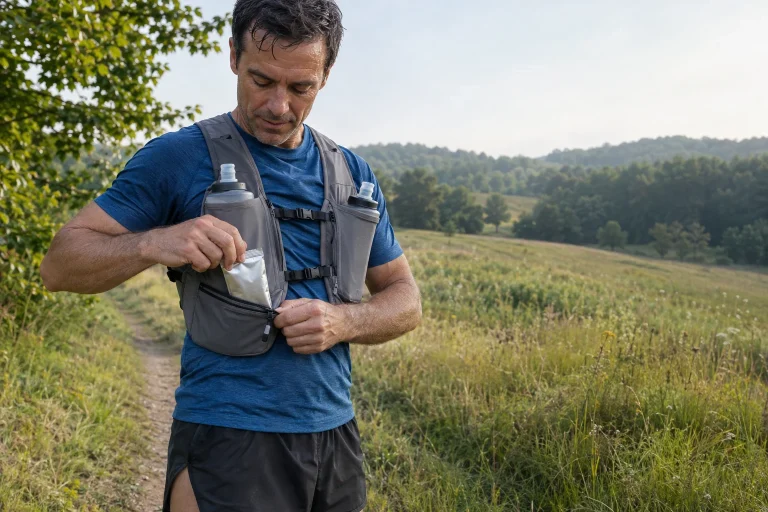
Separate what you carry, what you can obtain at a confirmed location and what you see only as an uncertain possibility. Your own supplies involve carrying and access. A service may require opening hours, payment and an approach route. Do not place an uncertain point in the same category merely because relying on it would be convenient.
Plan around the full duration of your expected programme, not just estimated moving time. Navigation, group stops and detours may be included. If a resupply point is reachable only when every section meets the most optimistic timing, that creates access uncertainty. You can address this by simplifying the plan, not only by assuming faster progress.
A map icon does not certify water quality or operation
A spring or well symbol may identify a location without telling you whether water flows that day, the point is accessible or the water is of suitable quality. An old comment can be a useful lead, but it is not a current check. Read signs on site and available land-manager information. Do not interpret missing information as automatic confirmation.
The CDC guide to using water while hiking and travelling notes that water containing pathogens can appear clear. A visibly clear stream or spring is therefore not independent proof that it can be drunk directly. This article gives no improvised water-treatment recipe; choose confirmed drinking-water access or another appropriately planned solution for your own outing.
Do not conflate a natural watercourse with an operated drinking fountain. A managed mains-water point, seasonal public fountain and spring require different information. Record the point’s type in the route plan rather than merely ‘water’. You will then still understand later which source needs checking.
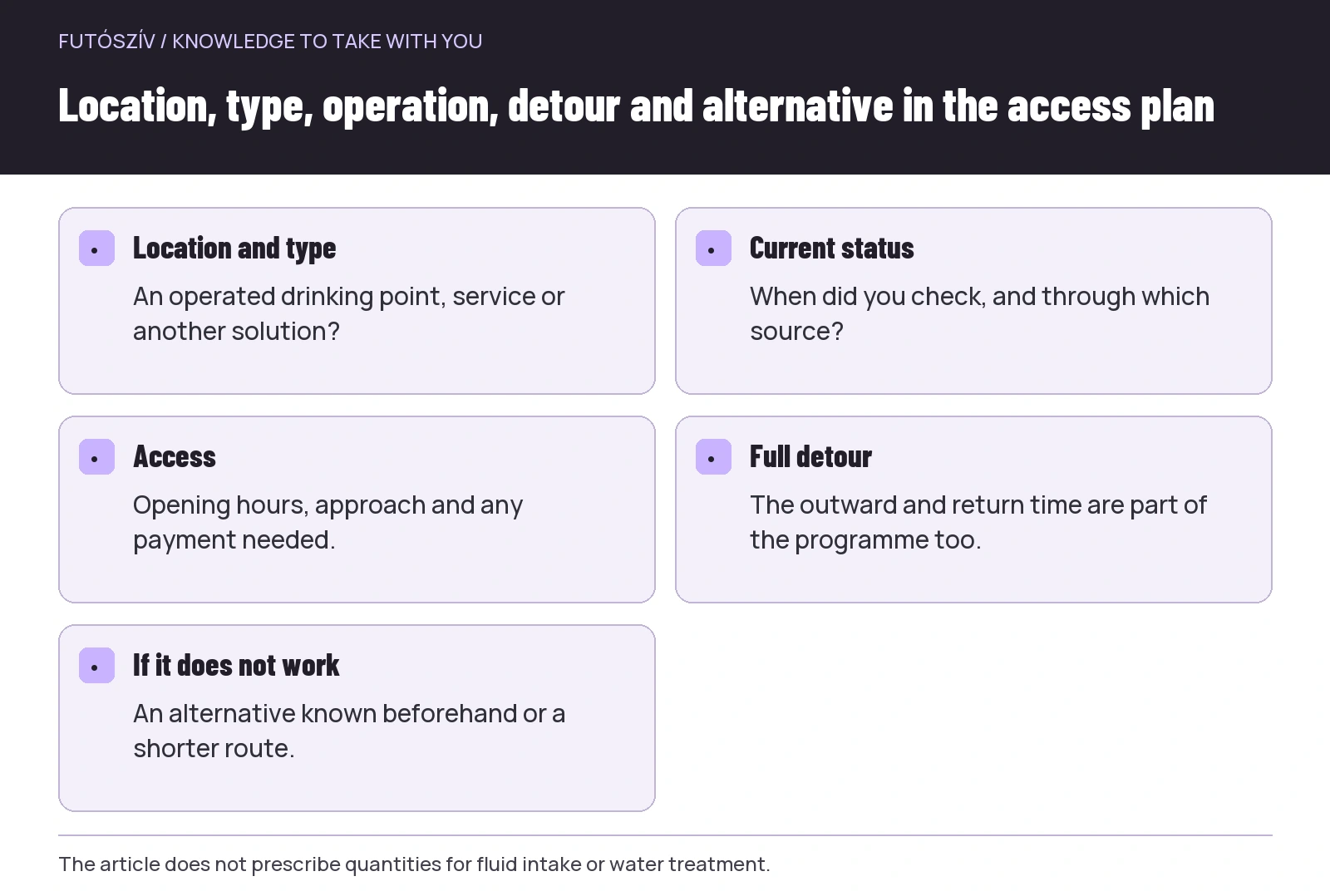 Enlarge diagram
Text version of the diagram
- Location and type
- An operated drinking point, service or another solution?
- Current status
- When did you check, and through which source?
- Access
- Opening hours, approach and any payment needed.
- Full detour
- The outward and return time are part of the programme too.
- If it does not work
- An alternative known beforehand or a shorter route.
A public map is a useful starting point, not a live operations report
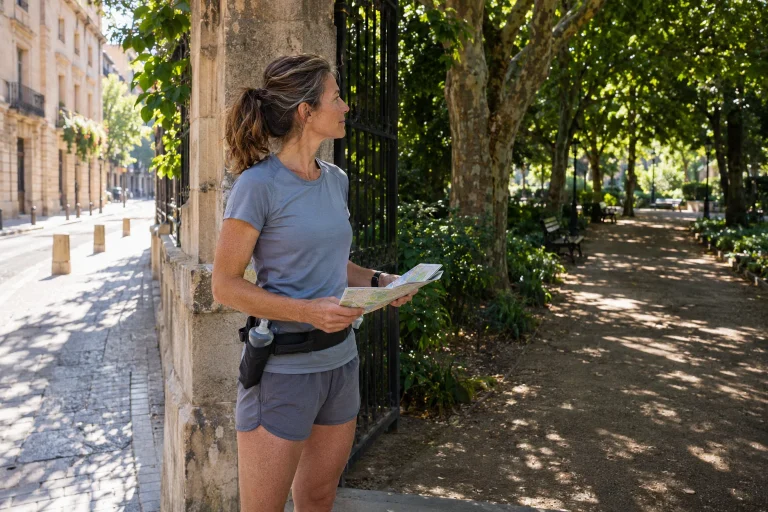
The city’s Cooling Budapest page provides a drinking-fountain map and related information. Such an official collection can help plan an urban approach or connection at the edge of a woodland area. However, presence on the map should not imply unchanged operation at every time of year. Check conditions important to your particular day separately.
Seasonal operation can be especially important in cooler weather. A summer route report does not establish that the same point operates in late autumn. The same applies to maintenance or temporary closures. In your own list, mark a point as confirmed, needs checking or not relied upon. Its presence on a map then does not quietly become certain access.
If information cannot be obtained adequately, adapt your own plan. Choose another loop, shorter route, a format returning to known access or an activity on another day. Good planning does not necessarily link ever more uncertain points. Sometimes depending on fewer external conditions makes it more usable.
For shops and snack bars, the detour belongs in the plan too
Treat a shop near a route as usable only after clarifying opening hours, the approach and necessary payment options. A short-looking map distance may not mean an easy exit: a busy road, elevation difference or another barrier may lie between. Include the full out-and-back detour.
Check opening for your own day. Public holidays, weekends or seasonal operation may differ from the general description. If the entire resupply plan depends on one place, certainty matters more. Alongside a general online opening-hours field, you may need the provider’s own current information.
Do not assume unlimited stock. A small outlet may not carry the familiar product on which your own plan depends. Personal dietary or medical needs can require particular attention. In that case, do not treat an unknown selection as a guaranteed solution in advance when planning access.
Make a simple access table
You do not need a complete supply-logistics system. For every point considered, include location, type, how it was checked and what follows if it does not work. You can record your own starting supplies too, but decide quantities within your own appropriate framework. The table’s job is to organise information.
| Point or solution | What needs checking? | If it does not work |
|---|---|---|
| Your own carried supplies | Accessible, closable and actually packed | Change the plan before departure |
| Operated drinking point | Type, access, current operation and information | Another known solution or route version |
| Shop or snack bar | Opening hours, detour, payment and required selection | Avoid searching randomly for an unknown place |
| Meeting arranged beforehand | Precise place, time window and contact | An agreed backup decision, not unlimited waiting |
| Uncertain map symbol | What confirmation is missing? | Essential access does not depend on it |
The checking date shows how fresh a note is. Do not call an observation from months earlier confirmation for the day. If someone else supplied information, record the circumstances in which they saw the point. A specific observation is more useful than ‘it always works’.
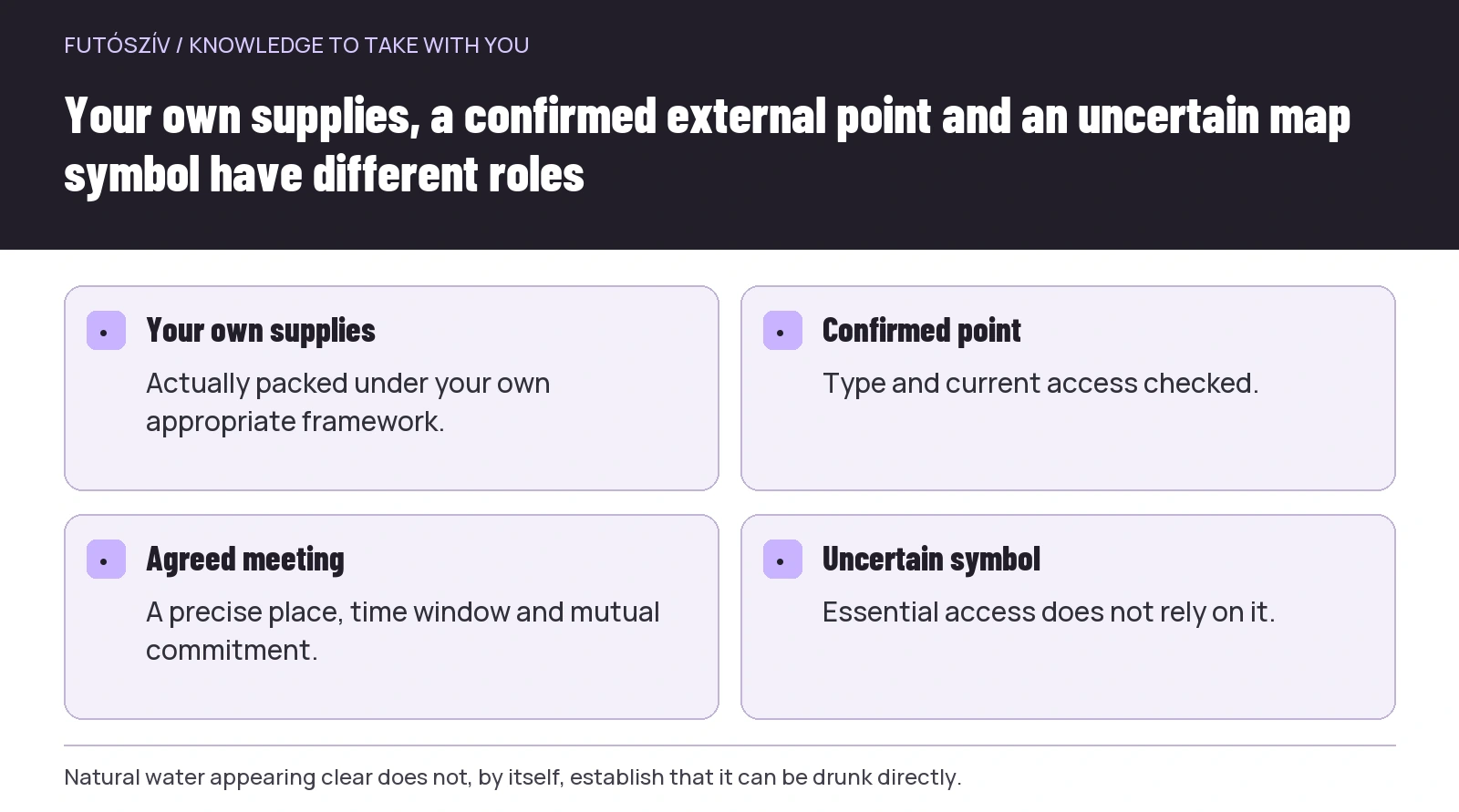 Enlarge diagram
Text version of the diagram
- Your own supplies
- Actually packed under your own appropriate framework.
- Confirmed point
- Type and current access checked.
- Agreed meeting
- A precise place, time window and mutual commitment.
- Uncertain symbol
- Essential access does not rely on it.
Supplies delivered at a meeting are a shared commitment
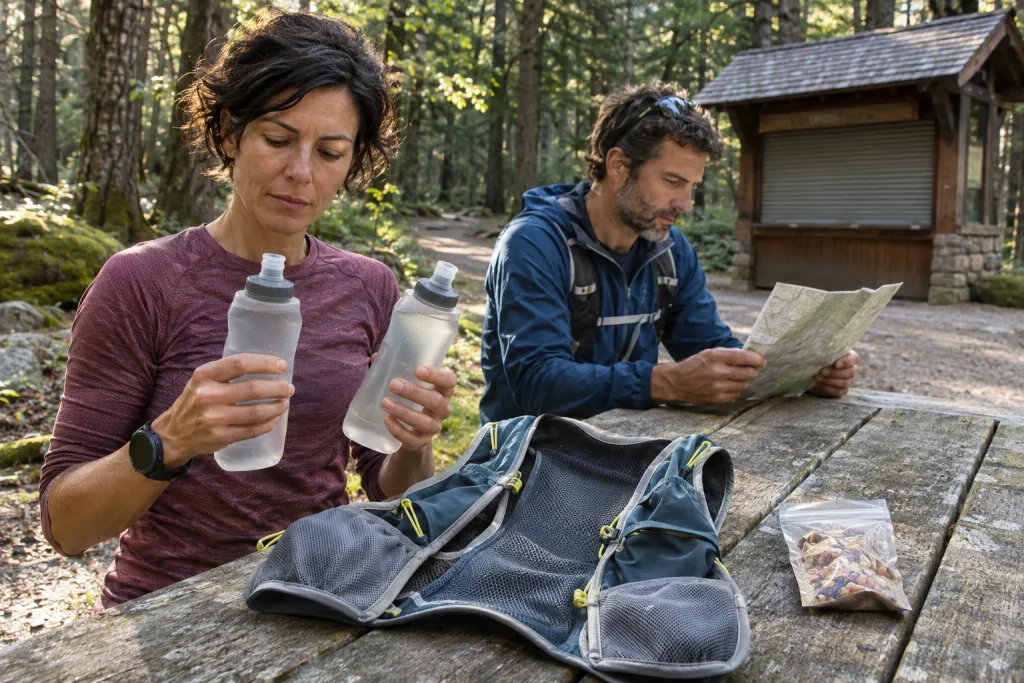
If a friend helps, specify the location and time window. Plan not only the runner’s expected arrival but also the helper’s approach and lawful waiting. A barrier on a woodland road or vehicle-access restriction does not disappear because the meeting would be convenient. The agreement must follow actual access.
Discuss what happens if delayed or out of contact. The helper may not be able to wait indefinitely, and the runner cannot assume immediate phone contact everywhere. The backup should make sense from both sides. If it requires too many uncertain conditions, a simpler route format is also an option.
Do not automatically equate personal supplies with the group’s full needs. With several people, clarify who brings what and what each person expects. ‘We’ll have something’ is not a clear supply agreement. Equally, avoid gathering unnecessary medical details in a shared spreadsheet; the person concerned can discuss the specific need for participation appropriately.
Do not leave a trace through improvised storage
An item or package left in advance is not automatically permitted. Land-manager rules and the particular site matter. Food smells can attract animals, a package may appear to be litter and you may not find it in the same place later. Your convenience should not shift uncertain safekeeping onto the environment and other visitors.
A shorter loop around an accessible base point or an agreed actual meeting can often be clearer than supplies hidden somewhere unfamiliar. Neither suits every situation, but at least who undertakes what and where is clear. Consider local rules separately in every case.
Plan what happens to used packaging too. A woodland point does not automatically become a waste-collection site because you stop there. Have a closable place for your own rubbish, and do not treat the nearest container intended for another purpose as an unlimited solution. An access plan includes the onward journey of things you bring.
A fictional example of changing a plan based on a spring
A runner selects a woodland loop with a spring marked halfway around. They find an old report but no adequate current confirmation of operation or drinkability. They do not treat it as certain access or assume clear appearance is enough. Instead of that loop, they choose a version returning to known access.
They check supplies adapted to their own needs before leaving and do not use possible later access as an excuse to leave basic conditions unresolved. At the end of the shorter loop, they reassess continuing. The decision does not claim the spring is definitely bad or always unusable; it reflects missing necessary information on that day.
They briefly record which point is uncertain, when they checked and where to seek current information next time. They do not publish an unconfirmed claim in the community calendar or automatically recommend the same access to someone else. They distinguish a personal precautionary decision from a general statement about the place.
Look for assumptions before leaving
At the final review, ask which point’s operation is definitely checked and which you count on only because you saw it before or it would be convenient. Review your pack, access locations, detours and ways to shorten the route. If something is indispensable to the plan, do not leave its uncertainty hidden behind a general map symbol.
When conditions change on the trail, do not defend an earlier spreadsheet at any cost. If a point fails, use the agreed alternative or consider ending the route. Details depend on the situation; this article does not give a universal medical decision rule. What matters is making room in the organisation from the start for external access to be unavailable.
On a well-planned independent woodland loop, access to food and drink is not a series of lucky discoveries. Known supplies of your own, appropriately verified opportunities and a manageable alternative connect. The running route and access plan then become two mutually supporting parts of the same day.
How Futószív articles are prepared: our editorial guidelines.