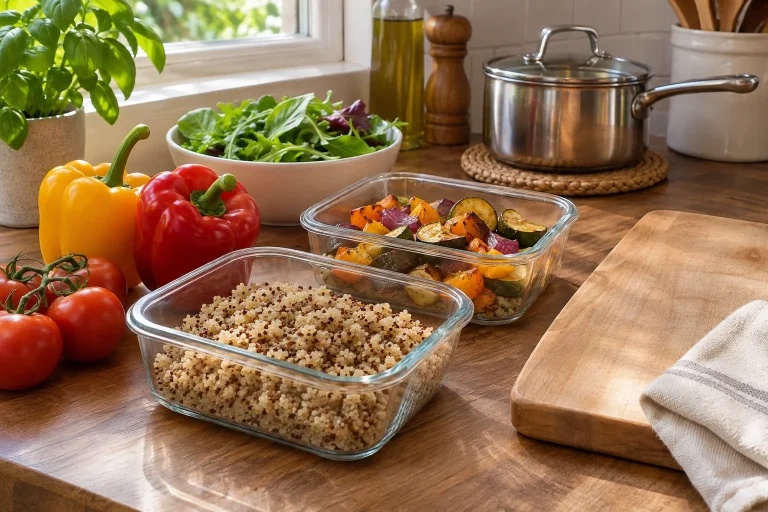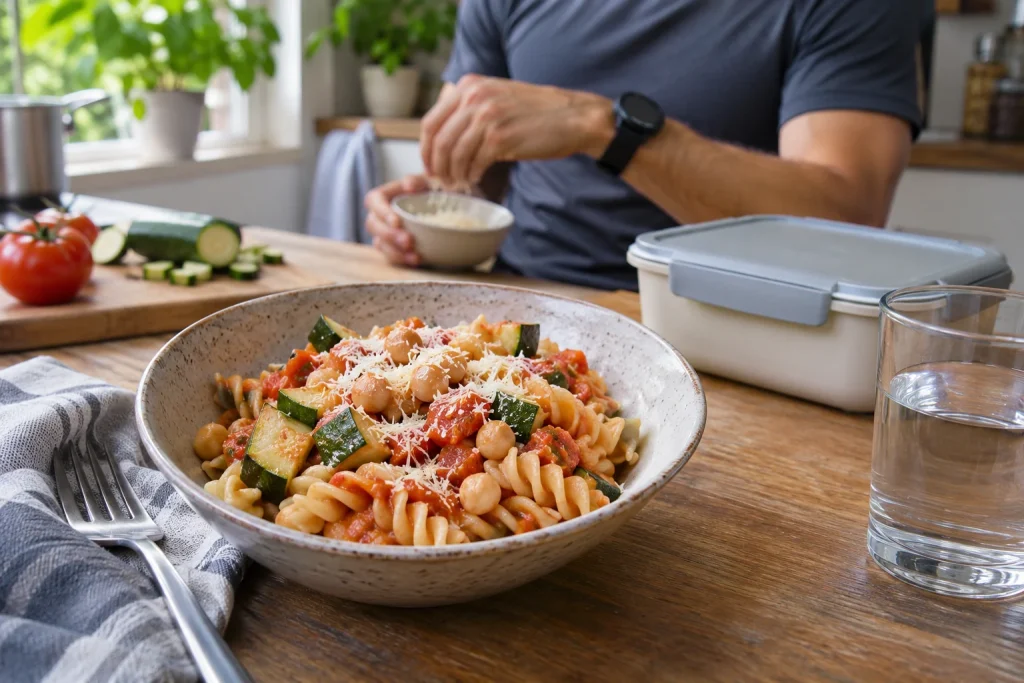
A pasta lunch is a familiar, simple food format for many runners. It can adapt easily to ingredients at home, use different sauces and additions, and fit shared family meals. A useful version, however, involves more than cooking a large portion of pasta. The base, accompanying ingredients, your own quantity, timing and safe handling together determine how it works in your real day.
This guide offers ideas for everyday cooking by adult recreational runners. It is neither a pre-race carbohydrate-loading plan nor an identical portion recommendation for everyone. With an allergy or prescribed diet, the pasta and every addition should suit you. Follow preparation and storage instructions for special products too. The article shows the process and variable elements so you can adapt food to your diet and actual kitchen possibilities.
Choose the lunch you want to arrange
Will you eat at home straight after cooking, or take it to work? Will there be a fridge and suitable reheating facilities? Perhaps you plan a cold pasta dish? These answers matter before the recipe. Food served cold can still need refrigeration, and workplace reheating needs timely access too. Knowing local conditions makes it easier to choose a format you can not only prepare but also eat appropriately.
Place the run within the day too. Training starting soon after lunch differs from lunch before a late-evening run. Do not automatically treat every pasta dish as the same pre-run food. Sauce, additions and your own portion vary too. If individual comfort matters because training is close, use a previously tested combination and your personal timing plan as references rather than a generic food name.
The British Dietetic Association sports nutrition guide discusses carbohydrate-containing foods as part of a varied overall diet adapted to load. This does not mean every run requires the same pasta portion. Personal needs and the whole day’s meals matter together. Kitchen planning helps make your chosen appropriate meal easy to prepare and enjoyable to eat.
Pasta type and shape are two separate decisions
Ingredients, allergen labelling and nutrition information clarify dietary suitability. Shape mainly affects serving and eating. Short pasta may be easier to eat from a container, while you might prefer long strands at home. The sauce’s chunkiness and sizes of other ingredients should fit too. You do not need one shape for every recipe simply because it appears on your usual shopping list.
Set cooking time from that particular packaging, rather than using a number remembered from another product. Pastas made from different ingredients can behave differently. Get to know a new product first in a smaller, relaxed meal: how does it soften, hold its shape and pair with sauces you enjoy? Packaging instructions give a specific starting point. Developing a preferred texture within that is your own kitchen experience.
Measure the dry quantity needed according to your own eating plan, then reseal and store remaining dry pasta as instructed. When cooking for several people, do not assume identical needs. You can serve different individual portions and additions from a common base. An adult runner’s meal is not determined by a children’s recipe portion or restaurant plate size.
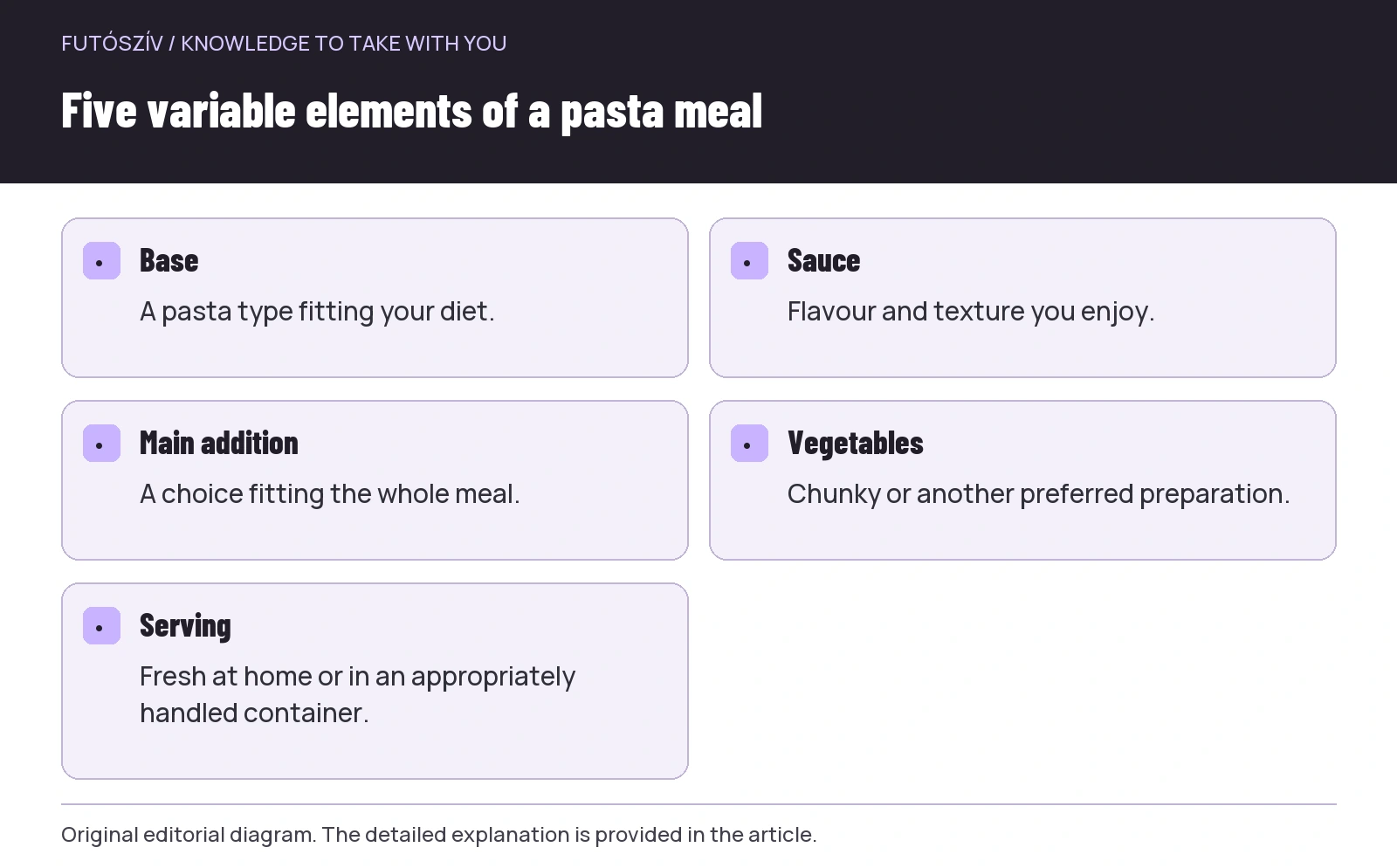 Enlarge diagram
Text version of the diagram
- Base
- A pasta type fitting your diet.
- Sauce
- Flavour and texture you enjoy.
- Main addition
- A choice fitting the whole meal.
- Vegetables
- Chunky or another preferred preparation.
- Serving
- Fresh at home or in an appropriately handled container.
Make sauce a separately plannable component
Sauce can connect pasta with the other ingredients and shape texture. Choose a tomato-based, vegetable or other version fitting your diet. The question is not which sauce sounds sportiest, but what it contains, how it is made and the whole meal it joins. Check a ready-made product’s label or the actual homemade recipe. Similar names can conceal different ingredients.
The NHS pasta and tomato sauce recipe shows a simple sauce base and pasta preparation according to packaging; preparing vegetables differently can also alter sauce texture. The recipe is a family food idea, rather than an individual running diet. In your own process, treat sauce as an independent component beside which you choose further ingredients appropriate to the meal. One base can then provide several serving variations.
If sauce becomes too runny, address preparation or ingredient proportions next time. If too thick, adjust it appropriately for your recipe. Do not add more and more unchecked ingredients to finished food merely to improve texture. Record one modification on the recipe card. This makes clear what changed next time and helps repeat the version that worked.
Four assembly directions using the same kitchen logic
For a tomato-and-vegetable version, prepare appropriately cleaned vegetables and the sauce base first. Make it according to your own recipe, then serve with pasta and the chosen main addition. Vegetables can be chunkier or more uniform according to preference. Changing vegetables or seasoning can provide variety. Continue to adapt the whole meal’s composition and quantity to your needs.
With fish or another animal-derived main component, separately plan safe preparation and storage of that ingredient. Once appropriately handled, it can join pasta and vegetables at serving time. If using canned food, follow the particular label and instructions after opening. The name canned fish alone does not identify the full meal’s composition; other ingredients and your chosen quantity belong in the picture too.
For a pulse-based or other plant-based main component, use appropriately prepared ingredients. Ready-canned and dry ingredients require different processes, so do not interchange instructions. Mixing into sauce and serving separately can produce different textures. If the ingredient is new to you, do not encounter it first before an important session. Individual comfort and the overall dietary plan matter just as much here as with any other combination.
In a pasta bowl assembled from separate elements, the cooked base, sauce and additions can meet when serving. This is flexible in a shared household too: different tastes can receive different plates from one appropriately prepared base. Separate storage does not automatically mean a longer shelf life. Consider handling every ingredient and safety of the whole dish. The aim is easier serving, rather than bypassing food-safety rules.
| Element | What can you vary? | What should you check? |
|---|---|---|
| Pasta | Type and a shape suitable for serving | Label and cooking instructions |
| Sauce | Flavour and desired texture | Specific ingredients and handling |
| Main addition | A version fitting your diet | Safe preparation and storage |
| Vegetables | Chunky, softer or separately served | Appropriate preparation |
| Serving | A plate at home or container at work | An actual opportunity to eat and reheat |
Cooking sequence can save time
Before starting the pasta, prepare equipment for sauce and serving. While pasta cooks according to its packaging, perform a step you can safely do in parallel. Chop and check ingredients earlier so you are not rushing to find things beside a hot pan. Handle equipment for raw and ready-to-eat foods appropriately to prevent cross-contamination.
Adapt the process to your own cooker and pans. With limited space, an earlier appropriately prepared sauce and freshly cooked pasta may be simpler than several frying pans at once. At other times, cooking together or vegetables prepared in advance may help. A good kitchen plan does not necessarily target the shortest theoretical recipe time, but calm, appropriate completion of the necessary steps.
Leave time after eating to handle leftovers too. If you know some is intended for later, prepare suitable containers and labels. Do not discover at the end of washing up that the whole large pan is still sitting out. Appropriate cooling and storage are part of cooking rather than a separate side task to postpone. Safety of a later workday lunch begins with the first preparation.
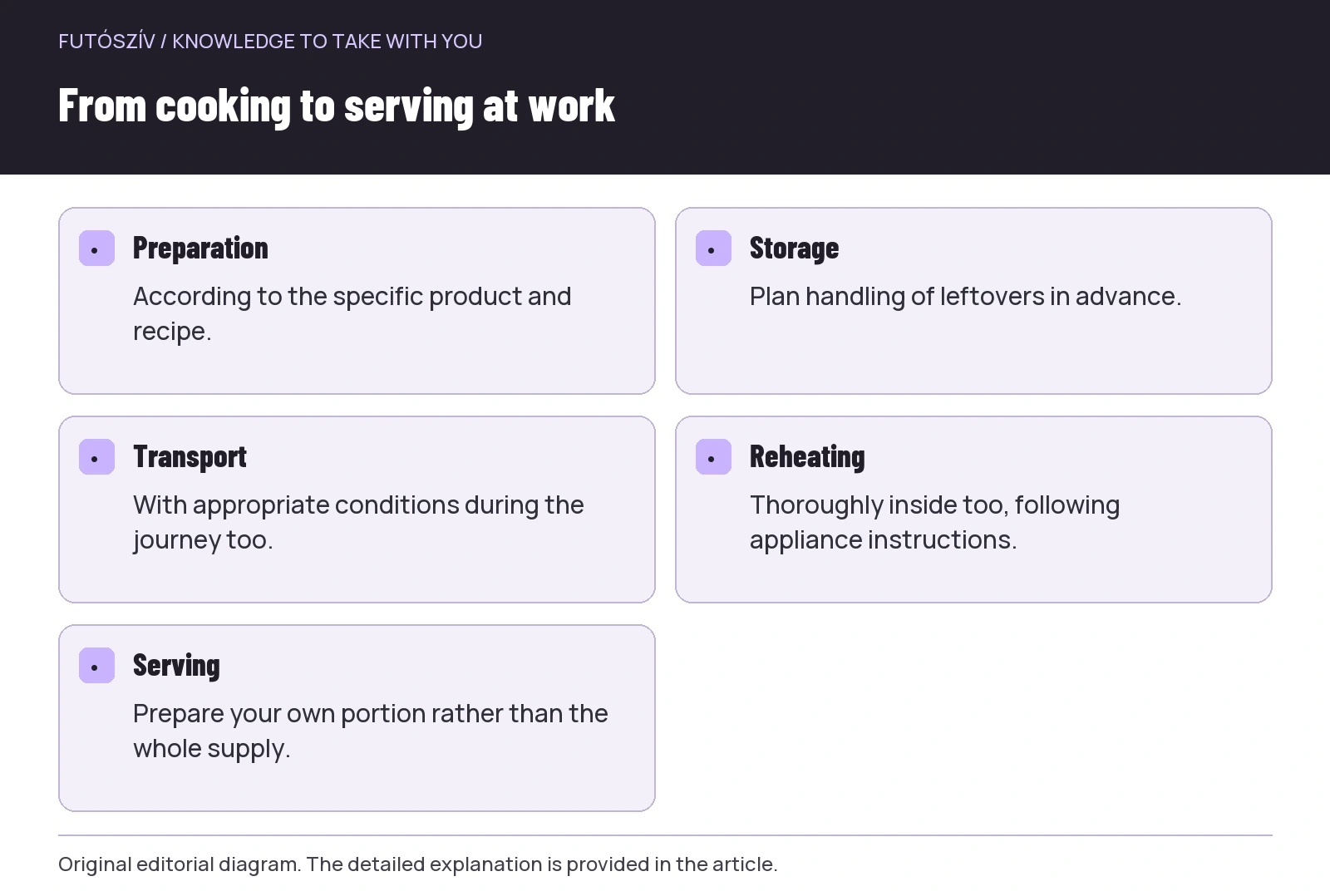 Enlarge diagram
Text version of the diagram
- Preparation
- According to the specific product and recipe.
- Storage
- Plan handling of leftovers in advance.
- Transport
- With appropriate conditions during the journey too.
- Reheating
- Thoroughly inside too, following appliance instructions.
- Serving
- Prepare your own portion rather than the whole supply.
Leftovers and reheating: pasta is no exception
The Food Standards Agency cooking guide emphasises prompt appropriate storage of leftovers and thorough reheating. When reheating, the centre should also be appropriately hot; stirring or turning in a way suited to food and appliance can reduce microwave unevenness. The source asks that food be reheated only once. Reheating does not automatically make previously mishandled food safe.
Adapt cooling and use conditions to the particular ingredients and official food-safety guidance. Sauce, meat or another addition and pasta together form the specific dish. You cannot give one general shelf life for all pasta dishes without knowing the recipe. Put a recognisable name and preparation marking on your container so its appearance or uncertain memory does not decide later.
Transport to work is a new stage: maintain appropriate food temperature during the journey and then store suitably on site. If you want to eat it cold, earlier preparation and cooling still matter. Eating cold is not the same as keeping without refrigeration. If planned storage or reheating is impossible, choose another lunch or change how you obtain food. The format should fit the actual environment.
Make a simple workplace serving plan too
Use a container appropriate to the chosen food and intended use. Check the marking for reheating suitability and follow appliance instructions too. Have clean utensils and allow time to get from the fridge to the eating place. Storing a portion suited to your meal separately instead of a large shared tub may make the process clearer. Do not reheat the entire leftover batch merely because you need part of it.
If texture after reheating is unappealing, name the particular experience first. Did pasta become too dry, vegetables overcook or sauce stay separate? Next time, change handling of one element within that recipe’s safe boundaries. You do not need to reject the entire food format on the basis of one container. Fresh serving at home and a later lunch at work can need different kitchen arrangements.
Varied, recognisable dishes from one base
Make a short recipe card for a version that works: exact pasta type, sauce base, main addition, vegetables and serving. Add storage and workplace steps too. In the next version you can change one component, perhaps choosing another vegetable or seasoning. Continue to adapt quantity and timing relative to running according to your personal plan. The card preserves kitchen implementation, rather than prescribing an unchanged diet every day.
A successful pasta lunch connects a simple base with thoughtfully chosen other elements. Alongside enjoyable flavour, serving location, safe handling and the day’s actual routine matter. Thinking these through once makes later variation a smaller task. Pasta then remains one flexible format within varied everyday eating, adaptable to your needs on a plate at home or in an appropriately organised working-day container.
Sources and further reading
- British Dietetic Association: Sport and exercise
- NHS: Perfect pasta and tomato sauce
- Food Standards Agency: Cooking your food
How Futószív articles are prepared: our editorial guidelines.