The heel and sole are not one single painful point
Discomfort underneath the foot can quickly acquire one familiar label: plantar fascia. Yet the back of the heel, the area beneath it, the arch and the forefoot may involve different situations. It also matters whether there was a sudden injury, the pain developed gradually, numbness accompanies it or walking has become difficult. Understanding these differences comes before deciding what to do.
The NHS information on heel pain explicitly advises against self-diagnosis. It recommends urgent assessment for severe pain after an injury, a change in shape, a popping sensation and inability to walk. Use Hungarian healthcare services rather than the British contact details; in a serious accident or life-threatening medical emergency, you can call 112.
This article does not prescribe exercises for every painful sole. It helps you identify details to observe, questions to ask about a finding or treatment, and ways to organise a manageable day in the meantime. Recurring or worsening symptoms, altered sensation or problems interfering with usual activities require an individual healthcare assessment.
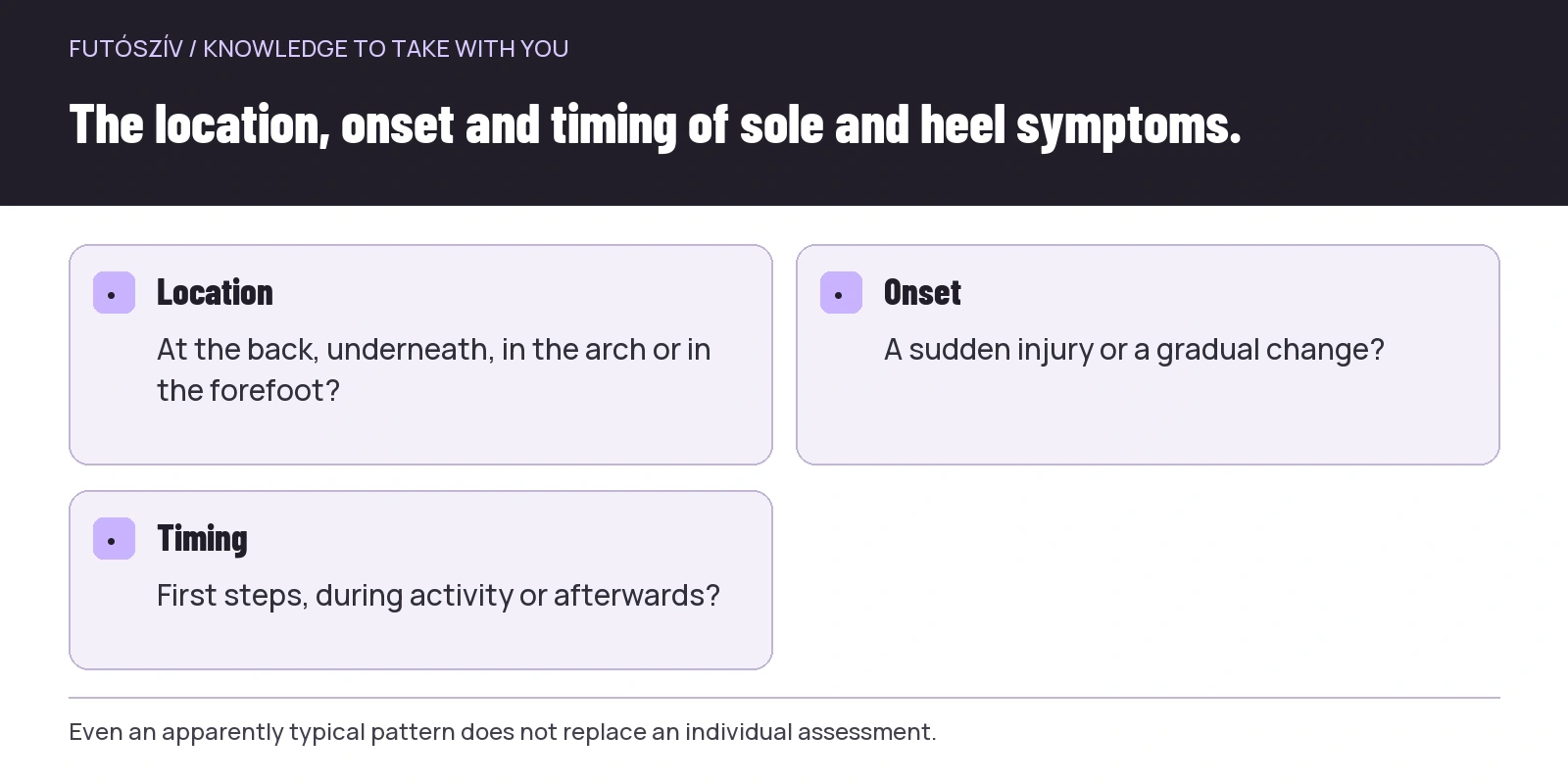
Location, onset and timing: three separate pieces of information
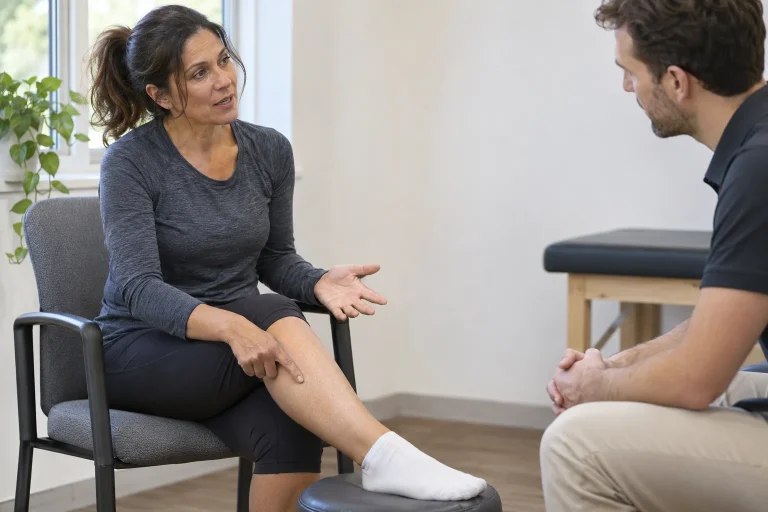
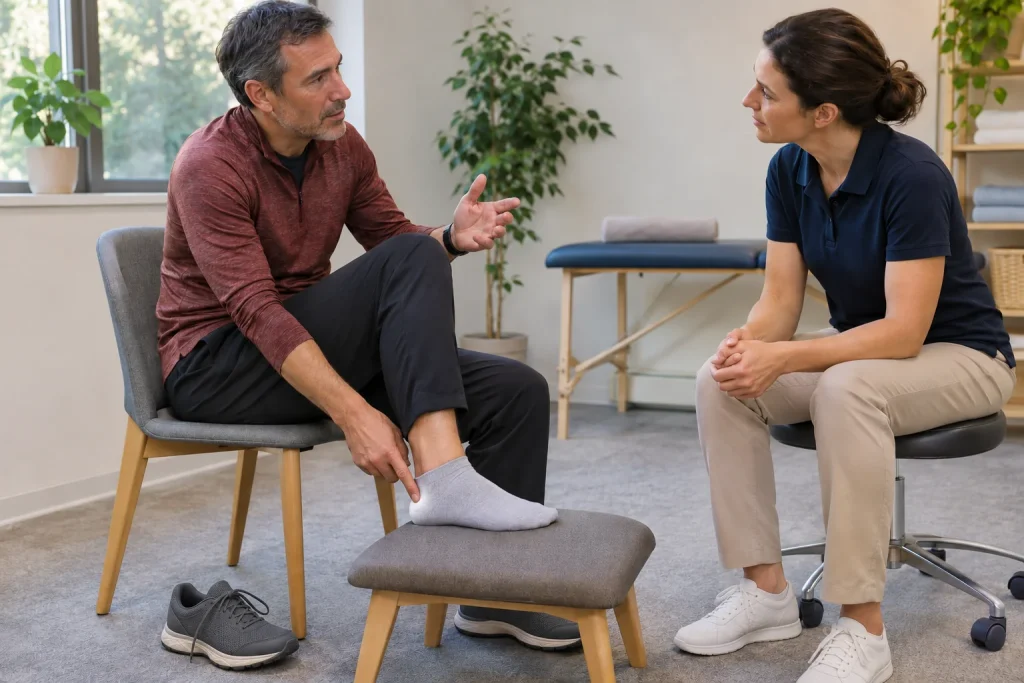
Point out where you feel the symptoms, but do not keep trying to reproduce them by pressing hard. Describe how they began and what has happened since. “Heel pain” alone provides little information if it pulls at the back one day and feels sharp underneath the foot another day. If you cannot distinguish the locations precisely, say that too.
The plantar fascia is a strong connective-tissue structure underneath the foot, running between the heel and forefoot and helping to support the arch. The AAOS information describes pain during the first steps after rest as a common pattern in plantar fasciitis. Recognising a typical pattern is useful, but does not, by itself, establish that this is your diagnosis.
Note when things are most difficult: in the morning, after sitting for a long time, at the beginning of a run, at the end of a long period on your feet or later. What happens on workdays and at weekends matters as well. The timing of pain is a detail that helps assessment and can later make the effects of treatment easier to understand.
The word “spur” does not finish the story
A heel-bone spur mentioned in an X-ray report can easily sound as though you are walking on a thorn. According to the AAOS, however, many people with spurs have no heel pain, and treating plantar fasciitis does not necessarily require removal of the bony change. The finding needs to be interpreted alongside the symptoms and an individual examination.
Ask: how does this particular finding relate to my symptoms, and which decision does it change? This is about understanding the report, rather than challenging it. You do not have to decide for yourself that it must be the cause of the pain, or that it must be irrelevant. Evaluating that relationship is a professional task.
If imaging is discussed, clarify the reason for it as well. An image showing bone and an examination of soft tissue may answer different questions. Using every method does not automatically mean better care. The aim is to answer a specific question raised by your history and examination.
 Enlarge diagram
Text version of the diagram
- Location
- At the back, underneath, in the arch or in the forefoot?
- Onset
- A sudden injury or a gradual change?
- Timing
- First steps, during activity or afterwards?
Why daily load can involve more than running
The sole of your foot is involved on the way to work, in the shop, in the kitchen and during a run. On a day with prolonged standing at work or a lot of walking, even a short run does not occur against an empty background. If symptoms appear only at the end of the day, it is worth reviewing all your time on your feet, rather than just training mileage.
Make two lists: what is fixed over the next few days, and what can be rearranged? You may be unable to miss work, but a long shopping trip could be shortened or handled with someone’s help. If rest or modification is needed, you also need to make it possible. Not everyone can simply sit all day, and this is worth discussing with the clinician too.
Include transport in the interim plan. How much walking is needed to reach the gym, treatment or work? The complete journey to a supposedly gentle alternative can sometimes involve more load than the session itself. Make the programme workable at the level of the whole day.
What can footwear do, and what can it not solve alone?
Shoe fit and comfort are important questions. Check where footwear presses, rubs or slips, and on what surfaces you use it. Work shoes, slippers at home and running shoes belong to different daily situations. If you replace only your running shoes, experiences from the rest of the day can easily be left out.
The 2023 plantar fasciitis guideline does not recommend orthoses as an isolated, standalone treatment for short-term pain relief, although they may have a role alongside other treatment. This does not mean an insert is unnecessary for everyone. It indicates that an individual programme should not be reduced to handing over a single device.
If you receive an insert or heel cushion, clarify which shoes to use it with, how to use it and what feedback to provide. A new pressure point, rubbing or numbness is not an obligatory stage of getting used to it. Use and individual response matter when choosing; custom manufacture or a high price alone cannot promise definite improvement.
You can take your most-used shoes and your insert to the consultation. This lets you show where you feel pressure, how your foot fits and in which situations symptoms change. A model number alone or an online product photograph does not show your individual fit.
What makes an exercise individual and manageable?
The JOSPT guideline discusses targeted stretching, exercises loading the muscles of the foot and ankle, and certain additional options for a defined plantar heel-pain condition. Their use must be adapted to the condition. The article does not imply that everyone with a painful heel should start the same movement or resistance.
Ask the professional to demonstrate the task, then show it back yourself. Its purpose, amount, permitted range of movement and the responses that require modification should be clear. If a new, unusual symptom appears during the exercise, do not use a general pain threshold from the internet to decide whether to continue.
You can pair the exercise with a brief observation: how are your first steps in the morning, a specified walk or an important part of the working day? Do not turn every morning into a test race. A consistent everyday reference helps track change without deliberately provoking pain over and over.
More treatments do not always mean more proven benefit
A 2024 randomised trial examined the effects of different additions in groups receiving advice and custom foot orthoses. In this study, radial shockwave therapy, sham treatment or added heavy-load exercise did not provide a clear additional benefit on the outcomes examined. The results of the clinical trial must be understood in terms of its particular participants and comparison.
This does not prove that no exercise has any value, or that every shockwave treatment is ineffective for everyone. It does warn that adding more and more components does not automatically produce a better plan. The purpose of the intervention, the comparison and the individual situation also matter in the decision.
Before an expensive treatment, ask what improvement is expected, how uncertain the outcome is and when it will be reviewed. The number of sessions already paid for should not be the sole reason for continuing. Your preferences, access and a manageable active plan are also part of the consideration.
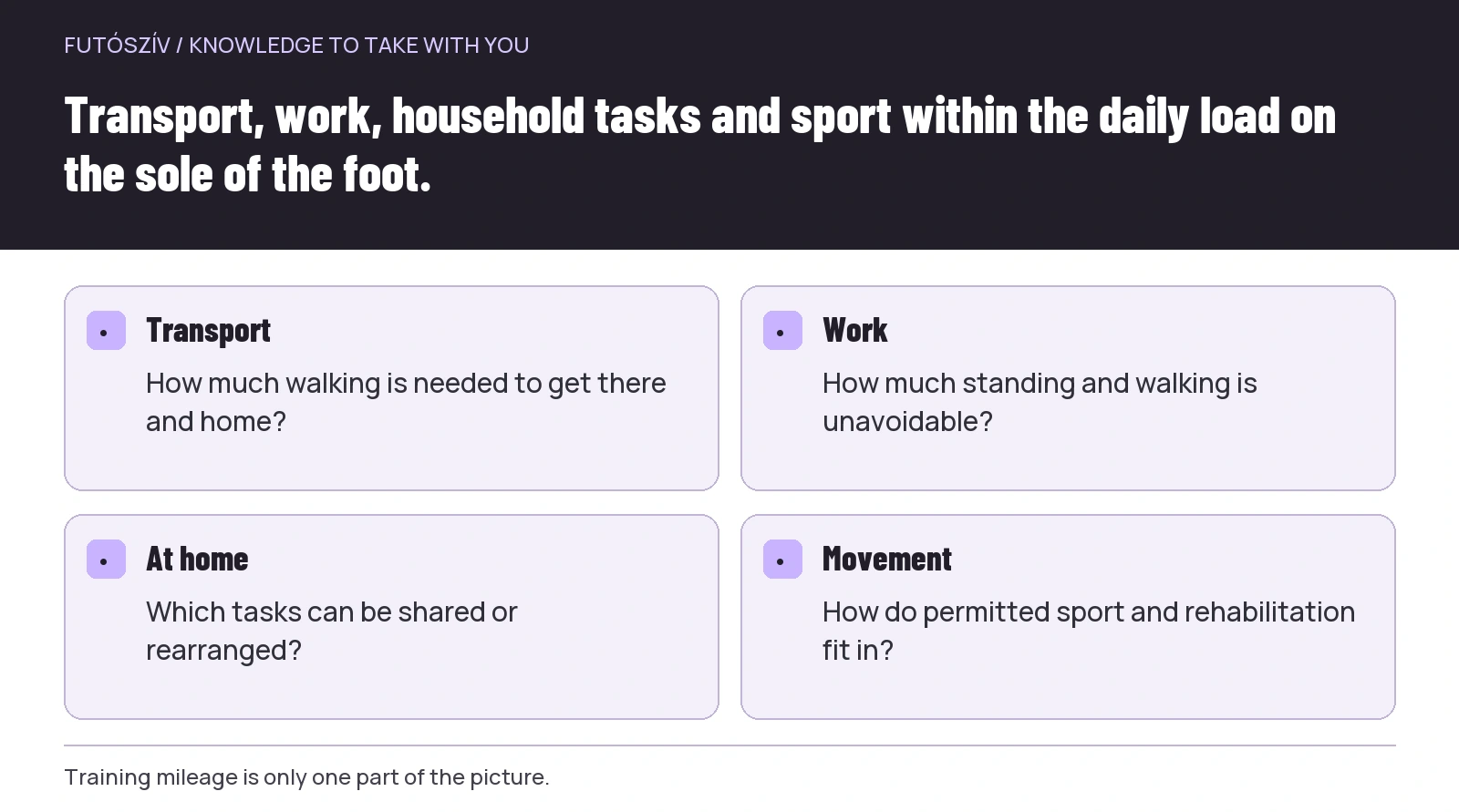 Enlarge diagram
Text version of the diagram
- Transport
- How much walking is needed to get there and home?
- Work
- How much standing and walking is unavoidable?
- At home
- Which tasks can be shared or rearranged?
- Movement
- How do permitted sport and rehabilitation fit in?
Altered sensation or diabetes brings other important questions
The NHS heel-pain guide specifically recommends medical advice when symptoms occur with loss of sensation, tingling or diabetes. An absence of pain does not mean the same thing for everyone. If your sensation is reduced, do not rely solely on how uncomfortable an activity feels.
The NIDDK information on diabetes and foot problems emphasises the importance of checking feet and reporting injuries promptly. Contact healthcare services about a new wound, skin change or healing problem. General running-shoe advice does not replace an individual foot-care and activity plan.
If you use an orthosis, prosthesis or another assistive device, also discuss pressure points and fit with the appropriate professional. Do not alter the device yourself because of pain. Access to movement can include ensuring that equipment, surfaces and daily tasks actually adapt to your circumstances.
How should you decide about the next run?
If symptoms are new, worsening or changing the way you walk, do not test them with your usual long loop. Seek assessment and clarify the boundaries for activity. Pain relief alone does not establish that running load is appropriate. The individual instructions you receive matter more than a general return schedule online.
If running can continue or resume, make the initial version precise: what location, how much total load, what observations and which stopping conditions apply? Instead of a long route that is difficult to shorten, an outing you can finish easily is more manageable organisationally. This is a useful framework, rather than a guarantee of recovery.
Review the whole week with your coach, including rehabilitation tasks and everyday time on your feet. Do not make up all missed distance at once as soon as you have a better day. Improvement is an observation; increasing load is a separate decision that needs to connect with your own plan.
What should you prepare for the next review?
Bring a short description of the location, onset, timing and most important everyday limitation. Note the footwear or device used, the tasks prescribed and the changes you have noticed. If you have had imaging, present the result alongside the whole history. You do not need to defend the wording of a report as a settled diagnosis.
Your questions might be: what do we currently think is causing this, what can I load, which task is appropriate and when should I get back in touch sooner? If the proposed solution is unworkable financially or because of your job, say so as well. An individual plan needs to address accessibility and the real framework of your day.
An informed approach to heel and sole pain does not mean knowing every anatomical detail. What matters is recognising warning situations, communicating your experience accurately and receiving a clear next step. Running can then rest on organised decisions rather than guesswork.
Sources
- NHS: Heel pain
- JOSPT: Heel pain, plantar fasciitis, revision 2023
- AAOS OrthoInfo: Plantar fasciitis and bone spurs
- Heide and colleagues: Plantar fasciopathy treatment randomized trial, 2024
- NIDDK: Diabetes and foot problems
How Futószív articles are prepared: our editorial guidelines.